Hello Everyone and welcome to The CBU International Nursing Experience 2020 blog!
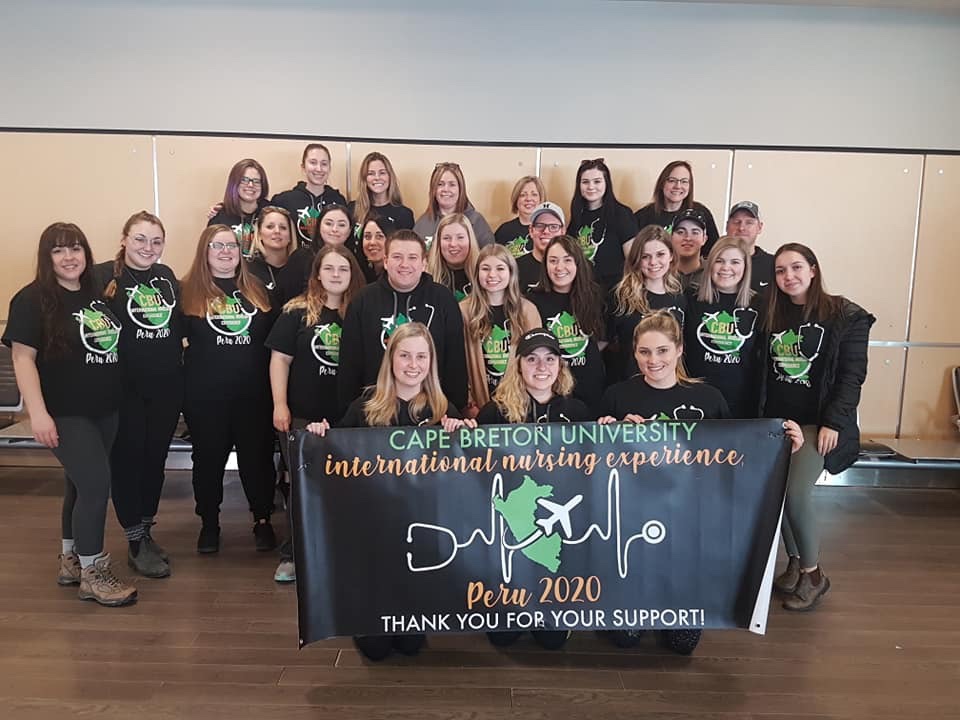
Cape Breton University International Nursing Experience to Peru 2020 Logo
We are all so excited for you to follow along on our international journey to Peru!
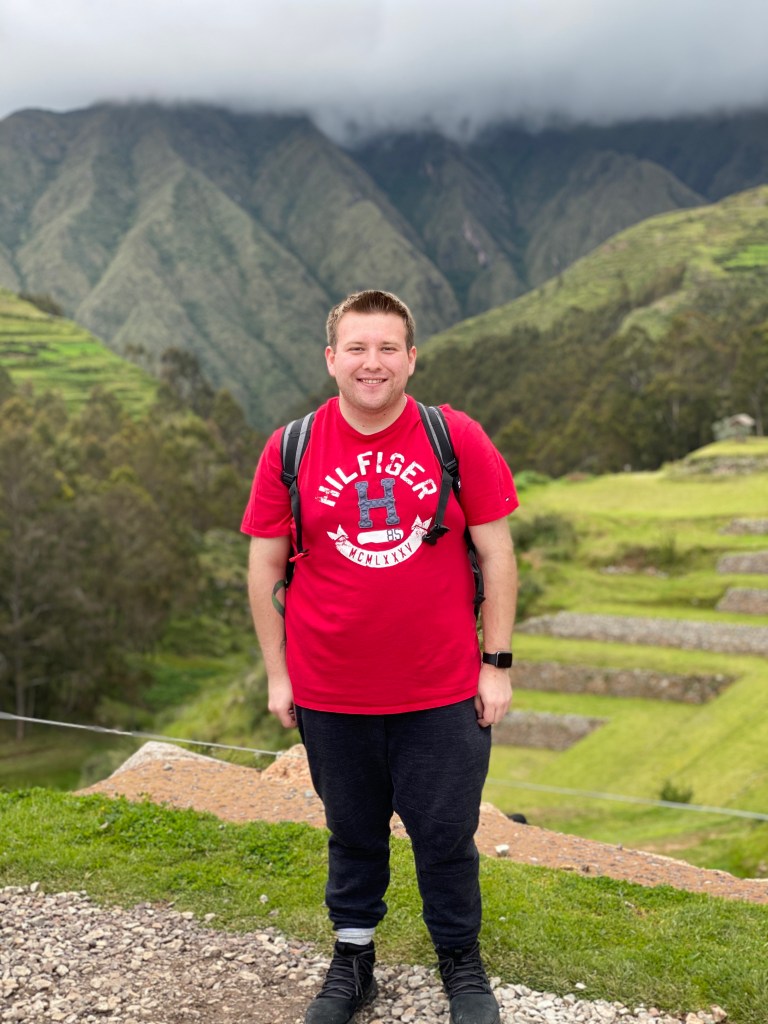
My name is Austin Chapman, I am one of the 22 nursing students attending this international experience. I am in my 3rd and final year of the BScN program at Cape Breton University. I am going to be blogging along with some of my classmates while we are in Peru, keeping you all up to date about each and every day and experience!
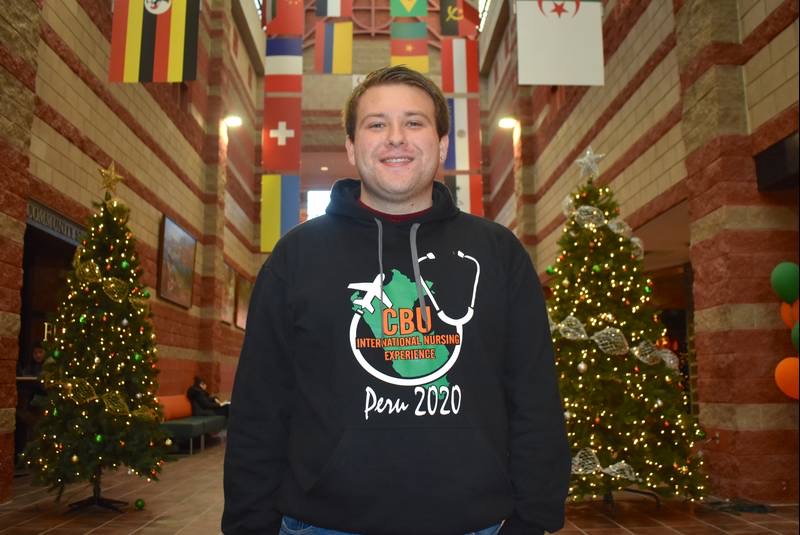
Austin Chapman wearing his Peru Sweater in the Great Hall at Cape Breton University.
First I am going to give you all some background about how and why we got to go on this amazing international opportunity.
Every year for the past few years, CBU nursing students in their final year have been given the opportunity to participate in a volunteer, service learning, international nursing experience. This experience gives nursing students a look into what healthcare is like in other countries while providing volunteer services to the communities visited. With a growing and diverse culture in Cape Breton we believe it is important to travel and learn about health care in other countries, communities and cultures. Experiential learning is what our program is based on, and being culturally aware is a very important part of being a nurse. Gaining this experience will open our eyes to how other cultures live and how healthcare works in other parts of the world. Our main goal is to learn lots and bring back what we learn to Cape Breton and Nova Scotia so we can use this new found knowledge in our nursing practice back home.
So how does one go on such a trip? In order to go on this trip we needed a lot of community support and fundraising efforts! For a little less than a year our group worked on raising awareness for this trip and fundraised non-stop!
Fundraisers of all sorts: Some small fundraisers like- Basket draws, Gift card trees, lotto trees, etc. We had a few bigger fundraisers like our Auction at Steel City Sports Bar and Grill (which raised close to $13,000 for our trip!), A craft fair and flea market at CBU, weekly 50/50 tickets and so much more! You name it, we did it!
But, we couldn’t have done it without our community and local businesses donating venues, items, and money towards fundraisers and other things! We cannot thank them enough! Really though, thank you!
About one month before we left, in preparation for this experience each of the students going did some research on Peru and presented our findings to each other. We covered topics from weather to economic status, healthcare quality, mortality rates and cultural beliefs. We also had our guide from United Planet (Callie Roberts) who we will be meeting in country present to us on important topics. She also let us know what we will be doing in Peru (both in regard to healthcare and country related activities).
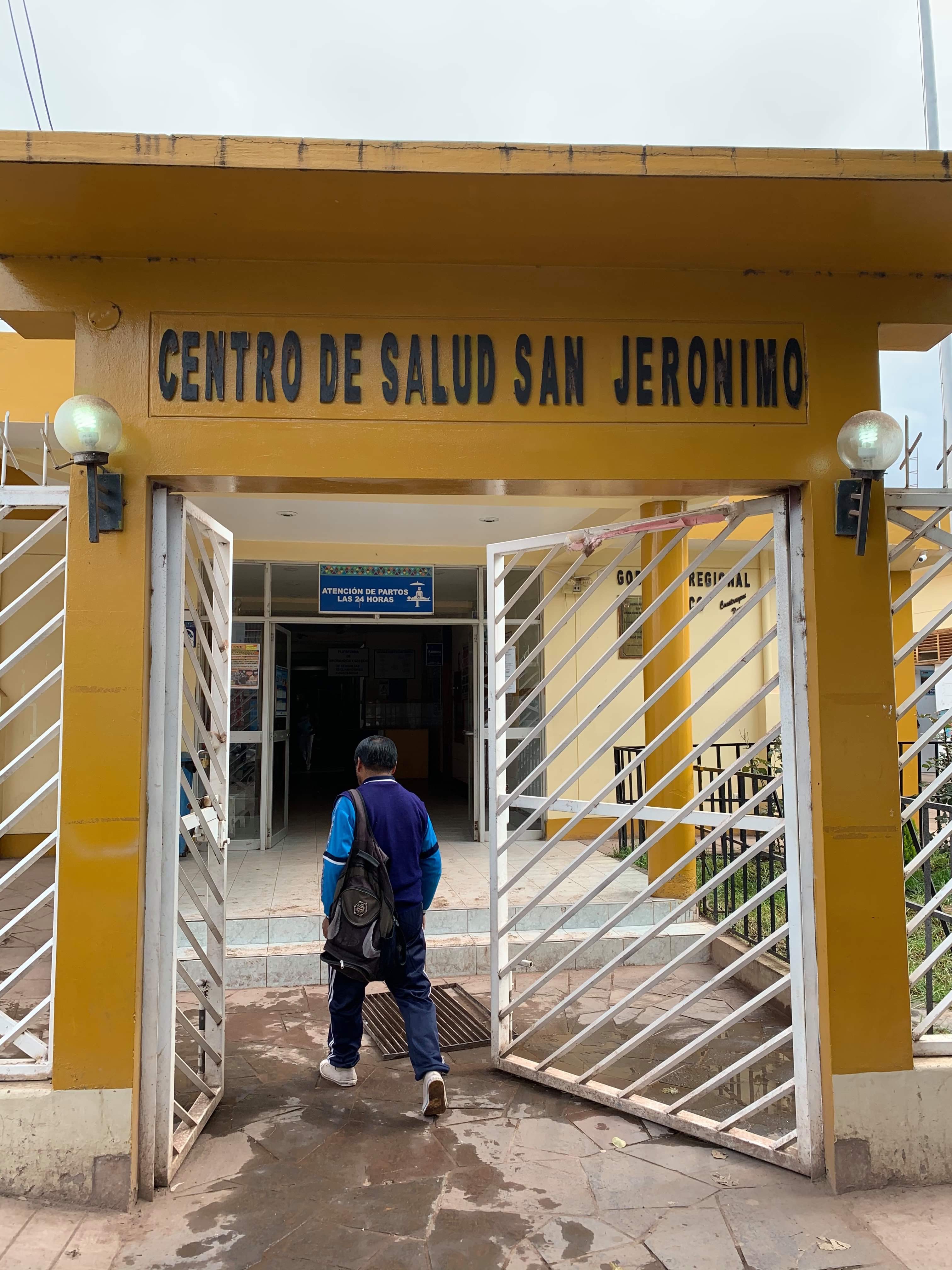
What will we be doing in Peru? We will be providing patient support to clients in underprivileged communities in the fields of emergency medicine, Psychiatric, Dental and maternal/pediatric in the hospitals (Posta San Jeronimo and Posta Ttio) near Cusco, Peru. We will also be visiting a community centre/after school program called CooperarPeru and we will be providing health education and dental hygiene to youth at risk! In between our volunteer work we will also be participating in cultural activities to broaden our understanding such as visiting historic sites/landmarks and immersing ourselves in the Peruvian culture.
This is sure to be an experience of learning and new adventures!
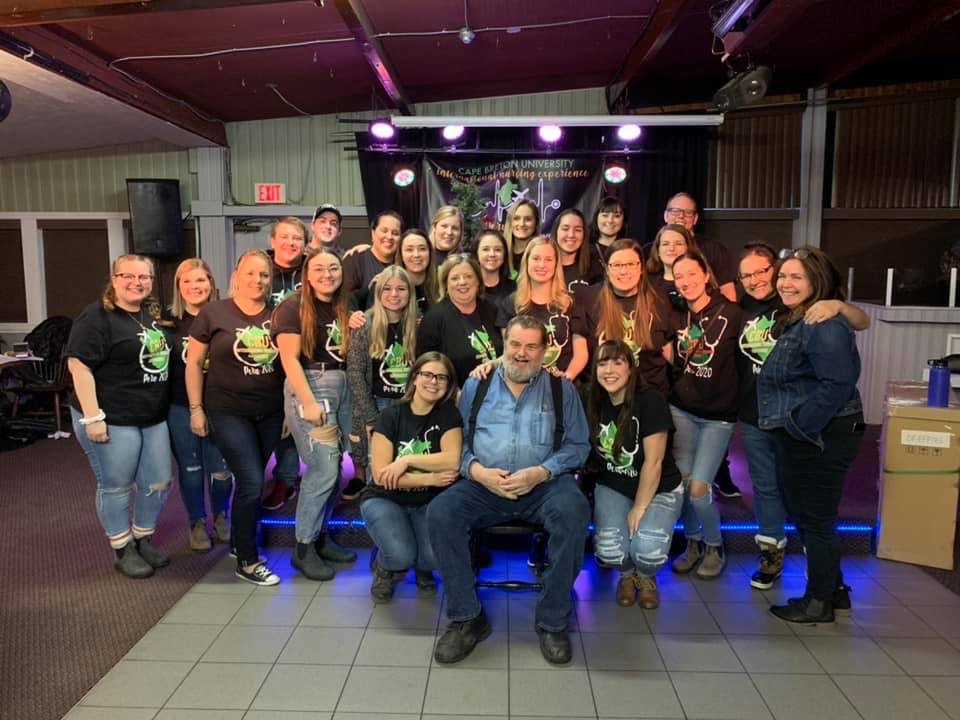
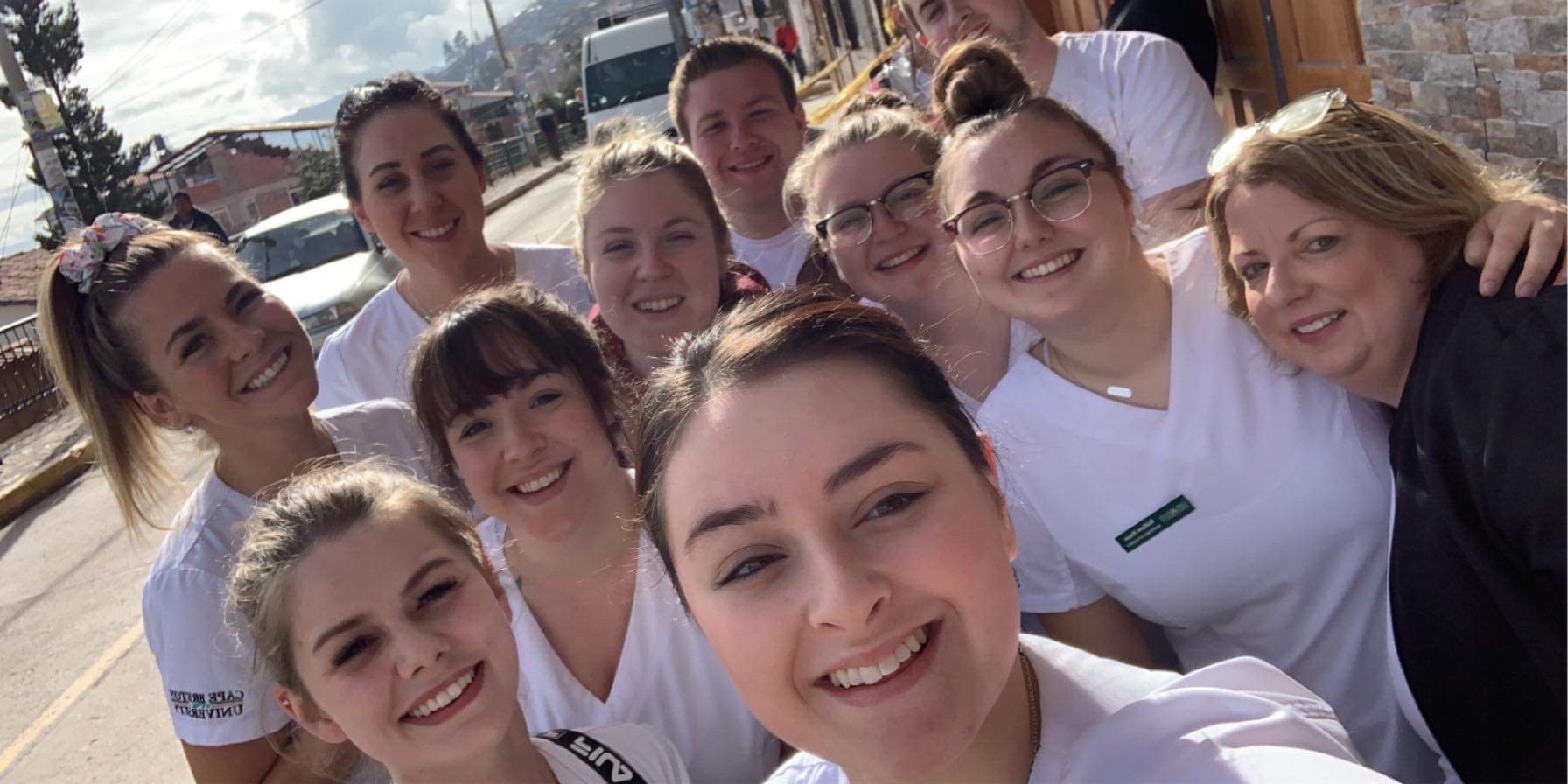
Photo from our auction at Steel City! Back row (L-R): James MacNeil, Kenzie Curry, Morgan Edwards, Allison Burke, Robyn Shibinette, David Gouthro Upper Middle (L-R): Austin Chapman, Chelsie Cann, Morgan Manthorne, Brianna Larusic, Kelsey Brown Lower Middle (L-R): Kaitlynn Hayes, Hannah Gartland, Sonya Wambolt, Kristen Bach, Megan McNeil, Tracy Lillington (Instructor), Rebecca MacDougall (Instructor), Hannah Tobin, Hannah Mackeigan, Angela MacDonald (Instructor/Trip Organizer), Karen Kennedy (Instructor) Front Row (L-R): Terri Vallis, Alfie MacLeod (Event Auctioneer), Annabelle Welsh
That is all for now; stay tuned for more exciting information!
We all got up and moved our luggage into the storage room at our hostel as checkout time was at 9:30am and we don’t leave to go to the airport until 6pm.
Today we have a free day to do our last minute shopping and exploring before we head home.
We all split up in groups and did our own thing.
A lot of people went to this little market close to our hostel with cheaper items to grab some last minute souvenirs.
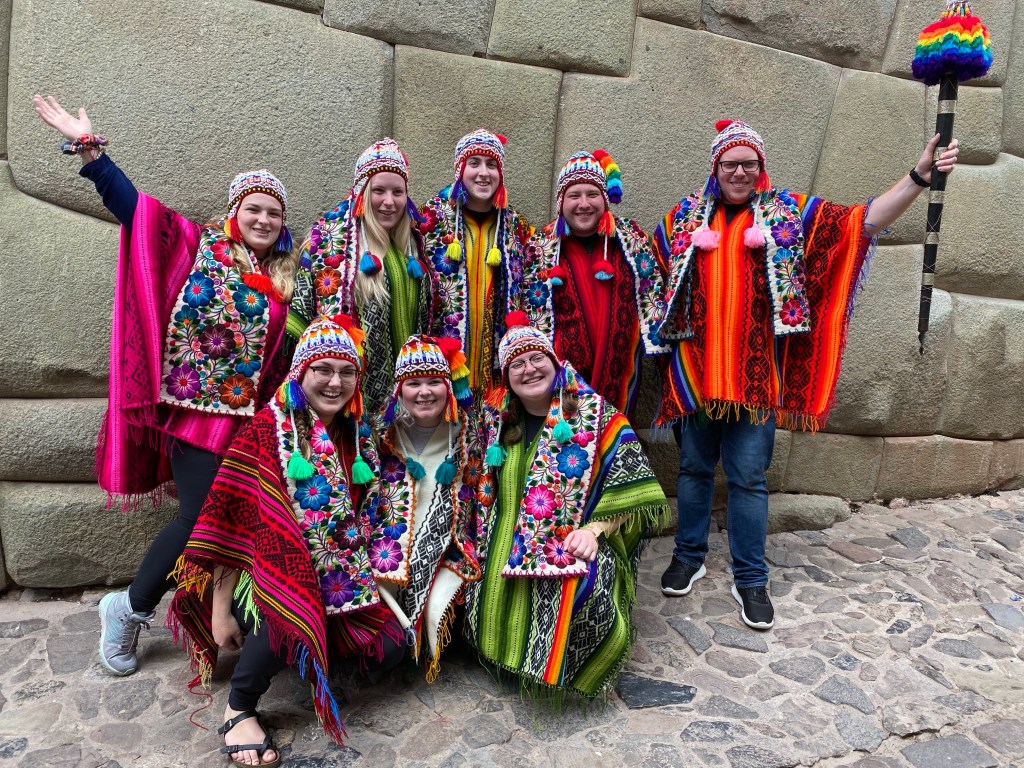
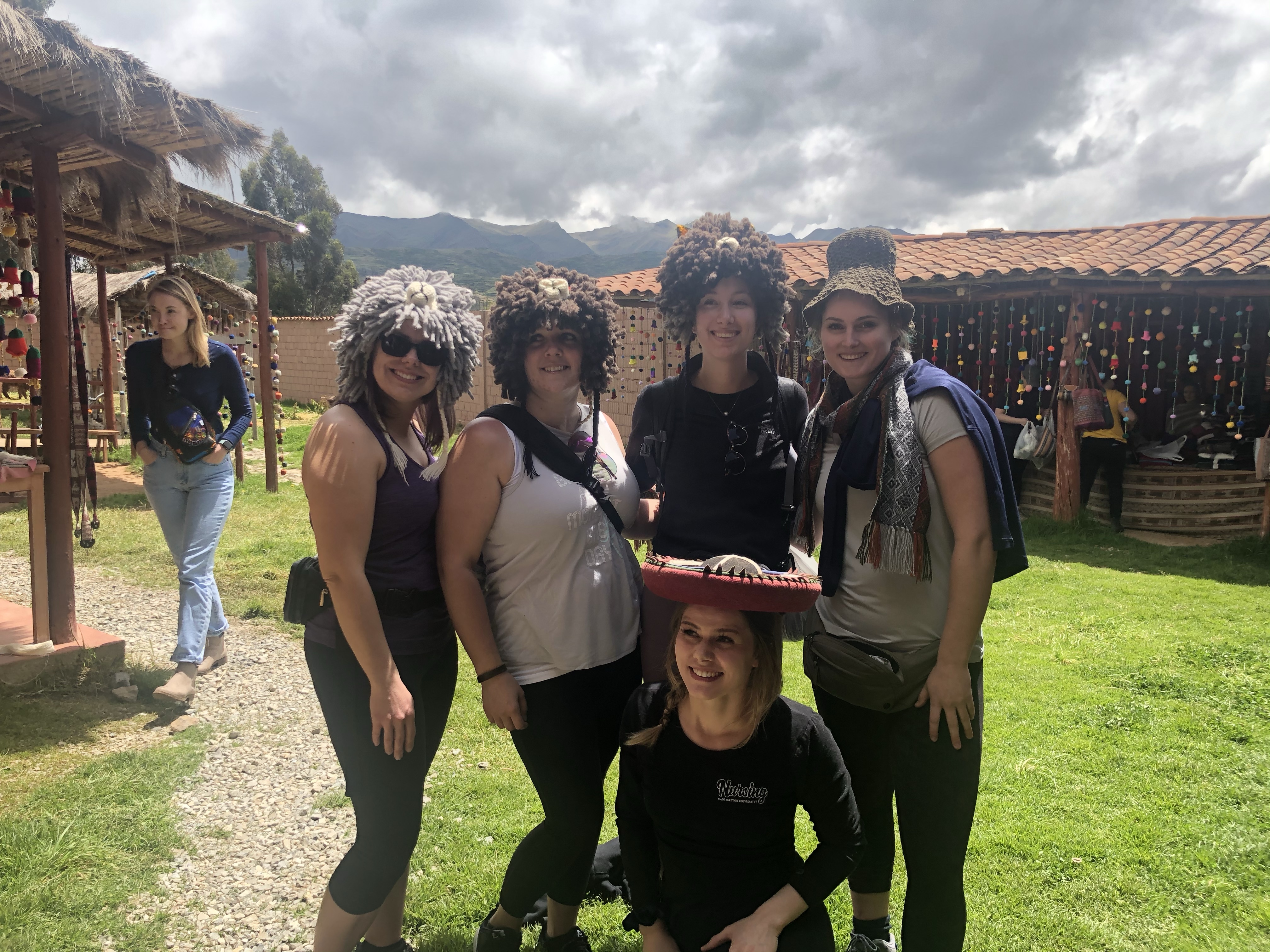
After we bought our souvenirs the shop dressed us up in the traditional Peruvian dress.
Back row (L-R): Kelsey Brown, Morgan Edwards, James MacNeil, Austin Chapman, David Gouthro Front Row (L-R): Kristen Bach, Hannah Gartland, Kaitlynn Hayes
Once 6pm hit we made the trek to our last bus ride in Peru!
We then yelled out our numbers for the last time! (Numbers to make sure we are all accounted for!)
1-22 in PERU!
Once we arrived to Cusco airport we checked in our bags and boarded our first plane shortly after.
Arriving in Lima around 10pm we then had a 7 hour layover before our next 8 hour flight to Toronto.
Our flight from Lima to Toronto.
Most of us spent the majority of this flight sleeping as we were dead tired from all the traveling and layovers.
When we arrived in Toronto we all showed lots of excitement; we are now on Canadian Soil!
We went through costumes in Toronto with no issues and then we went to get something to eat at the food court.
Our last plane from Toronto to Halifax
After our last 2 hour plane ride to Halifax we said goodbye to a few of our classmates who are staying in Halifax for their reading week.
We then received our luggage and off we went to get our bus to Sydney!
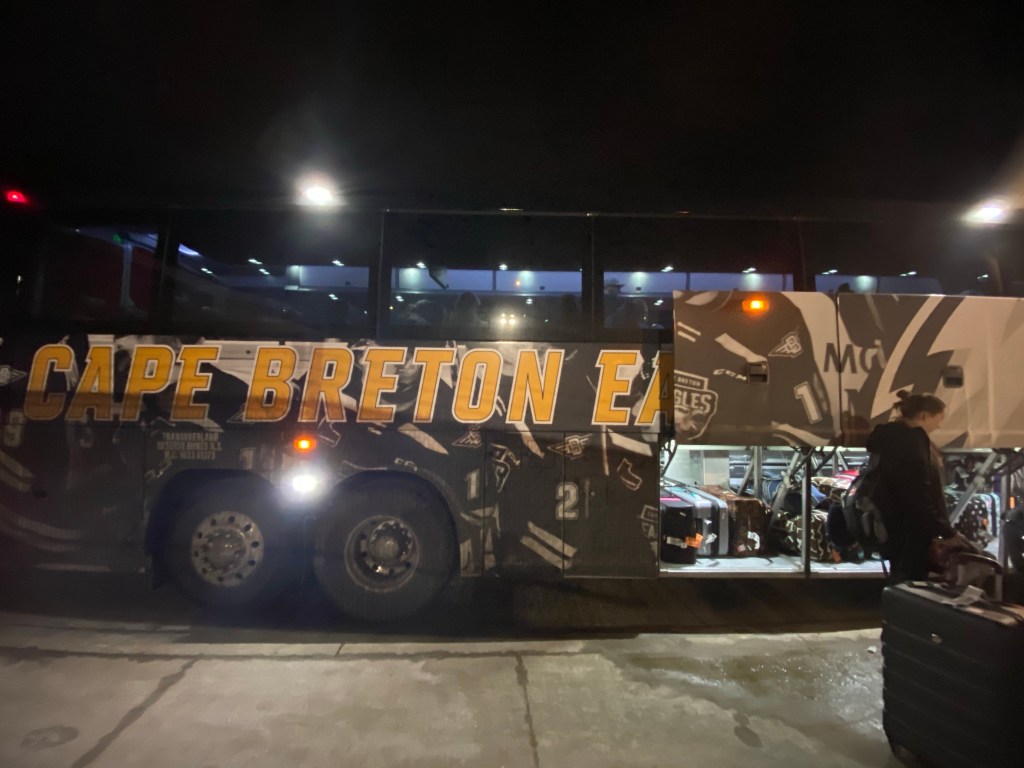
Our bus home wasn’t just any normal bus; it was the Cape Breton Eagles Bus!
The bus was very comfortable and had wifi! A great way to end our travel experiences!
It was a very quiet 4 hour bus ride back home, as most of us either slept or were checking social media to catch up with what we missed while we away.
We were all very happy to be home! Now for our reading week!
All of the students on the trip would like to send a massive thank you to all of the instructors who attended this trip with us! Angela, Tracy, Karen and Rebecca; without all of you this trip wouldn’t be possible! We couldn’t ask for better instructors to share this experience of a lifetime with!
I (Austin) would like to thank all of the students and Instructors for sending me pictures and information for the blogs! I really couldn’t have wrote these without all of your help!
Thank you to all of the companies, businesses, families and individuals at home who donated to our cause! You made all of this possible!
Last but not least thank you to all of you at home for reading these blogs and following along on our journey of a lifetime!
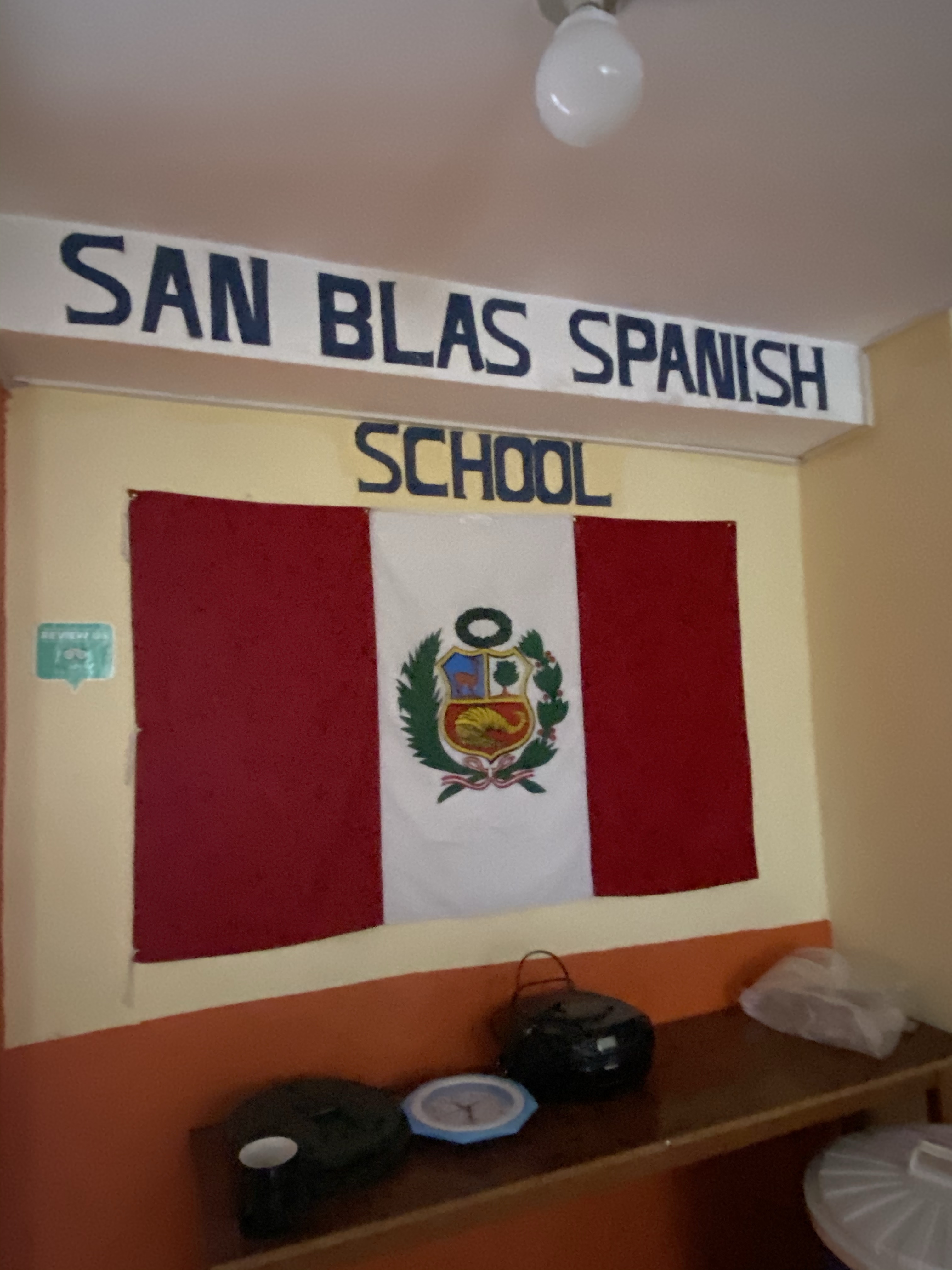
Today started by heading over to the Spanish School to make some posters on our assigned group/topic for the after school program we will be attending today.
We were assigned groups of 2-4 with topics like dental health, blood pressure, nutrition, glucose regulation, height and weight, hand washing and parasites, etc.
We got into our groups and worked on making posters for our topics.
Shortly after we finished our posters we bussed to the after school program.
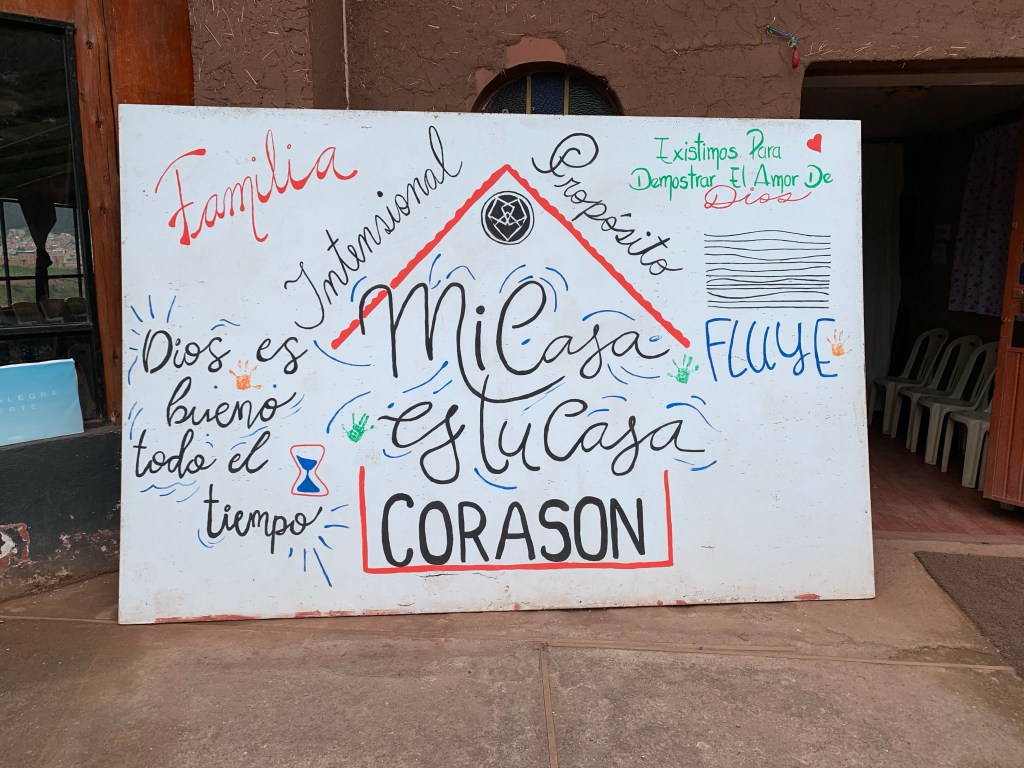
A sign at the after school program
CooperarPeru is an afterschool program located in a more rural neighborhood of Cusco called Tankarpata.
The program provides children from the neighbourhoods with a safe and productive place to go when they get out of school, before their parents come home from work.
CooperarPeru is a non-profit organization. They hope to prevent children from academic failure by providing education support like homework help and tutoring.
The project also provides social interaction through recreational games and activities, and they also have a feeding program where the children are provided a meal when they arrive after school.
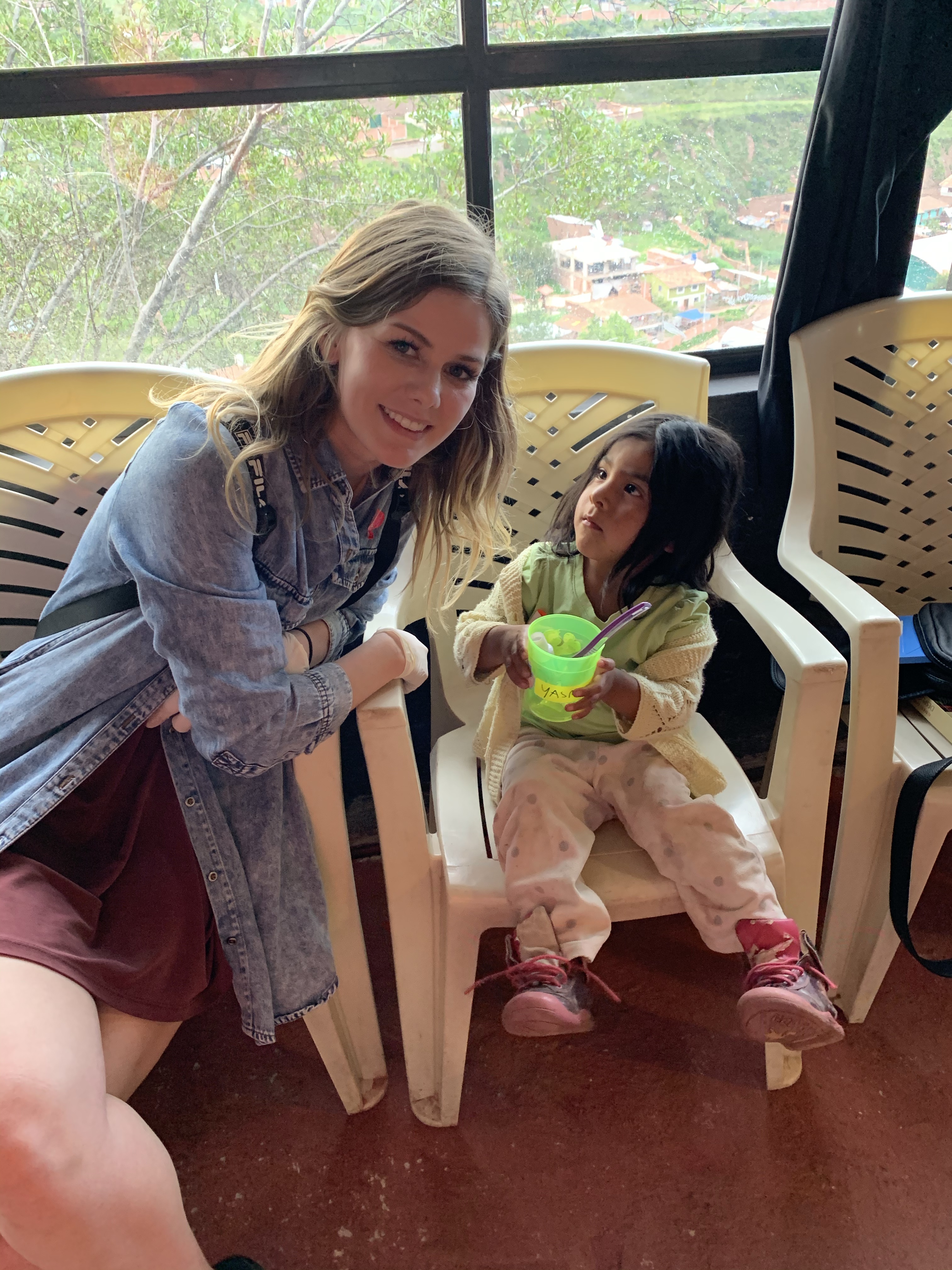
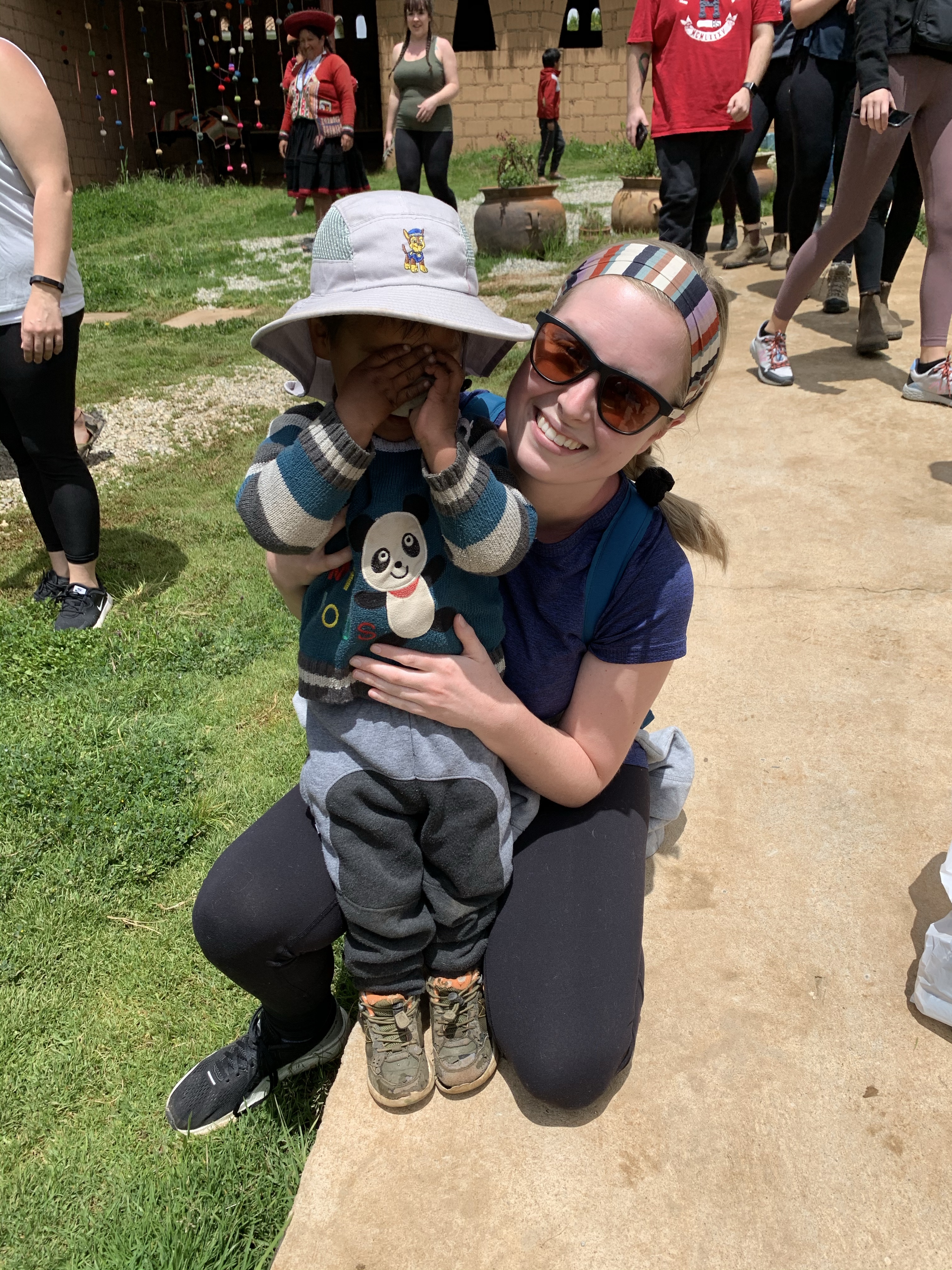
Mackenzie with one of the children from CooperarPeru
The after school program normally consists solely of children but today they opened it up to members of the community as well.
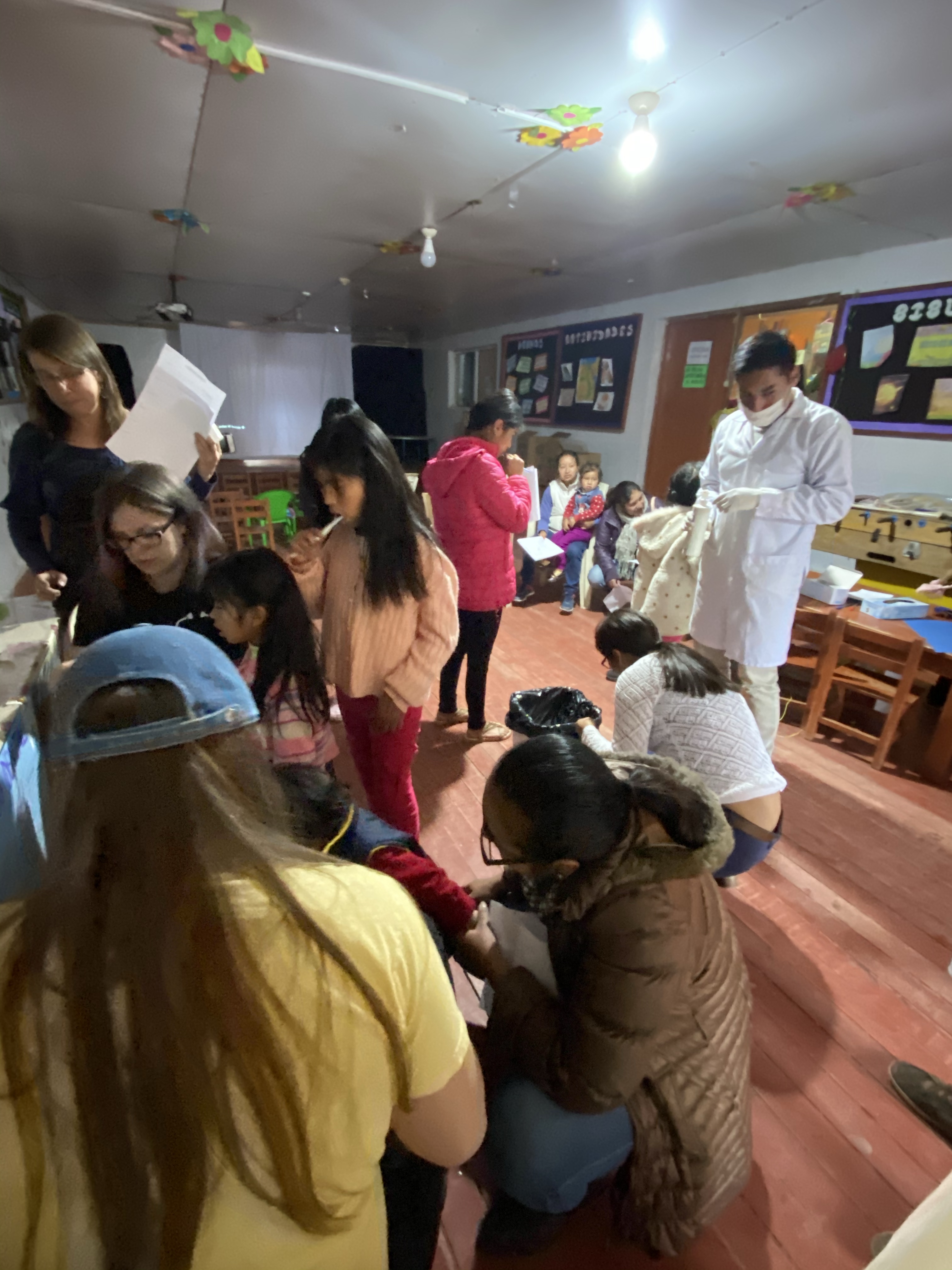
People started pilling in quickly to the stations and we very quickly started to work in our groups.
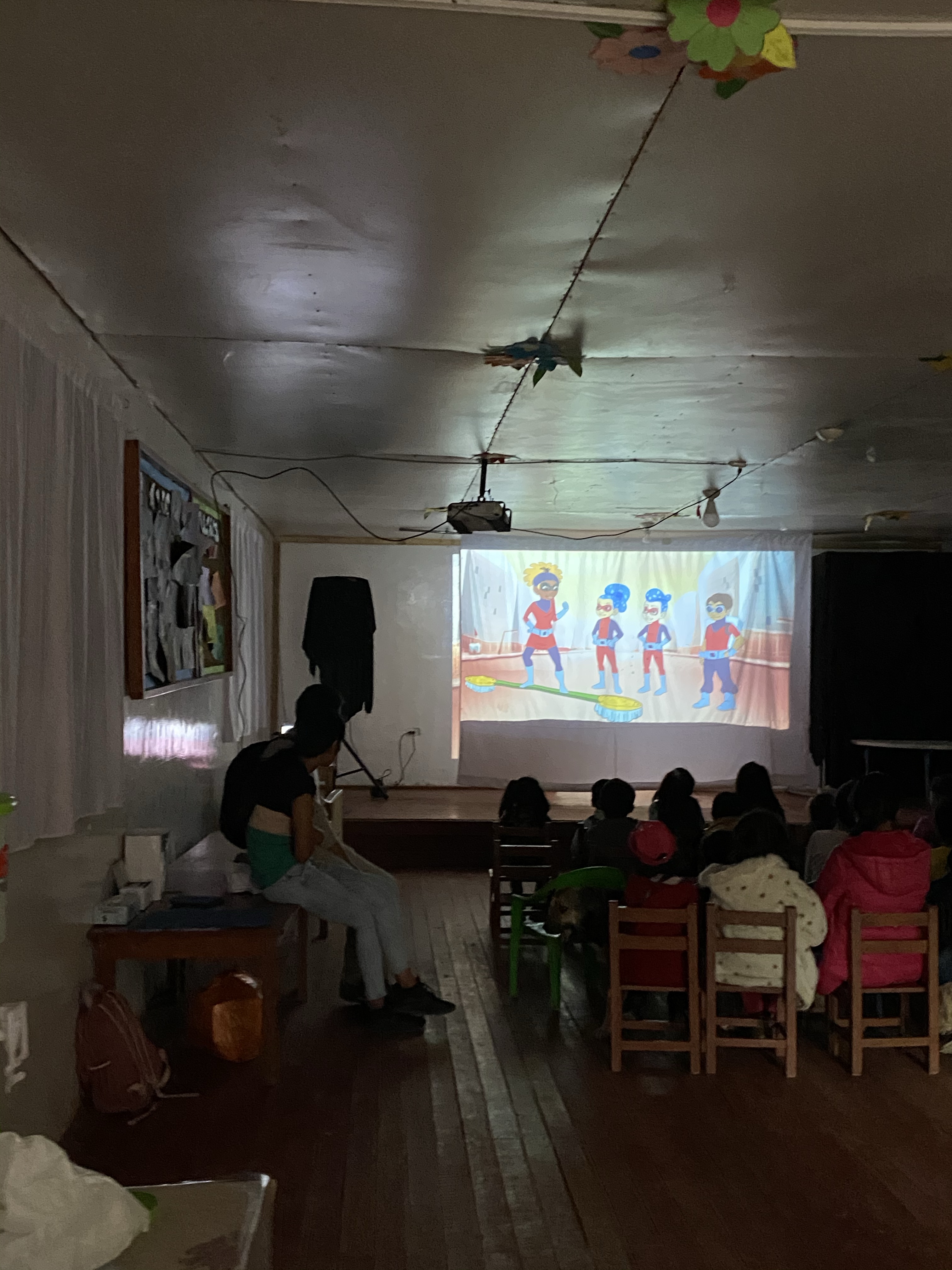
In the dental group we started out by helping the dentist and the dental students with having the kids sit and watch a few sort films about dental hygiene (cartoons about fighting off bacteria in your mouth by brushing and flossing).
After the children watched the films they went to the dentist to have their teeth and mouth checked/examined.
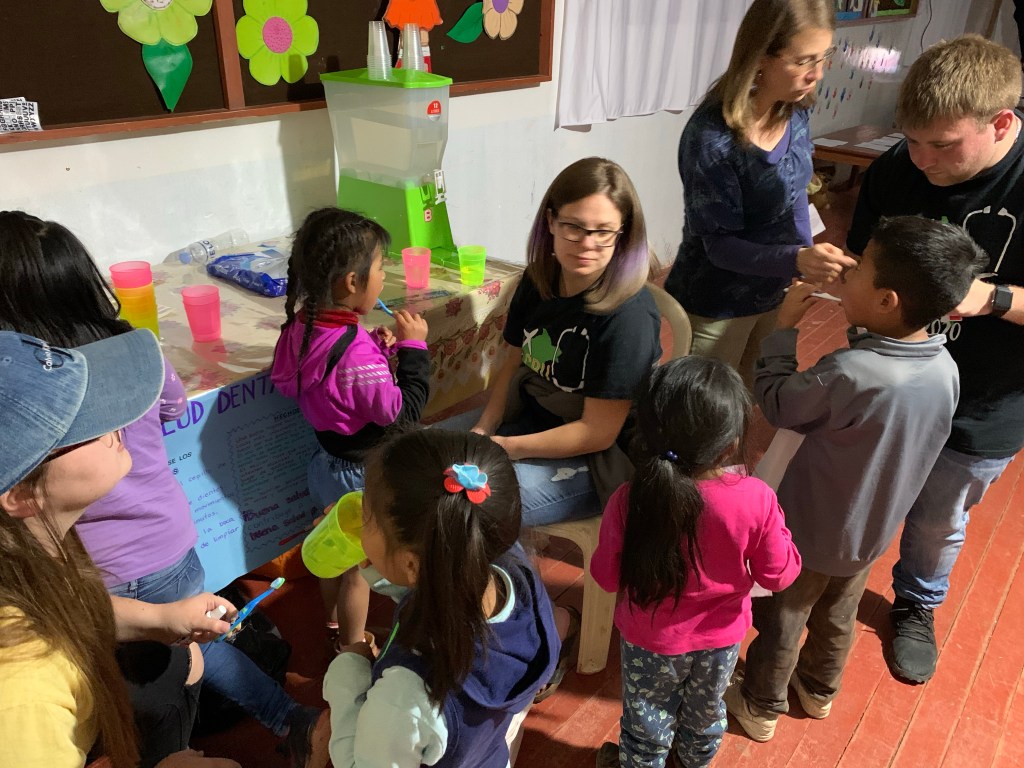
After that they were then sent to us to have their teeth brushed.
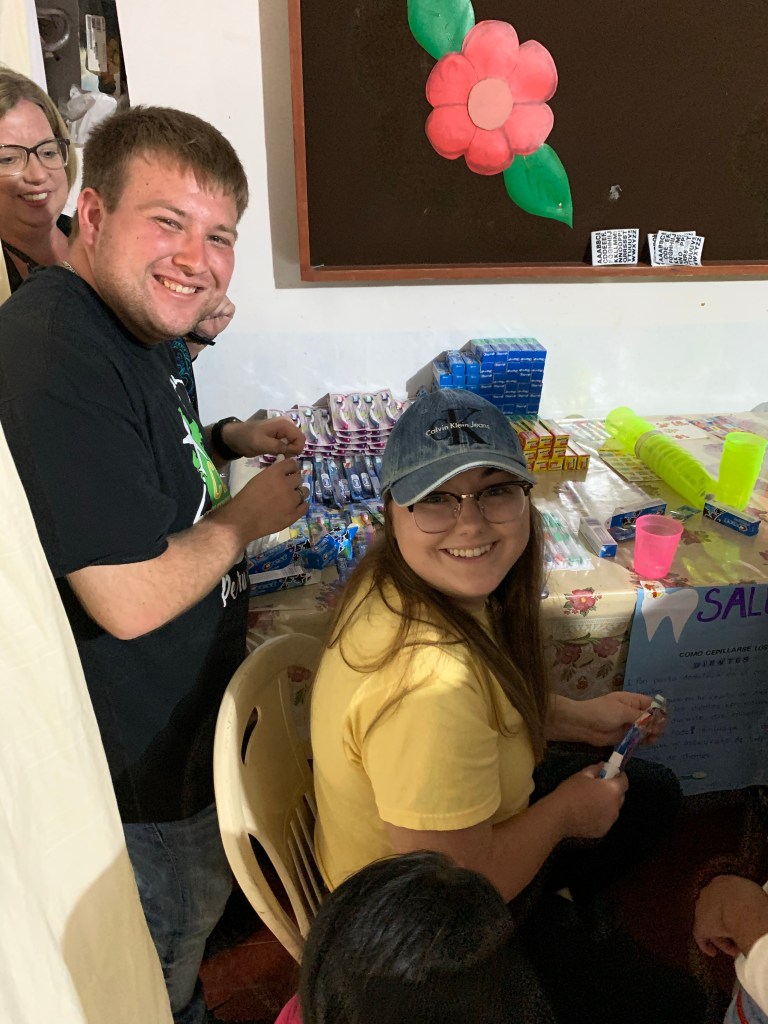
Austin and Kristen at their stationTerri, Austin and Kristen helping brush the children’s teeth
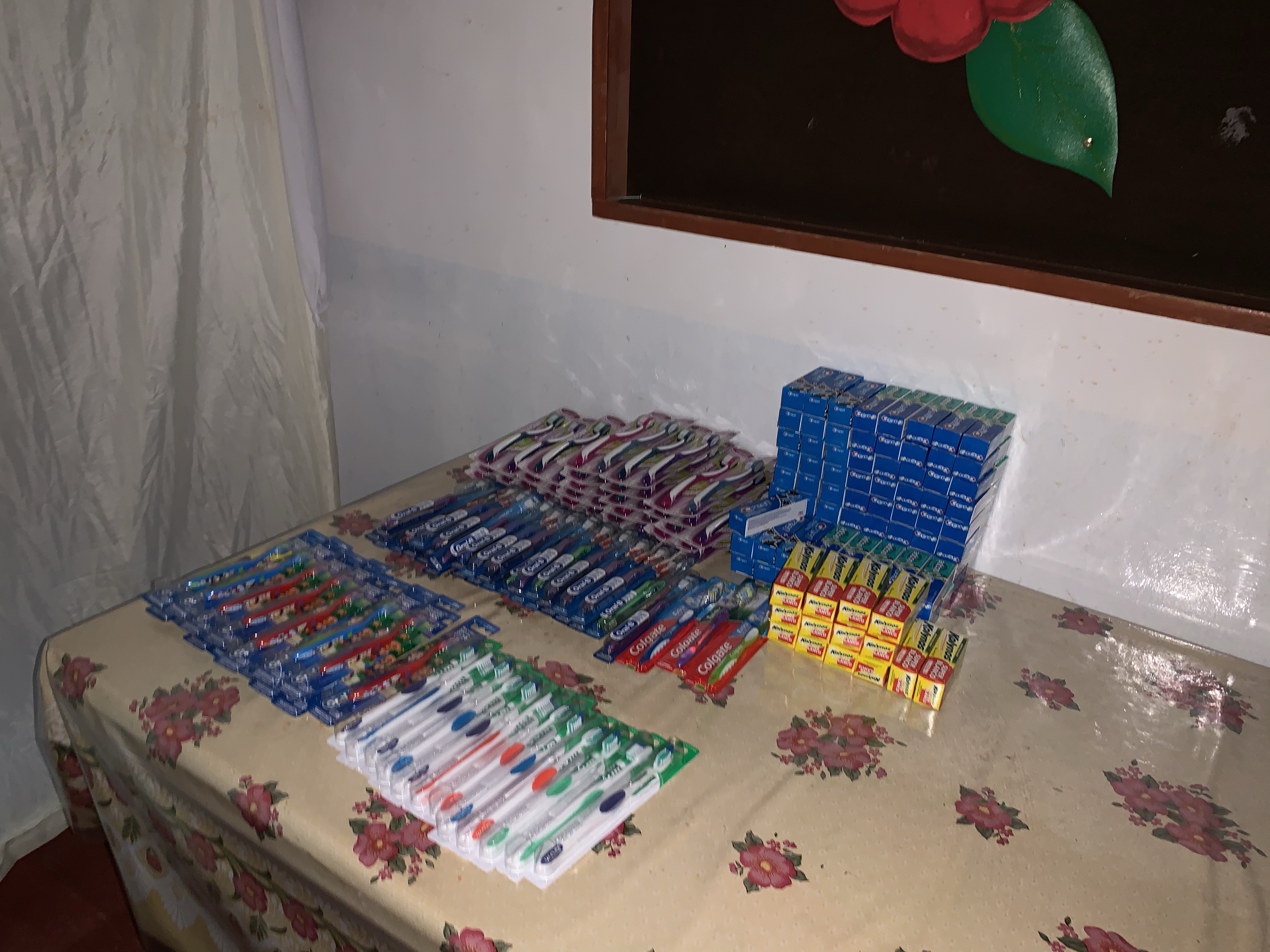
We gave everyone a new tooth brush and tooth paste. We had a wide variety of both for younger children, older children, adolescents and adults.
We helped some of the kids brush their teeth. We showed them circular motions for 2 minutes, then rinse your mouth and spit.
After that we then applied fluoride on the kids teeth.
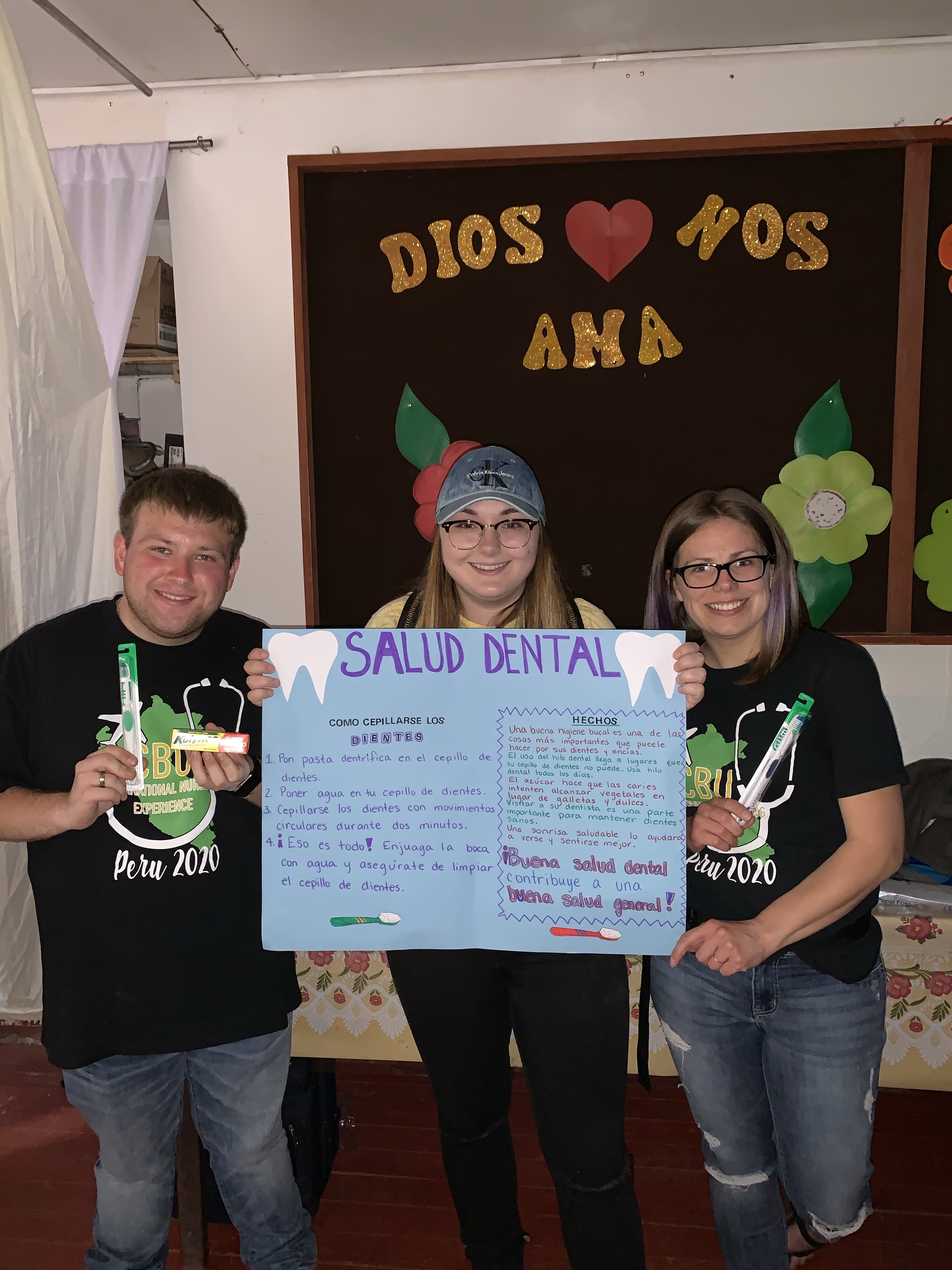
Austin, Kristen and Terri at the dental station holding the sign they made.
At this station we leaned that for the kids here, most of their parents do have medical but it does not cover any dental health; they have no dental coverage.
They receive cheaper care at the after school program but it is not ideal.
The dentists do not come here very often and it still costs 50 soles for a cleaning and 100 soles for a cavity.
We learned that a lot of the children here (older children included) do not know how to brush their teeth.
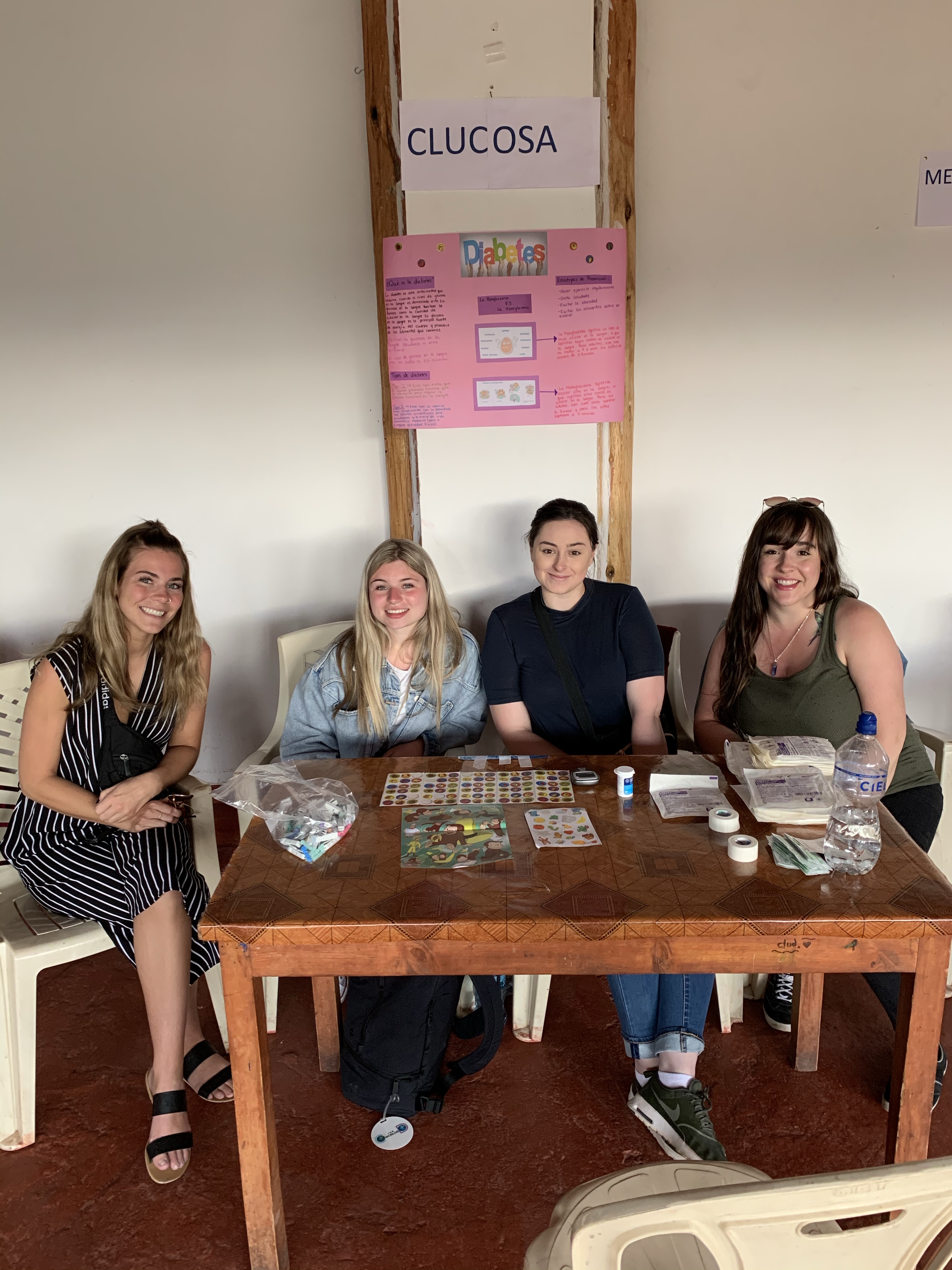
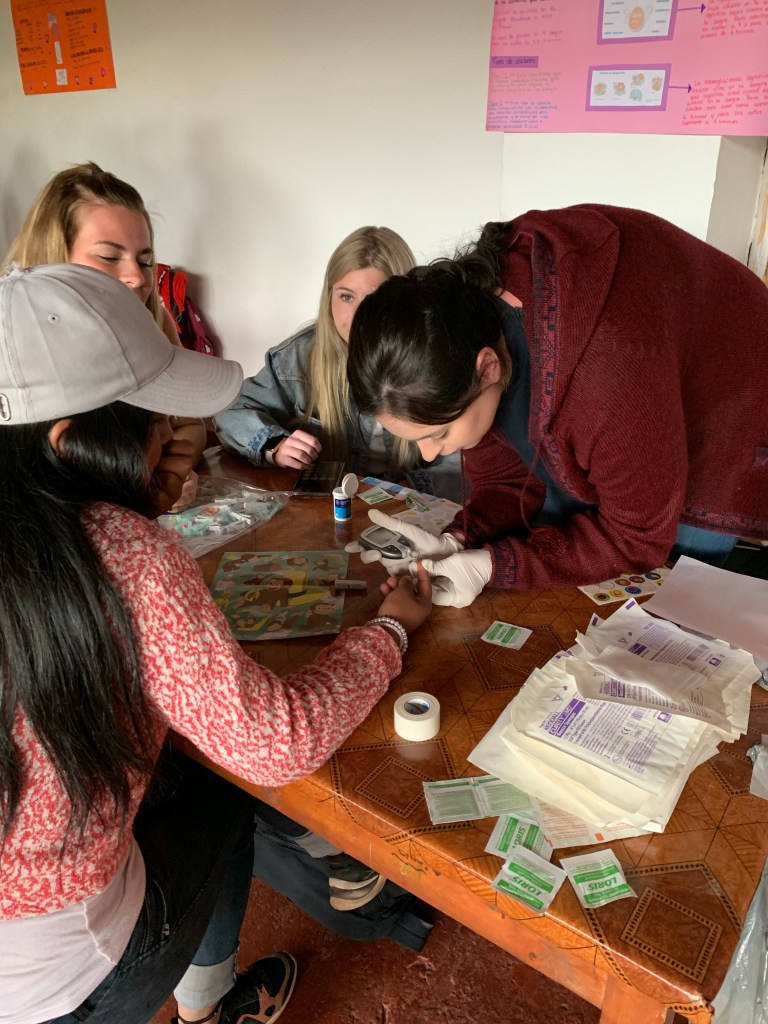
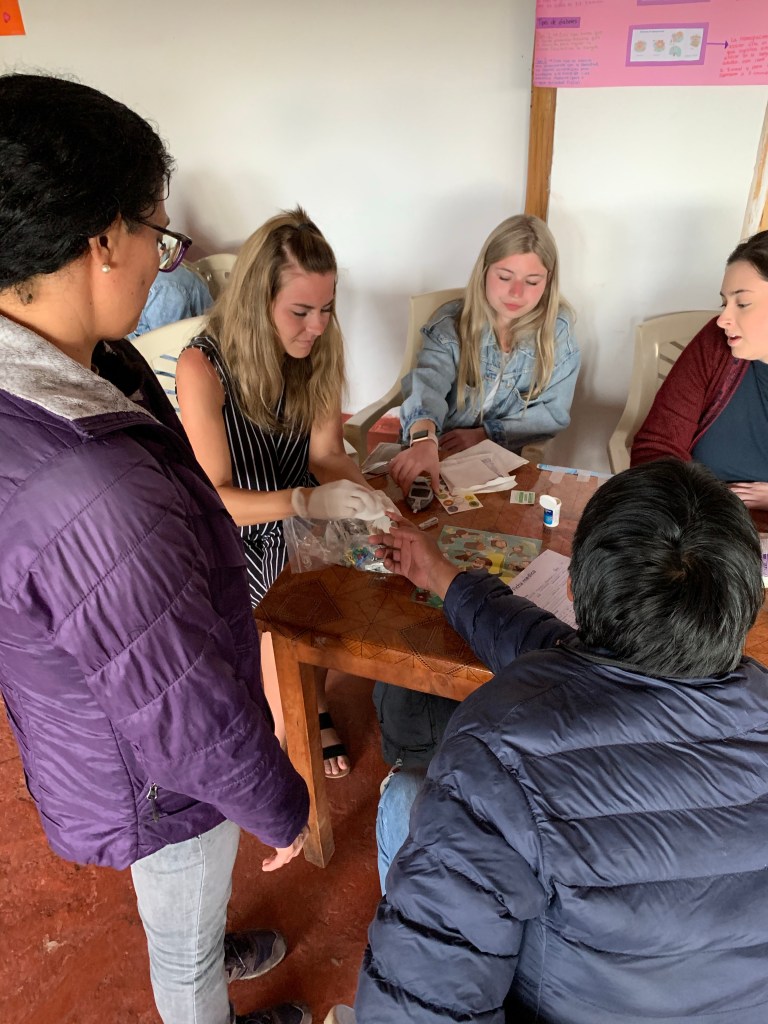
The group that did glucose regulation checked the blood sugars (glucose) of 20 teens and adults.
Kelsey Muller, Megan McNeil, Robyn Shibinette and Annabelle Welsh sitting at their glucose regulation table
They determined that most were normal (18 out of 20) they only had 2 really high sugars.
We believe this may be because most people grow their own food and eat healthier. It costs more to eat unhealthy in Peru.
Kelsey Muller, Megan McNeil, And Robyn Shibinette checking blood sugars.
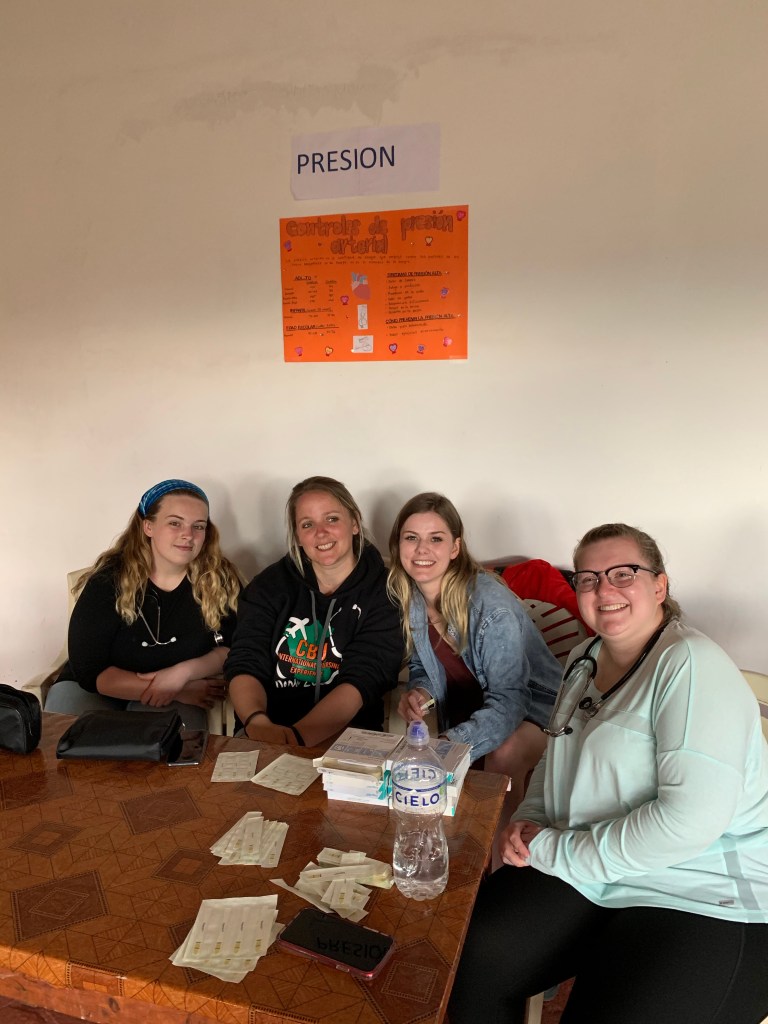
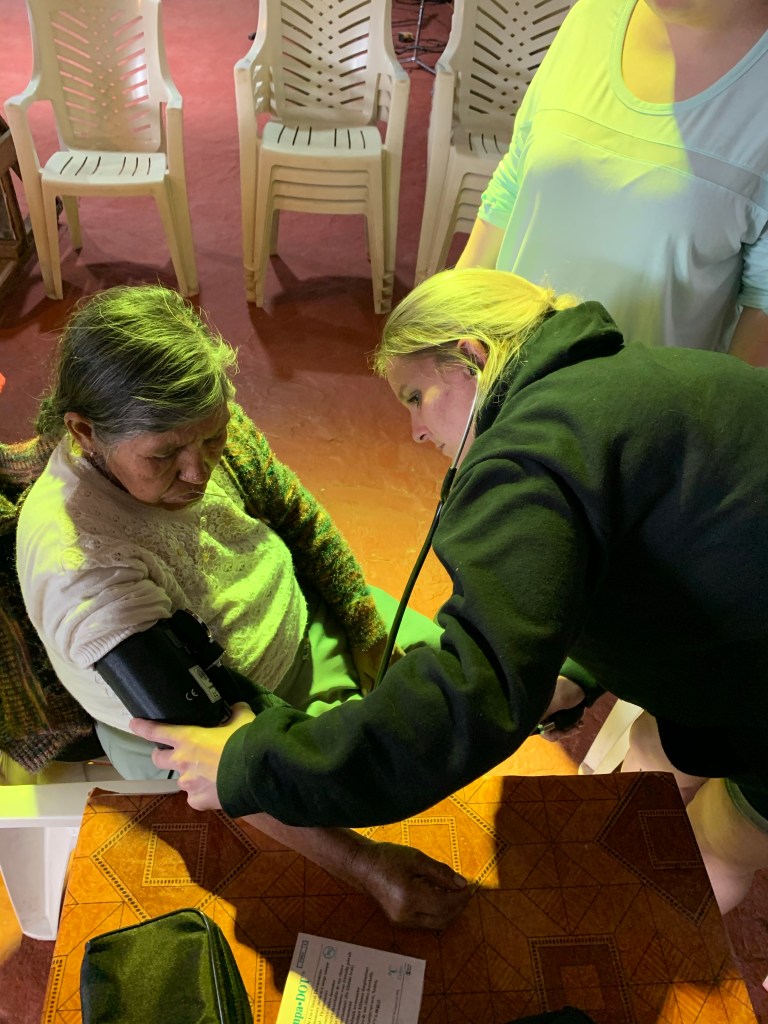
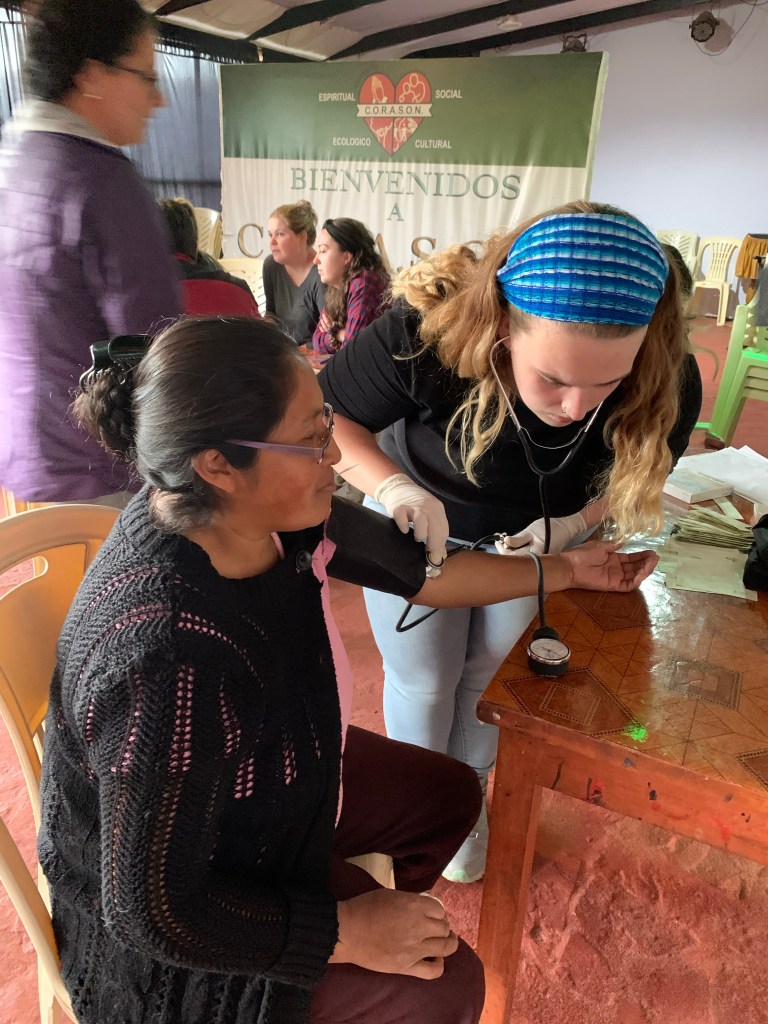
The group that was checking blood pressure and temperatures found that the majority of people had normal (and somewhere around lower normal) readings. Most children had readings around 100|60 and most adults had readings of 100| 80.
Kelsey Brown, Sonya Wambolt, Mackenzie Somers and Kaitlynn Hayes at the blood pressure and temperature station.
One older lady had a higher blood pressure of 145|90 but she told us that she had not taken her blood pressure medication for a week now because she ran out.
Sonya checking a lady’s blood pressure Kelsey Brown checking a lady’s blood pressure
One women had a higher temperature of 37.9 and was having dizziness and headaches. All of her other vital signs were normal and she said she already consulted with a doctor.
Kaitlynn checking a lady’s temperature
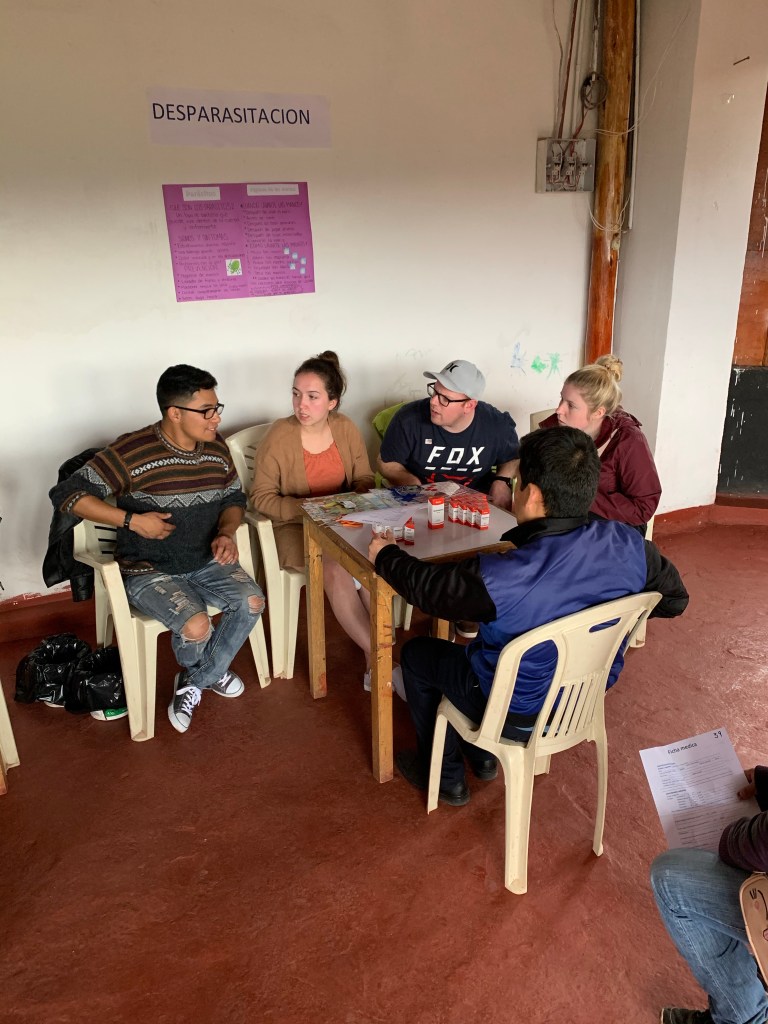
The group that provided information on hand hygiene and parasites gave a lot of education to the children and their parents about the importance of washing your hands to avoid parasites and becoming sick.
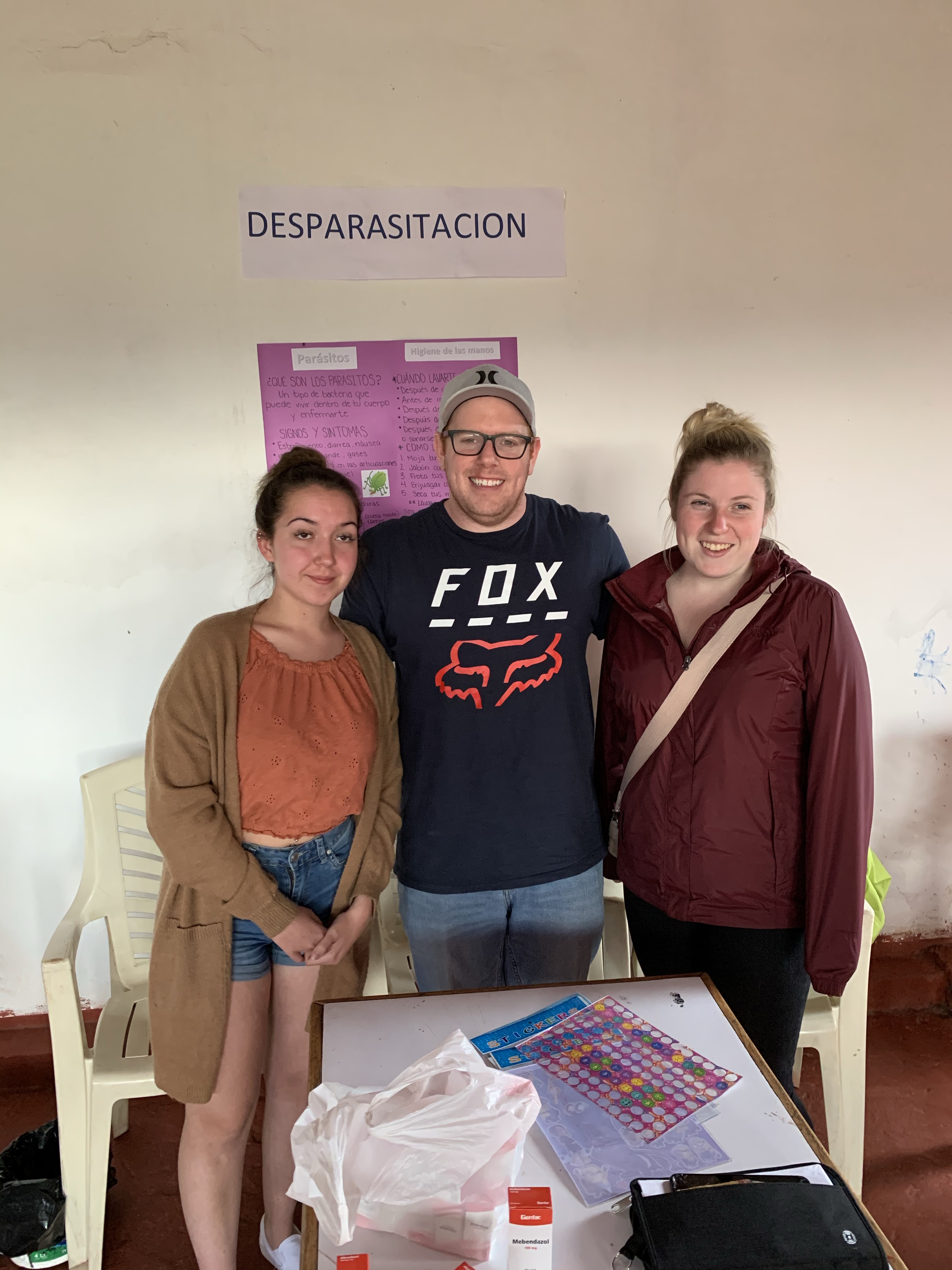
Morgan Edwards, David Gouthro and Briana LaRusic with Miguel (our translator) at the parasite and hand hygiene station.
This group gave out medication (liquid) to the children under 6 for parasites and gave tablets (medication) to those older than 6 as well.
They gave info on the signs and symptoms of parasites and how to prevent them.
There was a few pregnant women present at the program today and we knew that there was some contraindications about giving parasite medication when pregnant so we told them to consult their doctors.
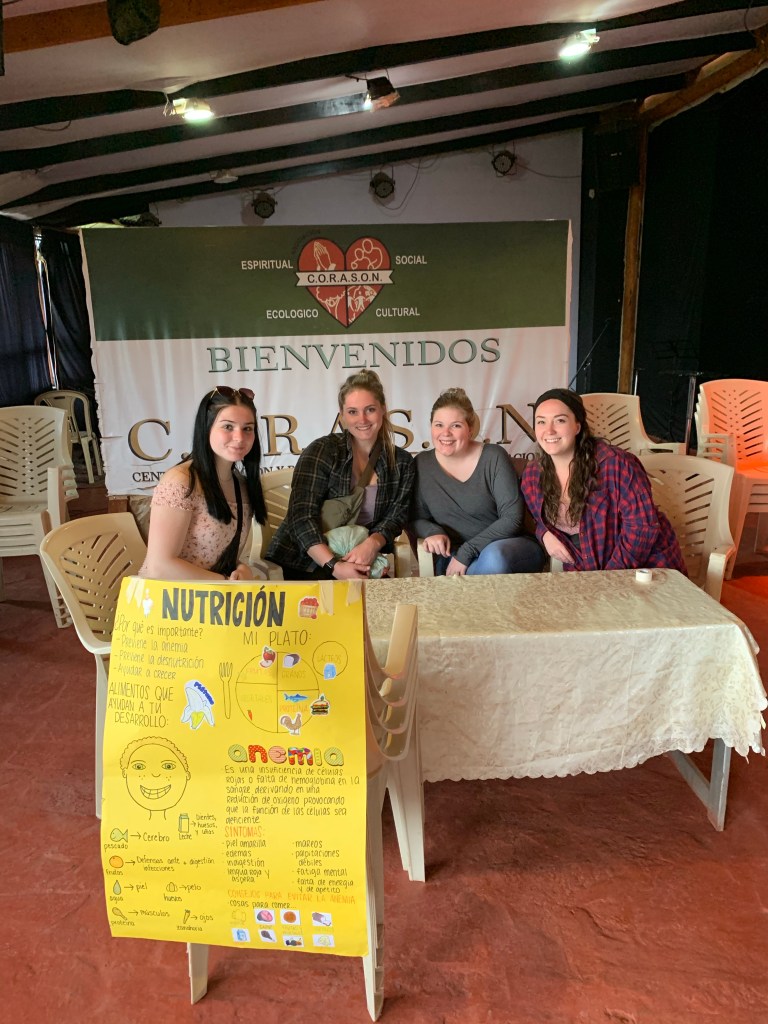
The group that was assigned to nutrition provided some education on the prevention of anemia (a very common issue among the Peruvian population) and the importance of eating healthy; related to malnutrition and growth.
Melanie Cochrane, Allison Burke, Hannah Gartland, And Chelsie Cann at the nutrition station.
The nutrition group talked about what a plate should look like when eating a meal, the importance of drinking water. They found out that a lot of people only drink about 1-2 cups of water per day.
This group also educated on the symptoms of anemia (yellow skin, tiredness, rapid heart beat, weakness, shortness of breath, etc.)
They discussed some food that will help with anemia like oranges, eggs, chicken, bread, meats, etc.
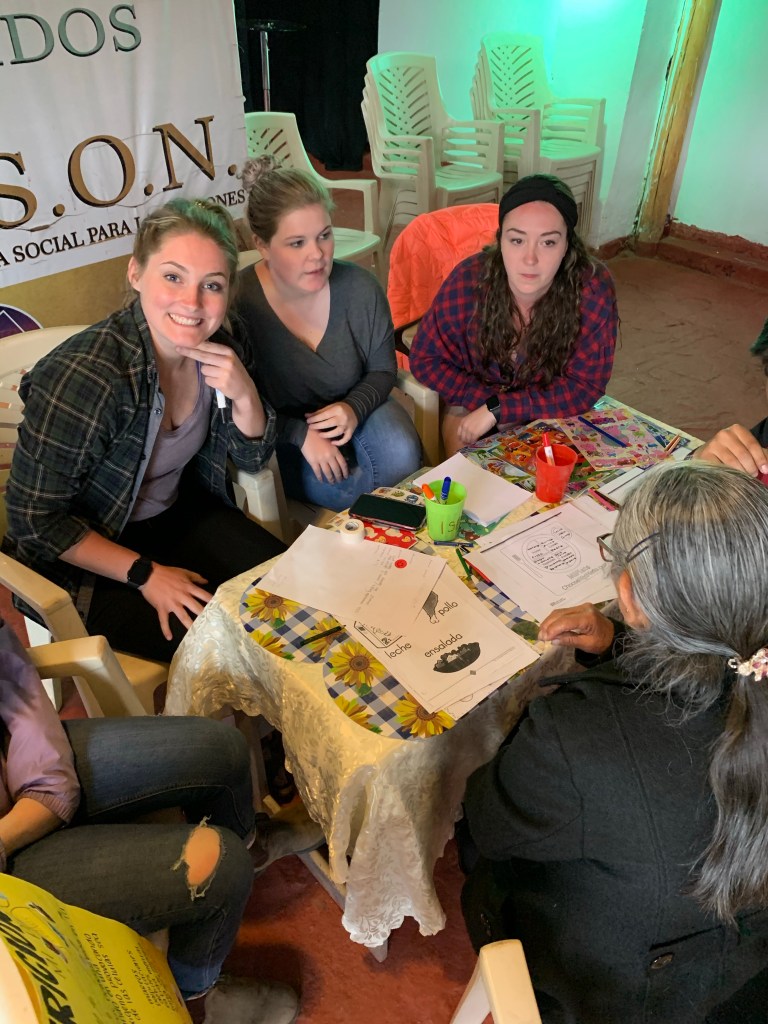
A lot of the parents displayed interest in this station to make sure their kids were on the right track even if they didn’t have anemia.
We also have some education on diabetic foods, pregnancy, baby’s nutrition and the importance of protein to have more energy.
The group that was assigned height and weights was placed outside in the main courtyard of the after school program.
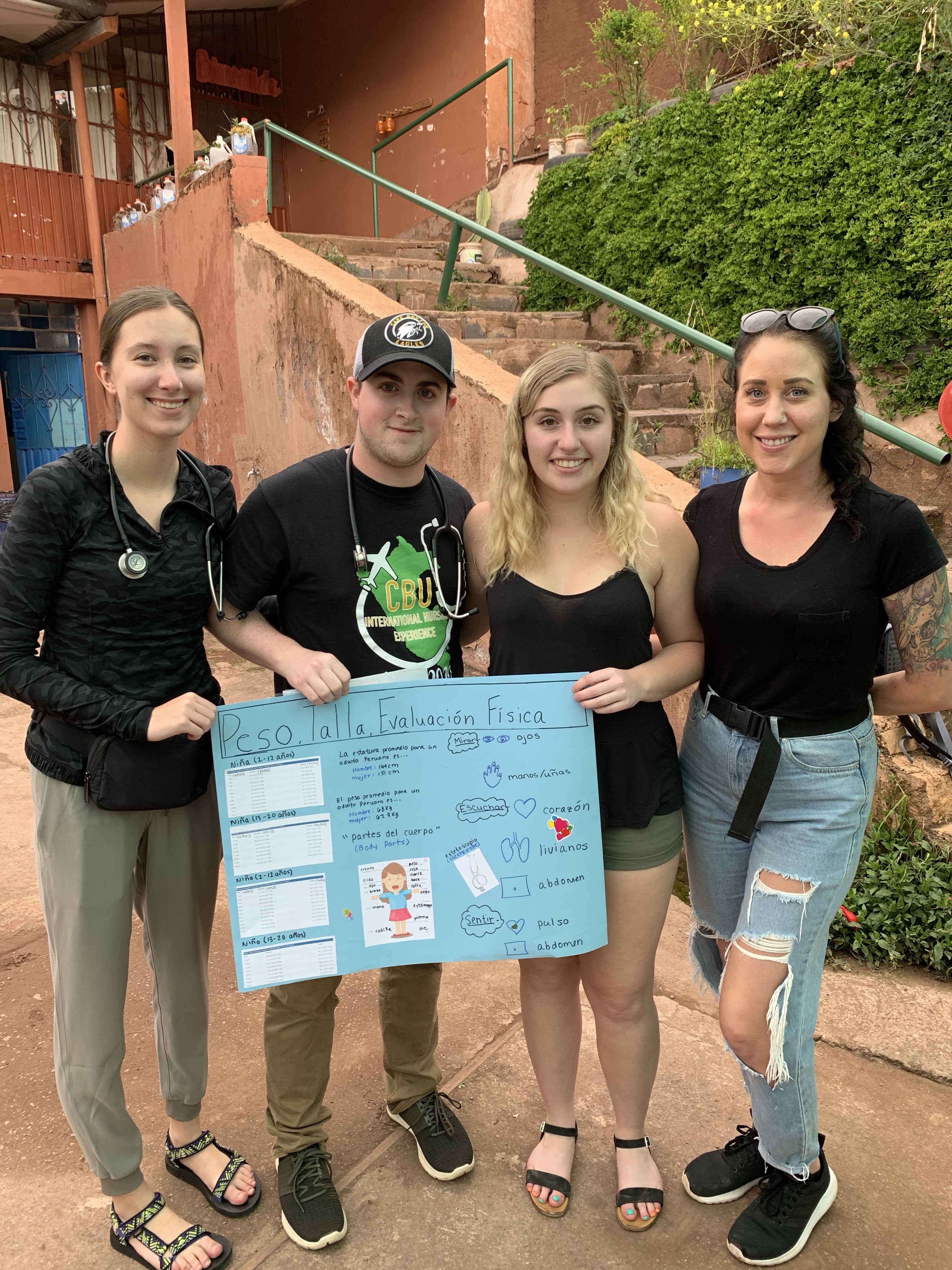
Hannah MacKeigan, James MacNeil, Jill Brown, and Jean Lavers holding their poster at their station.
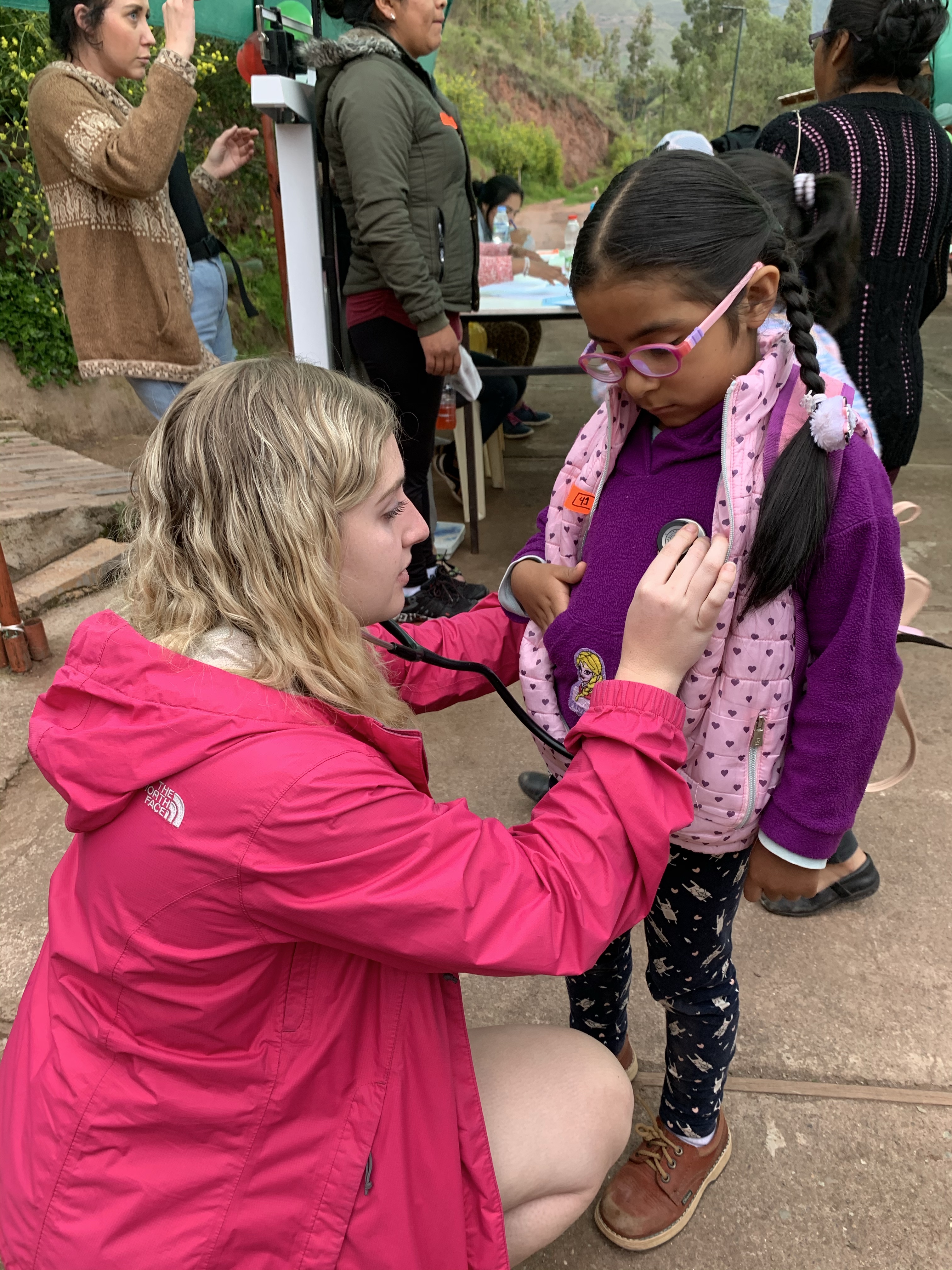
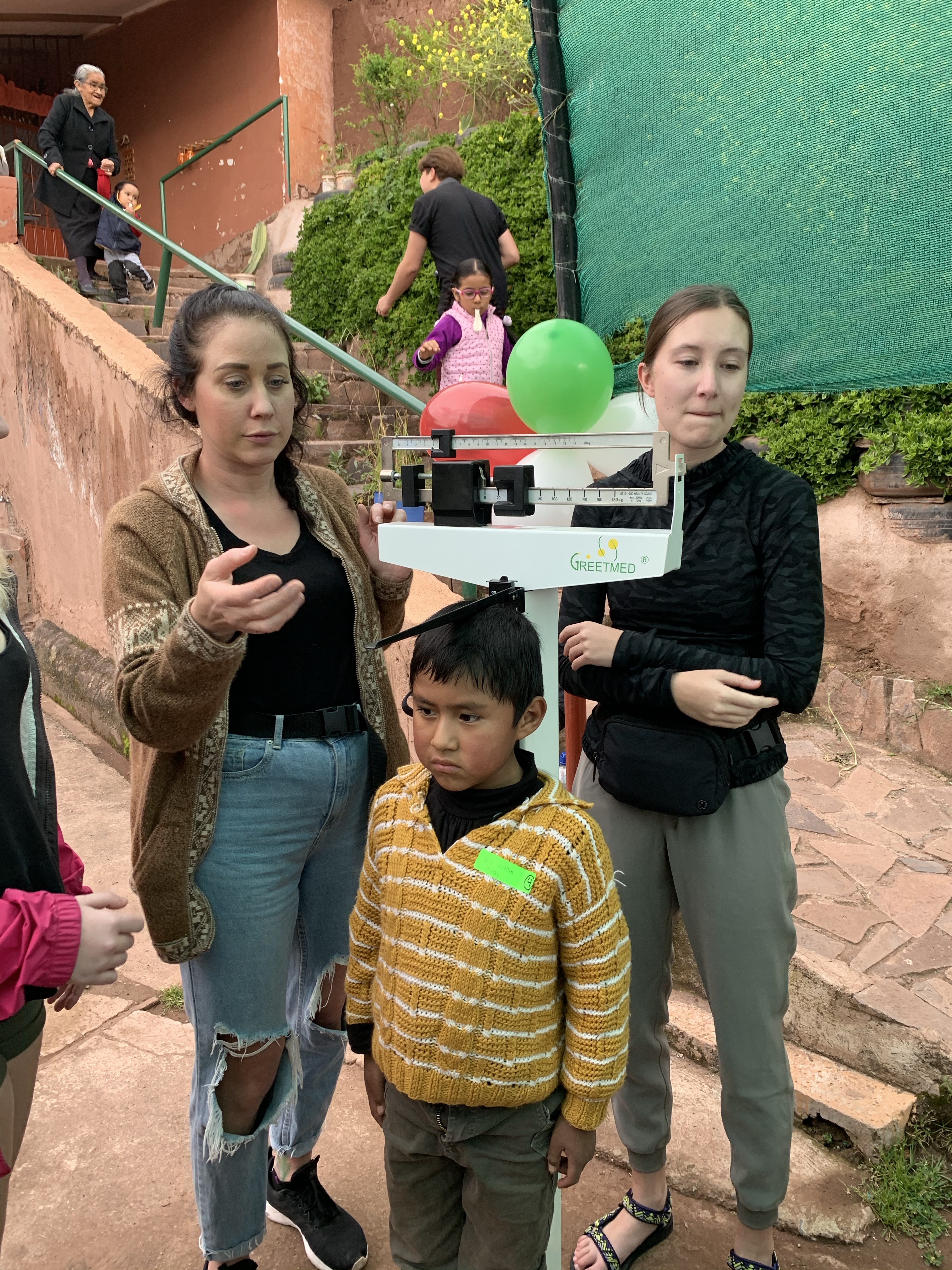
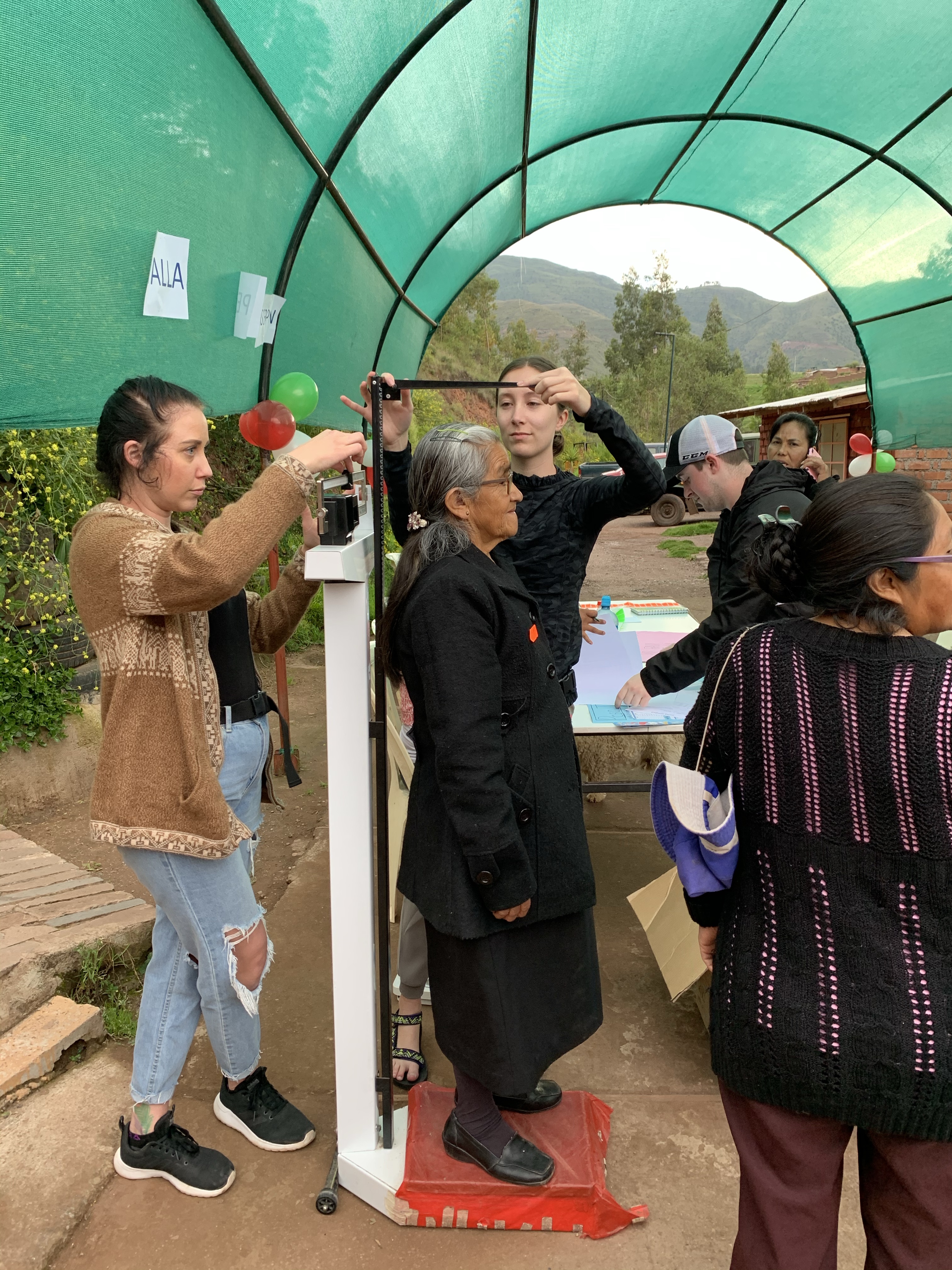
This station involved checking the height and weights of all clients. They also complete a brief physical assessment where they listened to heart lung and abdominal sounds. They also measured abdominal circumferences.
Jill Listening to heart and lung sounds
After that they sent the registered individuals to the next station.
Jean and Hannah measuring a child’s weight
We all had a great time at CooperarPeru!
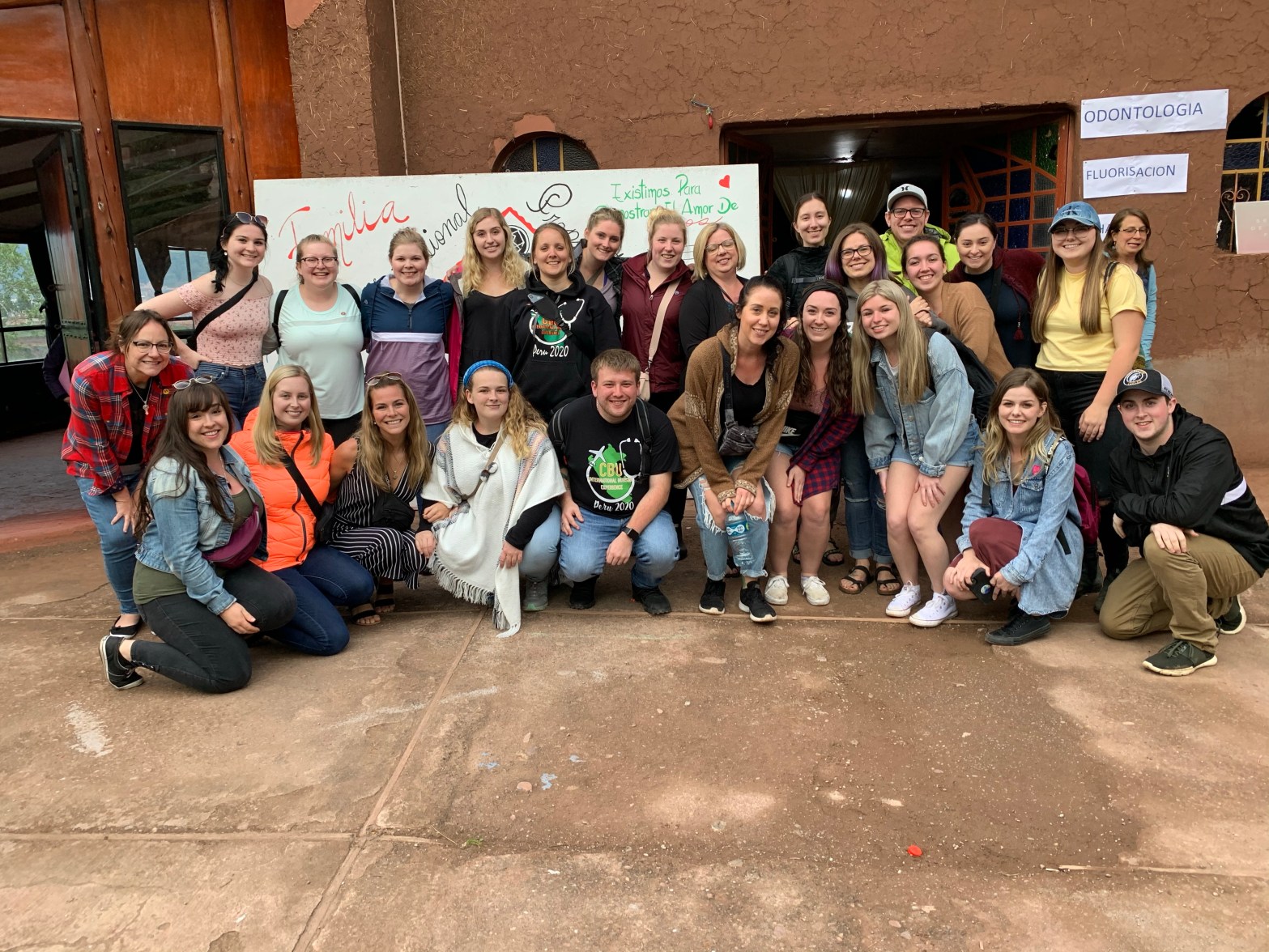
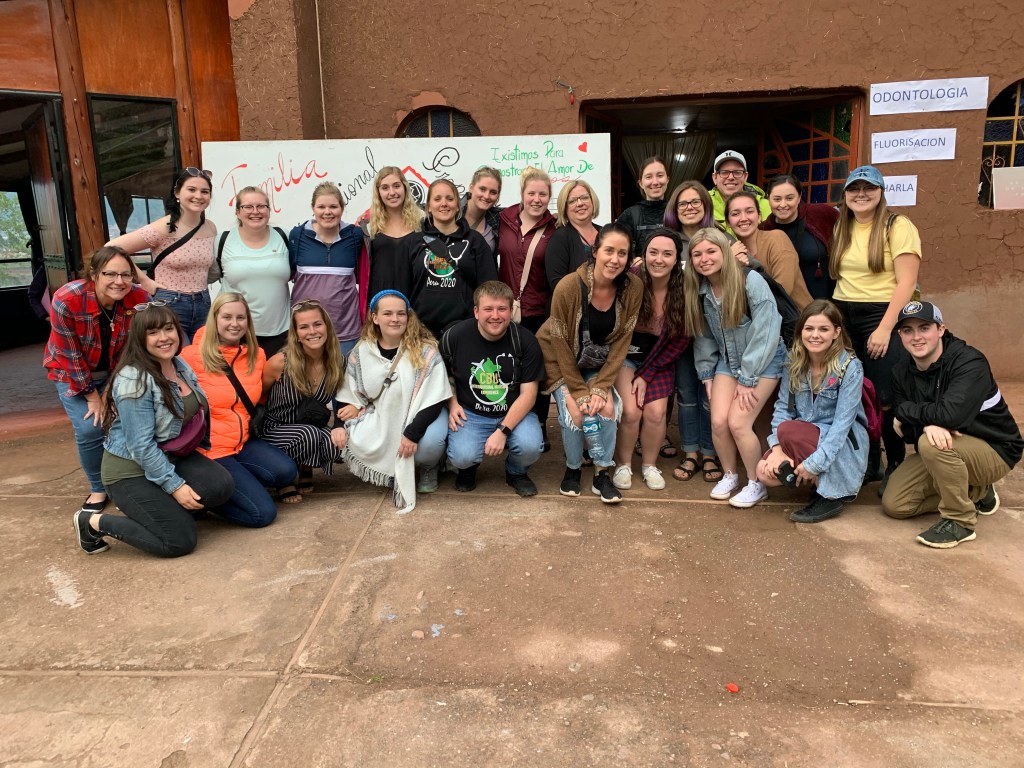
Back row(L-R): Melanie Cochrane, Kaitlynn Hayes, Hannah Gartland, Jill Brown, Sonya Wambolt, Allison Burke, Morgan Edwards, Tracy Lillington, Hannah MacKeigan, Terri Vallis, David Gouthro, Brianna LaRusic, Robyn Shibinette, Kristen Bach Font Row (L-R): Angela MacDonald, Annabelle Welsh, Rebecca MacDougall, Kelsey Muller, Kelsey Brown, Austin Chapman, Jean Lavers, Chelsie Cann, Megan McNeil, Mackenzie Somers, James MacNeil
We learned a lot about the community and what the program is all about.
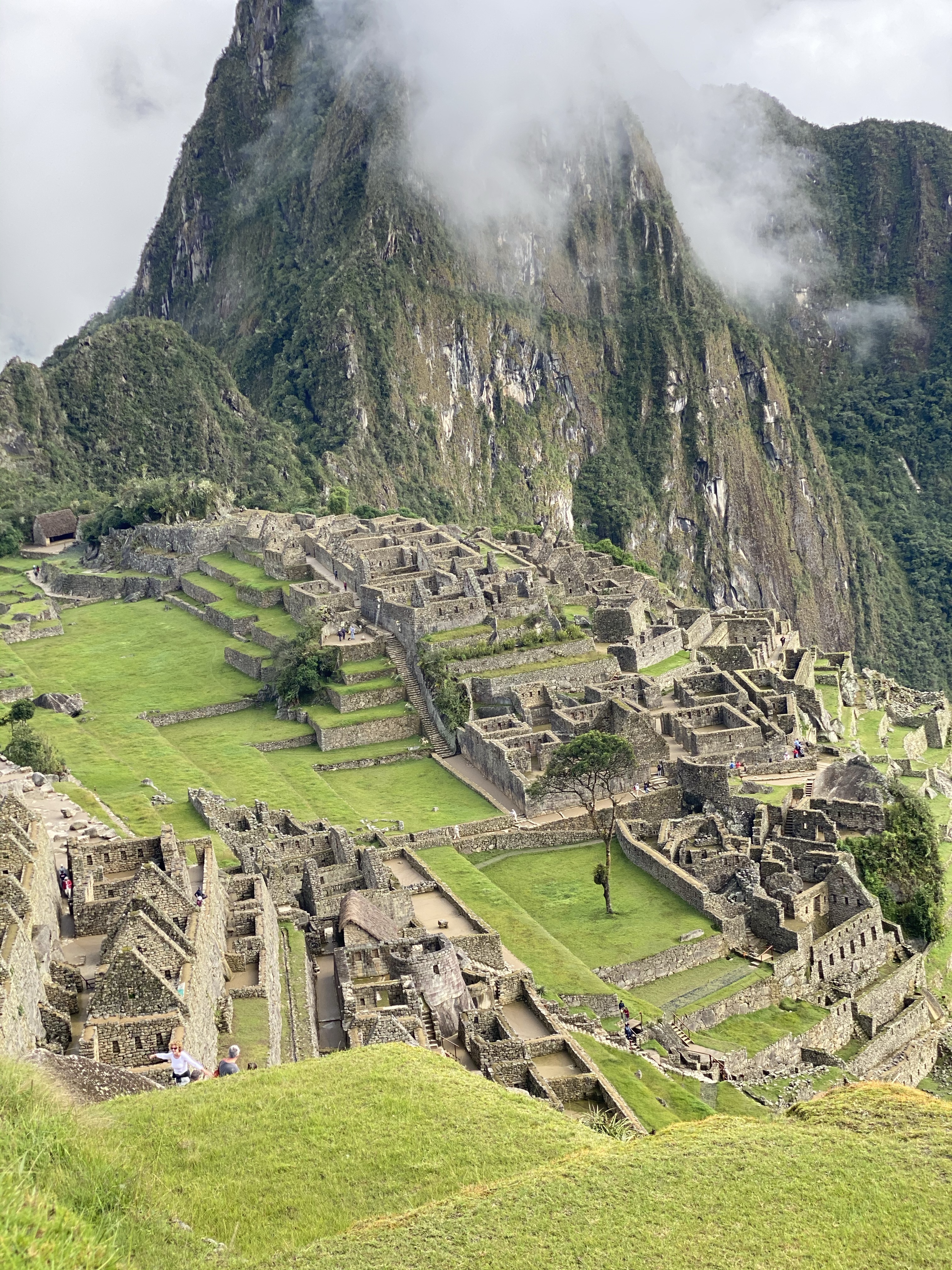
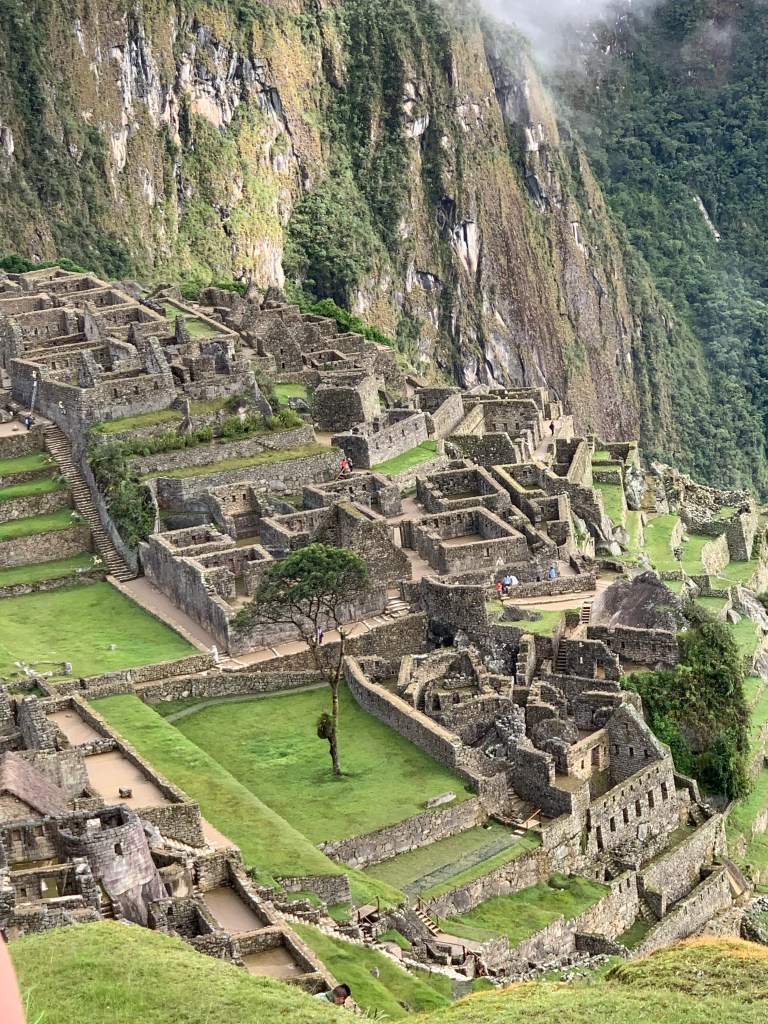
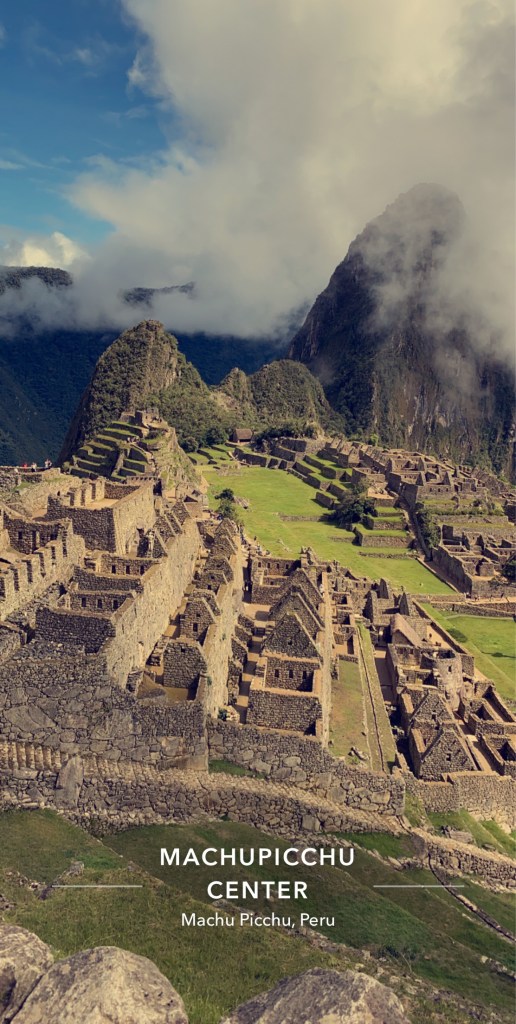
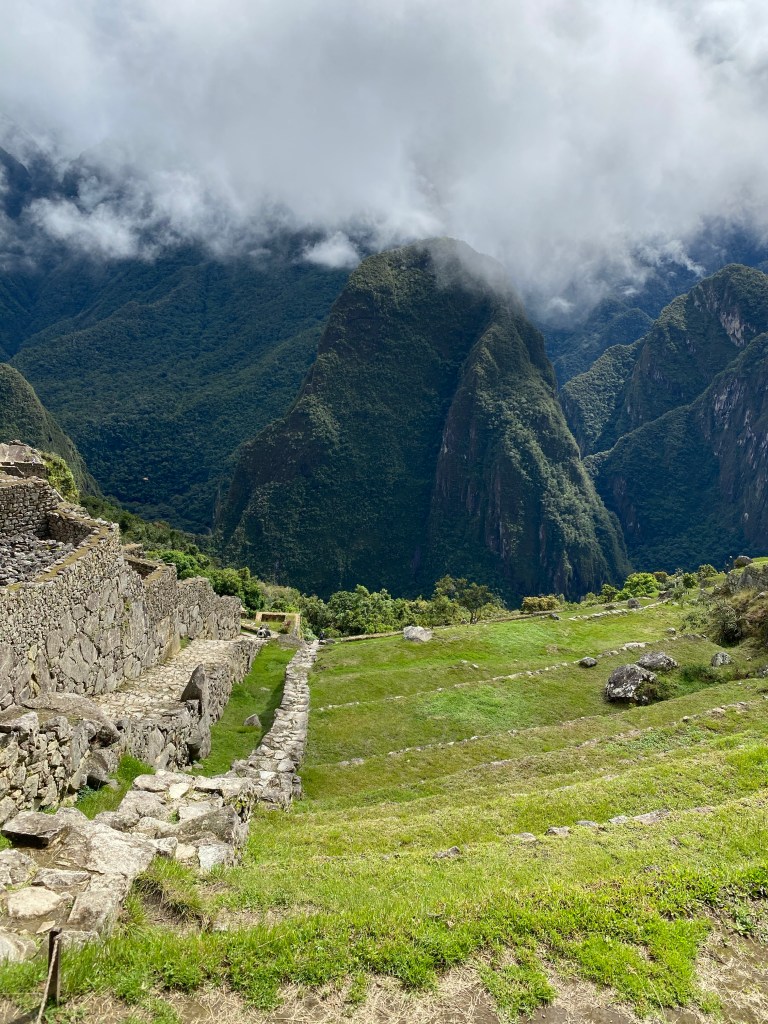
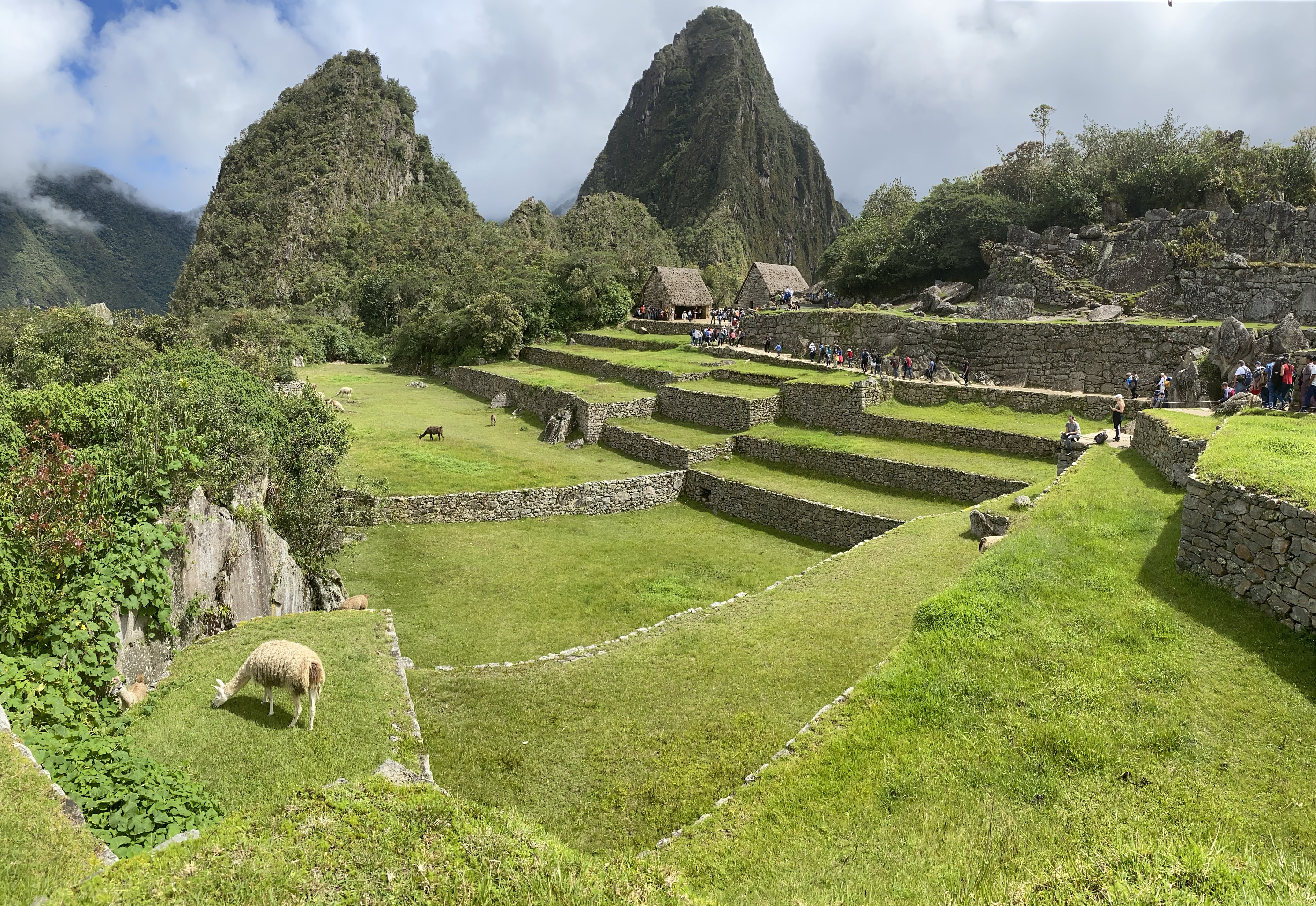
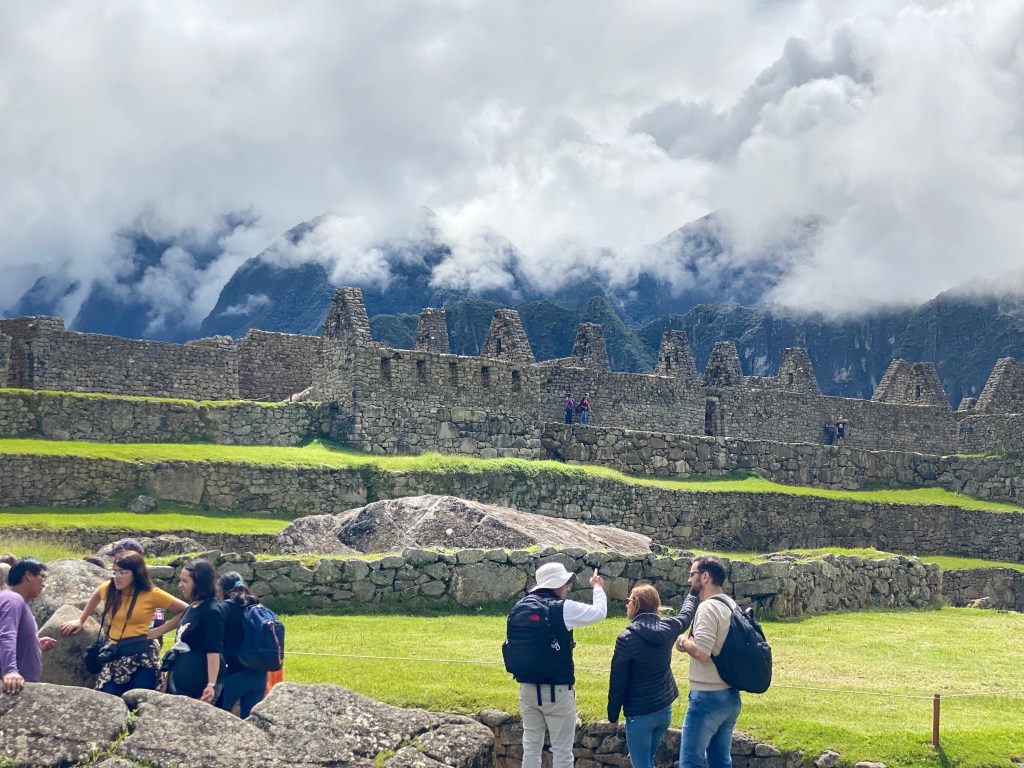
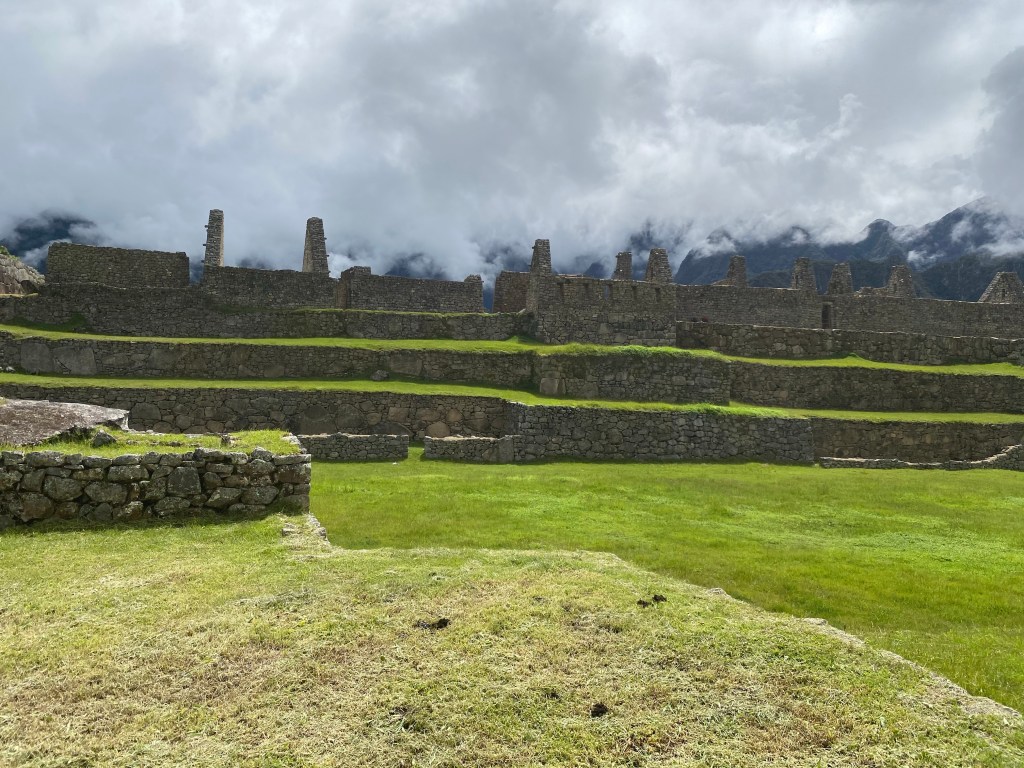
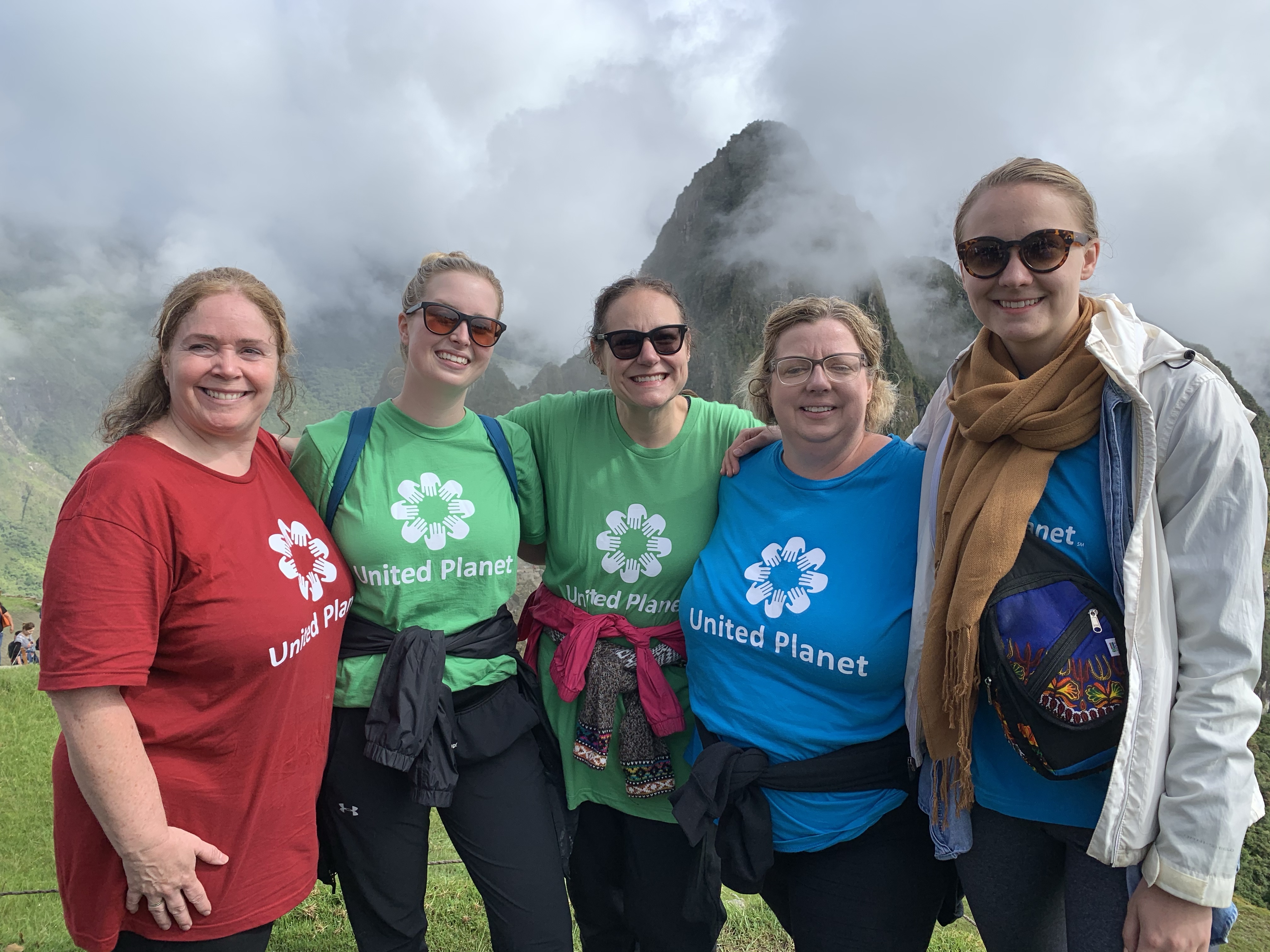
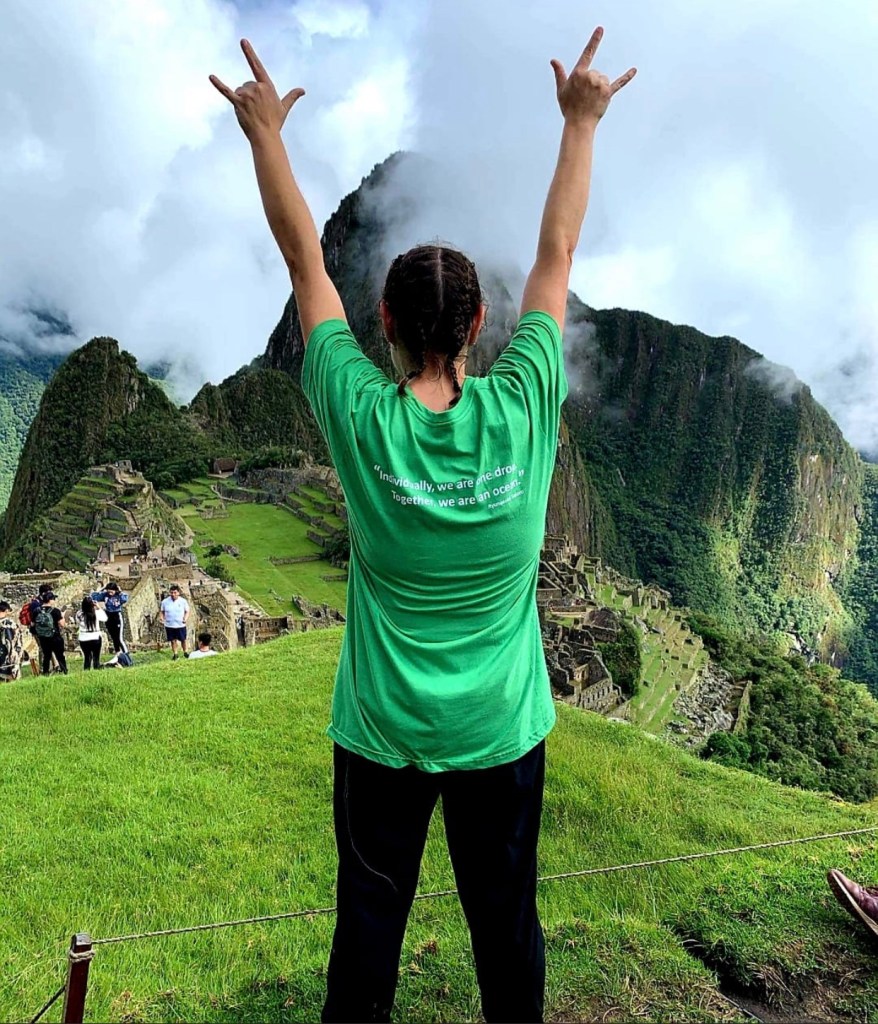
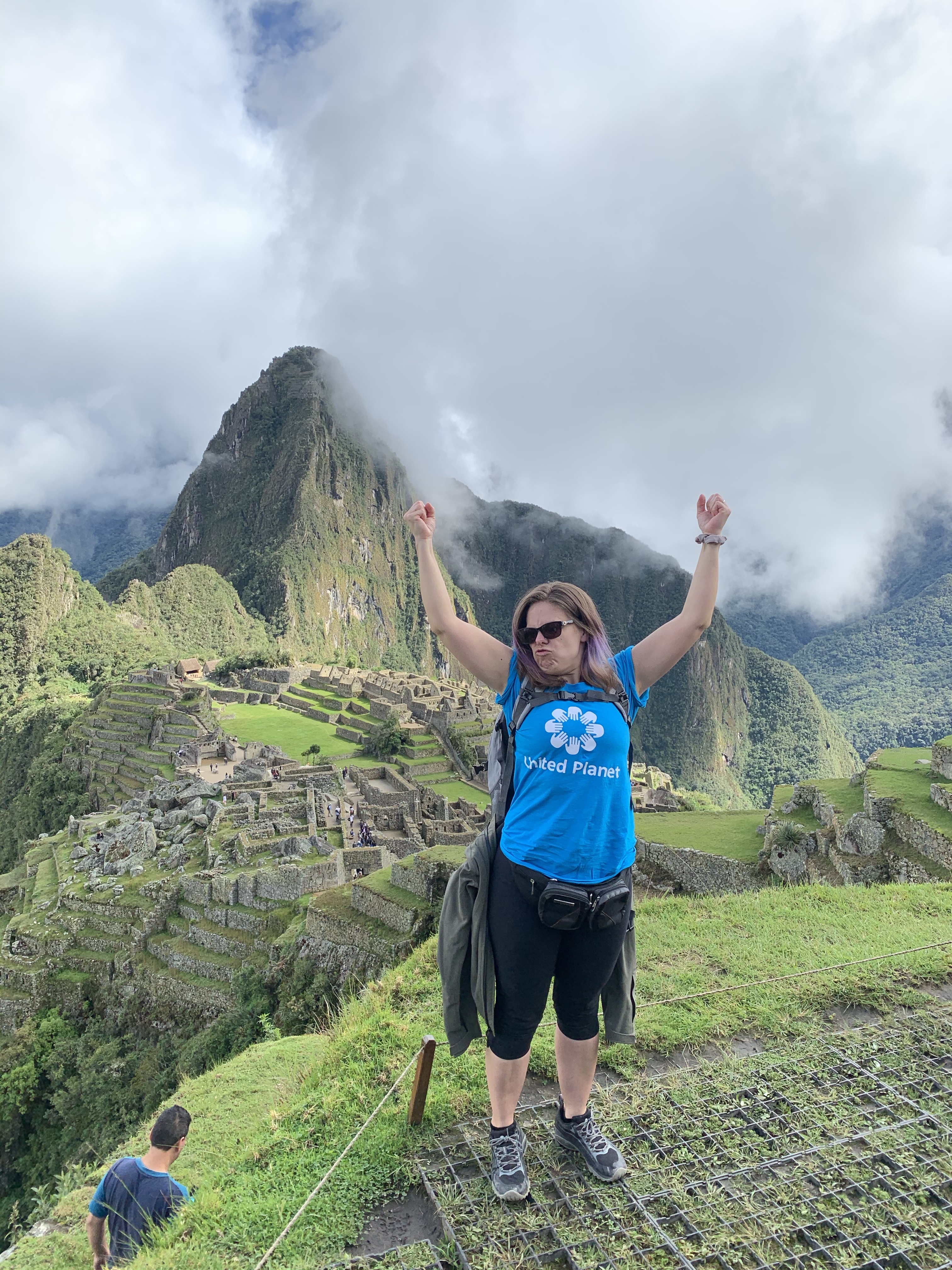
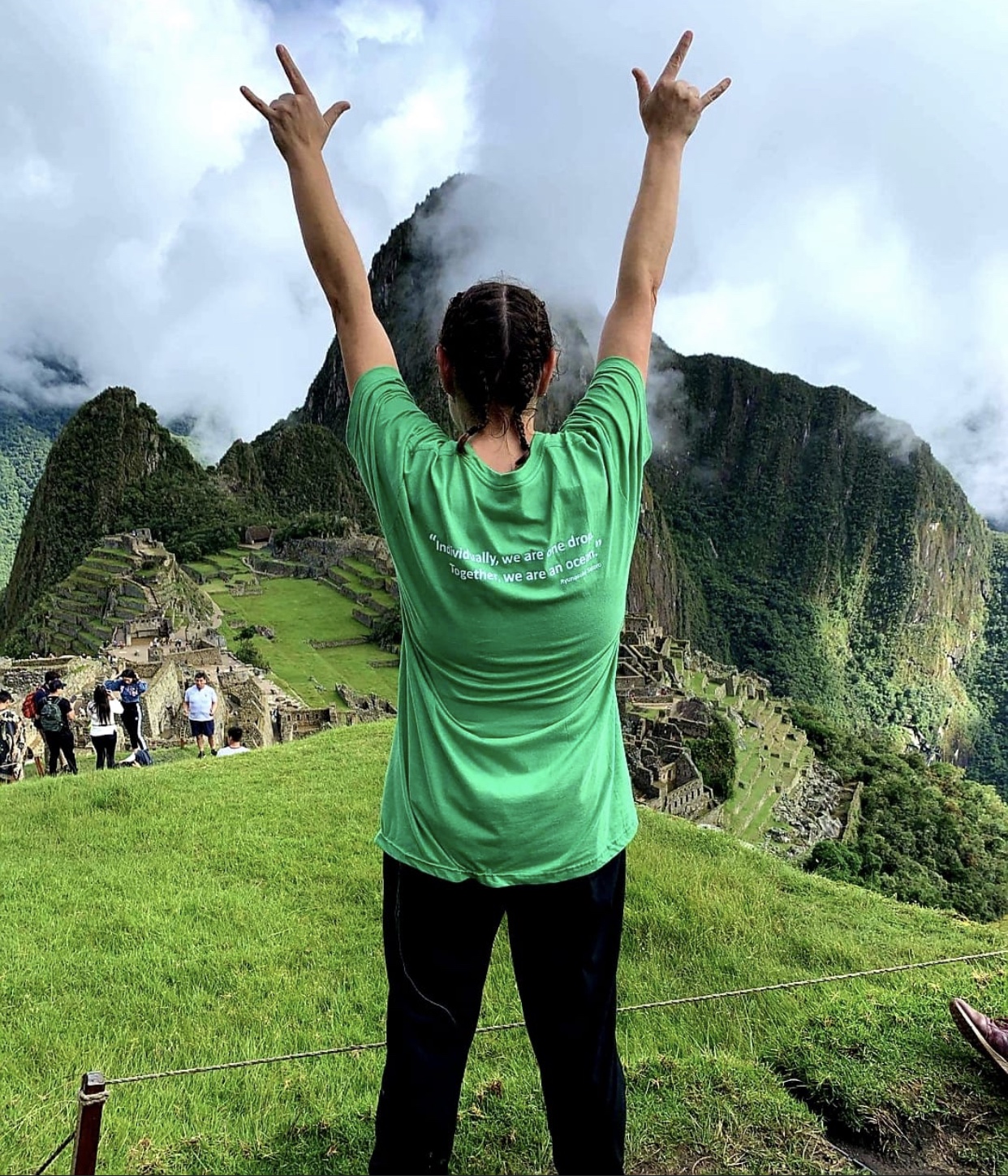
After spending a week in two Peruvian clinics, longterm care facilities, day cares and an orphanage it’s time to explore Machu Picchu (one of the Seven Wonders of the World)!
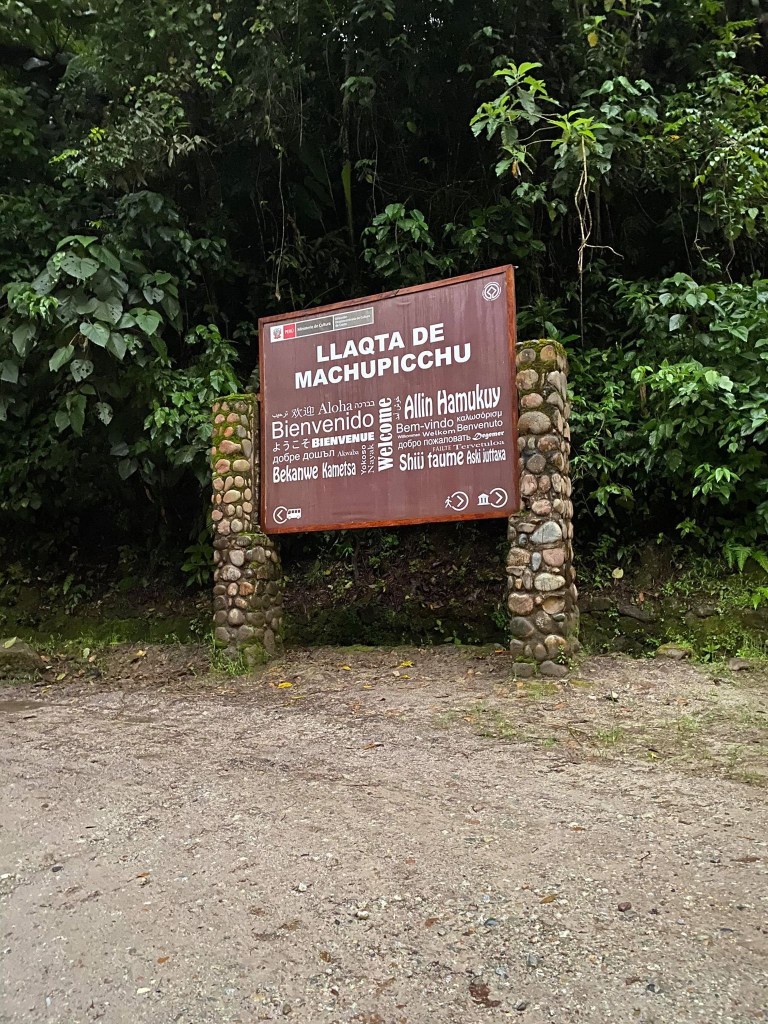
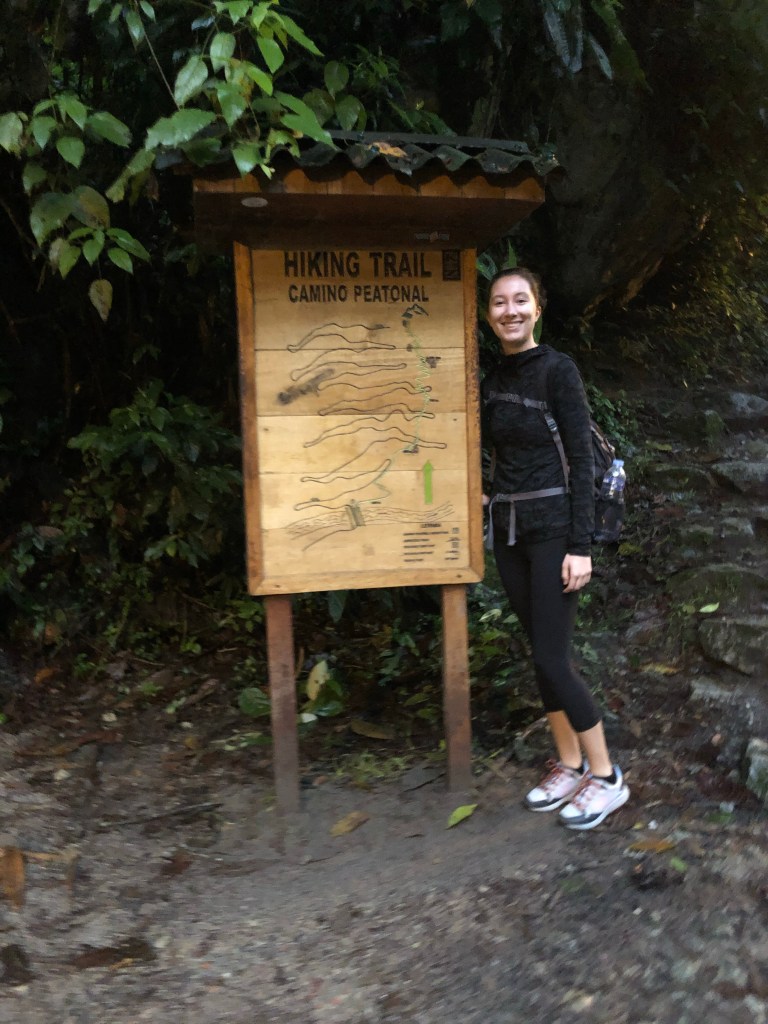
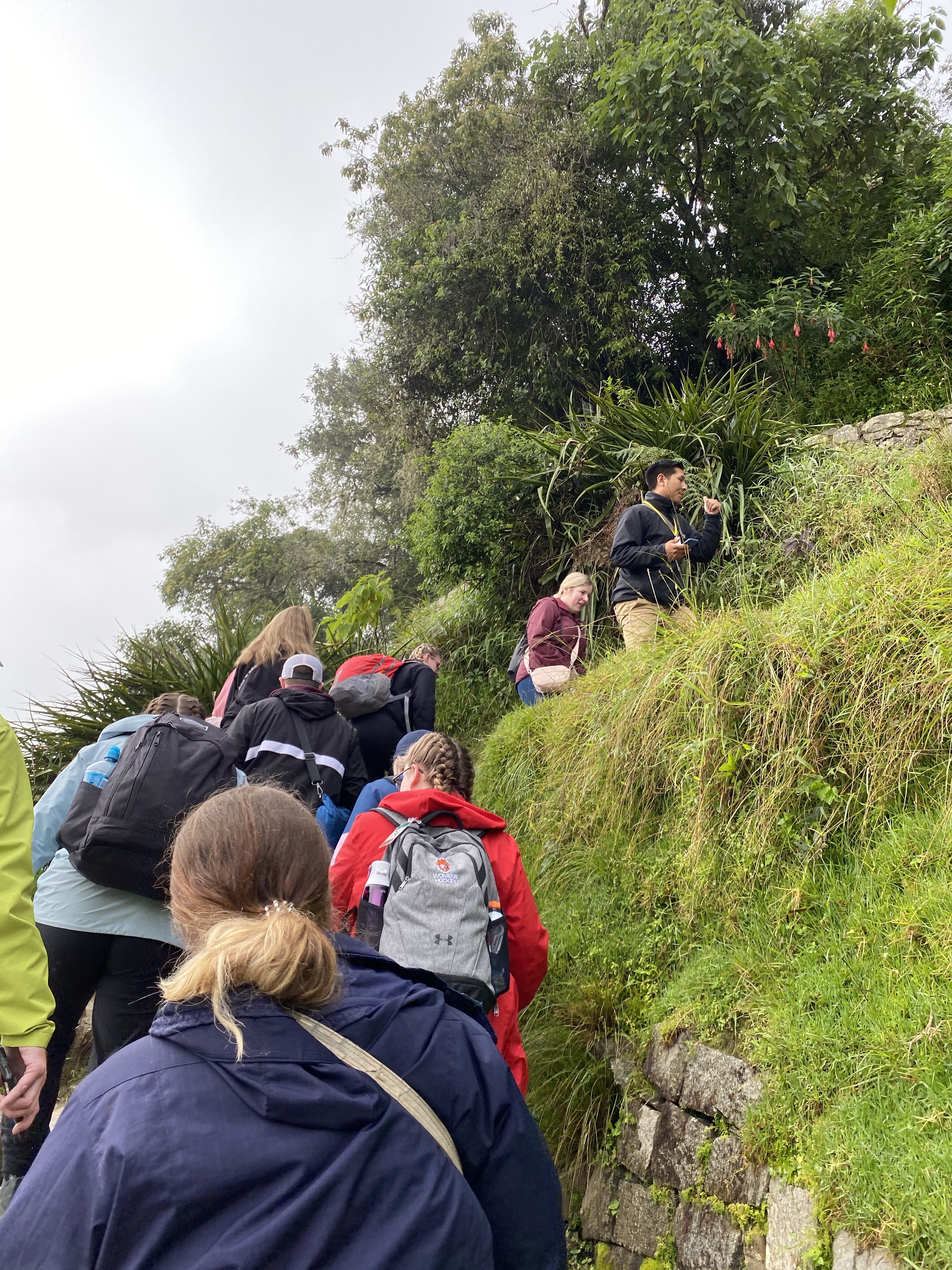
A large portion of our group chose to wake up early and do the full hike from our hostel to the start of the trial and then to the top of the mountain; while others took the bus to the base of the mountain and hiked from there.
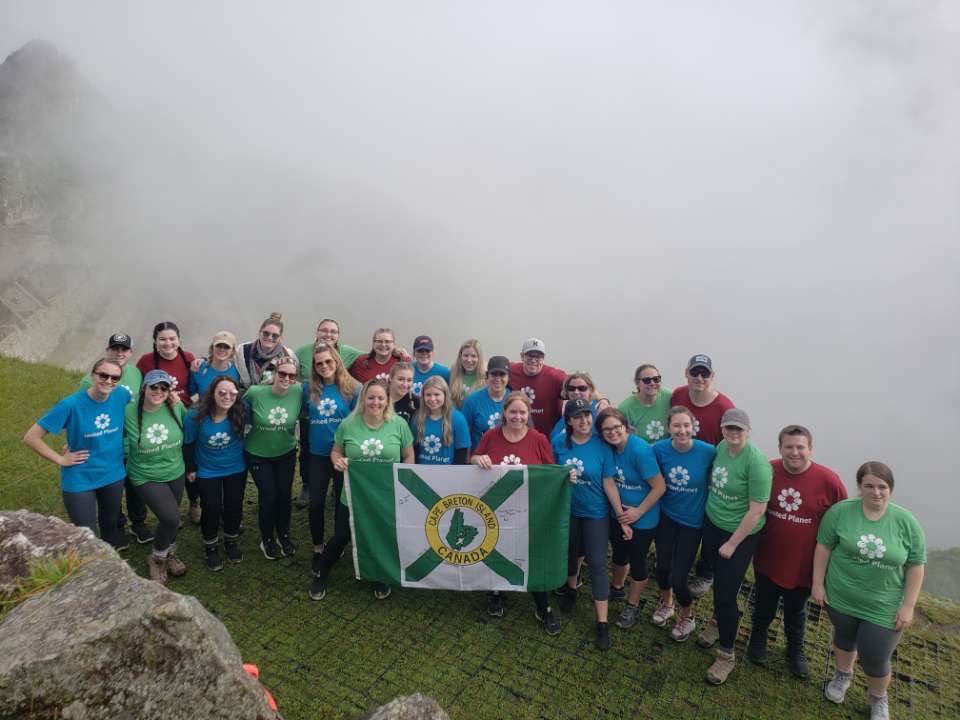
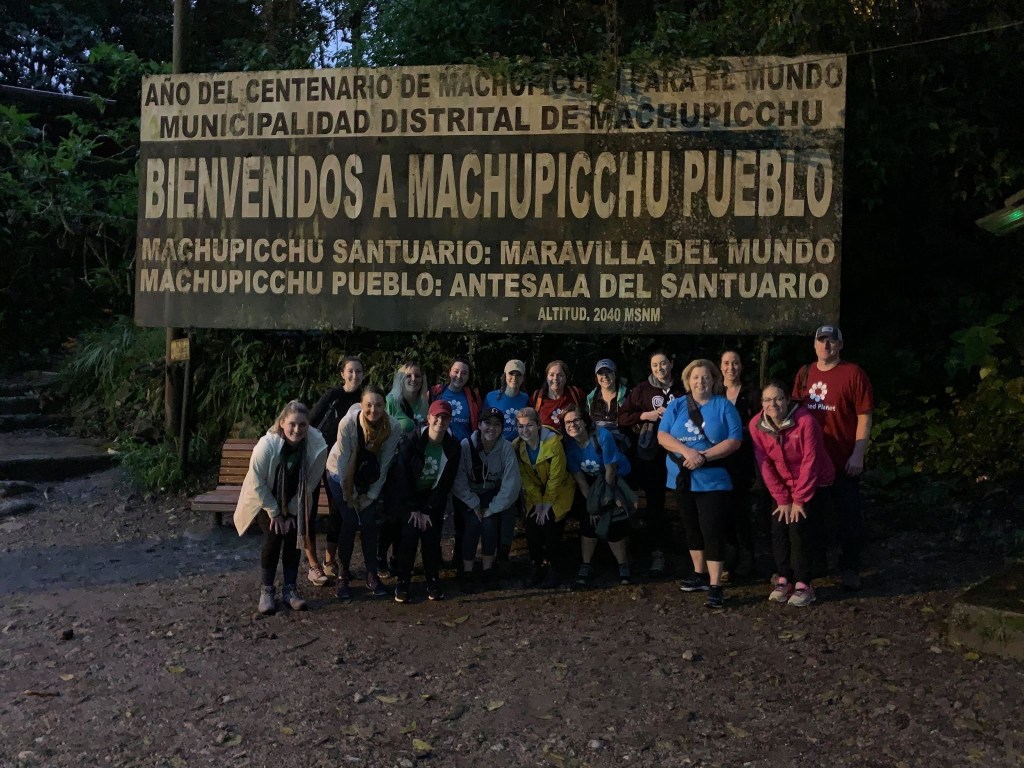
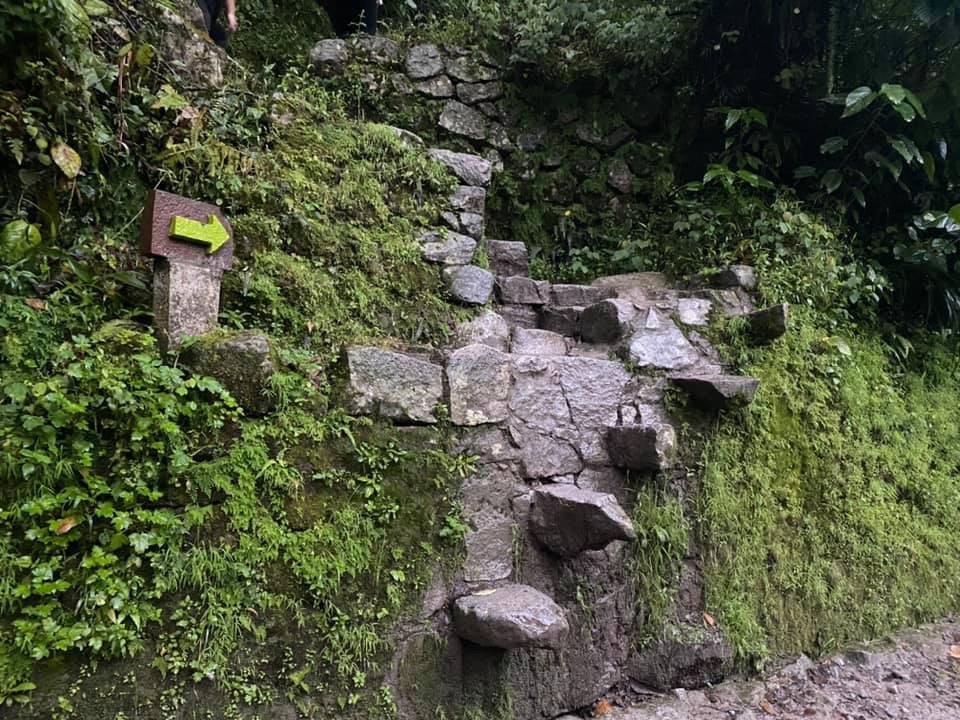
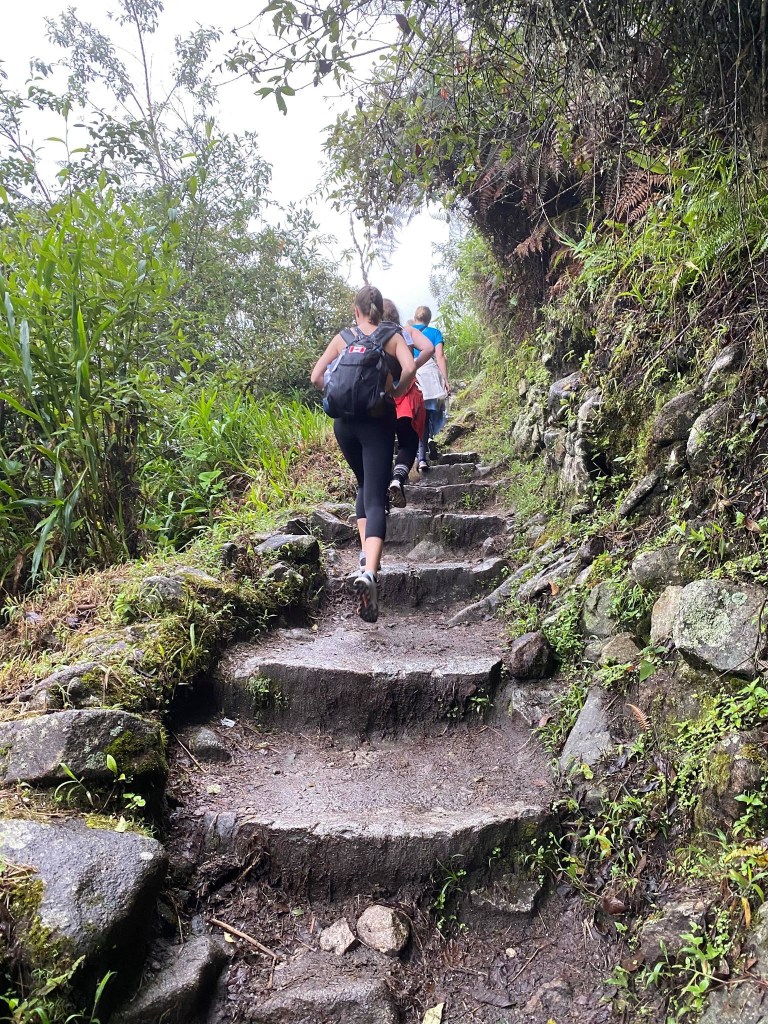
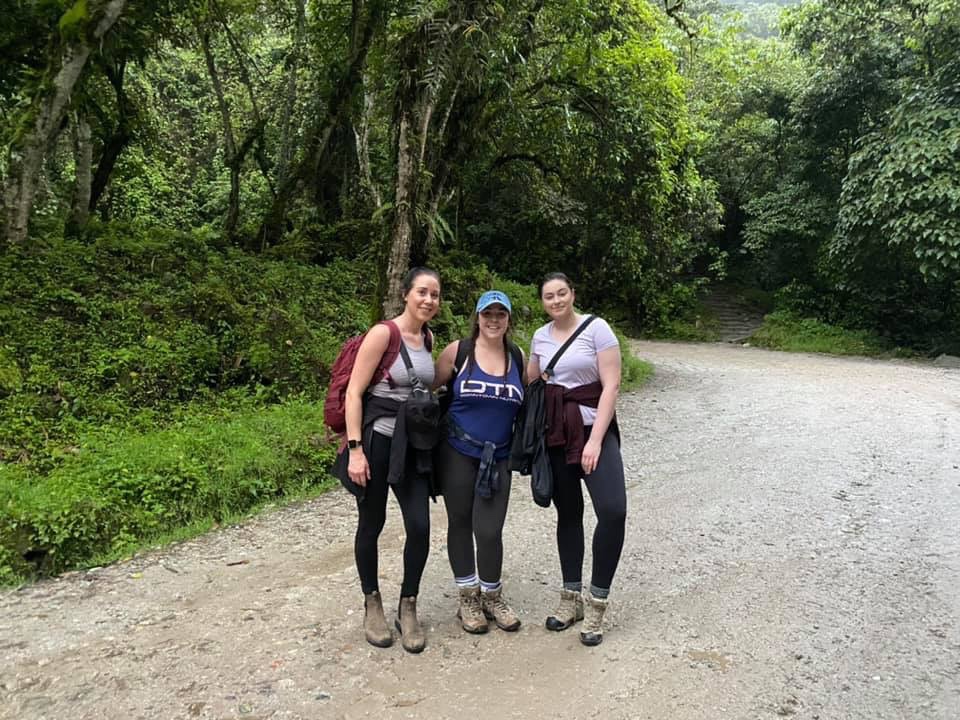
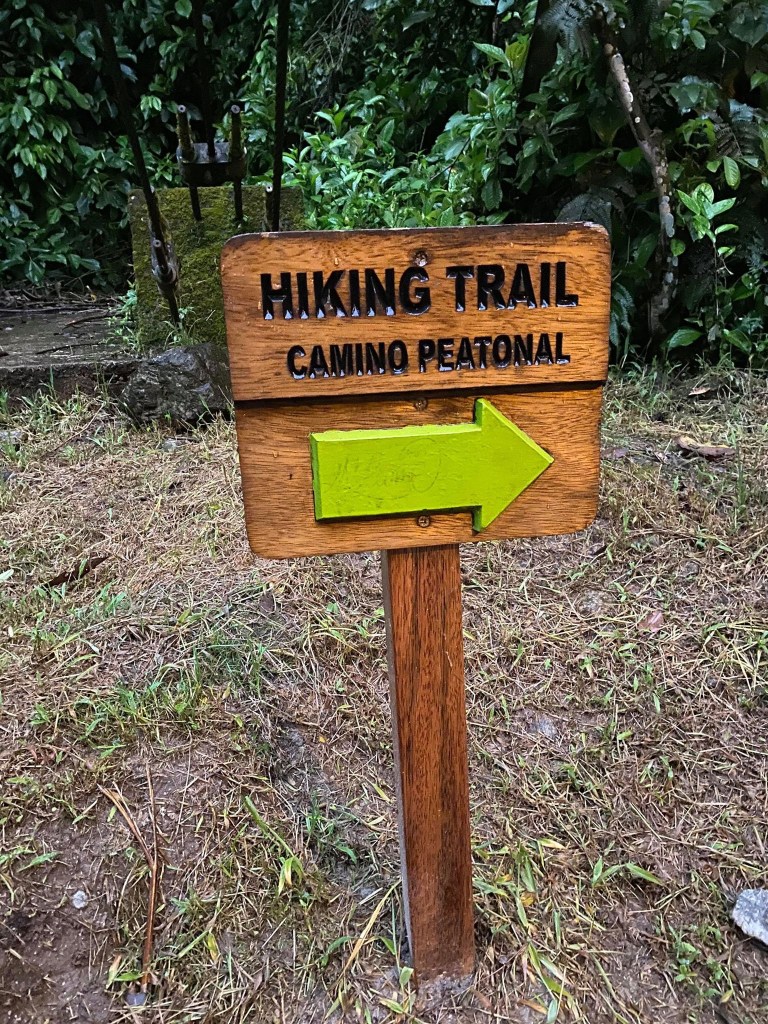
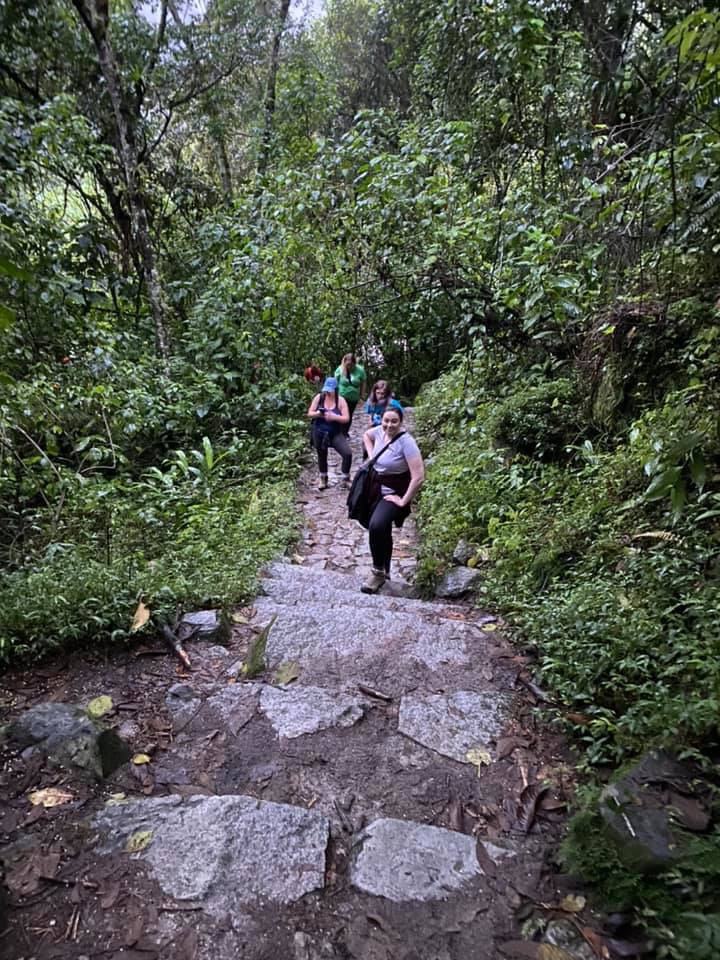
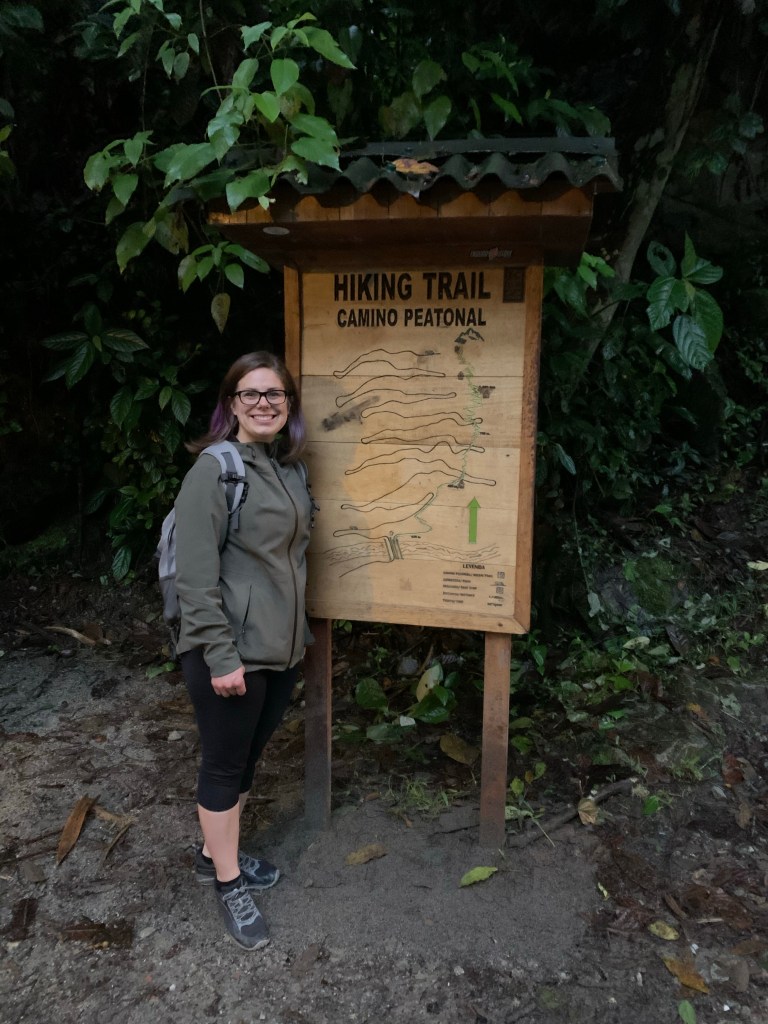
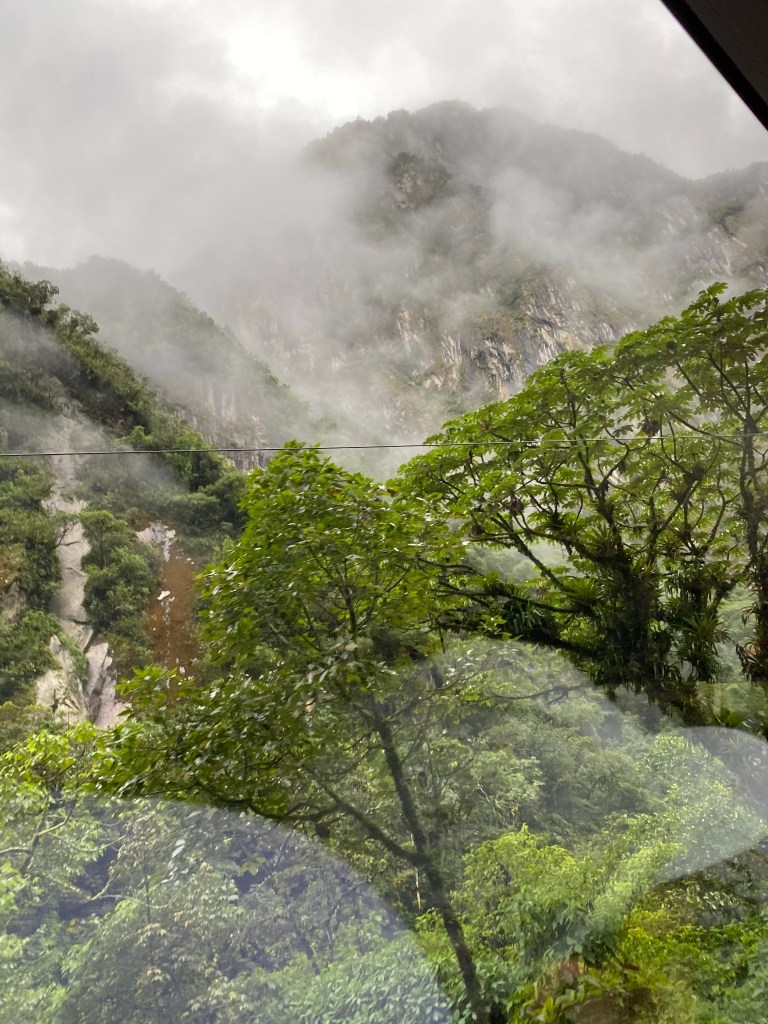
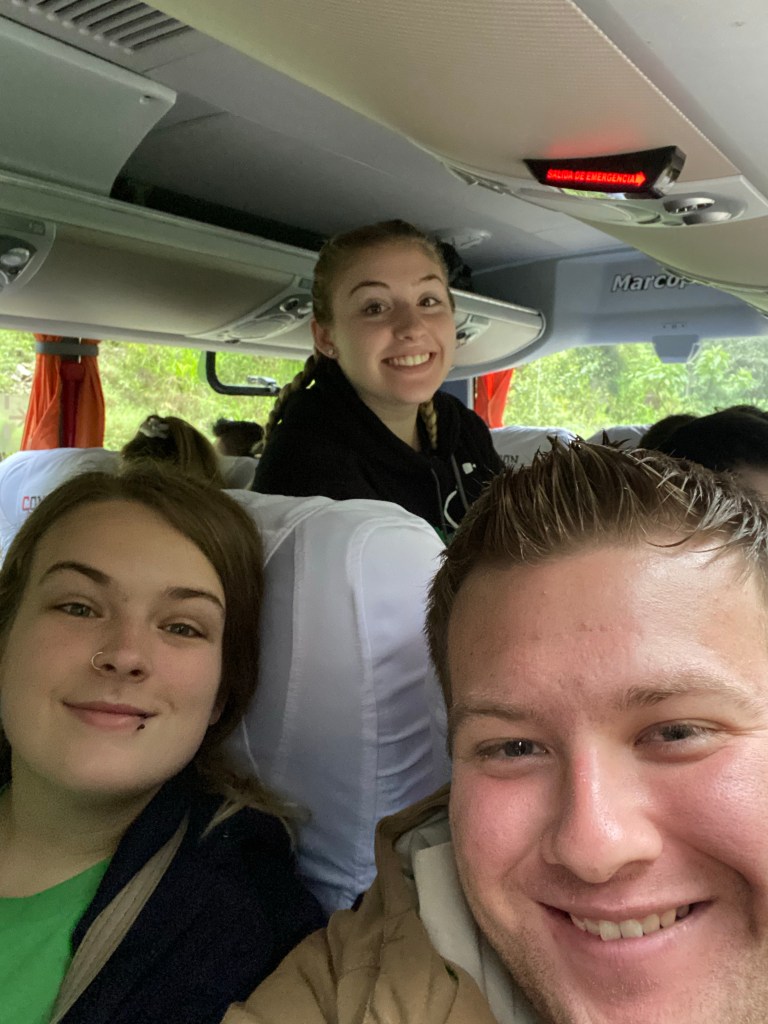
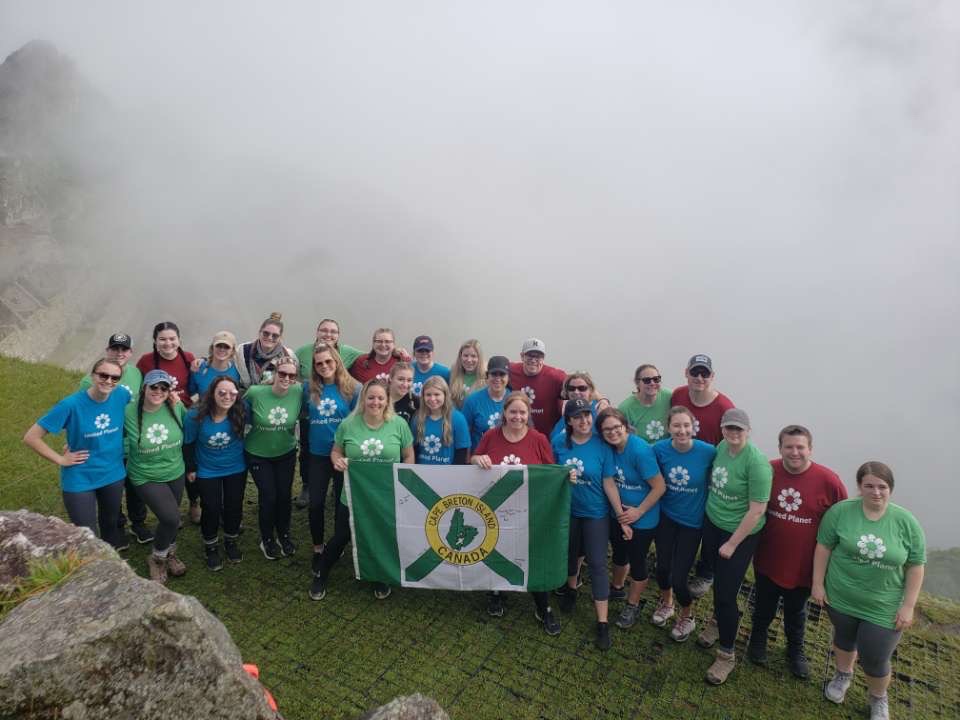
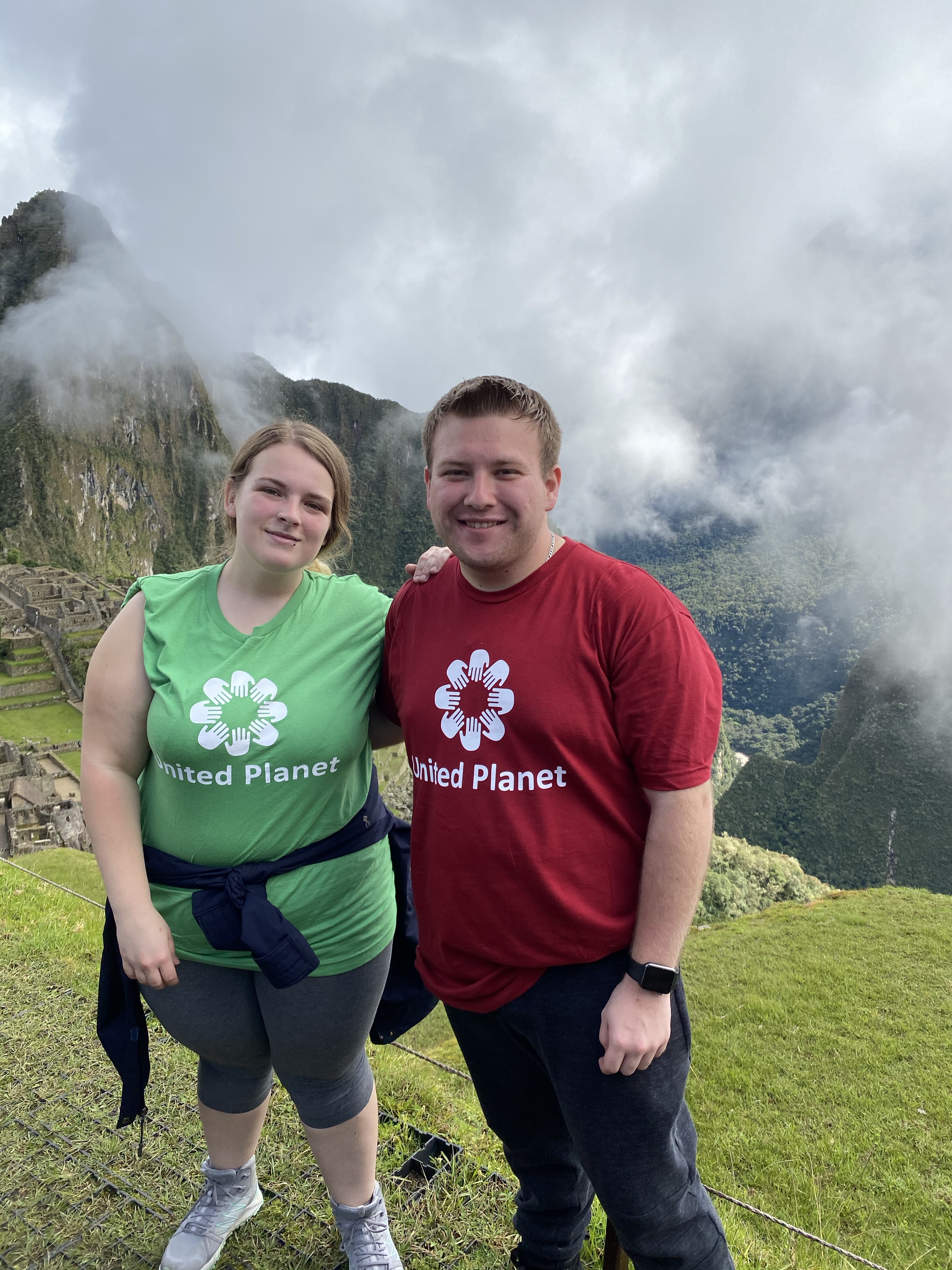
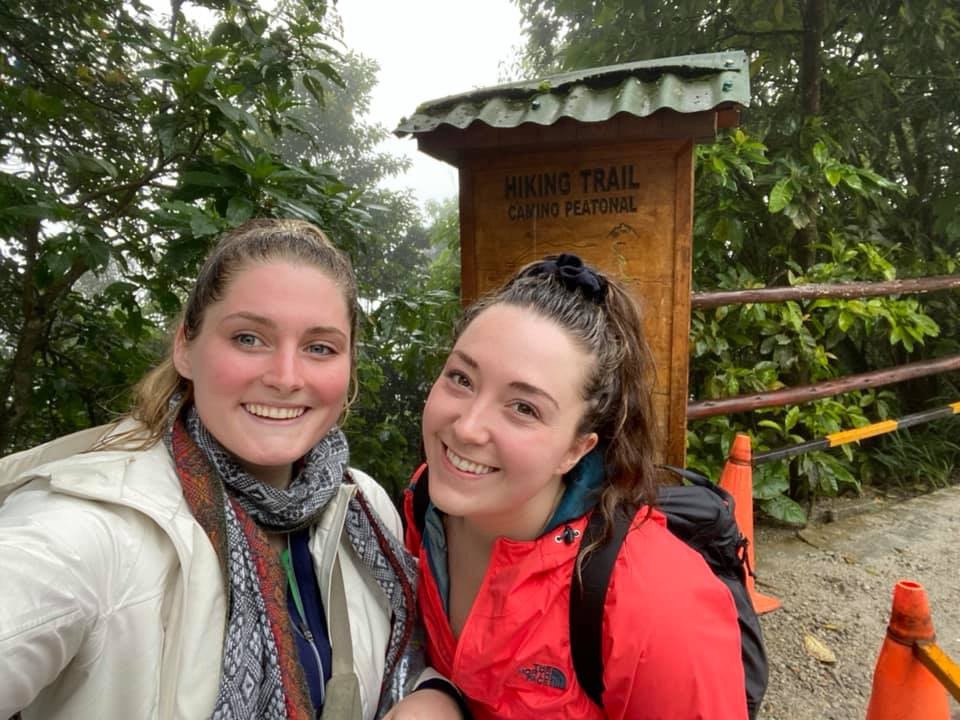
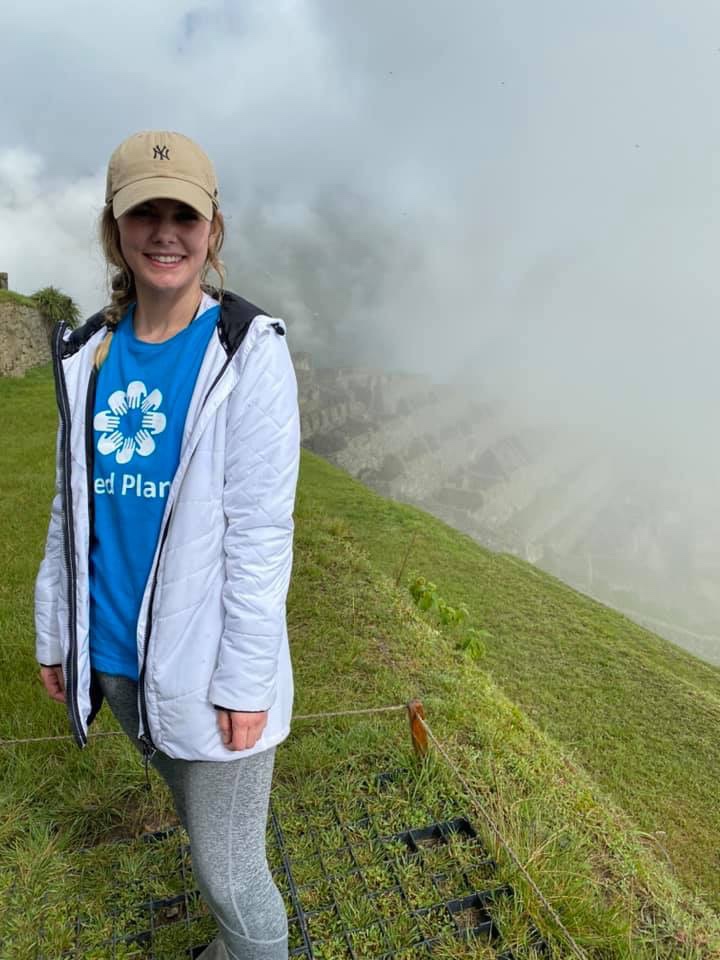
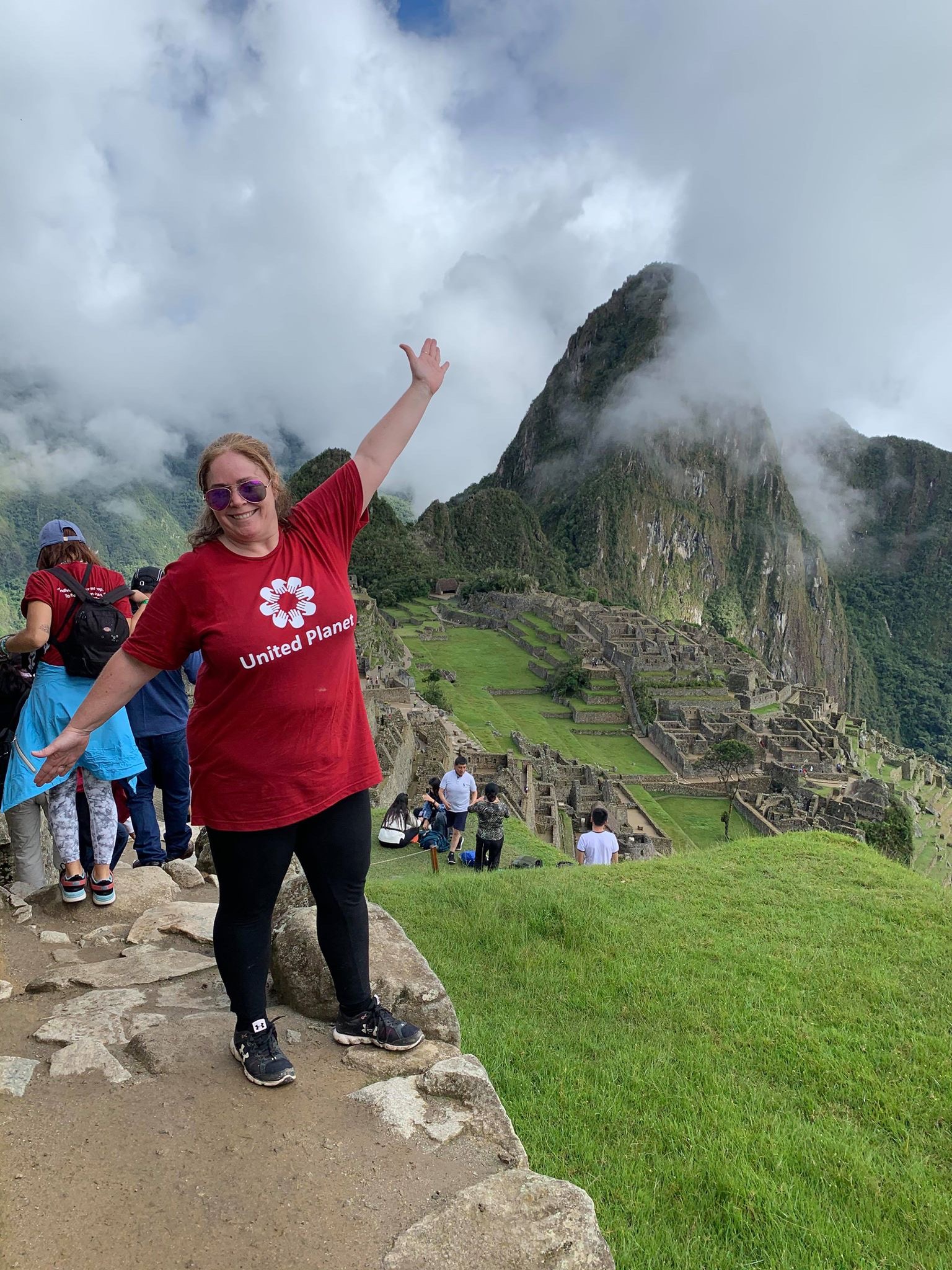
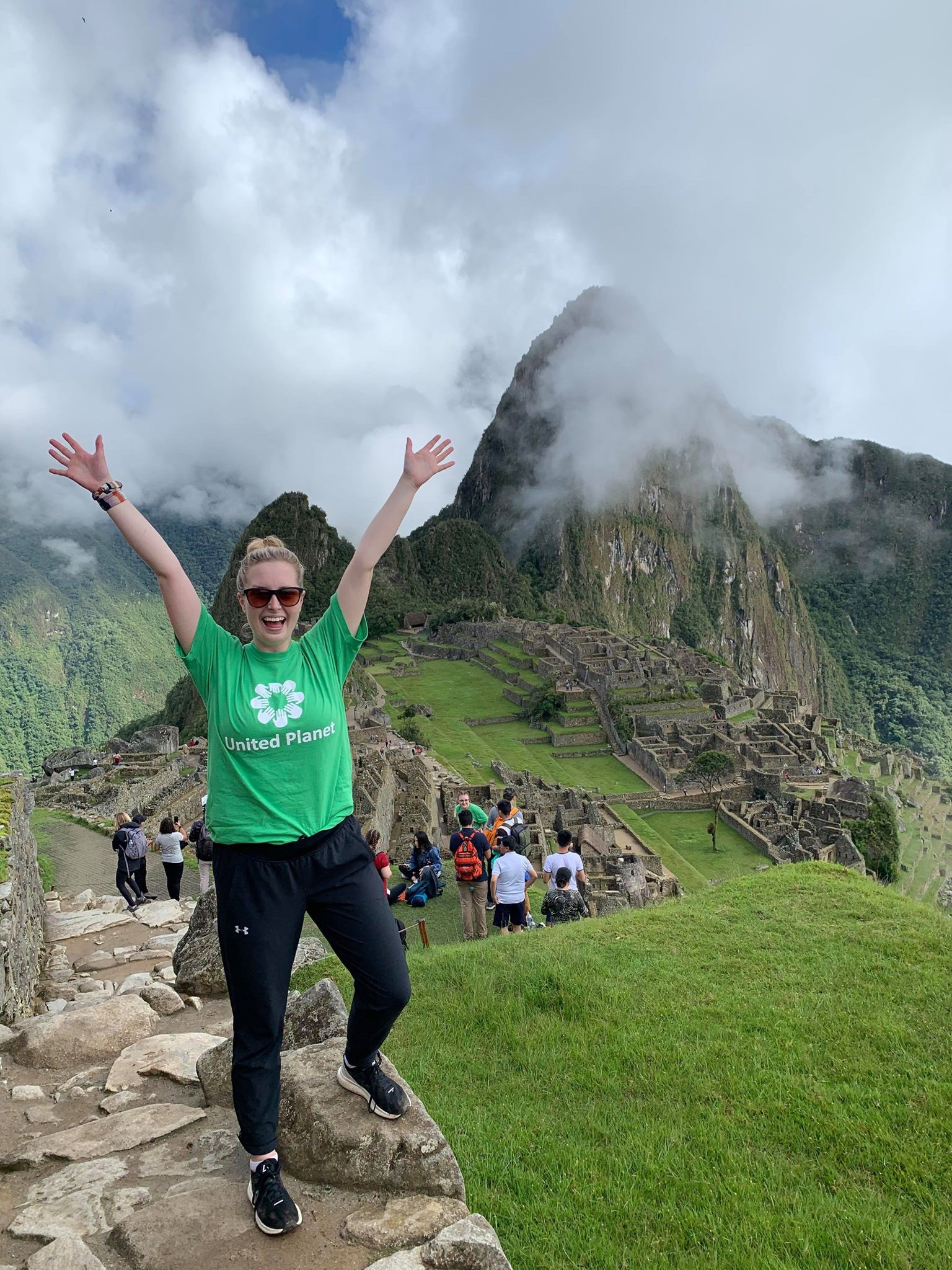
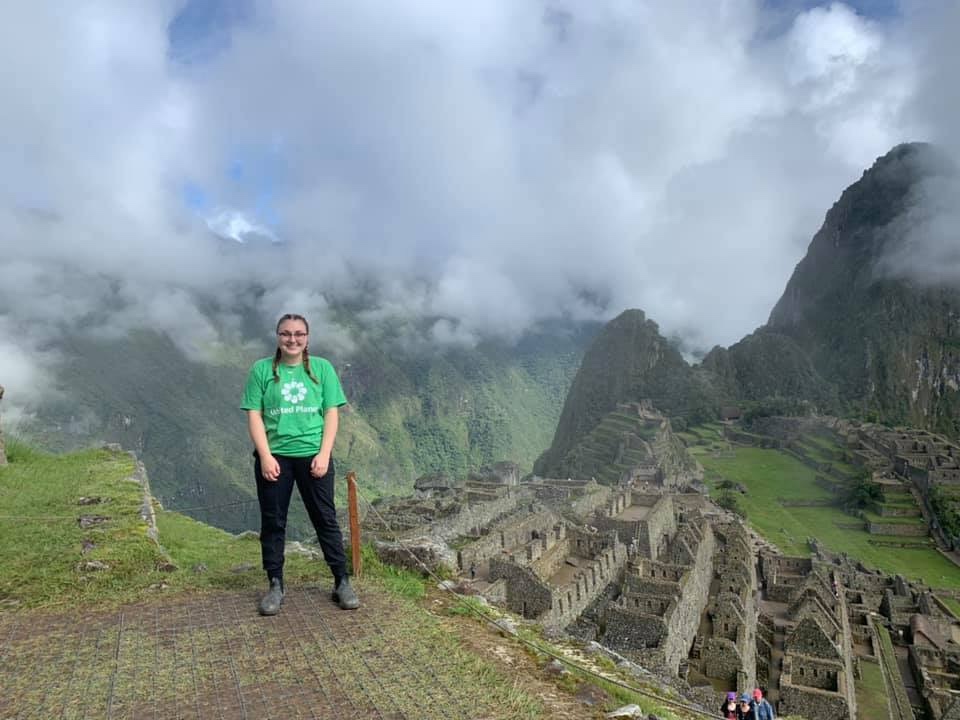
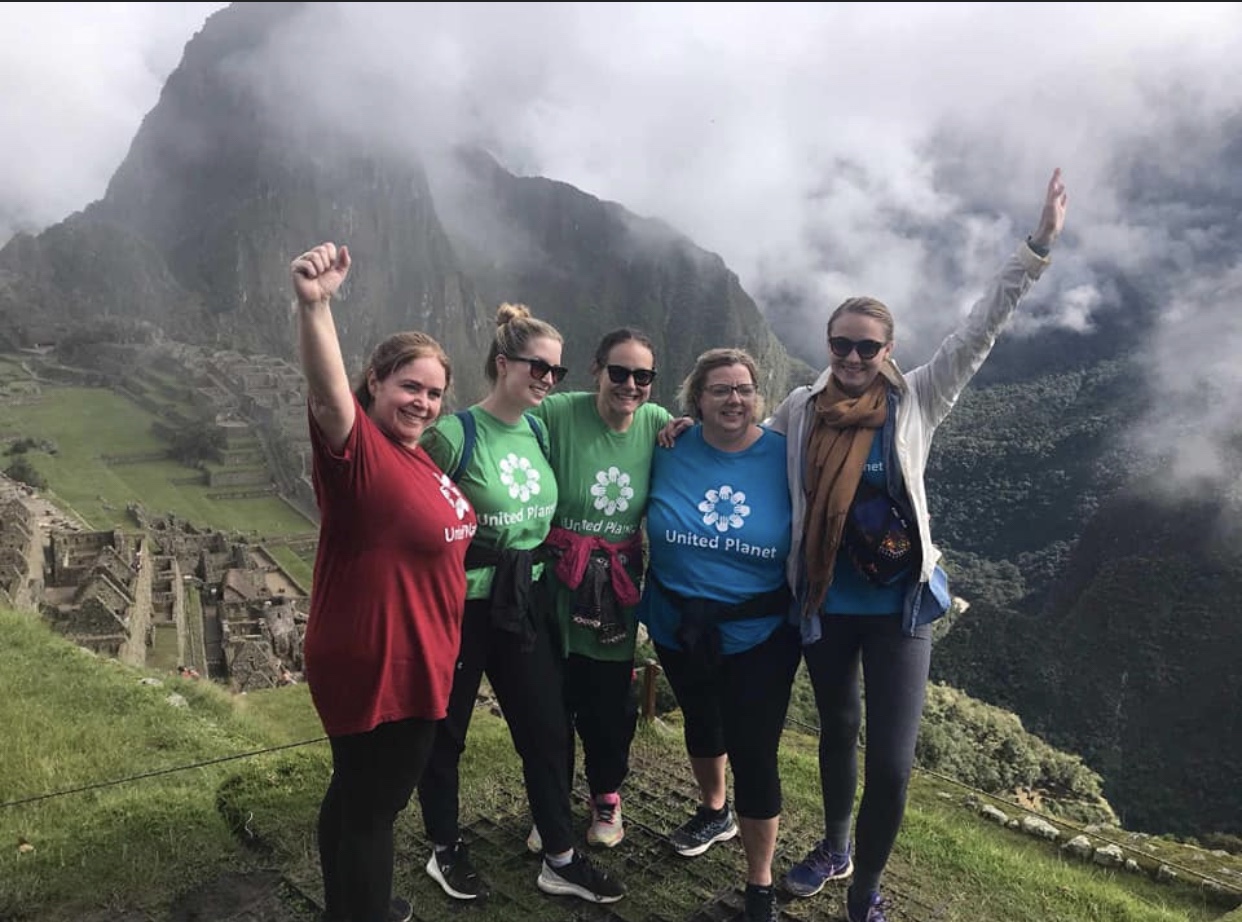
The group that hiked from the hostel to the top! Back Row( L-R): Hannah MacKeigan, Sonya Wambolt, Chelsie Cann, Mackenzie Somers, Karen Kennedy, Annabelle Welsh, Robyn Shibinette, Jean Lavers, Greg MacDonald Front Row( L-R): Allison Burke, Callie Roberts (United Planet Rep/trip organizer), Rebecca MacDougall, Brianna LaRusic, Megan McNeil, Terri Vallis, Tracy Lillington, Angela MacDonald.Part of the walking trailJean, Annabelle and RobynTerri Vallis with the Machu Picchu hiking trail signHannah MacKeigan with the Machu Picchu Hiking Trail signWe finally reached the top of the trail! Now to hike Machu Picchu View from the bus to Machu PicchuAustin, Kelsey B and Jill enroute to Machu Picchu via bus
When we arrived to the base of Machu Picchu by bus the majority of our group that walked the trial were already there but there were still a few people missing. We cheered as they arrived to the top of the trail.
Cheering for Karen as she reaches the top of the trail!Cheering for Tracy as she reached the top of the trail!
One of our tour guides met us at the base of Machu Picchu, the other met us inside.
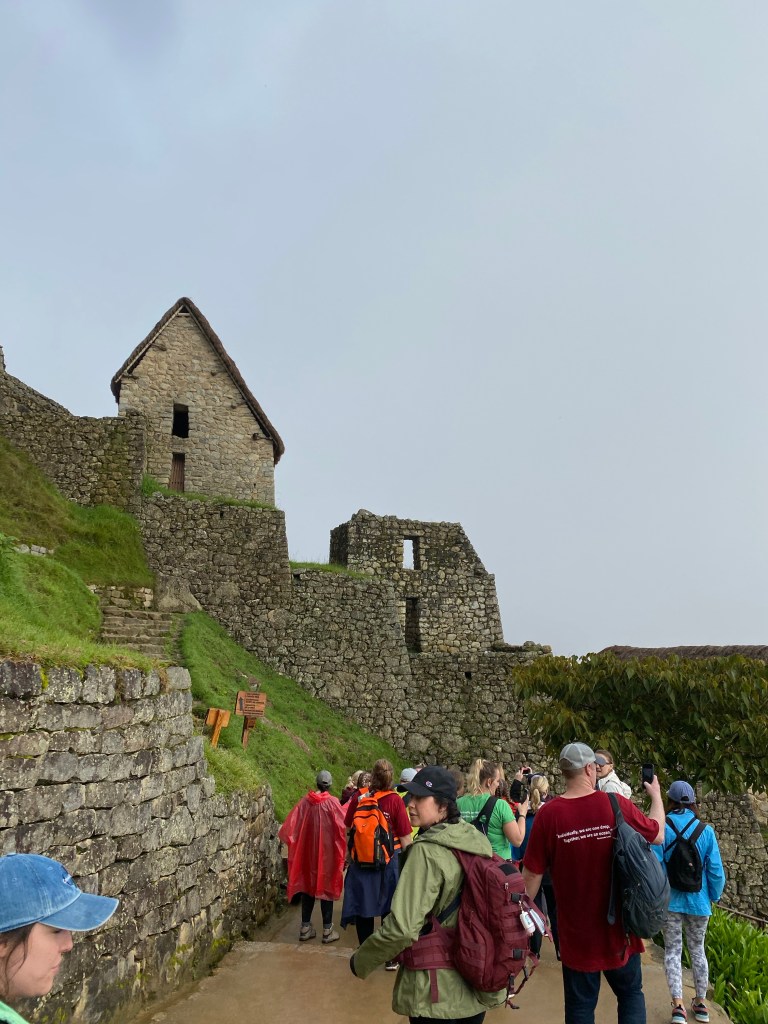
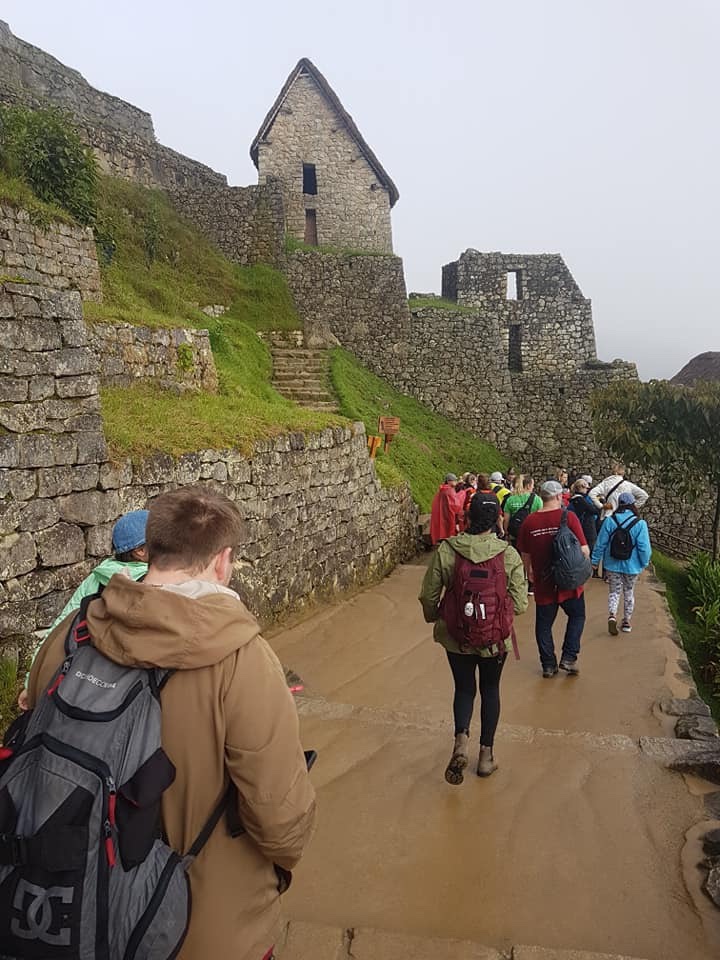
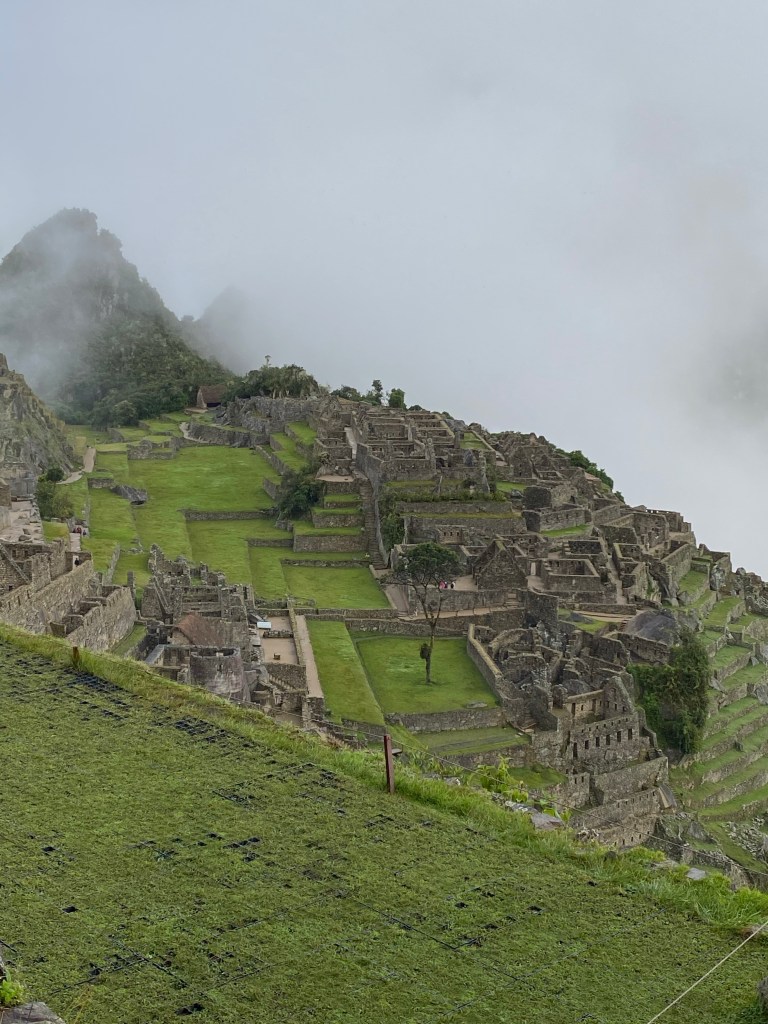
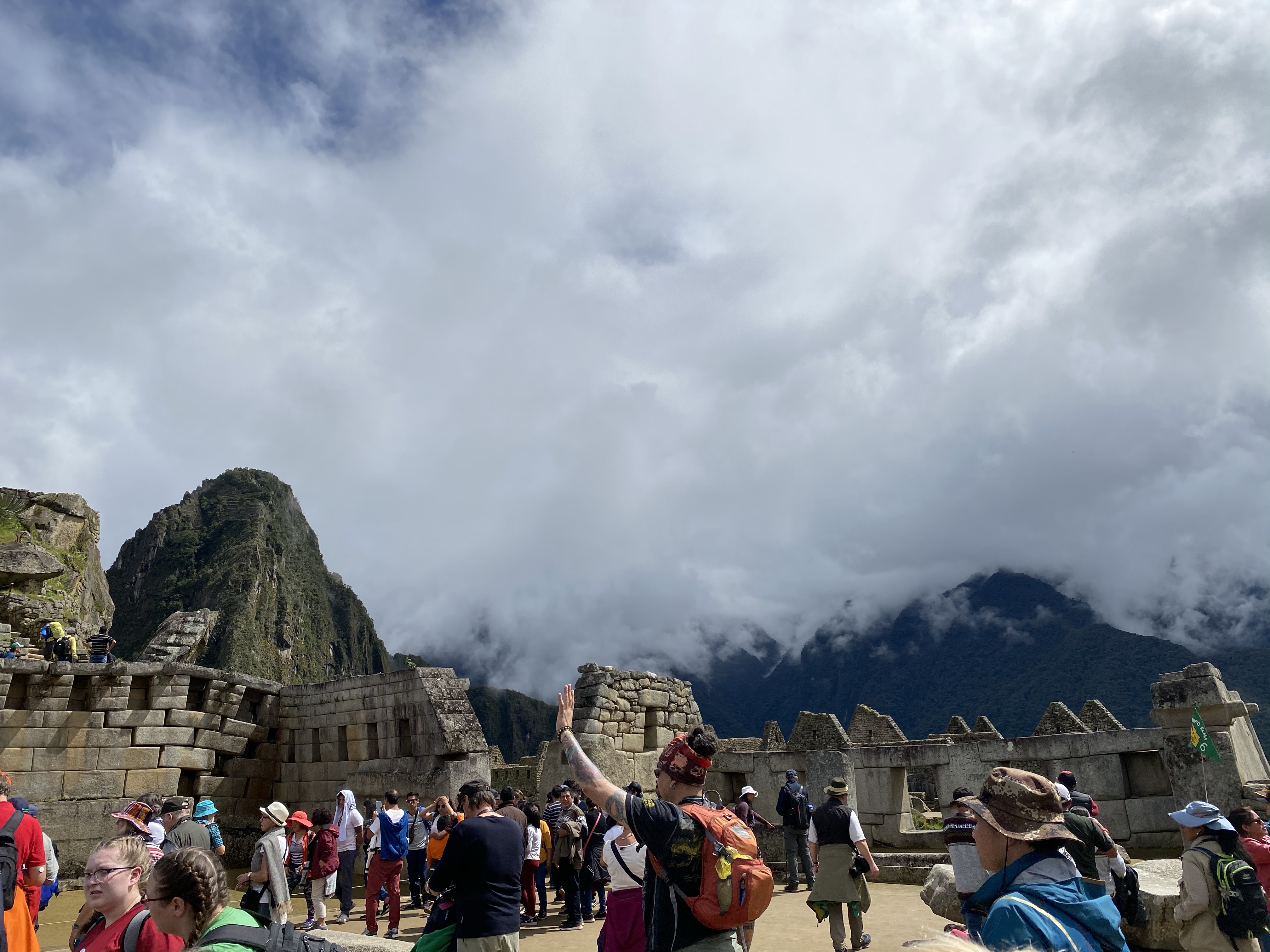
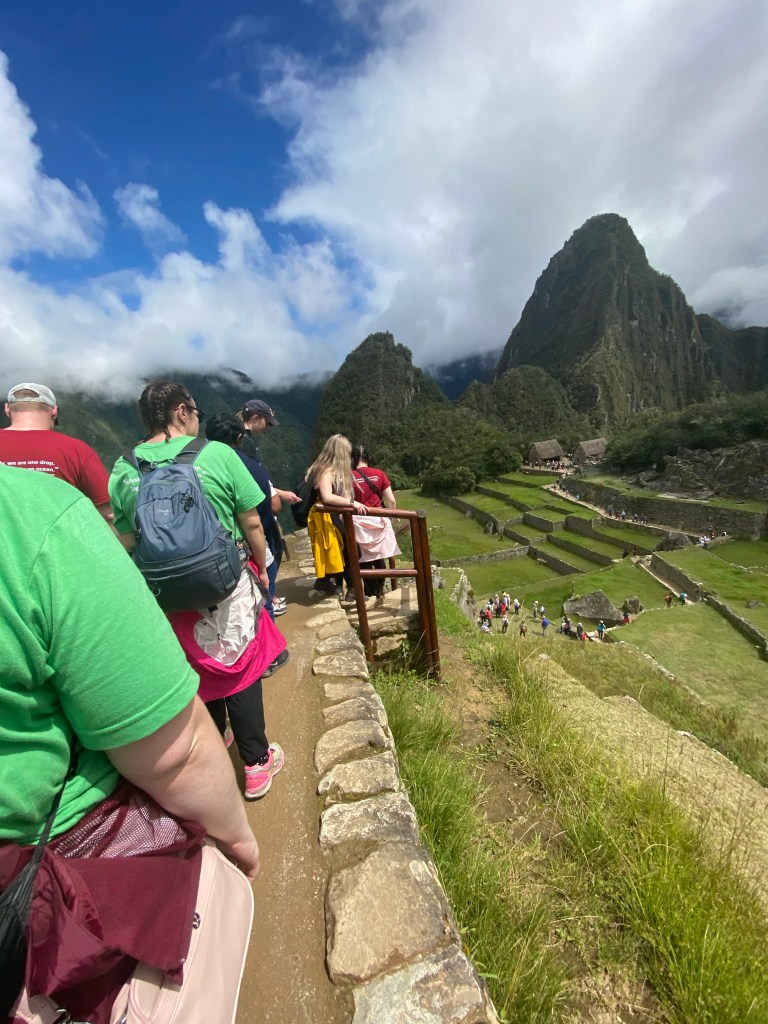
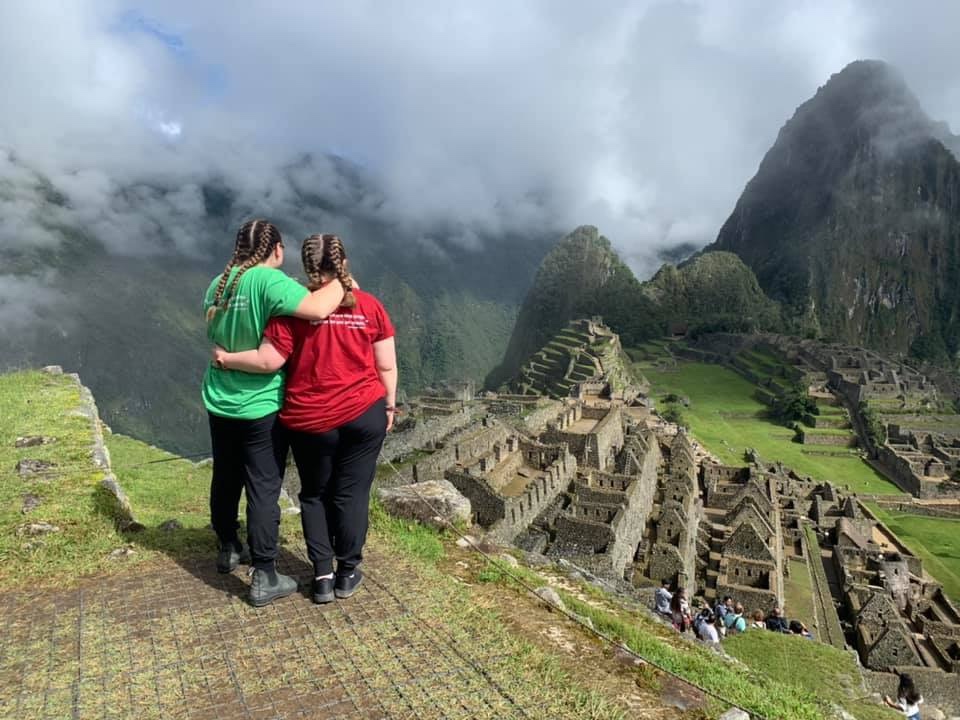
Walking into the gates/entrance was truly a spectacular moment. The sight was unbelievable; it was like we were all dreaming.
Are we actually here? Are we actually at one of the seven wonders of the world?
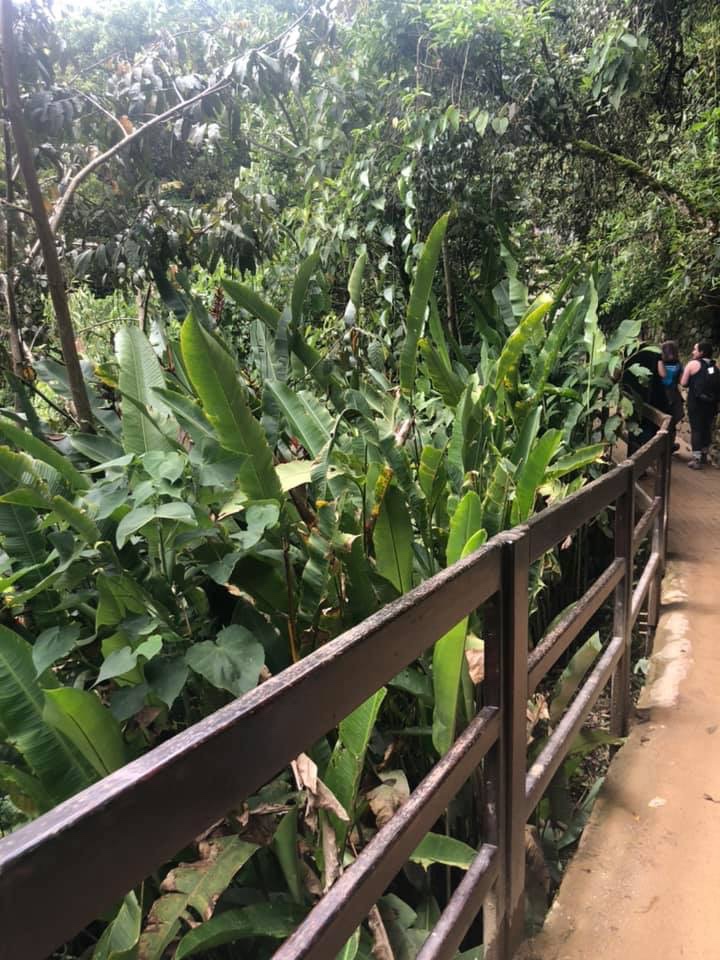
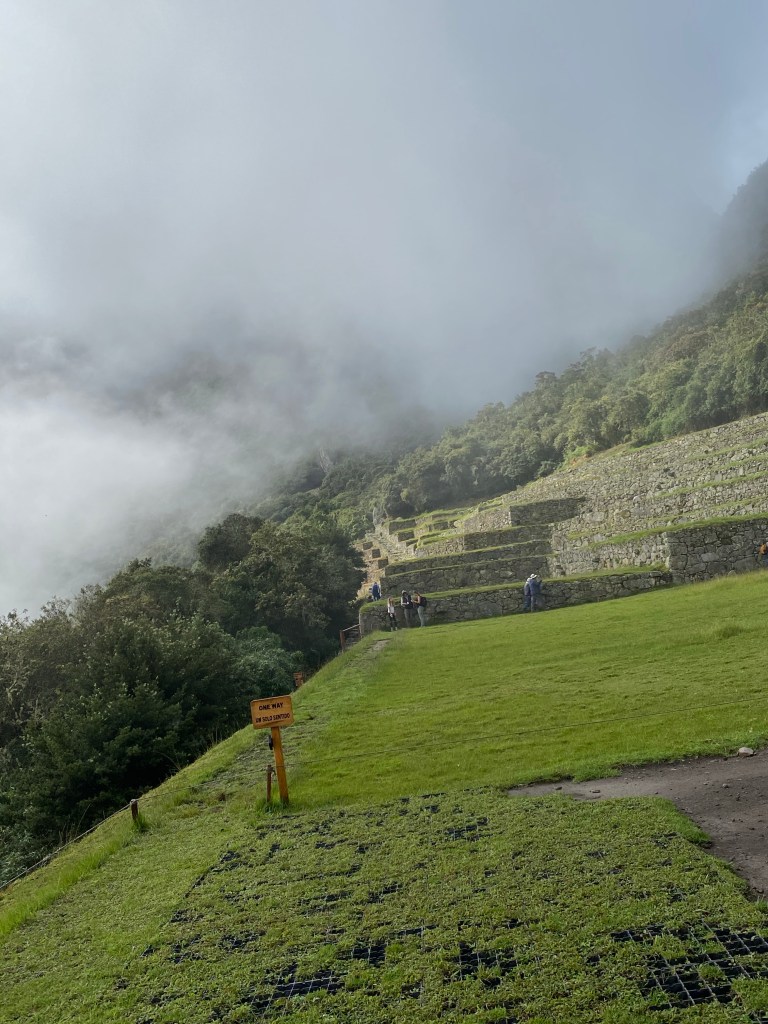
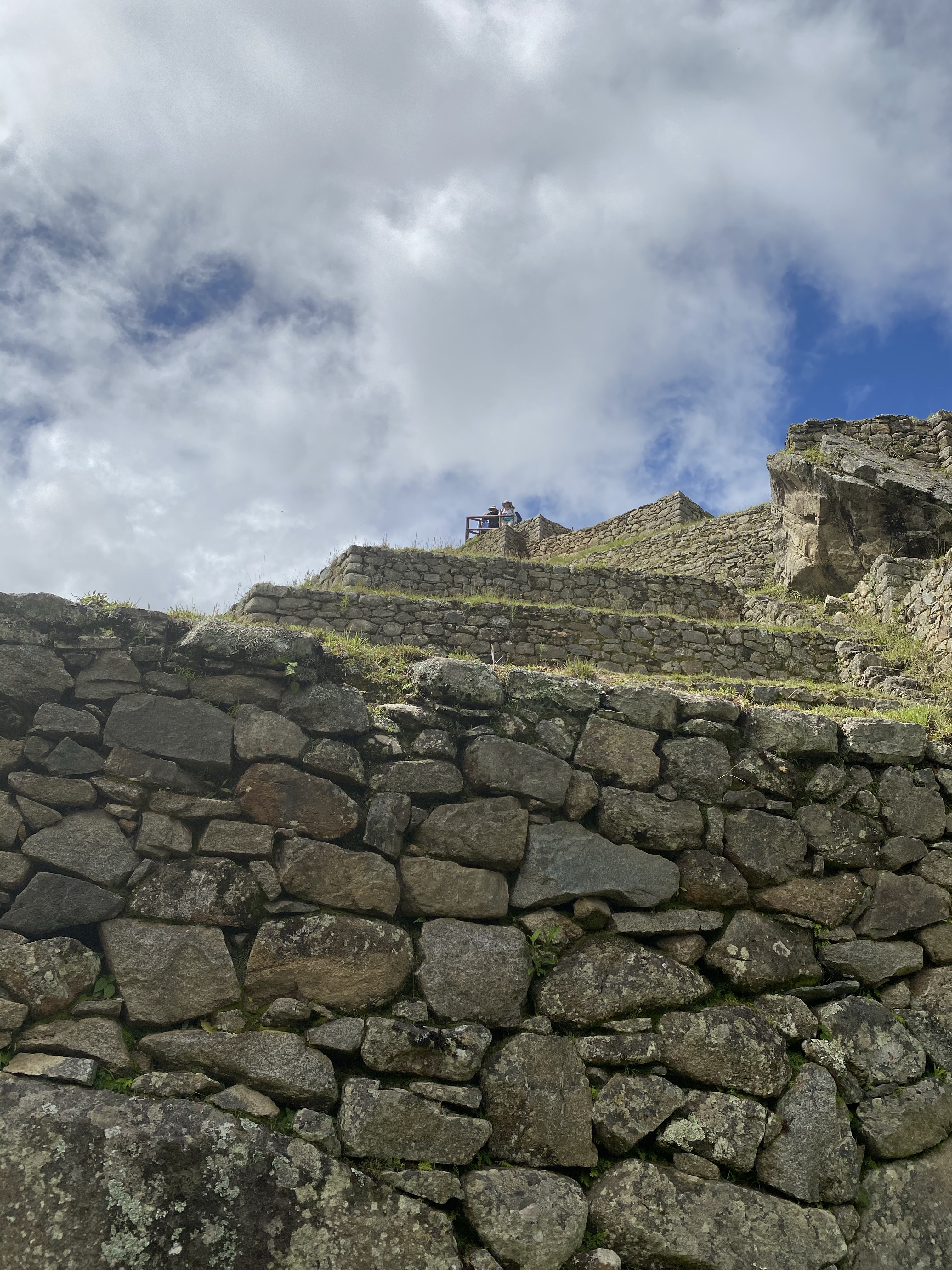
As we start walking through the trials we see lots of bamboo, ferns, and greenery.
Our tour guide mentioned how it is not uncommon for people to see wild animals like bears, weasels, snakes, fox and pumas. He stated that they are all friendly animals unless they feel threatened.
We did not have the chance to see any wild animals this time around.
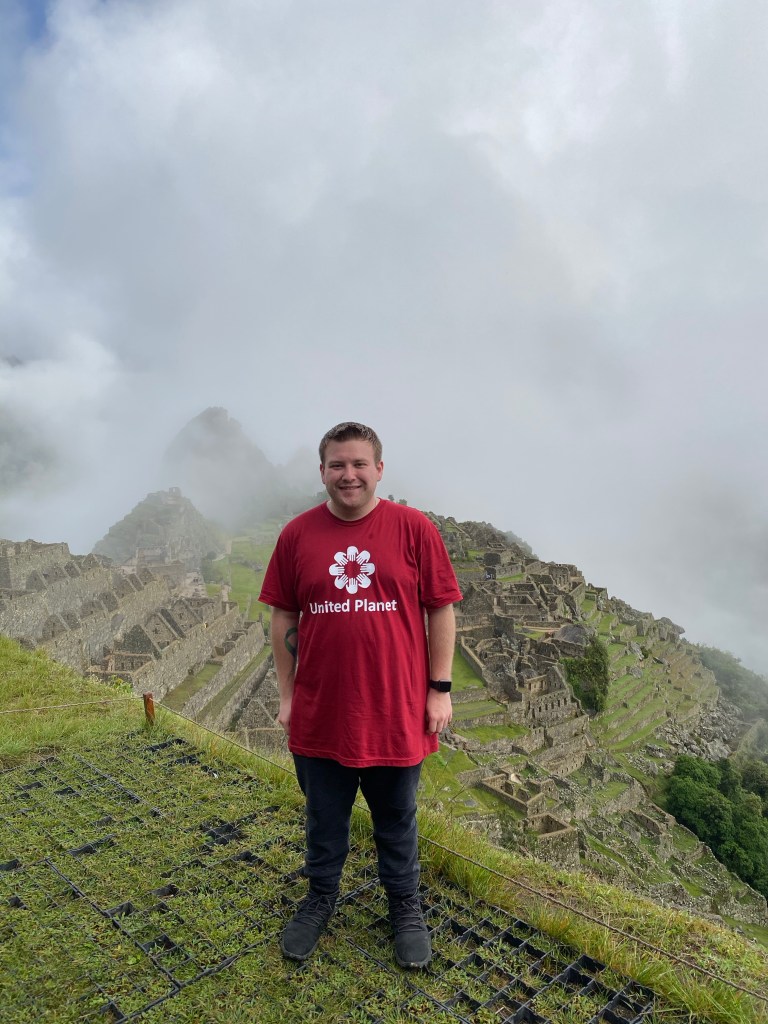
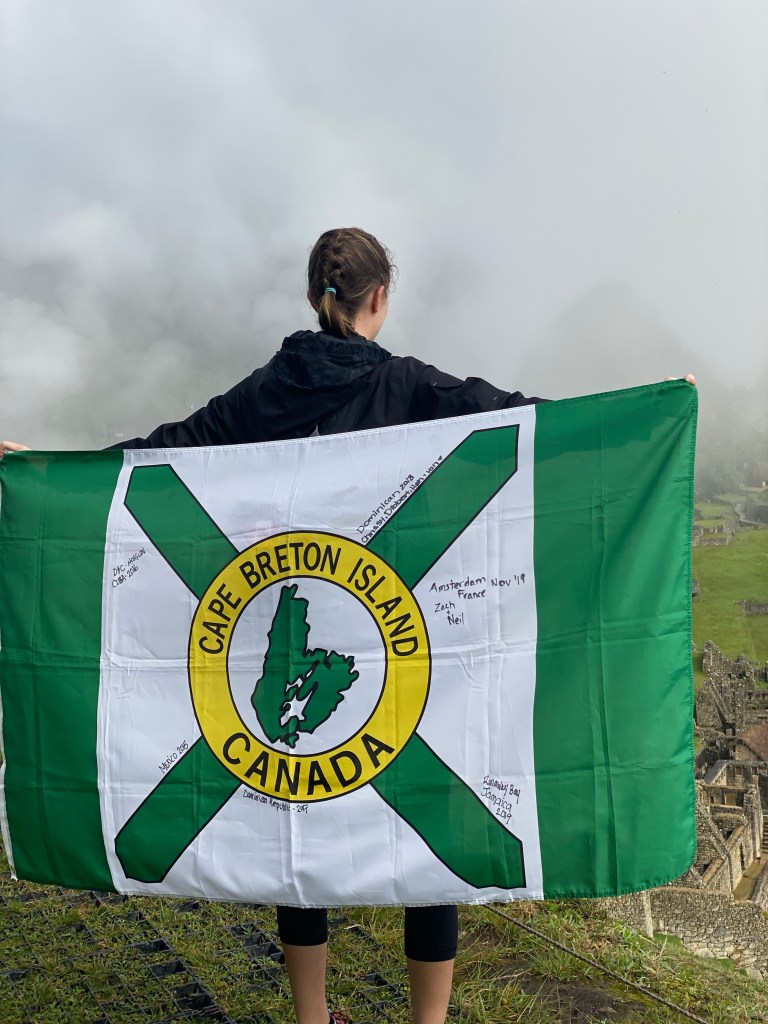
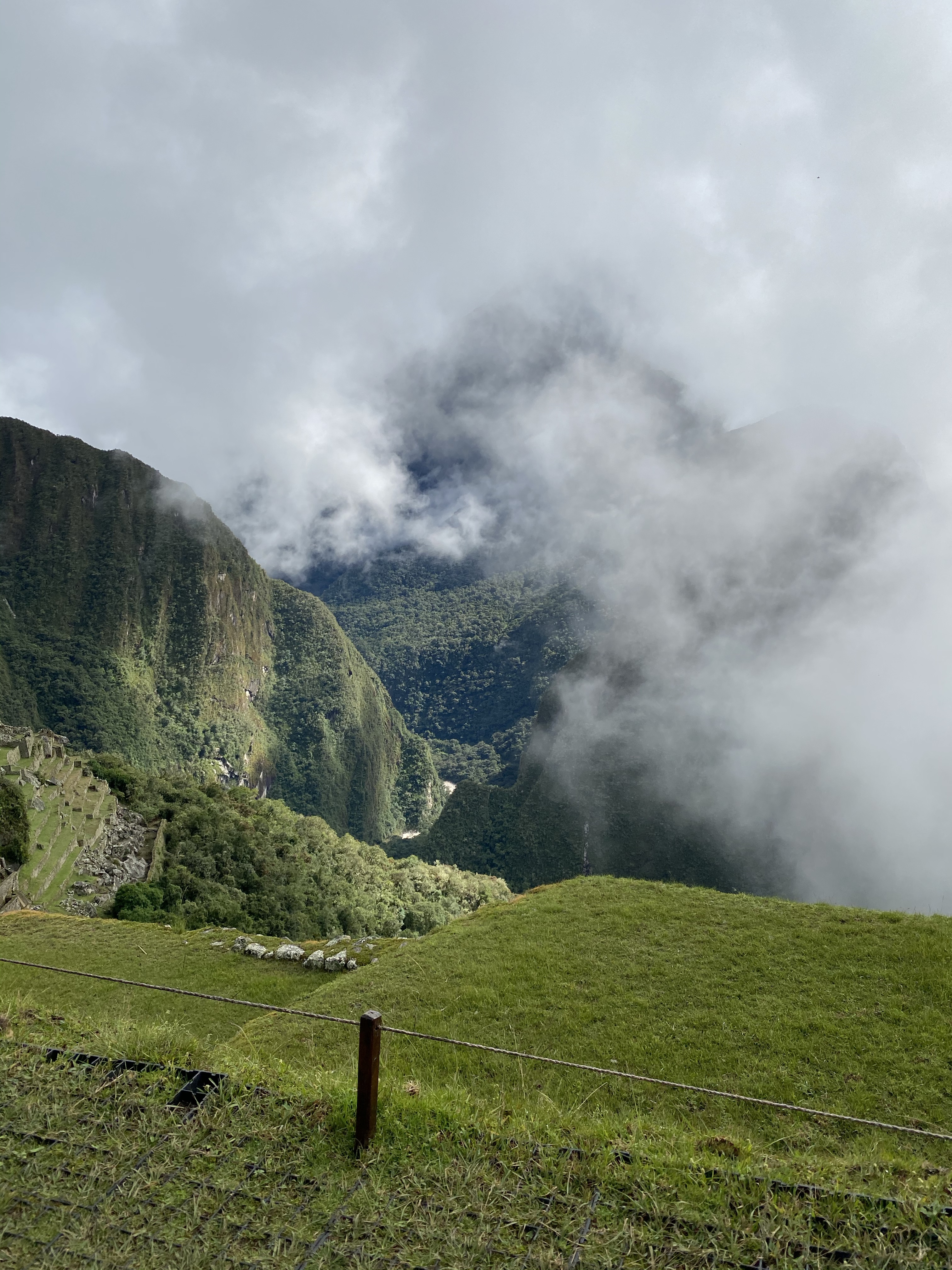
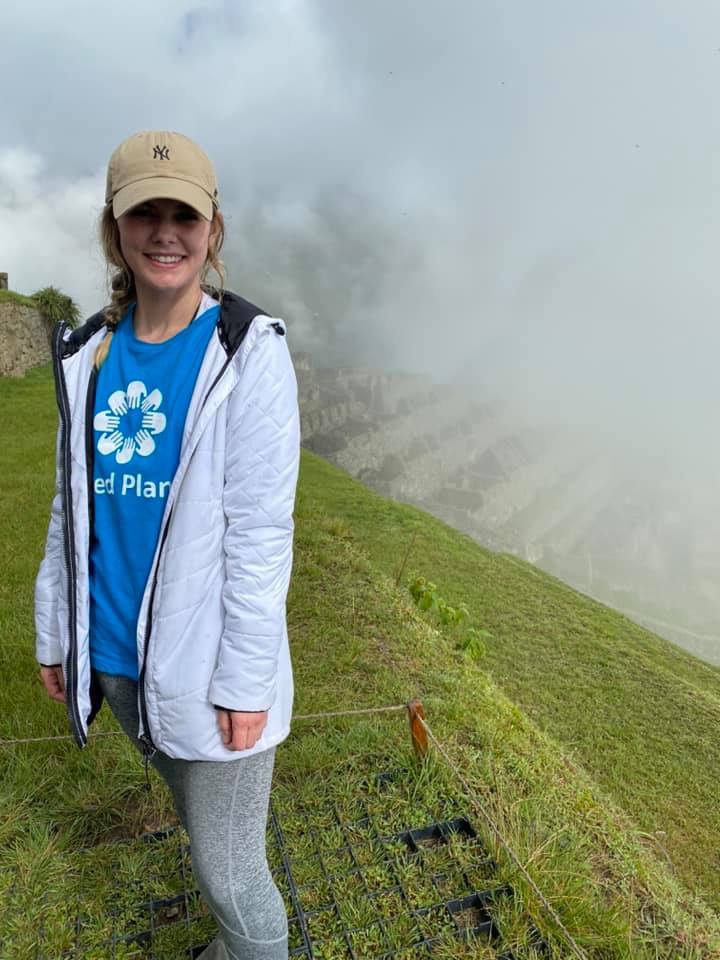
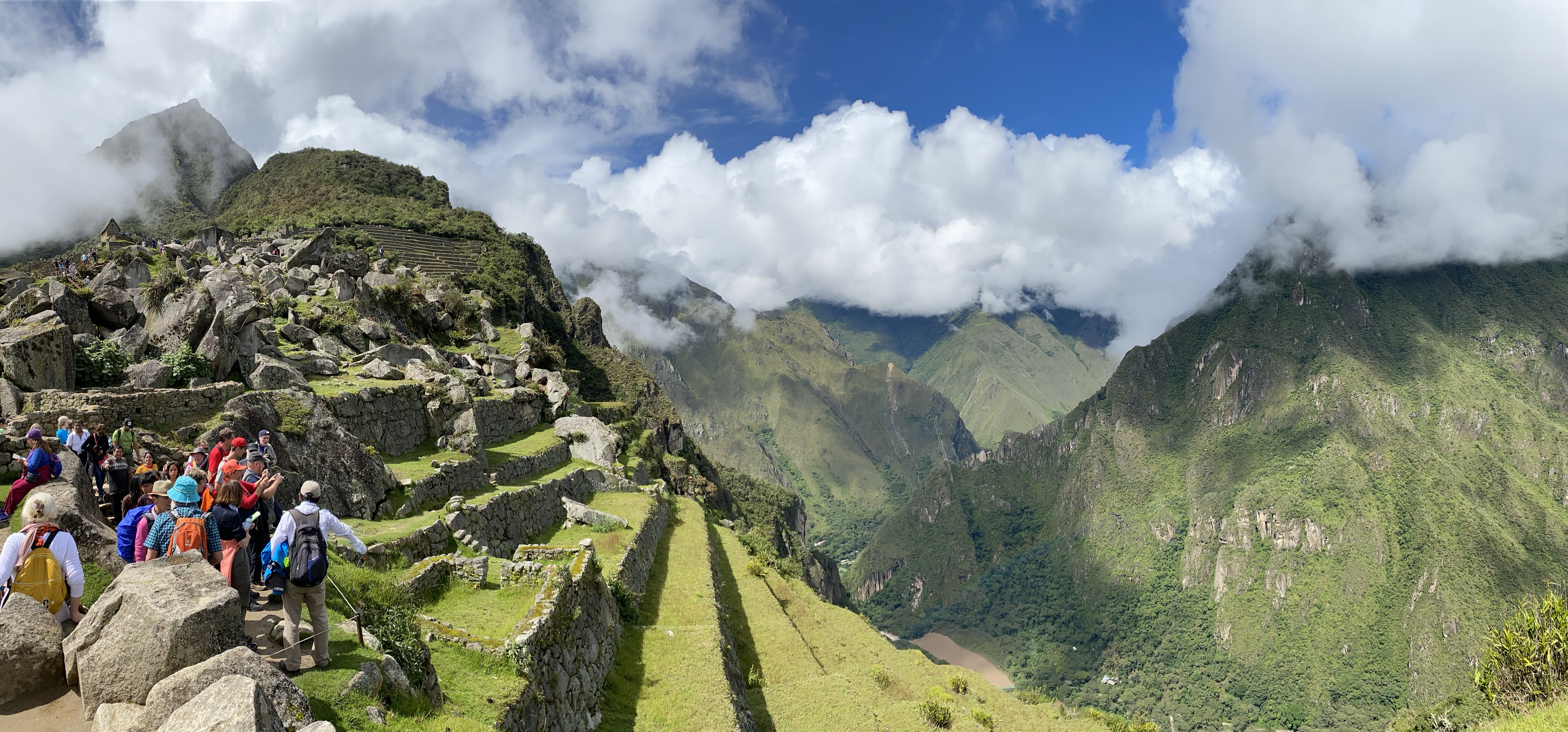
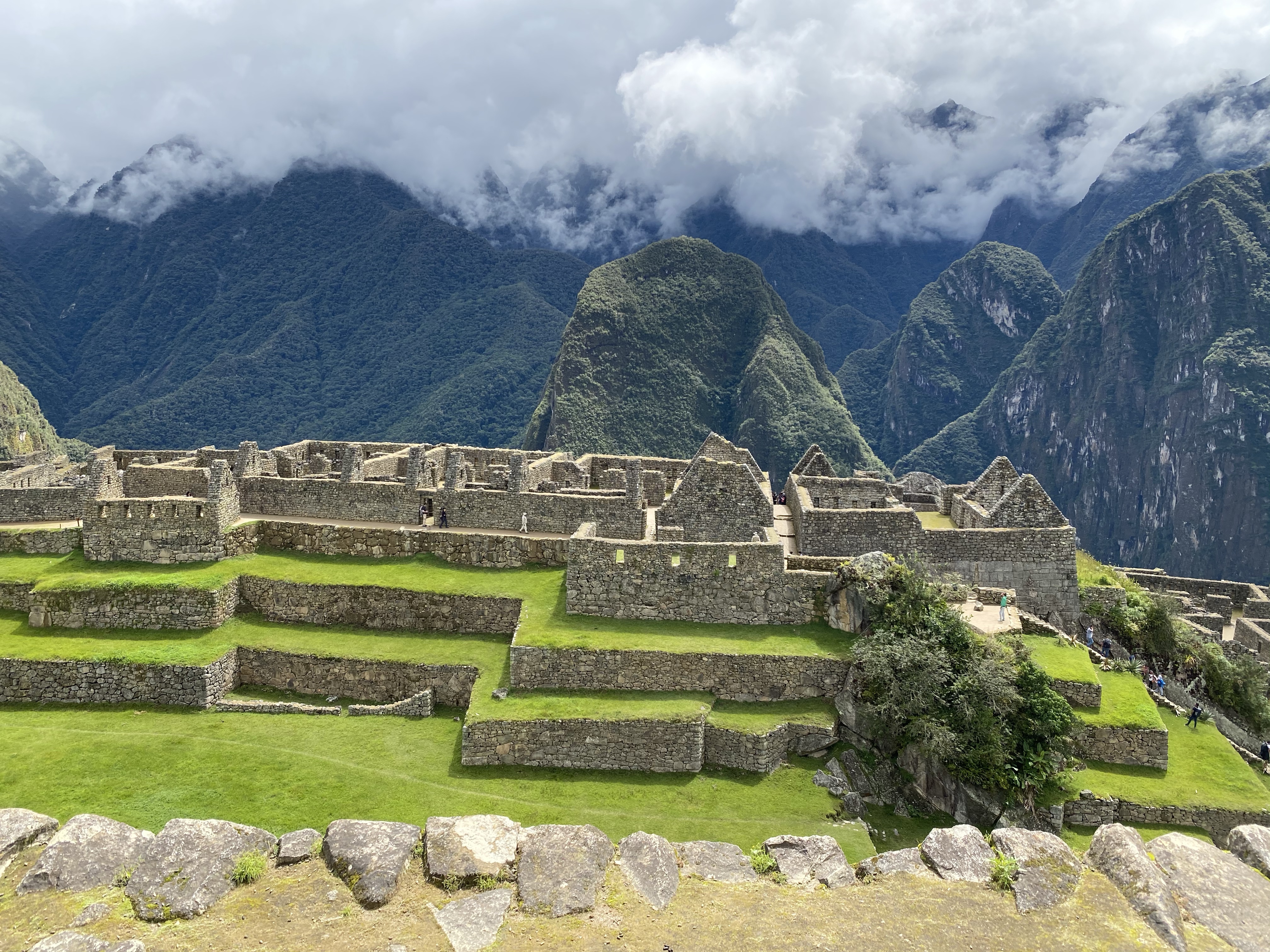
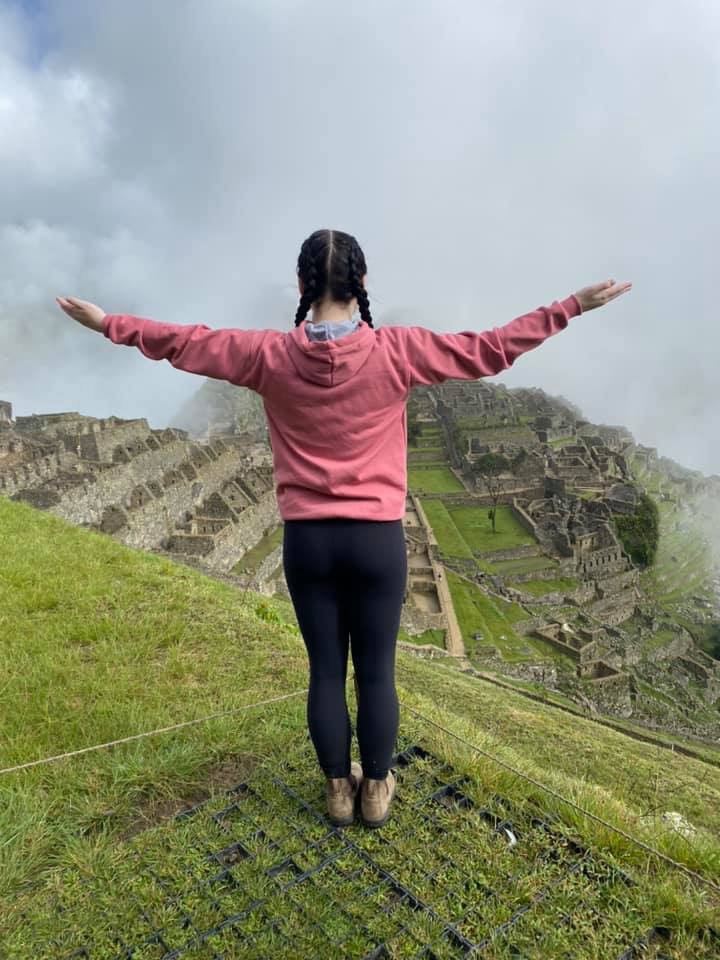
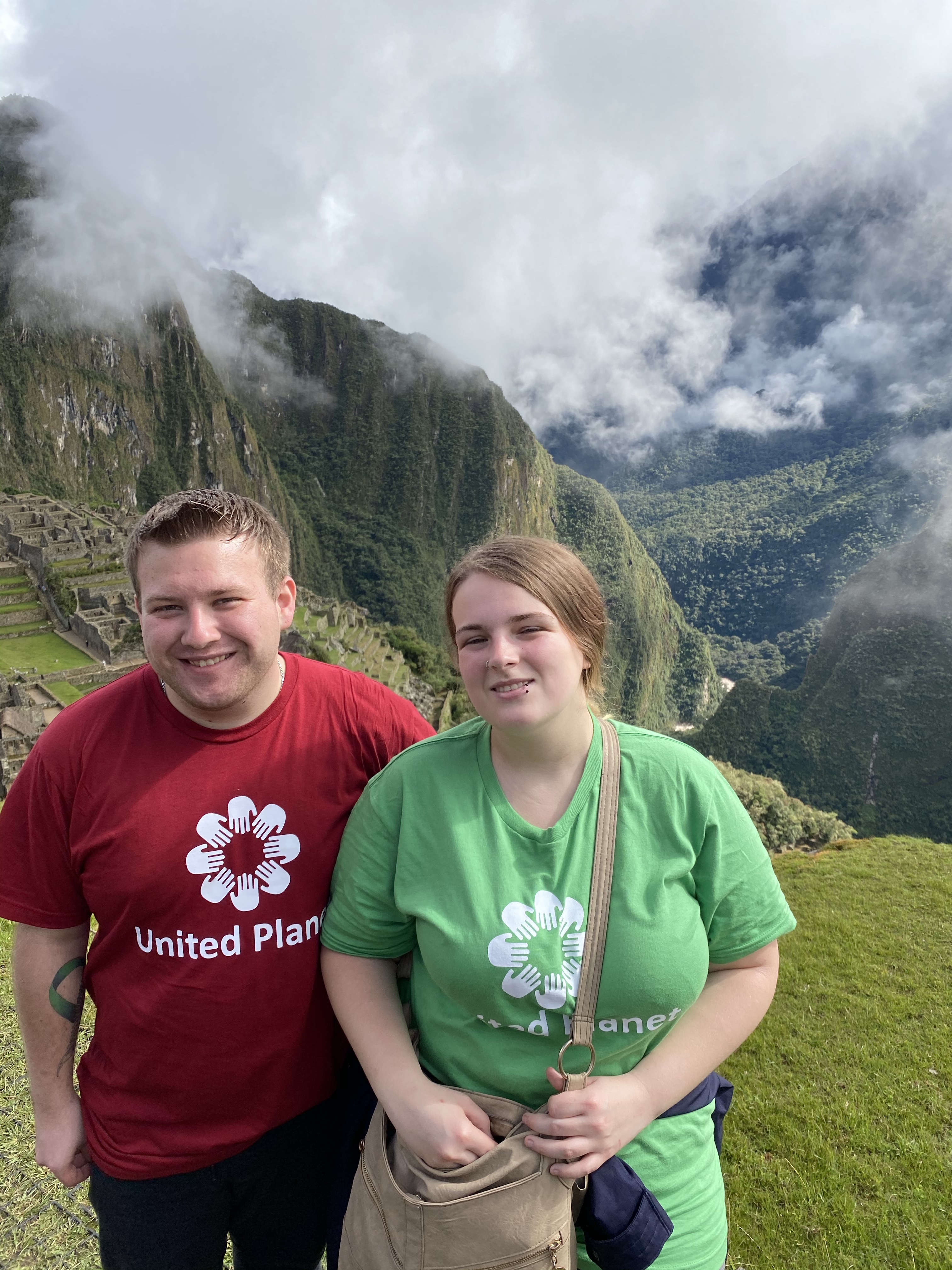
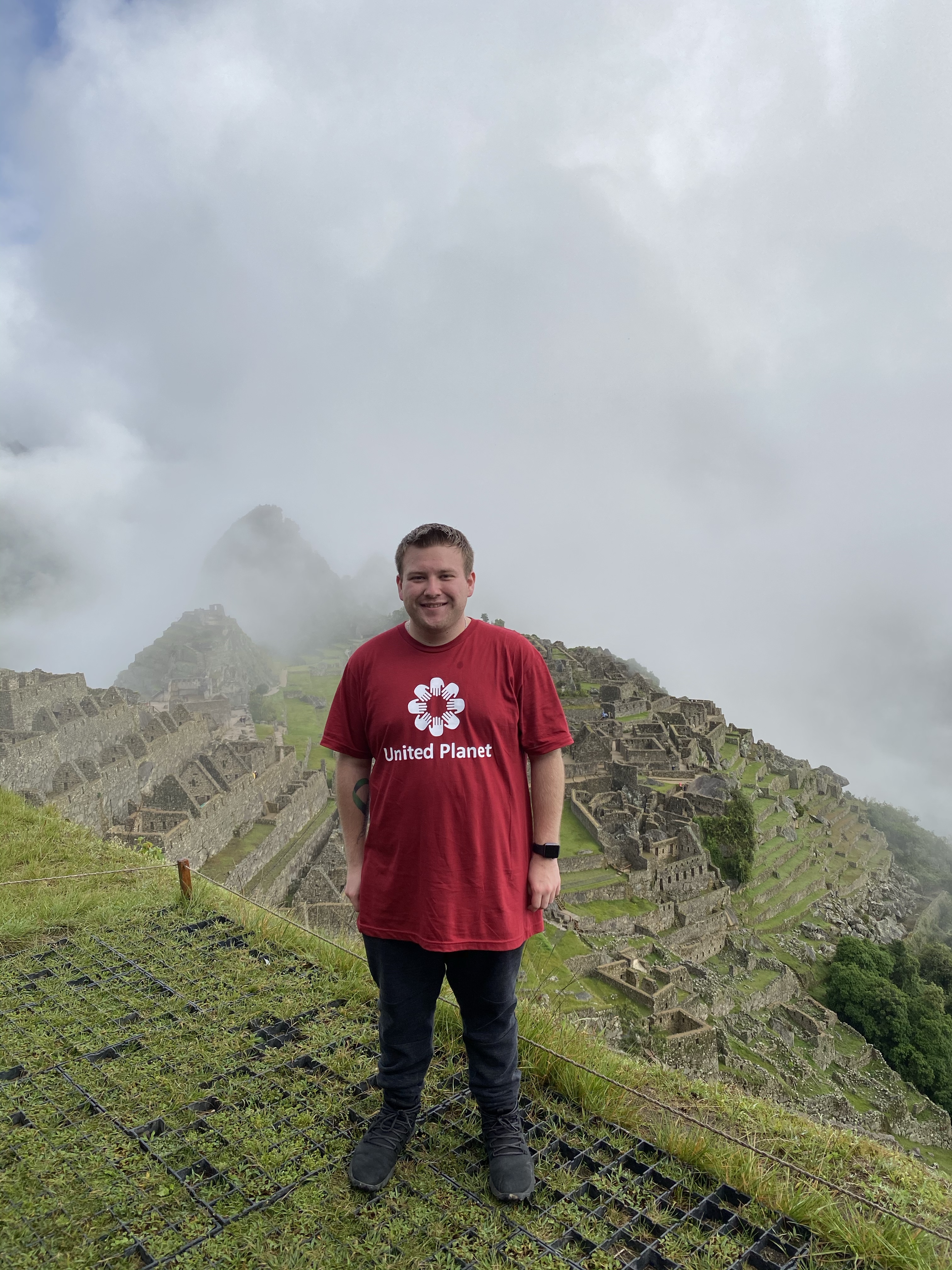
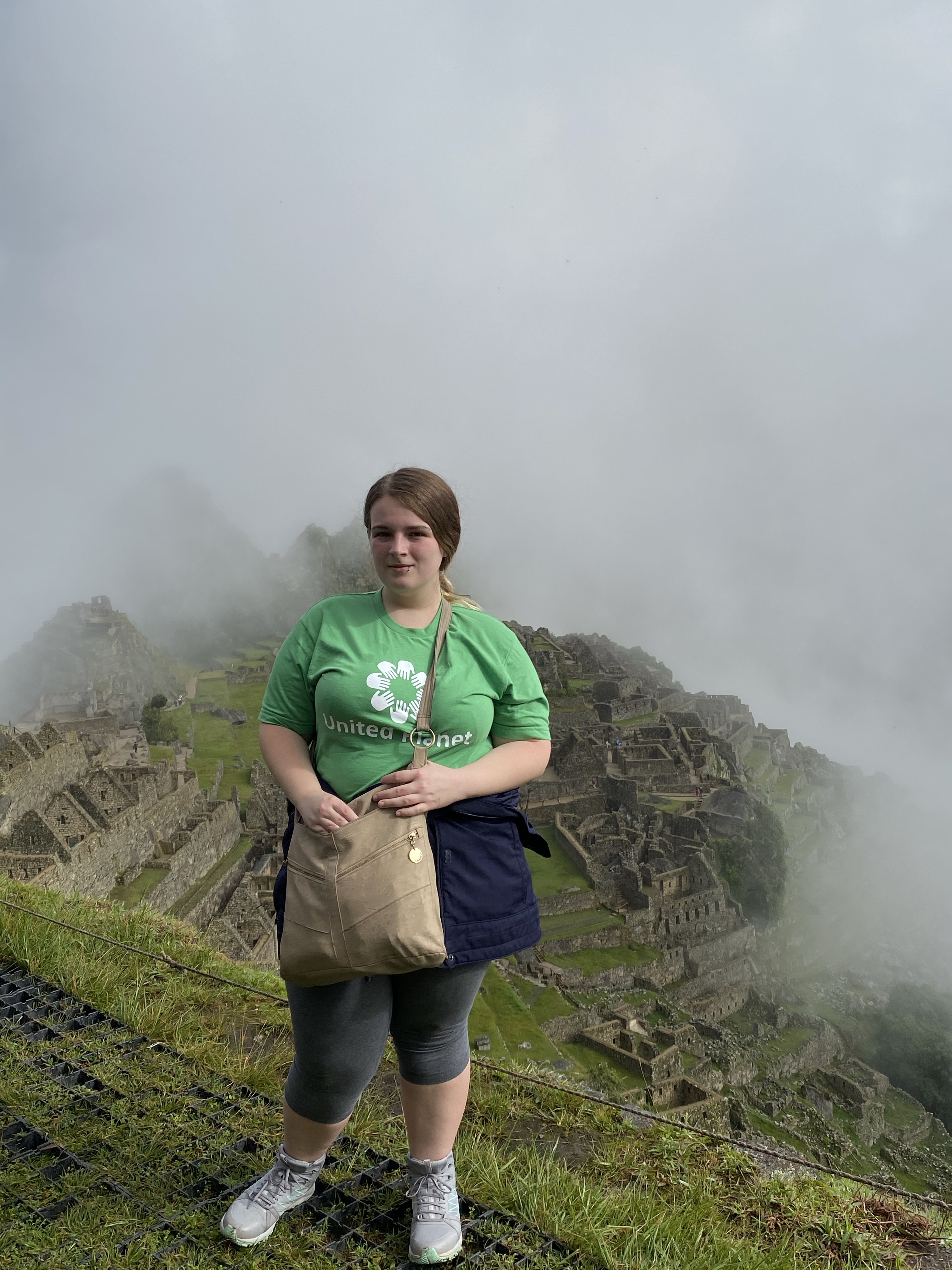
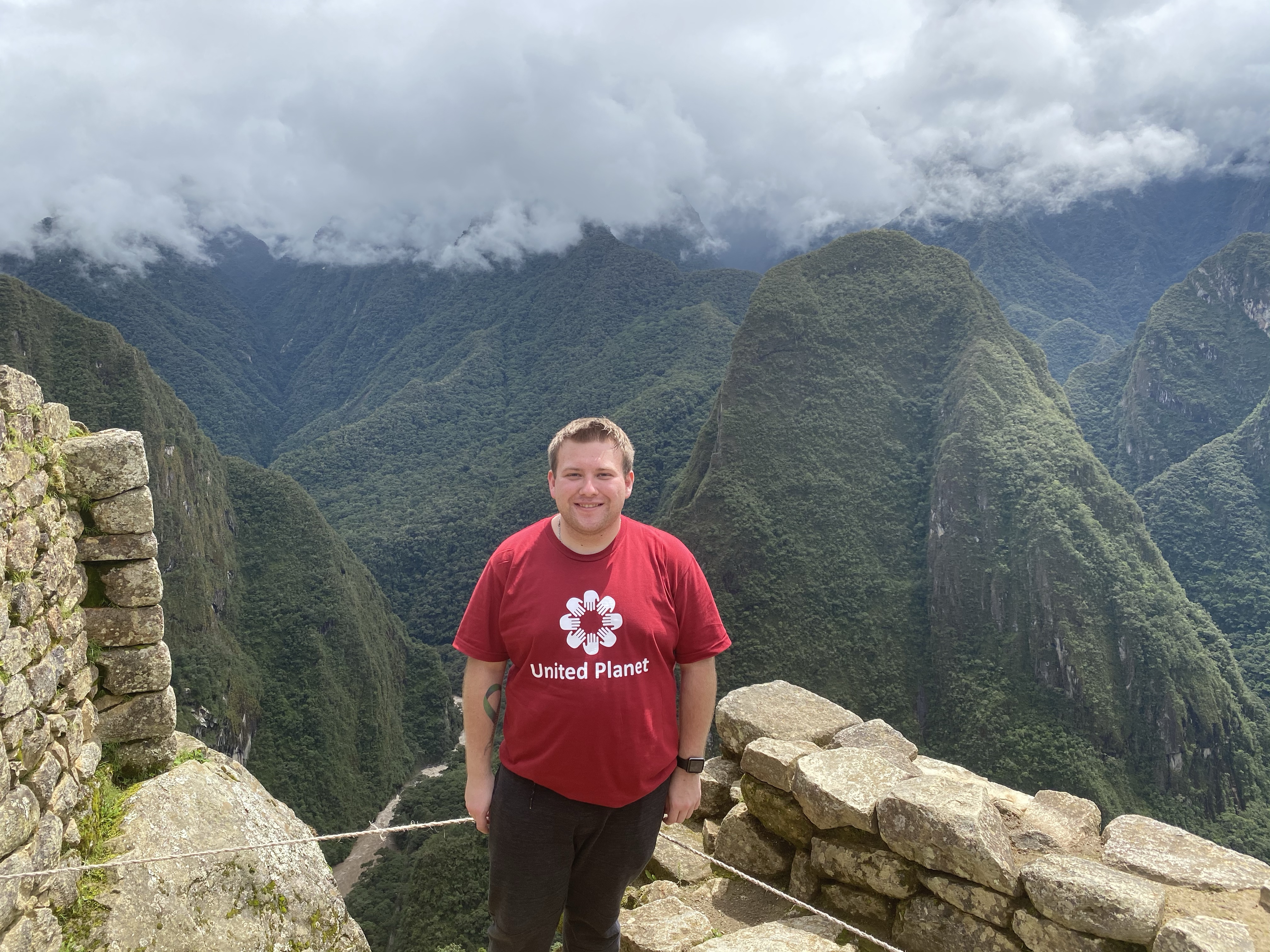
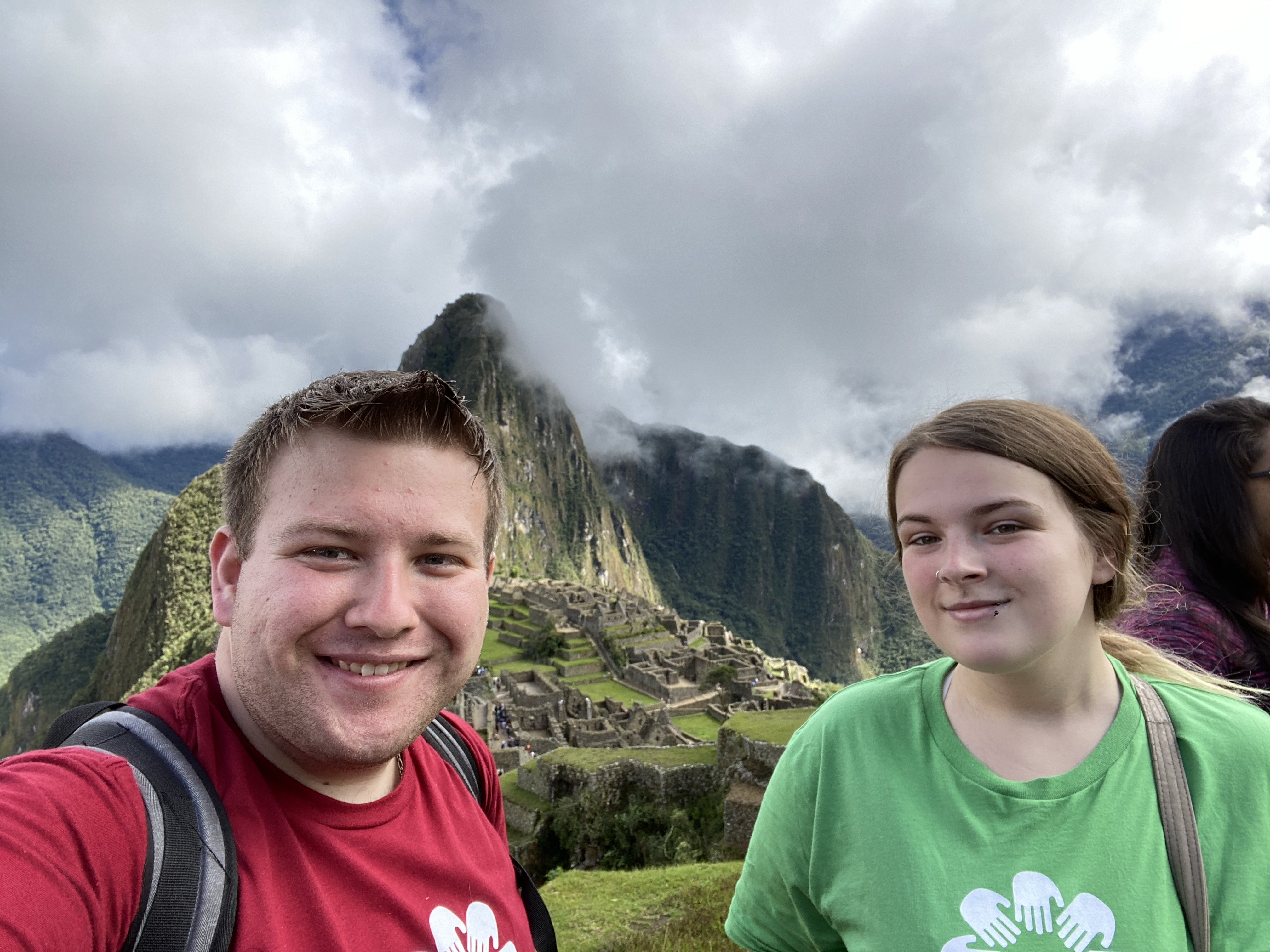
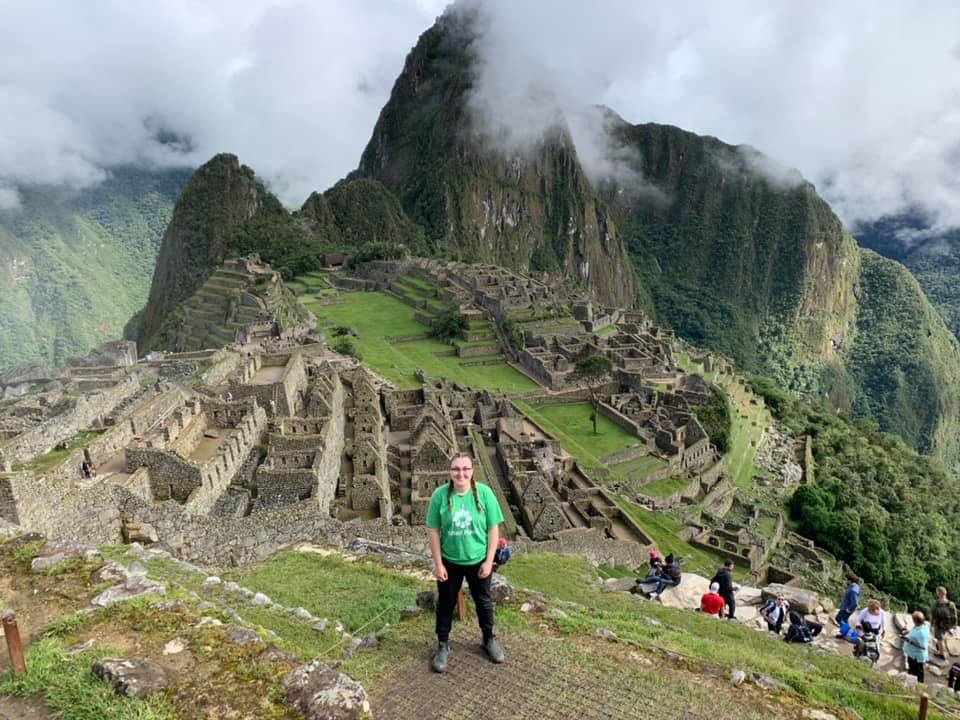
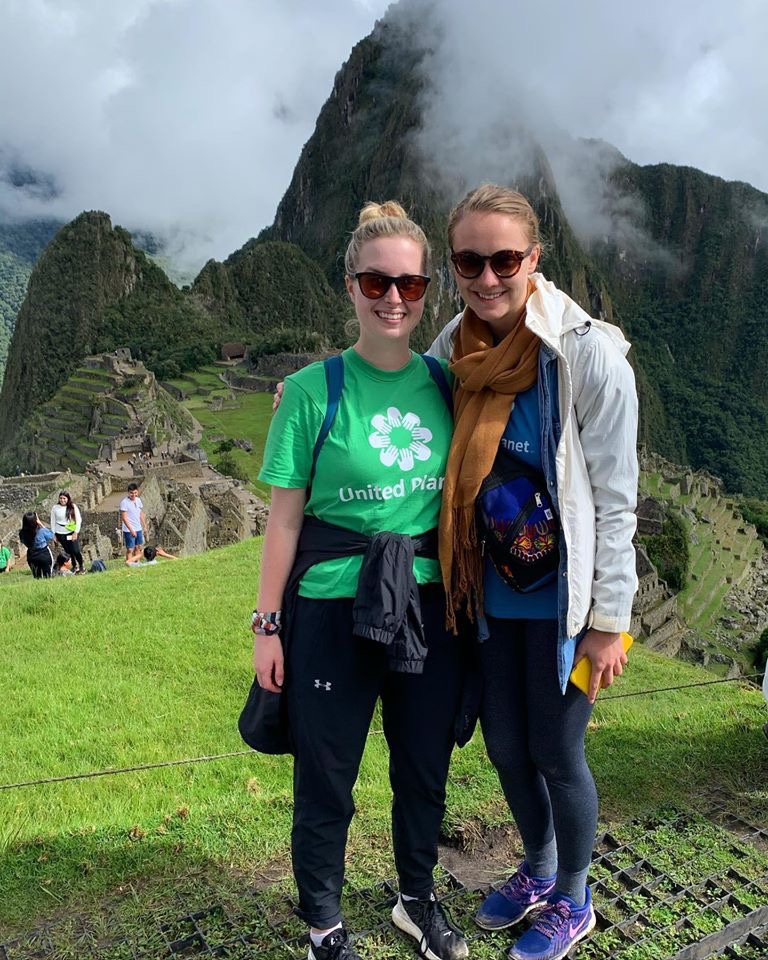
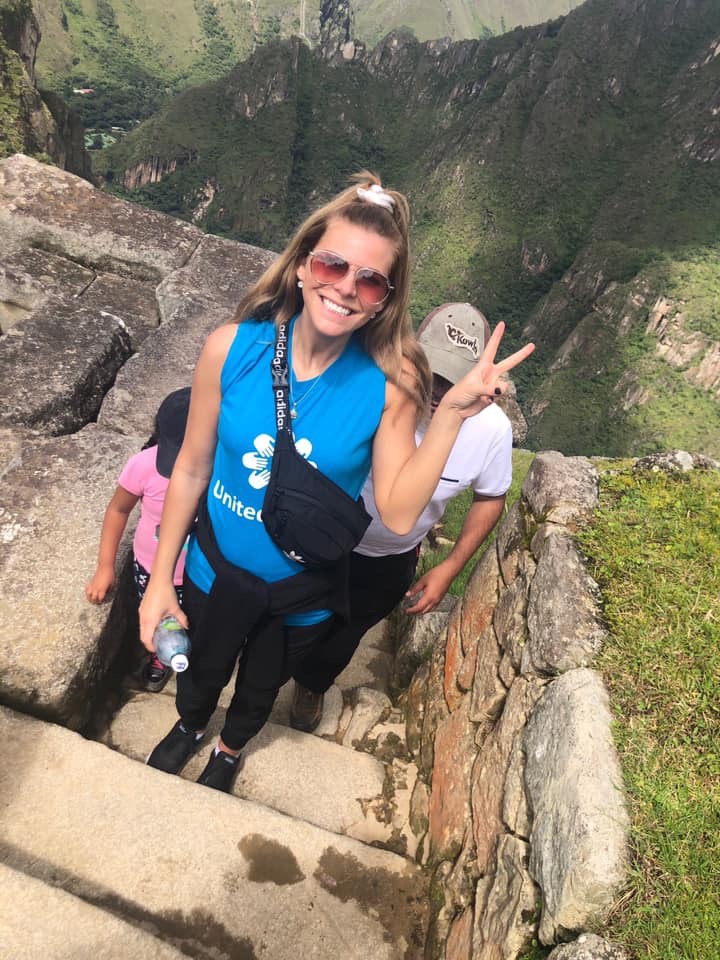
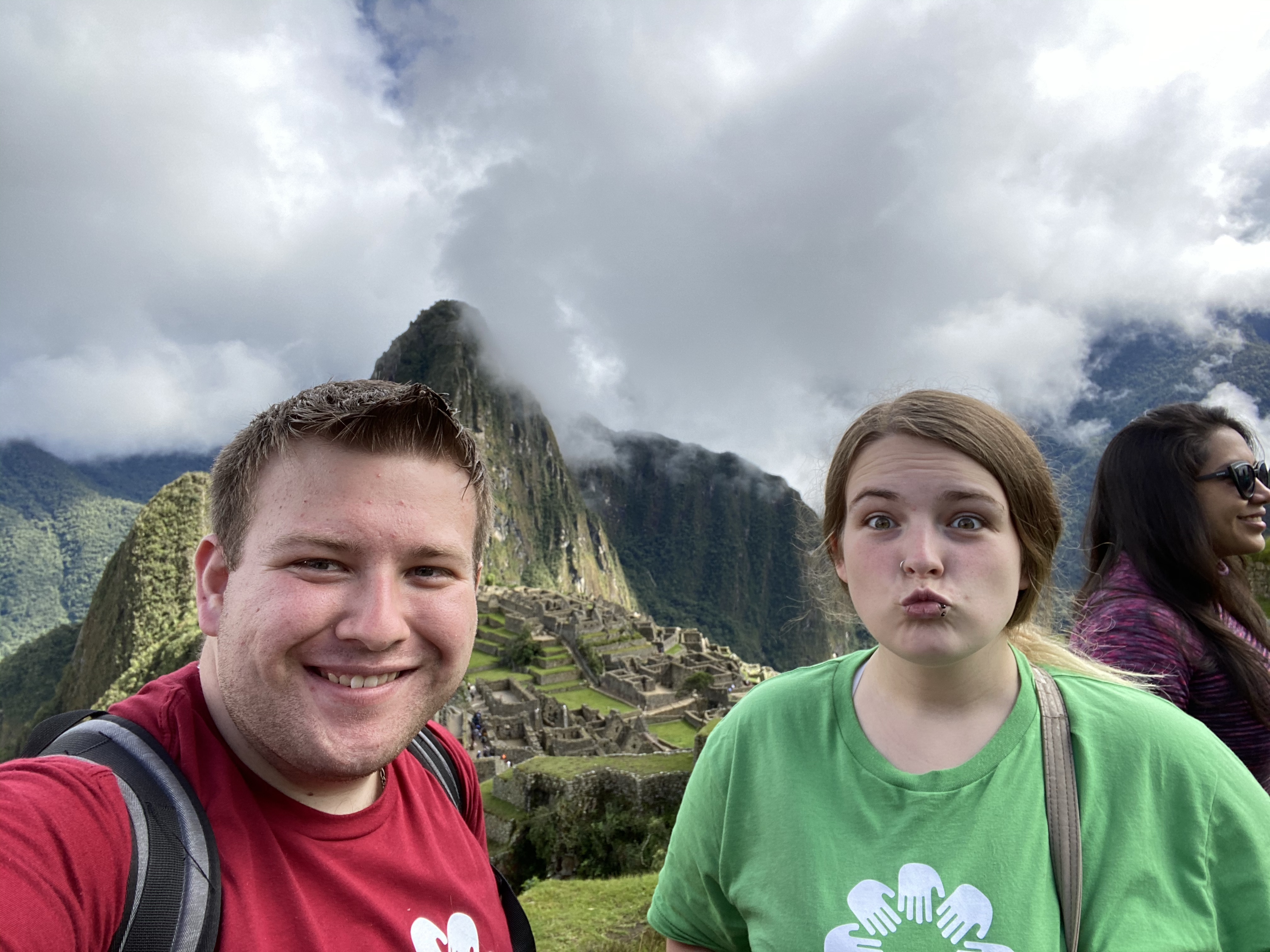
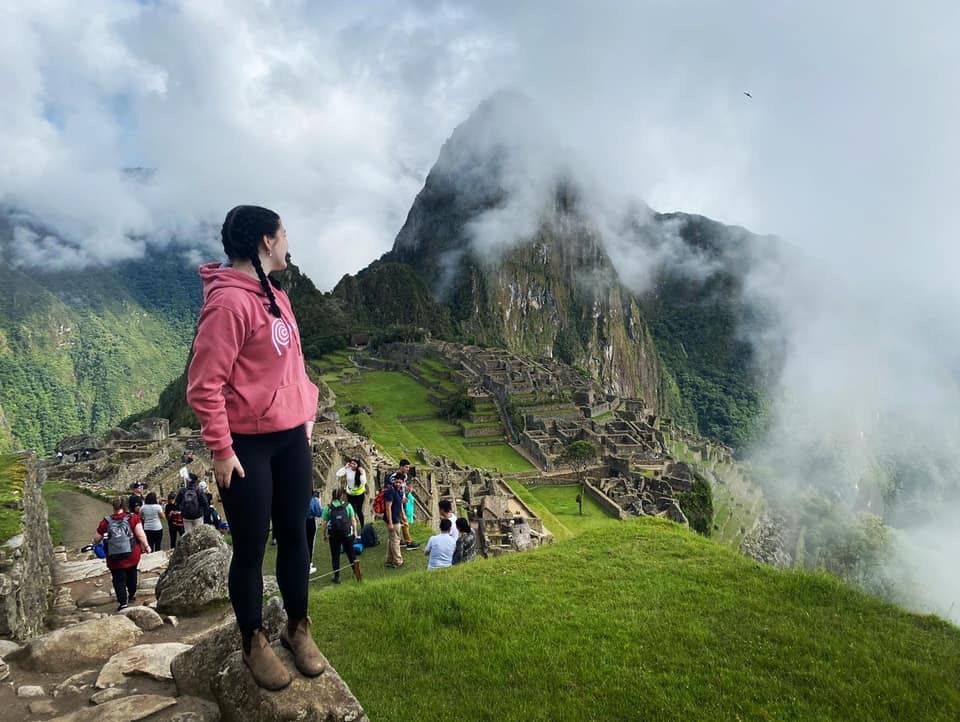
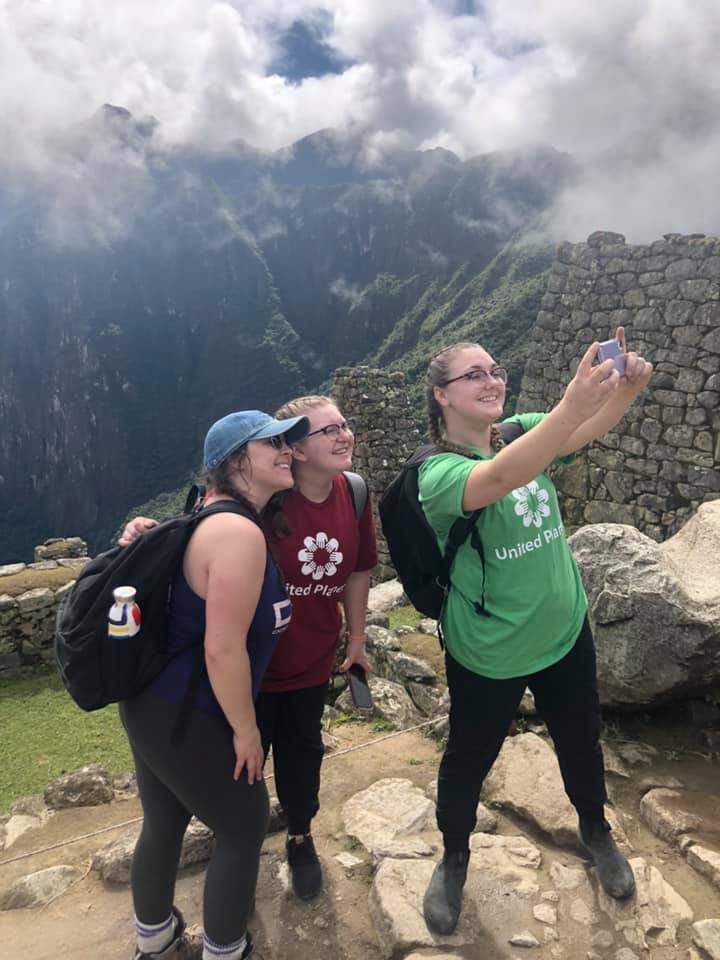
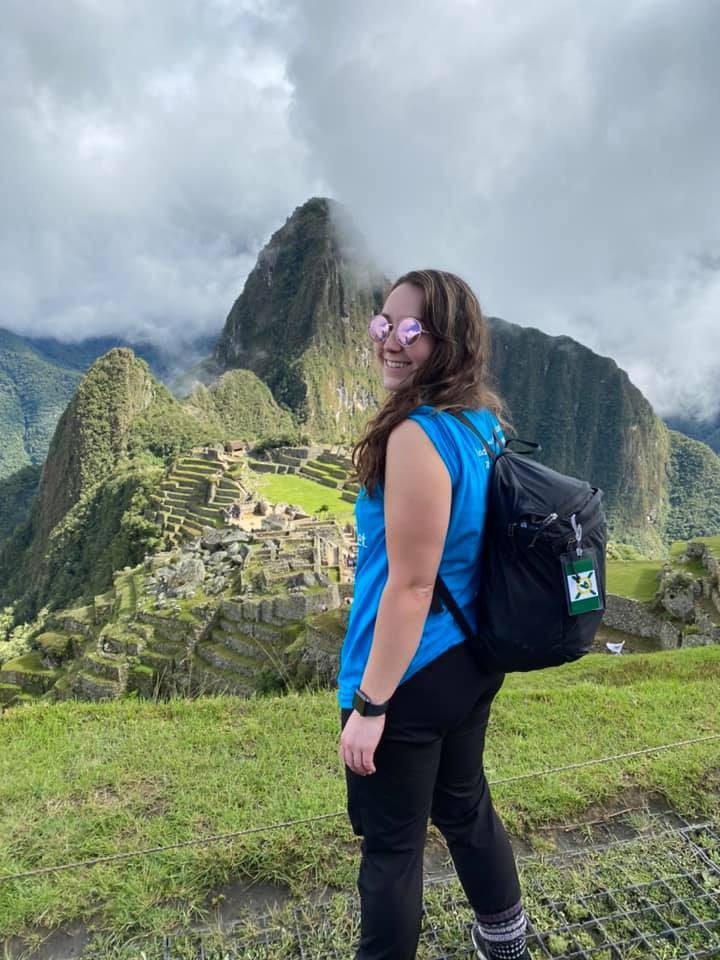
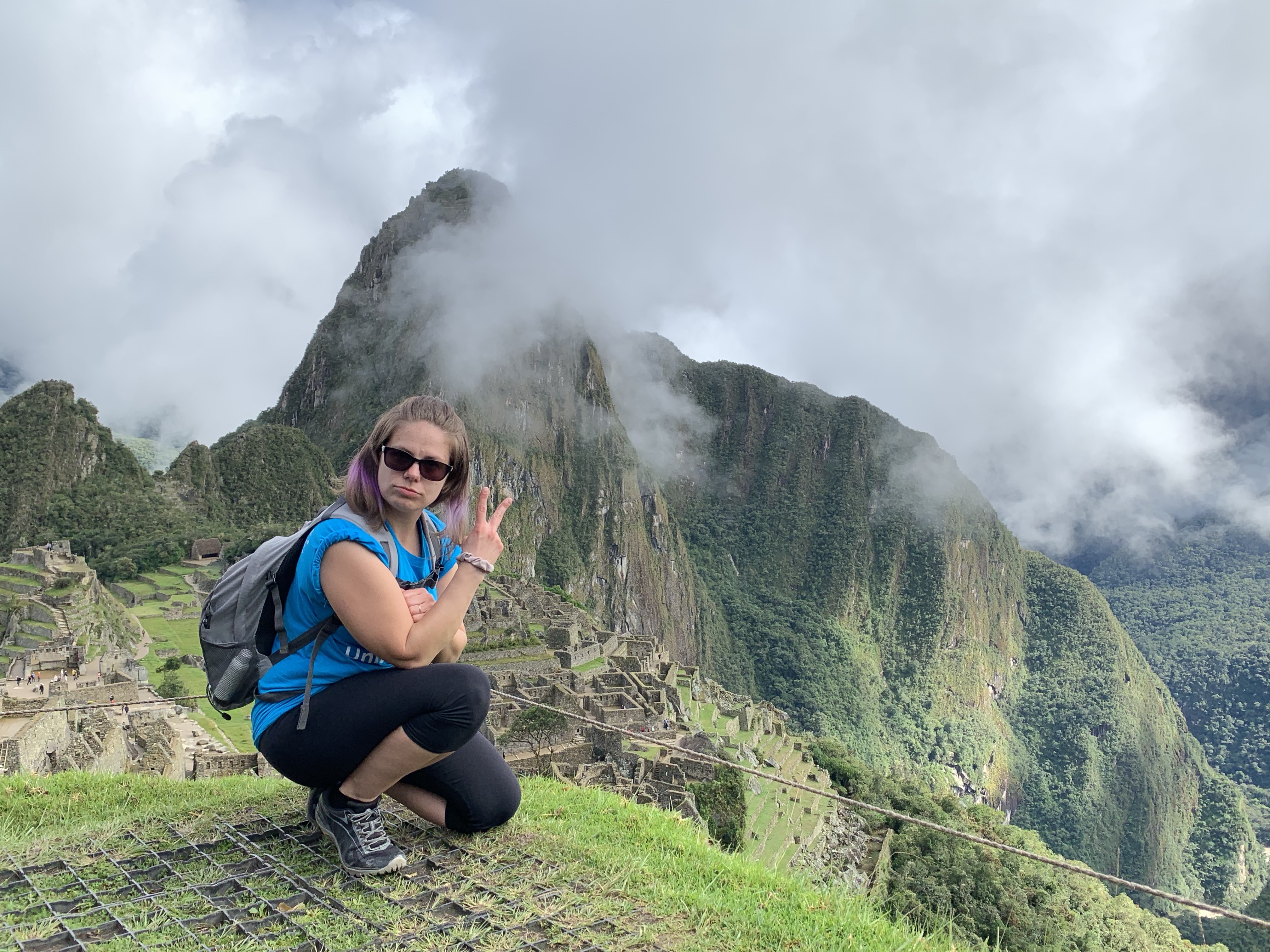
Just look at that view! It’s like something in a magazine or movie! Austin Chapman with the view of Machu Picchu Inca Ruins behind him Hannah MacKeigan holding the Cape Breton Flag looking out on the Inka ruins of Machu PicchuCape Breton and CBU takes on Machu Picchu (the city in the Clouds)
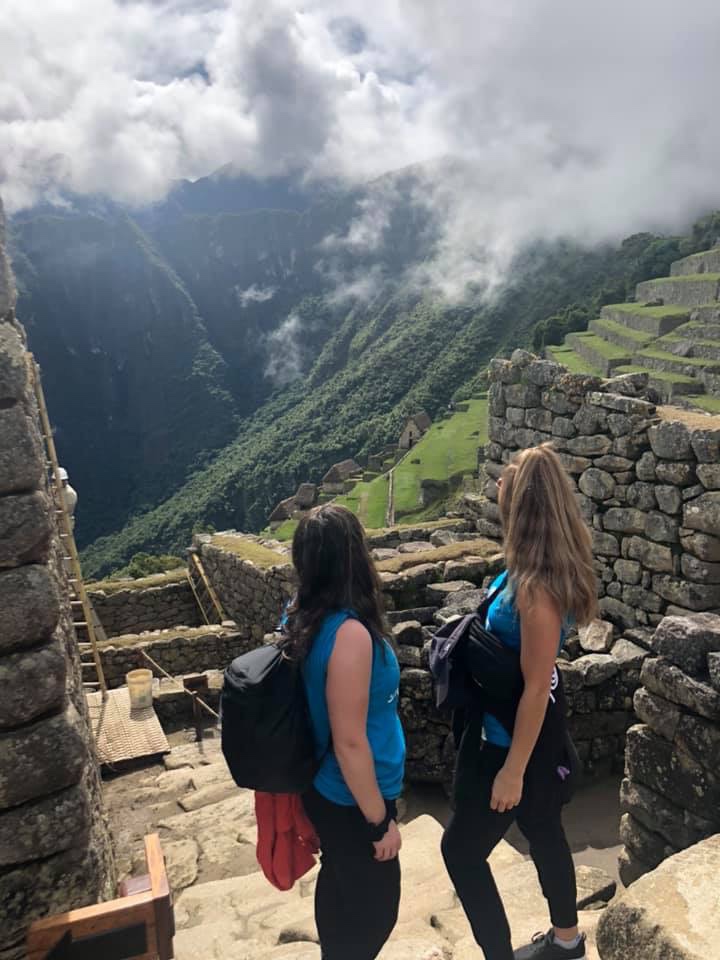
After taking a few breathtaking photos we worked our way up higher on the mountain.
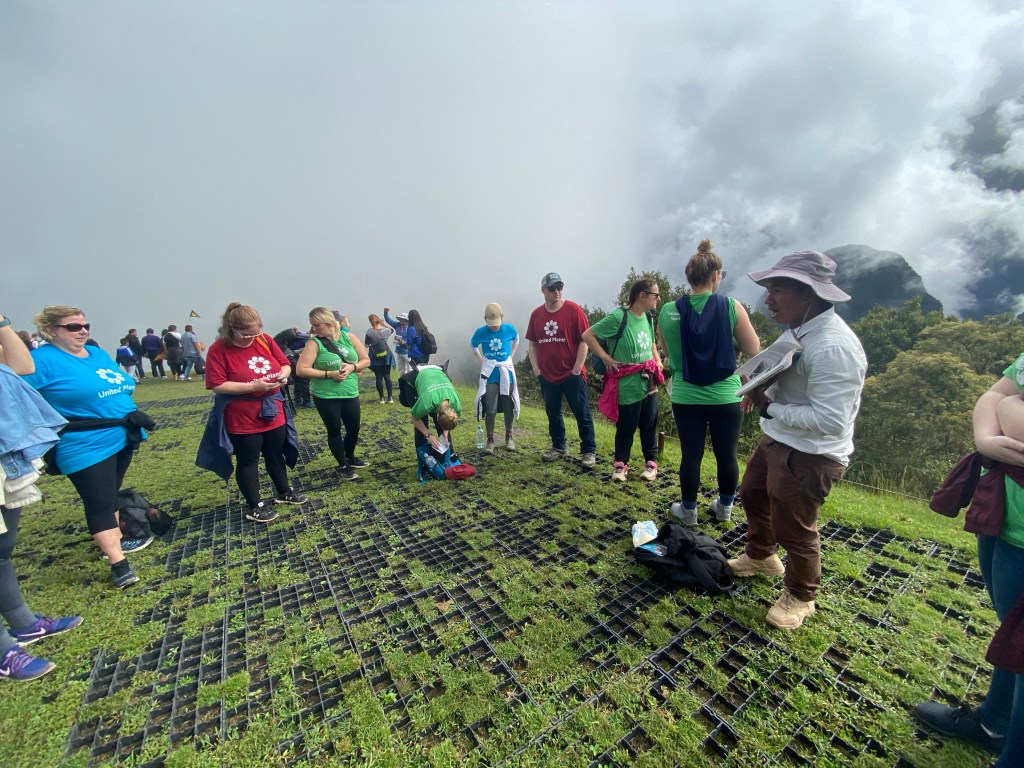
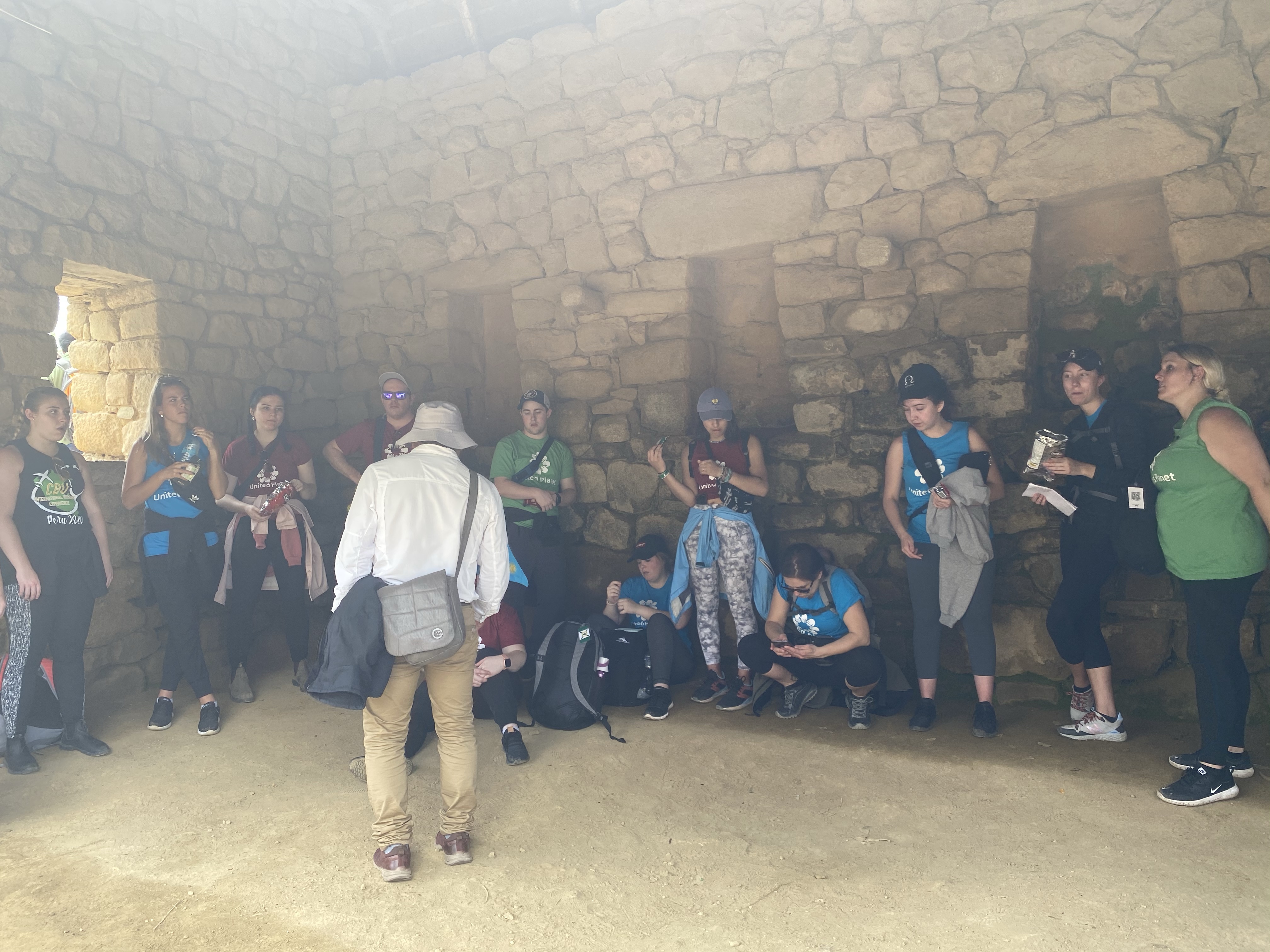
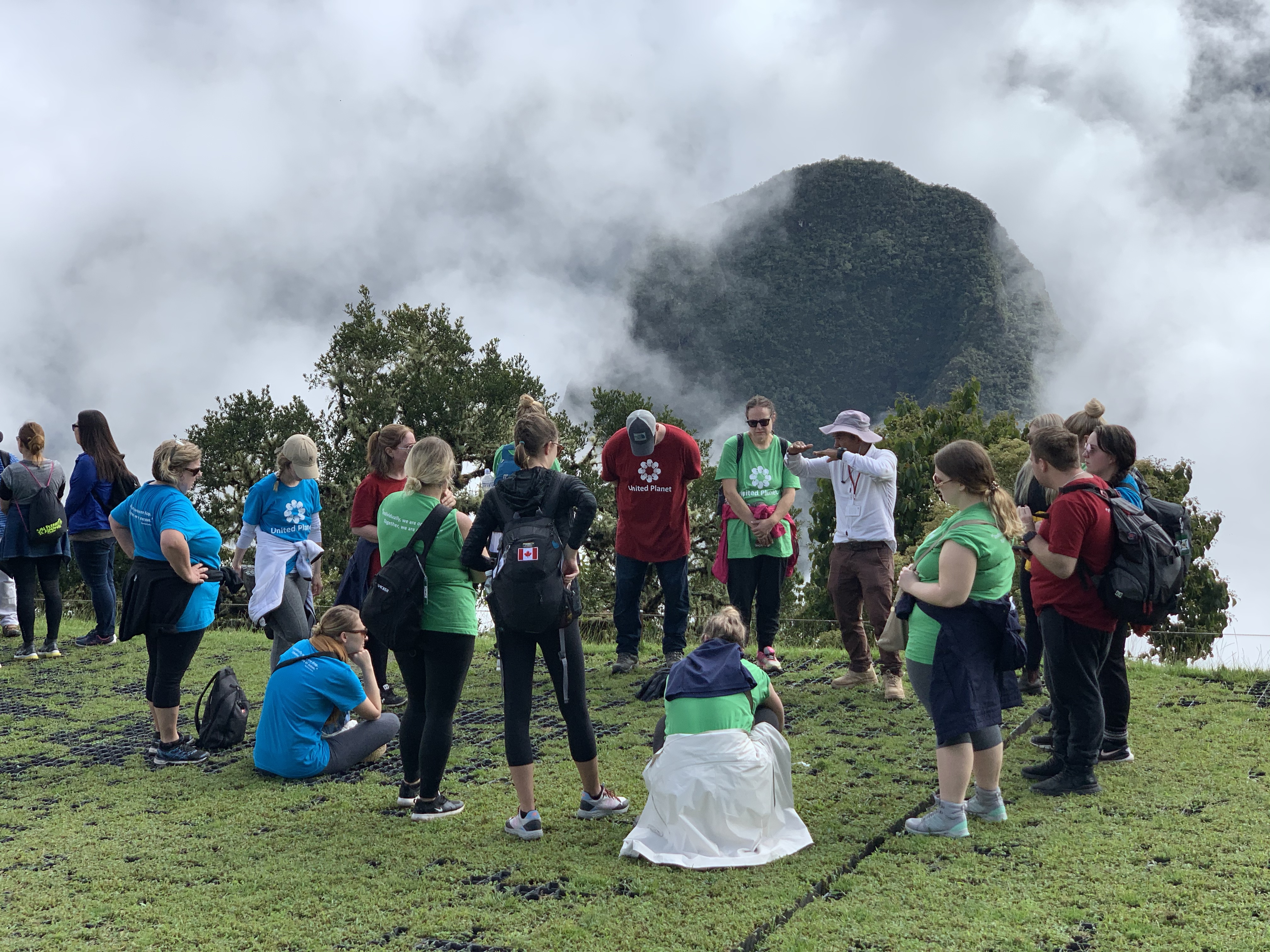
Our tour guide explaining the history of Machu Picchu Kelsey B and AustinMackenzie Somers all smiles on Machu Picchu
Our tour guide told us that according to carbon dating this city in the clouds (Machu Picchu) was built in the 1440s. In 1939 the Peruvian government started to rebuild and recreate the mountains and city.
It is said that in 1572 the Spanish organized 3 armies to climb the mountain and kill the Inka people.
Knowing that the army was coming, the Inka people took all of the treasure from Machu Picchu to their hidden city which is now known as the “lost city”.
There are many people whom are still looking for the lost Inca city.
The complete hike and original Inca trail to Machu Picchu is a 8-9 day hike -> 44km.
A picture of the end of the Inca Trail
In Machu Picchu and the Inka ruins there were about 500 habitants. All of the habitants were people of importance. People like Teachers, Shamans, professors, doctors, engineers, etc.
All of the farmers lived in the surrounding mountains.
In the city and ruins of Machu Picchu there were cocca plants, fruit, etc. All of the potatoes and quinoa were grown in the mountains where the environment suited them best.
All of the mountains surrounding this area have their own name because they believe each mountain has it’s own spirit. The Peruvians and Inca people place offerings for the mountains periodically.
Machu Picchu- old Mountain
Waynana Picchu- Young Mountain
*See under photos for the history and descriptions*
This is the agriculture side of the city/ Machu Picchu
Peru is 60% Amazon Rain Forrest. We learned that in the Peruvian Amazon there are still 15 tribes in isolation. They are secluded from the world, they live off nature and nature alone.
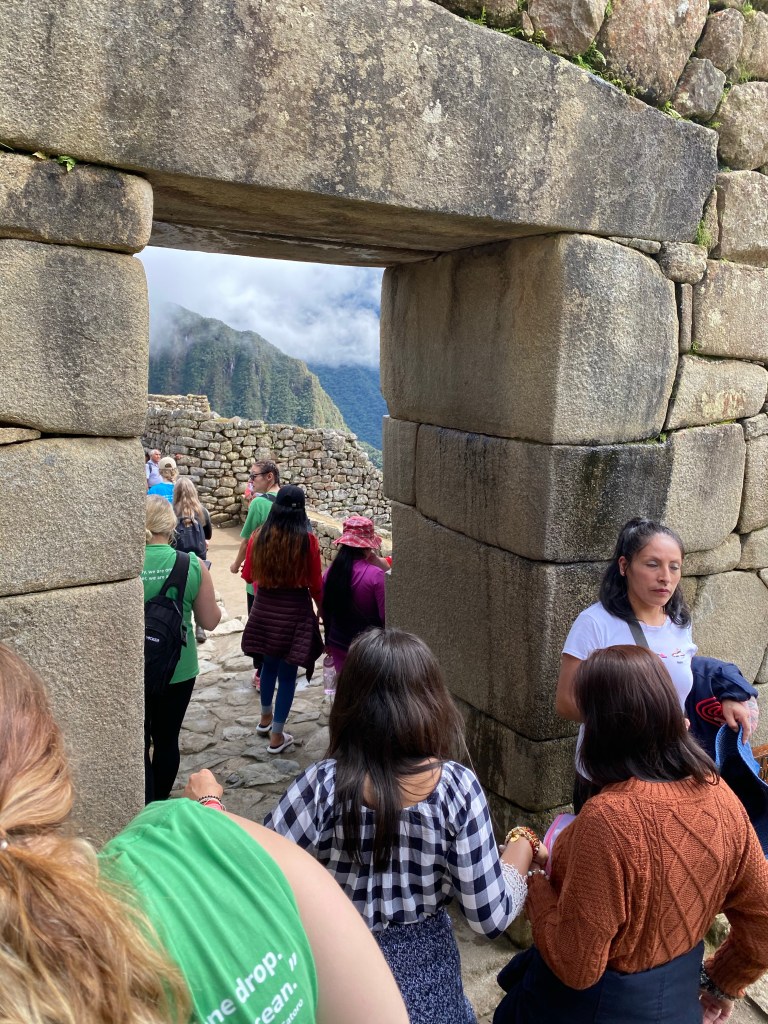
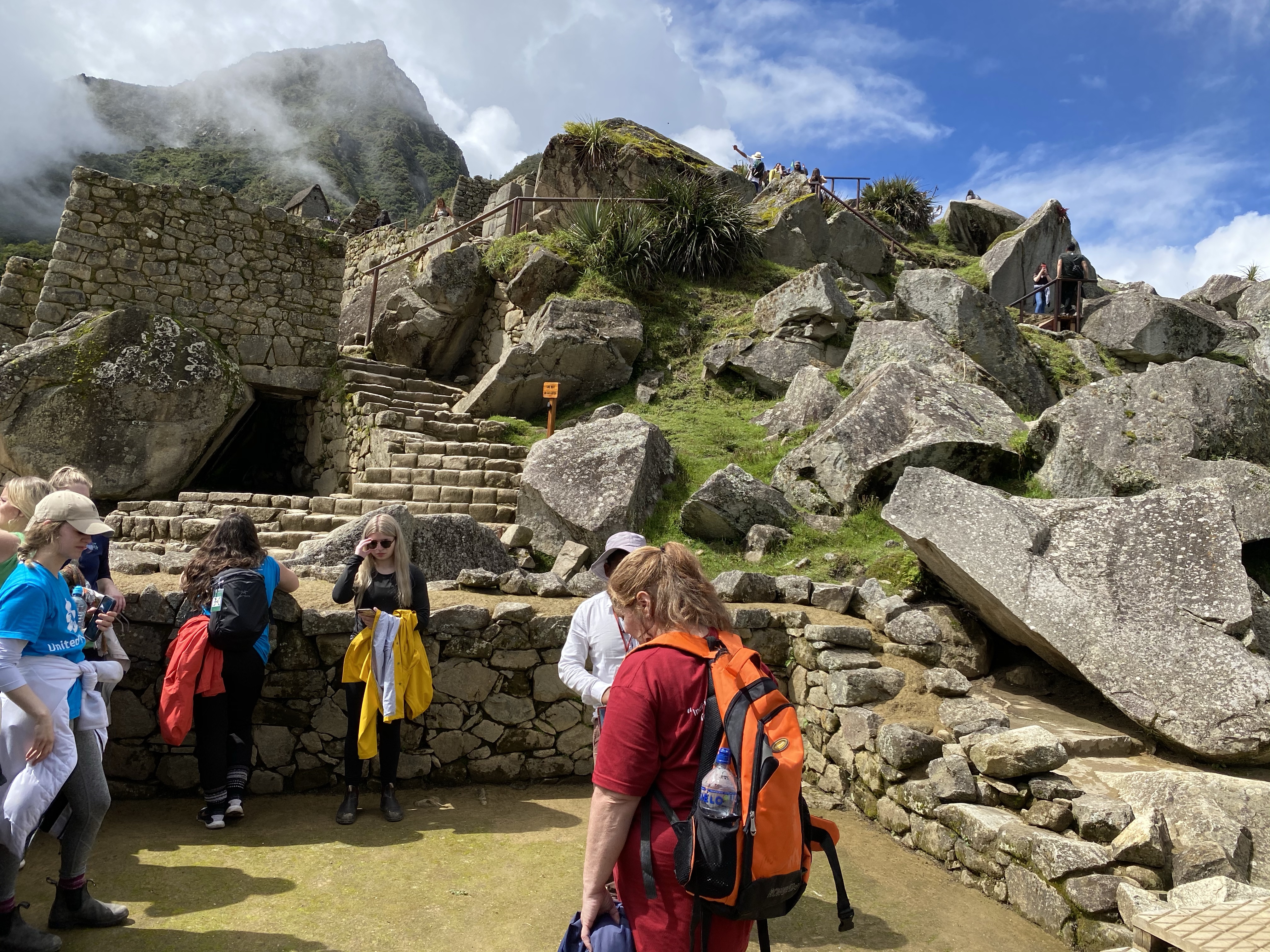
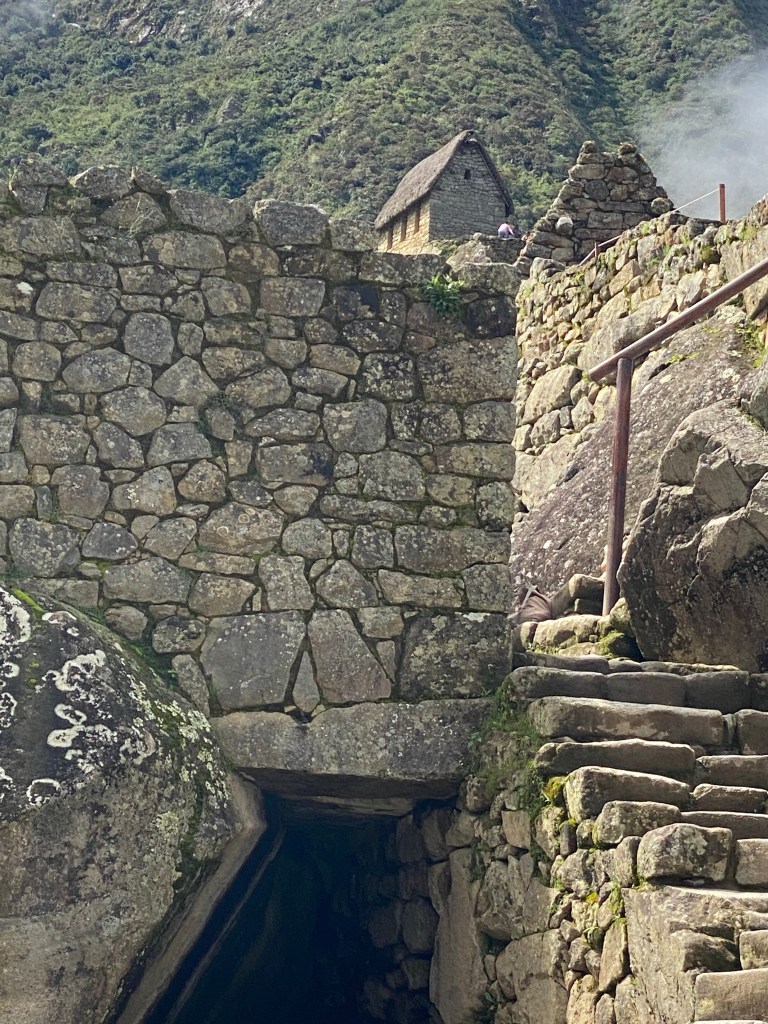
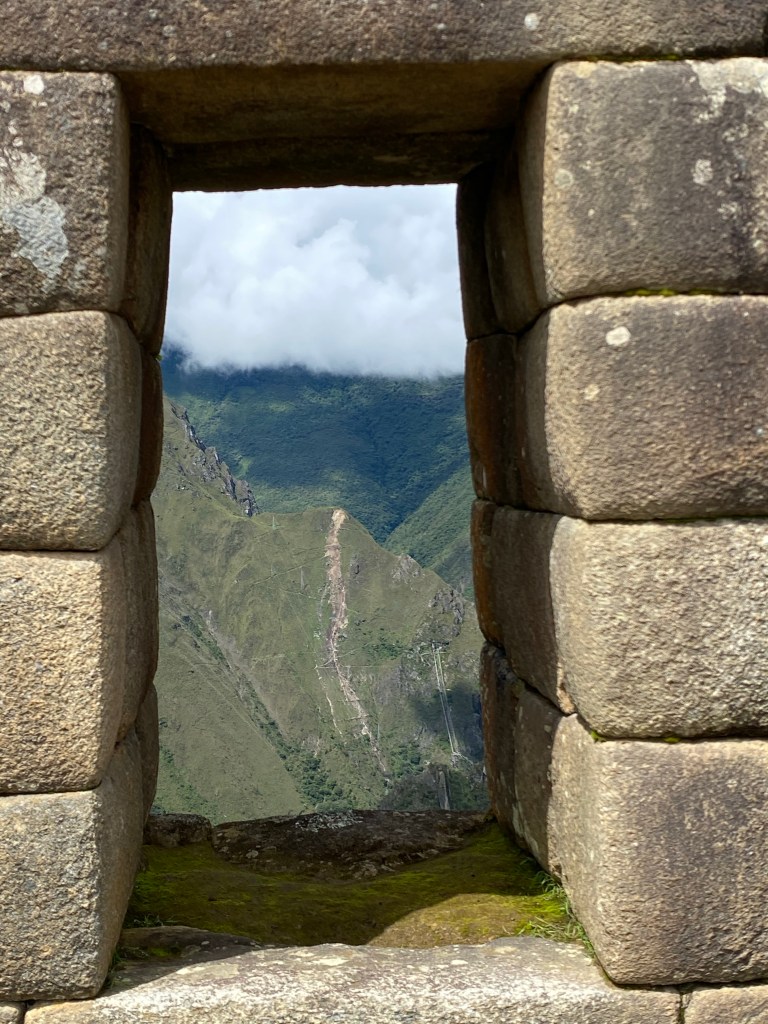
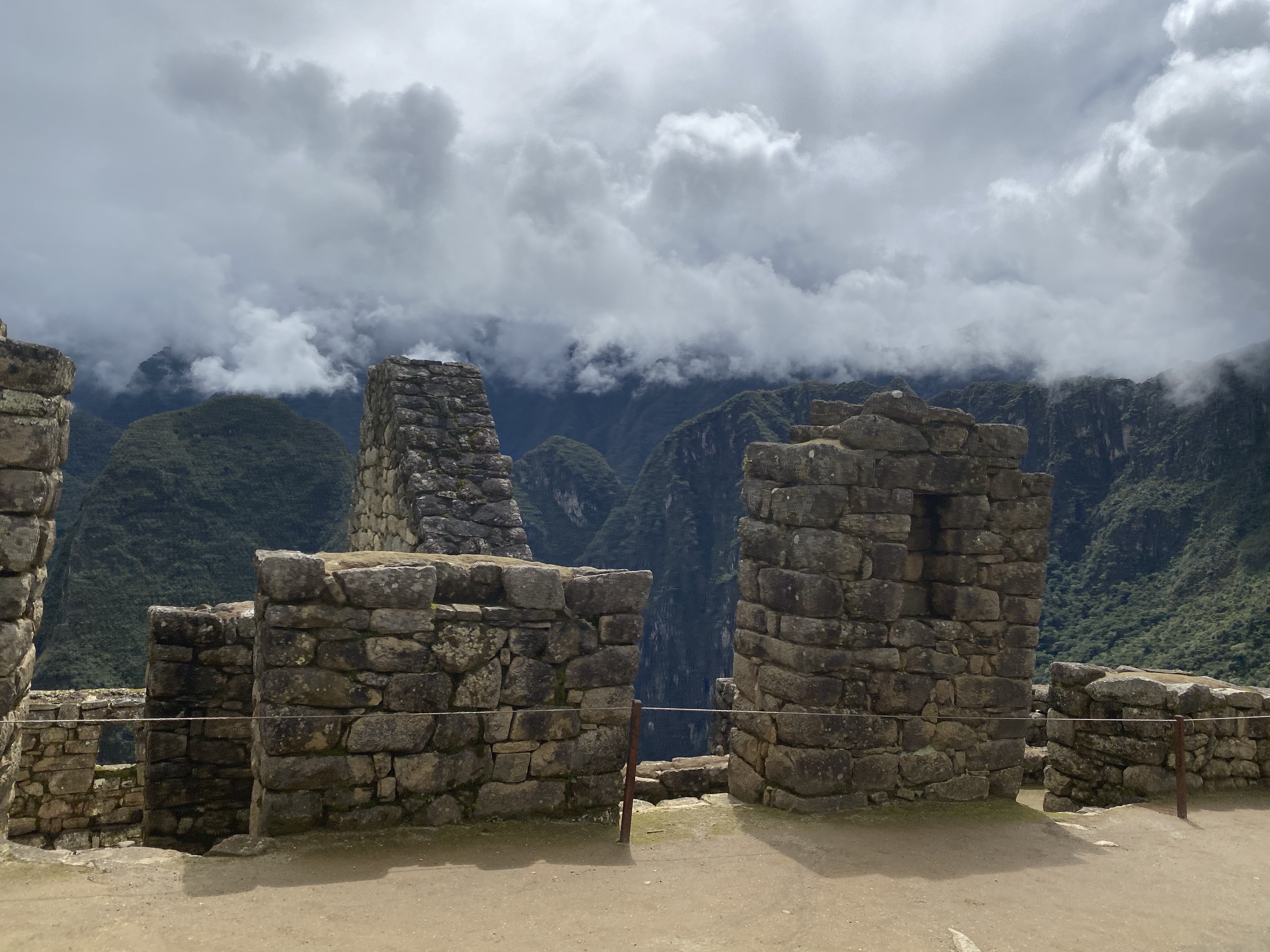
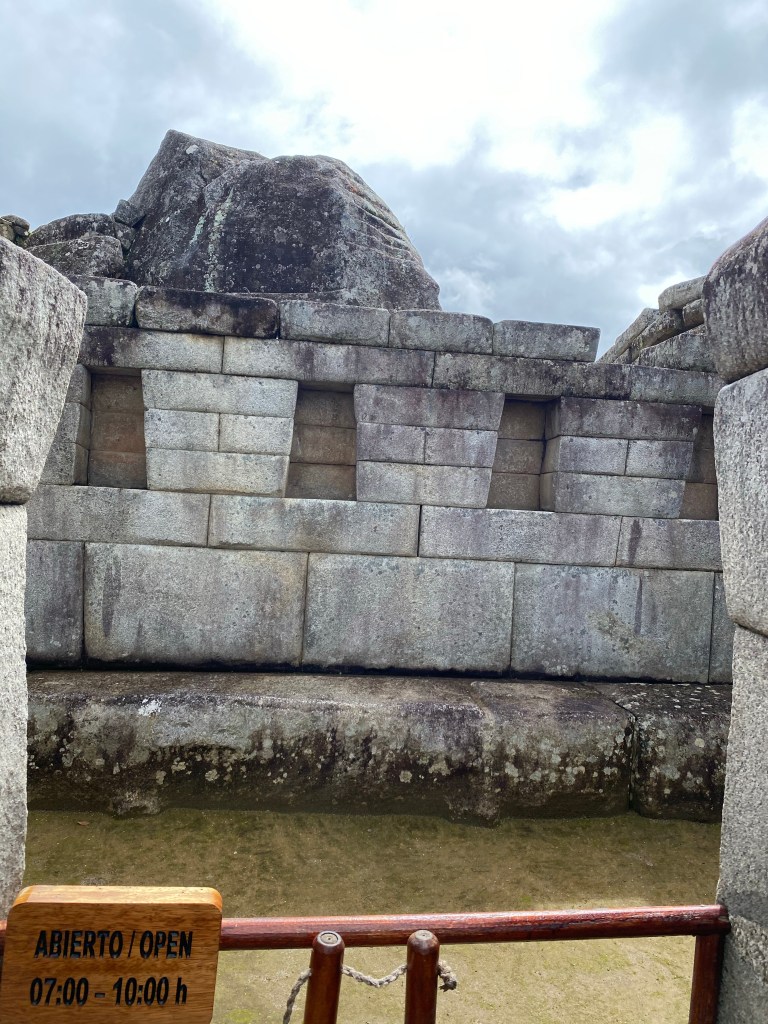
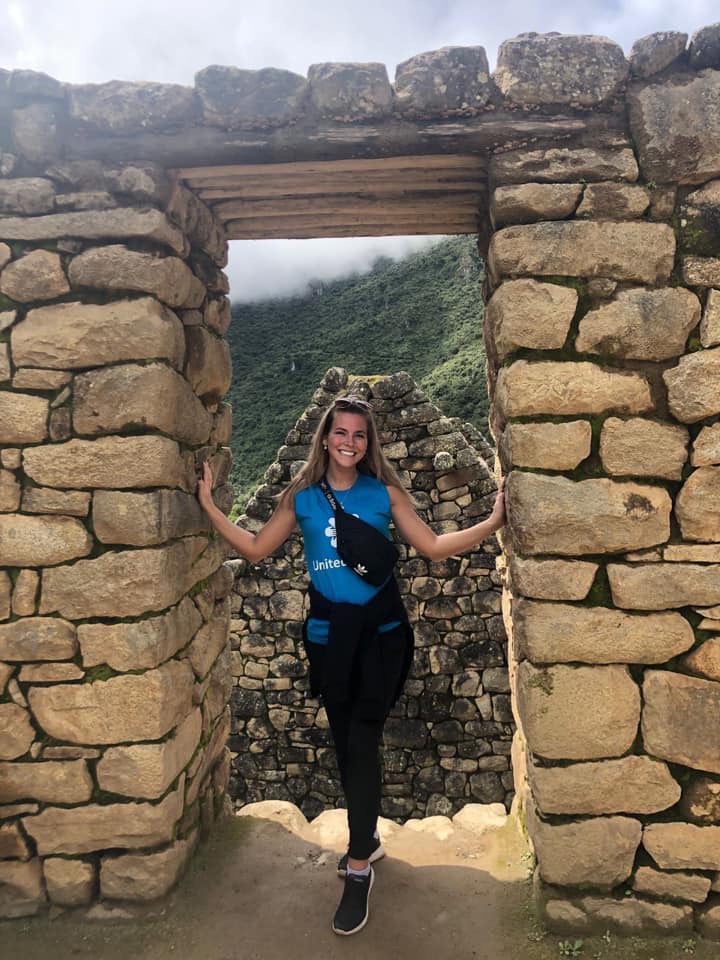
There used to be a door in this archway. The Inca people had many enemies; they needed this door for protection, the door was always open during the day and closed at night.This picture is taken in the old Quarry- the Inka people used to cut rocks here with bronze and chisels. They then set them on fire and put water on them so they would split.Here you can see the little houses/rooms in the rocks.The Inka people would have two windows in this area- facing different directions to let light in for the winter and summer solstices. In Peru the winter solstice is June 24 and summer Solstice is December 21st. The Peruvians celebrate their solstices with song and dance.
The Inka people used to sacrifice black llamas during a solstice and also to the mountains- as they considered the colour black to represent purity.
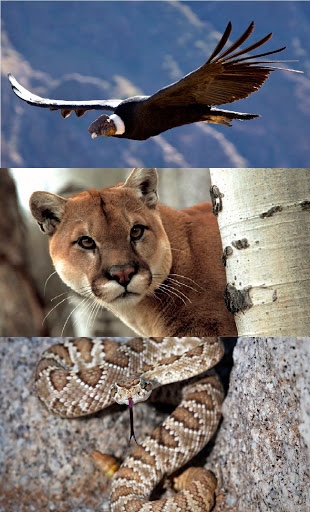
Our tour guide explained The importance of the Condor, Puma and Snake in Inca religion and history.
The snake represents the lower or underworld; the middle world of earth is represented by the puma; and the heavens are represented by the condor. These sacred animals, the condor included, find themselves not only on ruins but as parts of the Inca’s holy cross.
The Incas considered the condor as the most sacred bird. Its large size and ability to travel long distances – from Lima to the Andes, for example – are some of the reasons why the Incas believed it to be the messenger for the heavens.
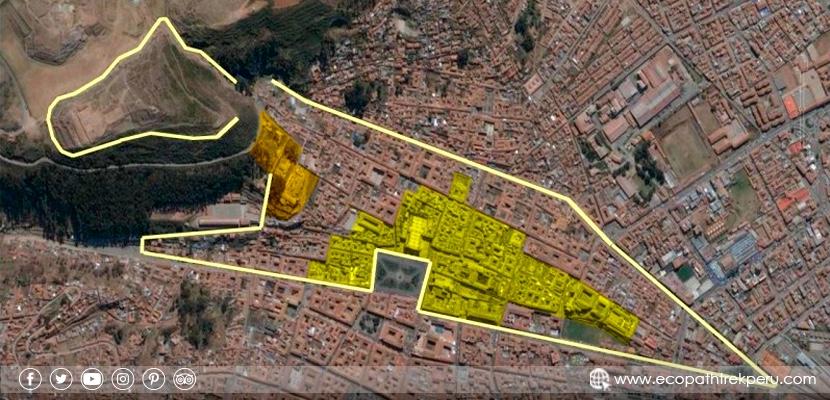
The puma was the symbol of power and strength and was also the symbol of life on Earth. It was important to show qualities of the puma in this lifetime, as it was considered the greatest predator. Because of this, the Incas designed Cusco in the shape of a puma.
Cusco City- in the shape of a Puma.
The snake represents the underworld, which, in Inca Traditions , has different meanings than Christianity. Rather than representing hell or being a sign of eternal punishment and temptations, the snake represented the beginning of new life. In the Inca Mythology , the snake is also believed to represent wisdom and knowledge.
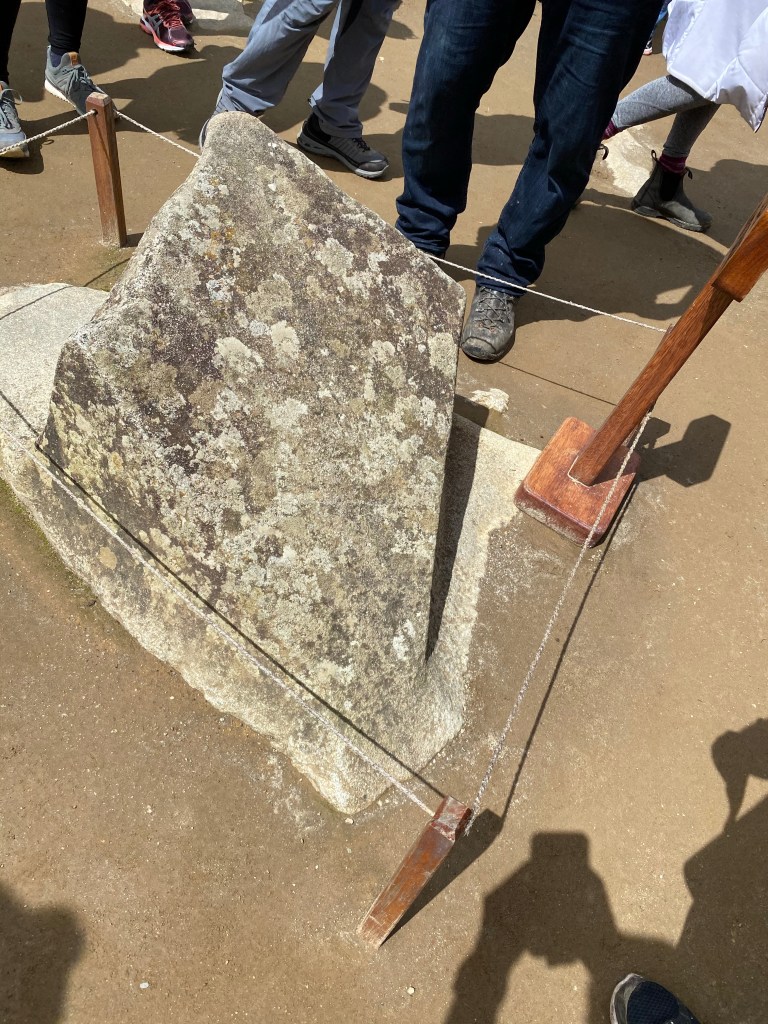
The sacred plazaThe compass rock- our tour guide tested it out using the compass app on My (Austin’s) phone. The top point- points to the South, Bottom point to the North Left point- is east Right point- is west
There were signs put up around the ruins saying do not touch the rocks/walls. The reason for these signs is that they want to preserve the ruins but also they believe that when you touch a rock- you touch good energy. They want to save that good energy.
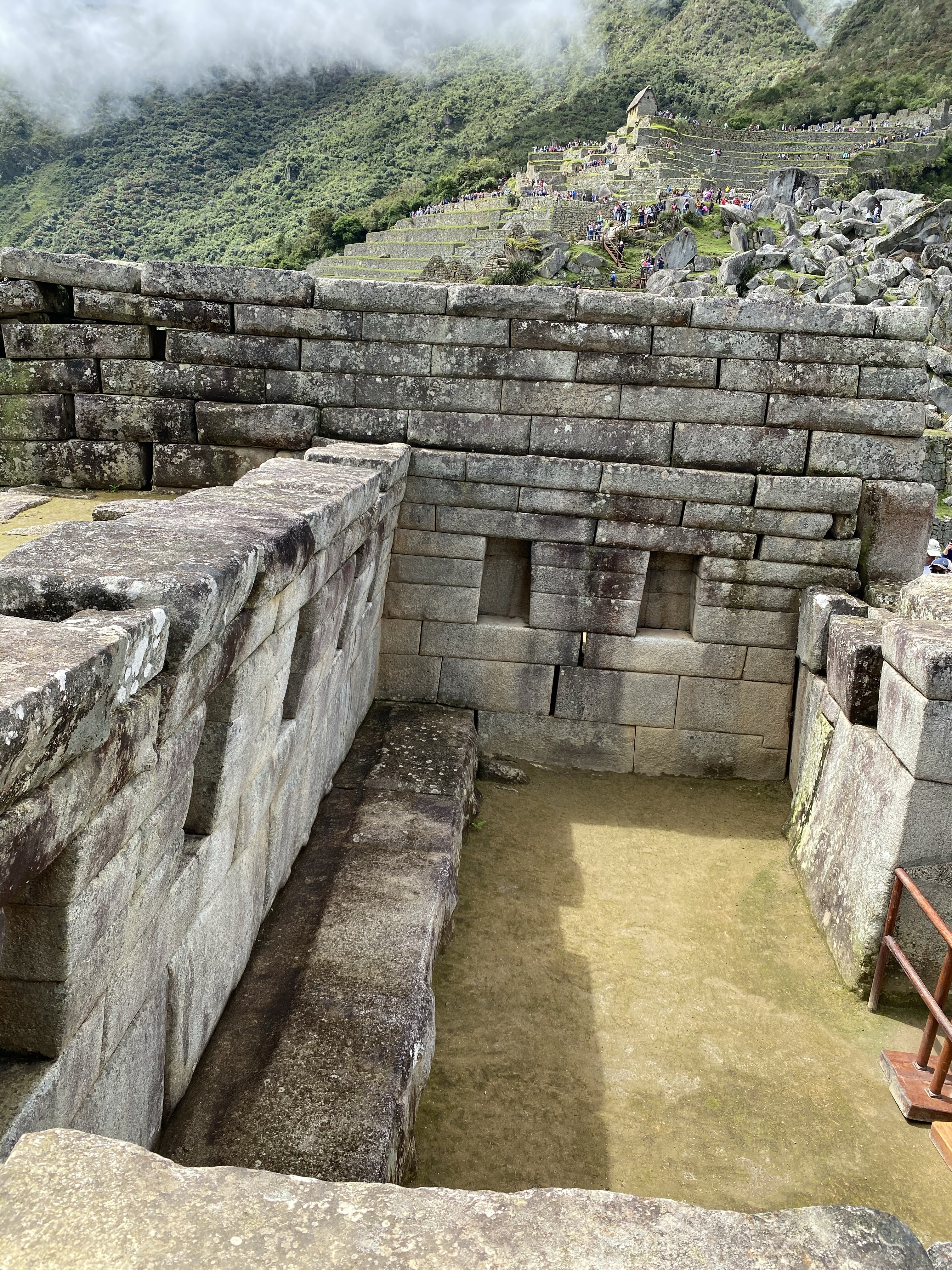
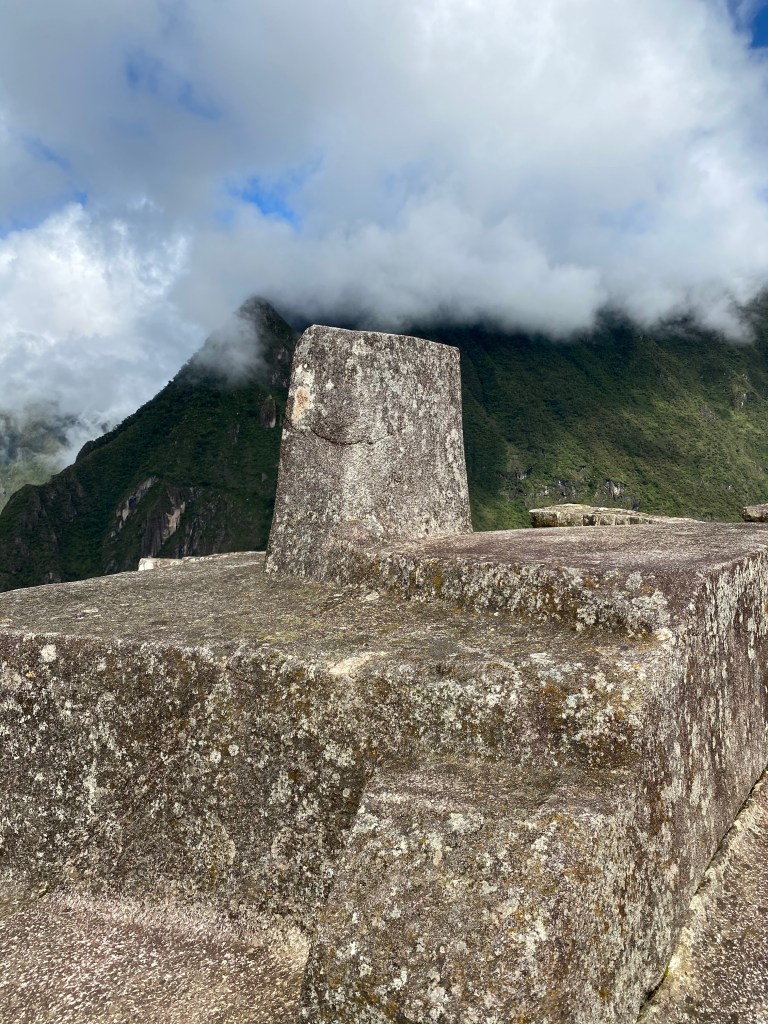
The Inca people use these window like areas to put treasures and decorative statues. They also sometimes used to use them for offerings and ceremonial purposes. The sun dial the Inca people of Machu Picchu used to use to tell the time.
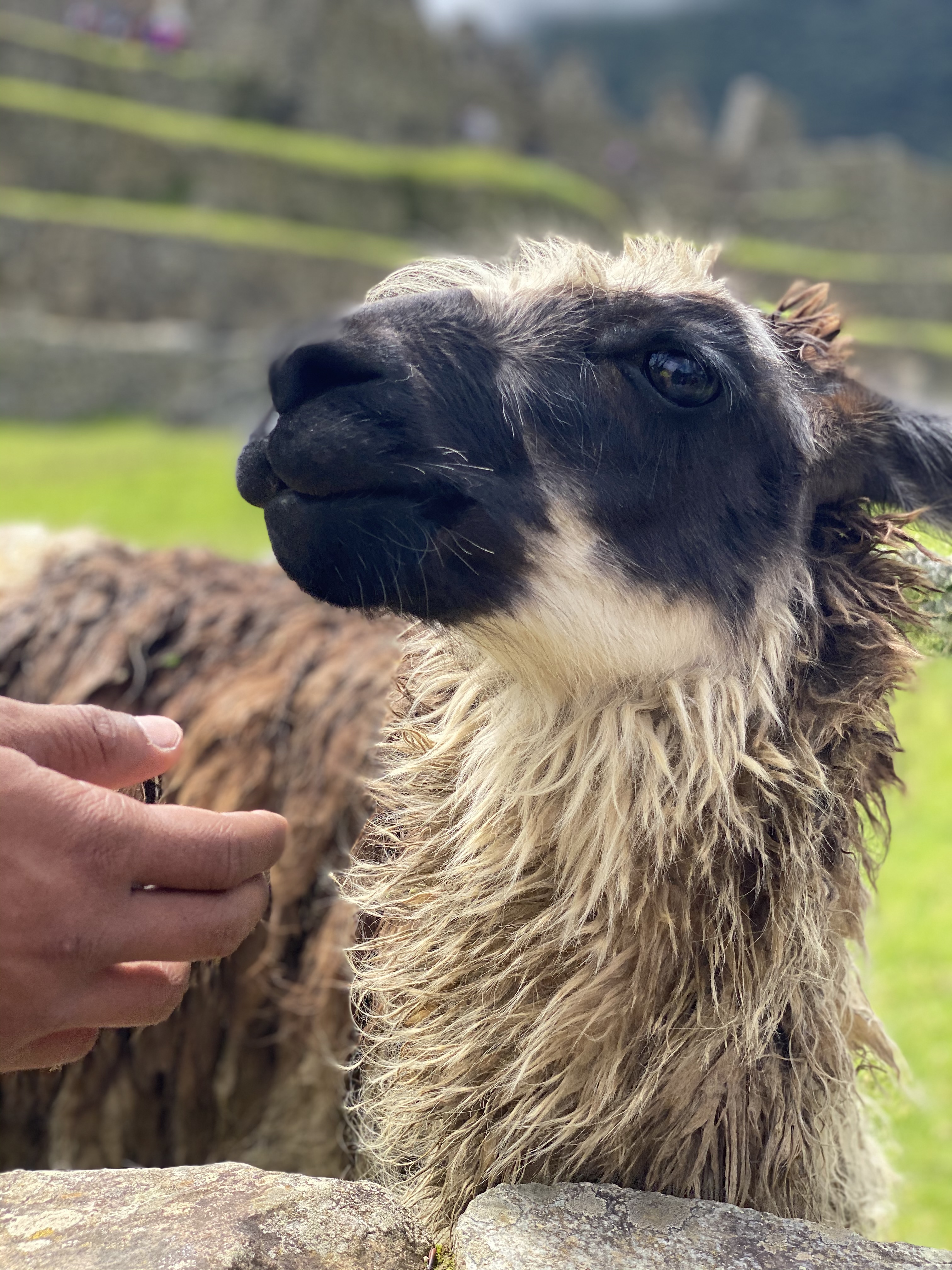
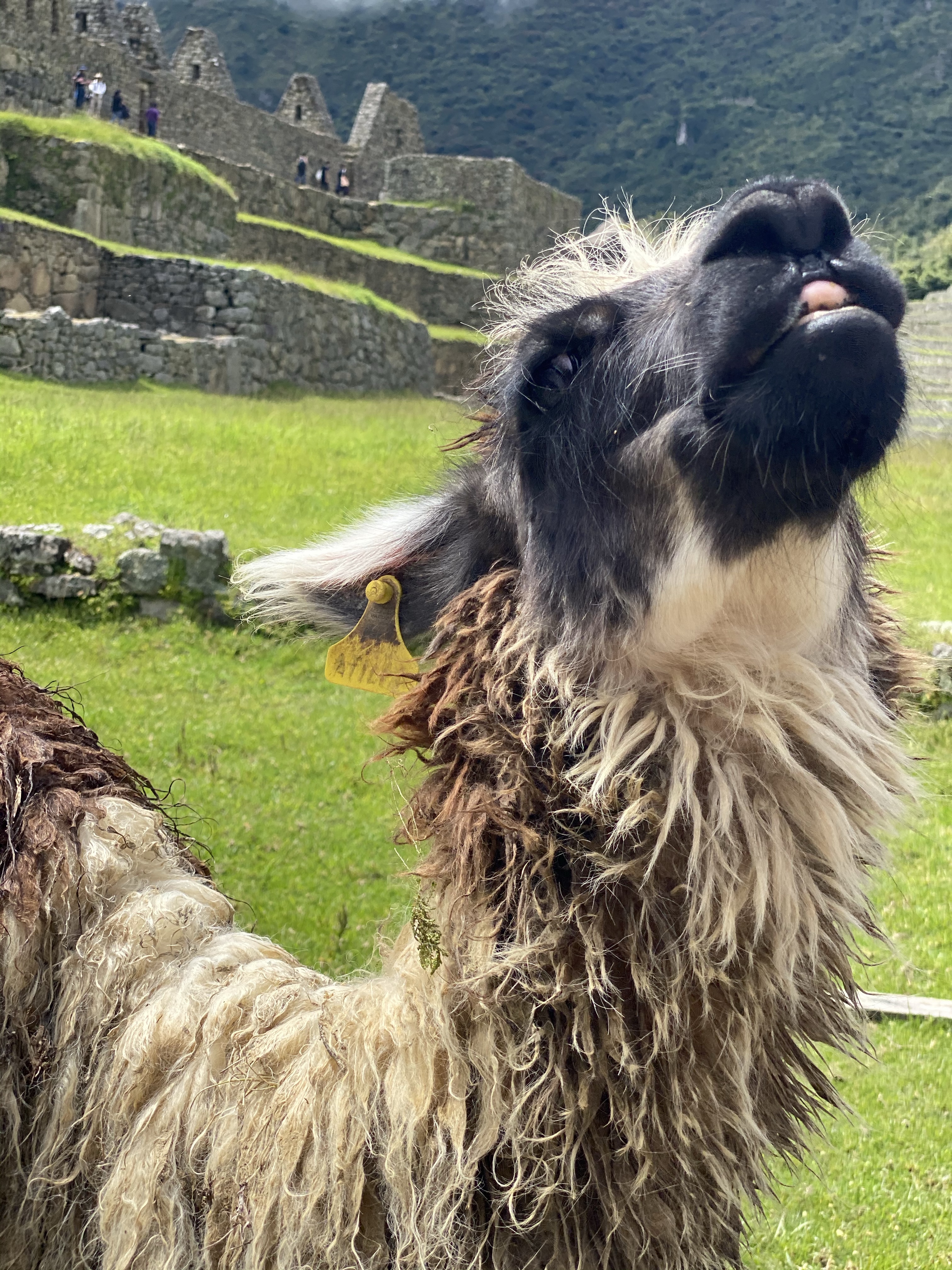
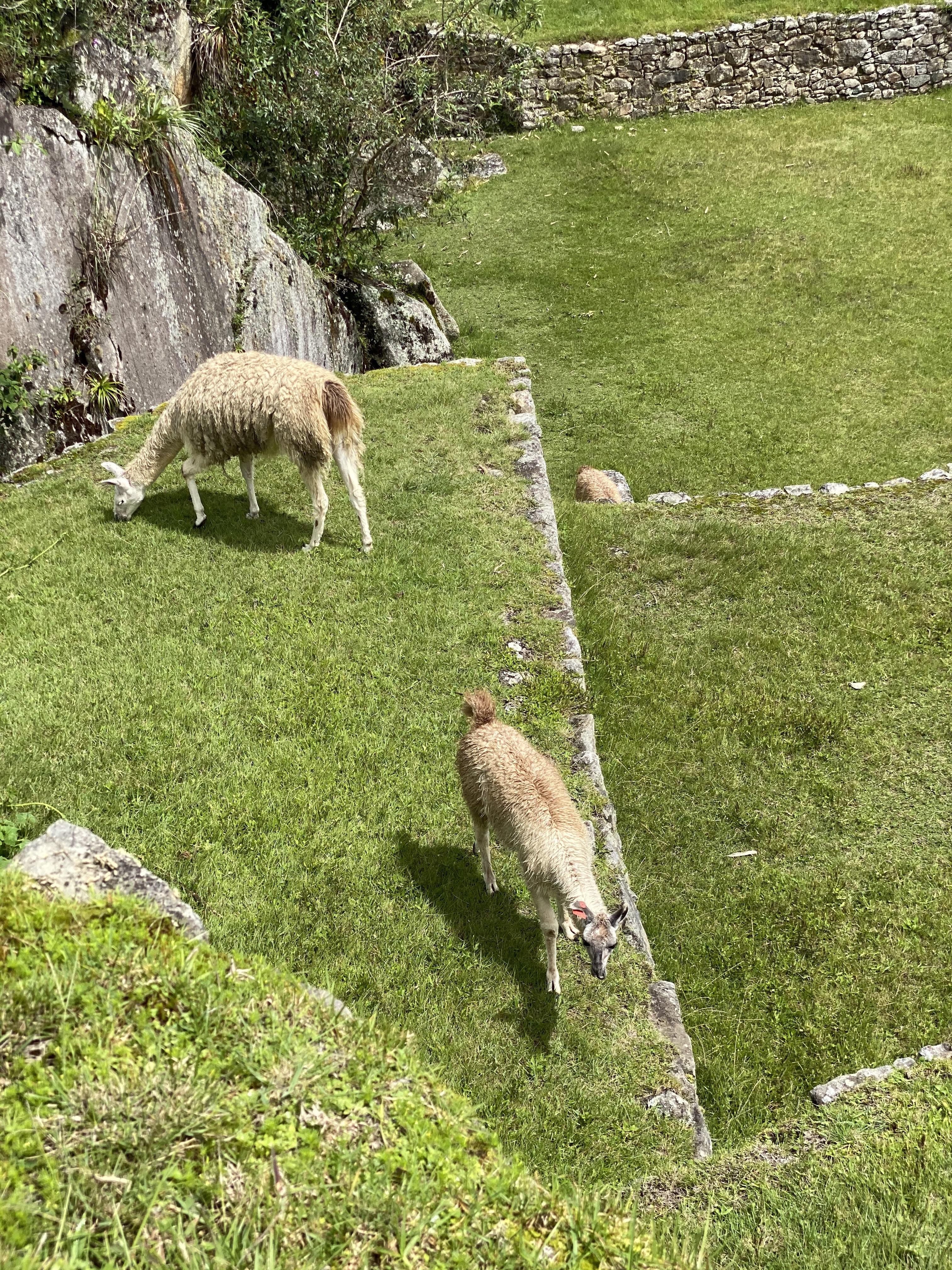
1 mother llama gives birth to 1 baby llama and they are pregnant for 10 months. Llamas eat a wide variety of food but some of their favourites are bananas and apples.What used to be the school- Yachay Wasi
After seeing them llamas we then made our way to the area of Machu Picchu where the Incas communicated by echo. They hosted dances and songs here with beautiful Acoustics.
Echo area of Machu Picchu.
This echo valley was one of our last stops with the tour guide on Machu Picchu.
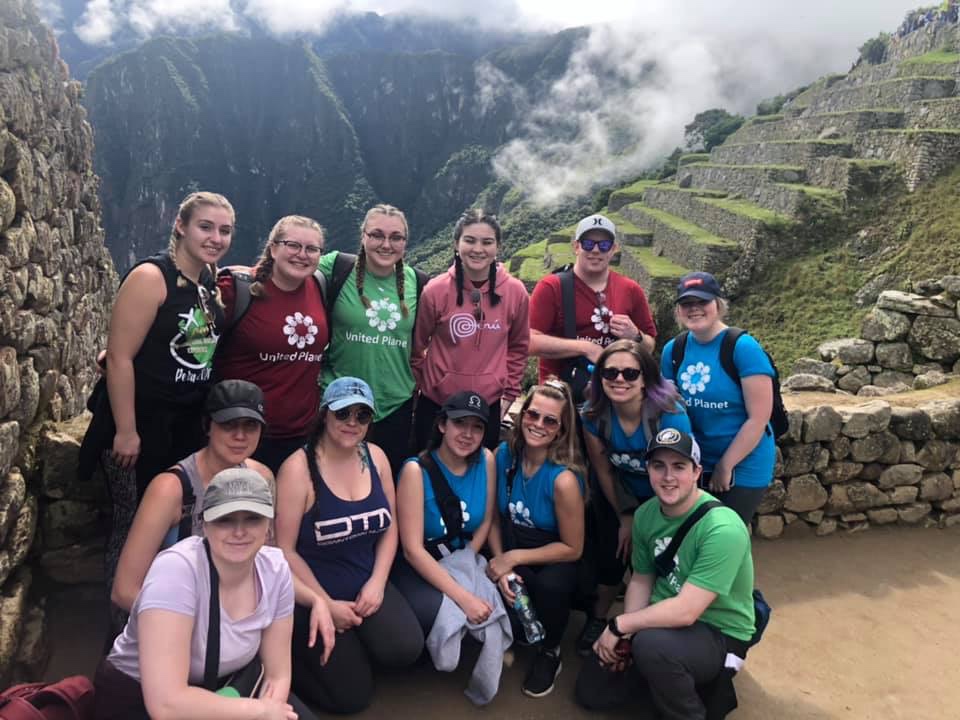
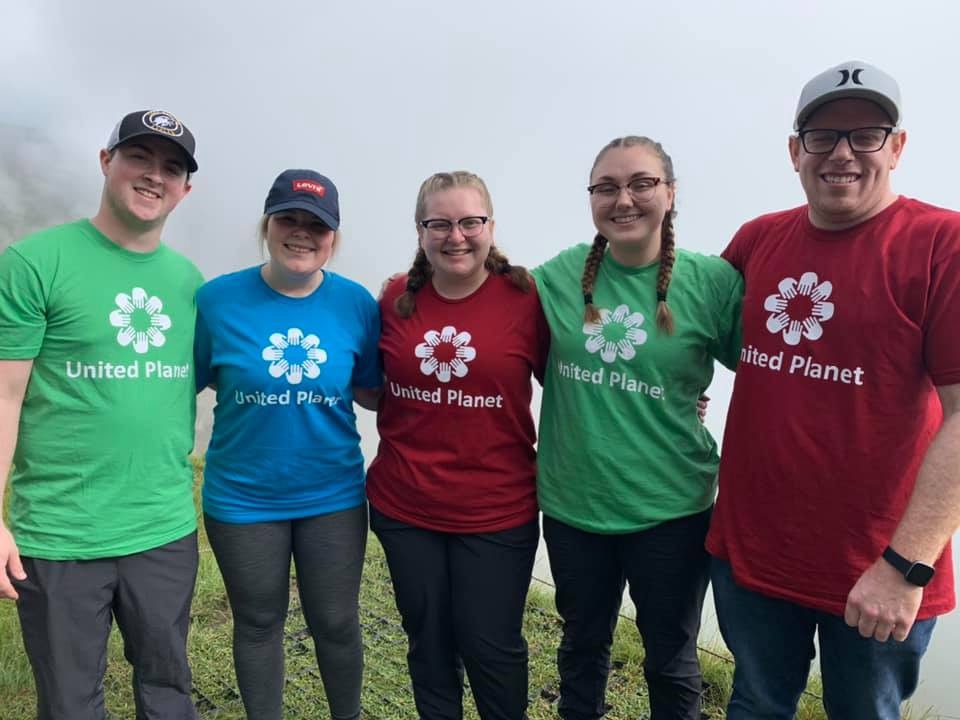
Here are some pictures of us enjoying the amazing view and culture:
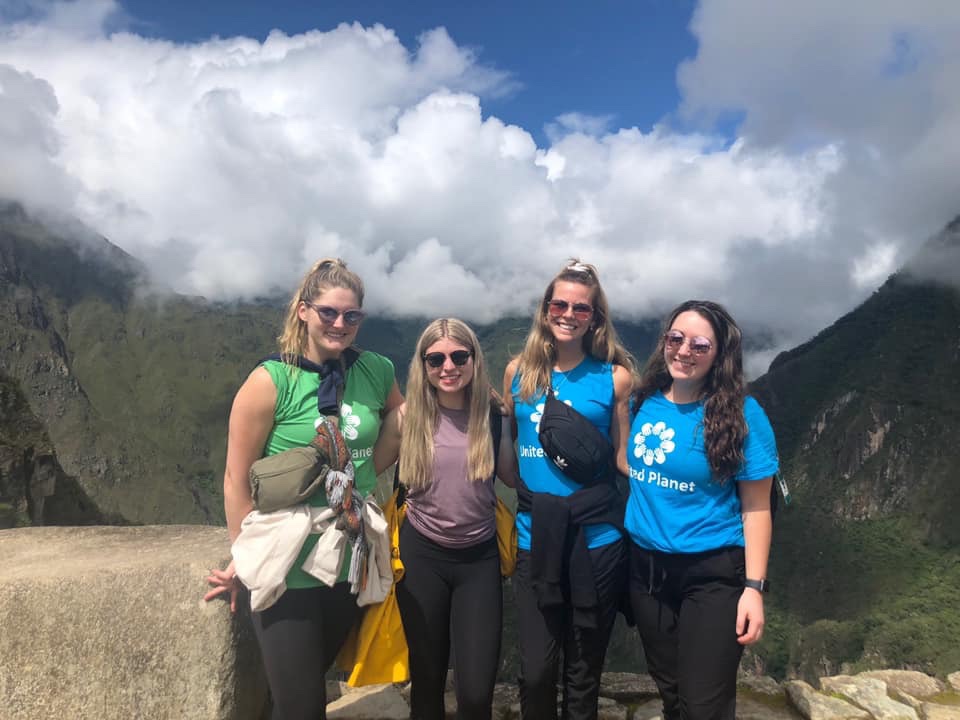
The instructors: Karen Kennedy, Rebecca MacDougall, Angela MacDonald, Tracy Lillington, Callie Roberts (United Planet)Angela Rocking it on top of Machu PicchuKristen Bach with a beautiful photo on top of Machu Picchu, over looking the mountains, if you look really close you can see a rainbow 🌈
With all that, after one of the most amazing experiences of our lives we bussed back to Aguas Calientes for something to eat and then a have a nice relaxing evening before we head back to our hostel in Cusco.
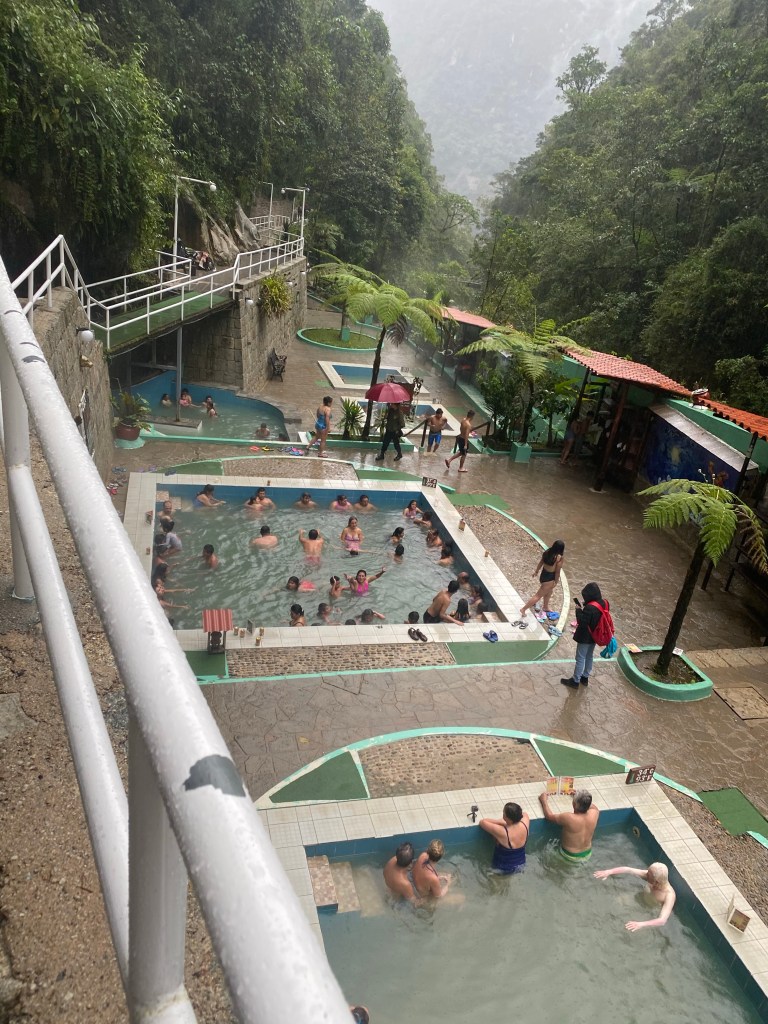
We went to the hot springs to relax after our very busy morning.
We travelled back to Ollantaitambo by train at around 8:50pm. We then bussed back to San Blas Cusco where our hostel is located.
Today was truly an amazing and emotional experience!
Today started off by packing some things for an overnight stay at Aguas Calientes so we can head to the world famous Machu Picchu tomorrow.
We took our usual couple minute walk to the buses at around 9:30am Peruvian time.
We piled our overnight luggage in the back of the two buses and off we went to Aguas Calientes (the town that grants access to Machu Picchu.)
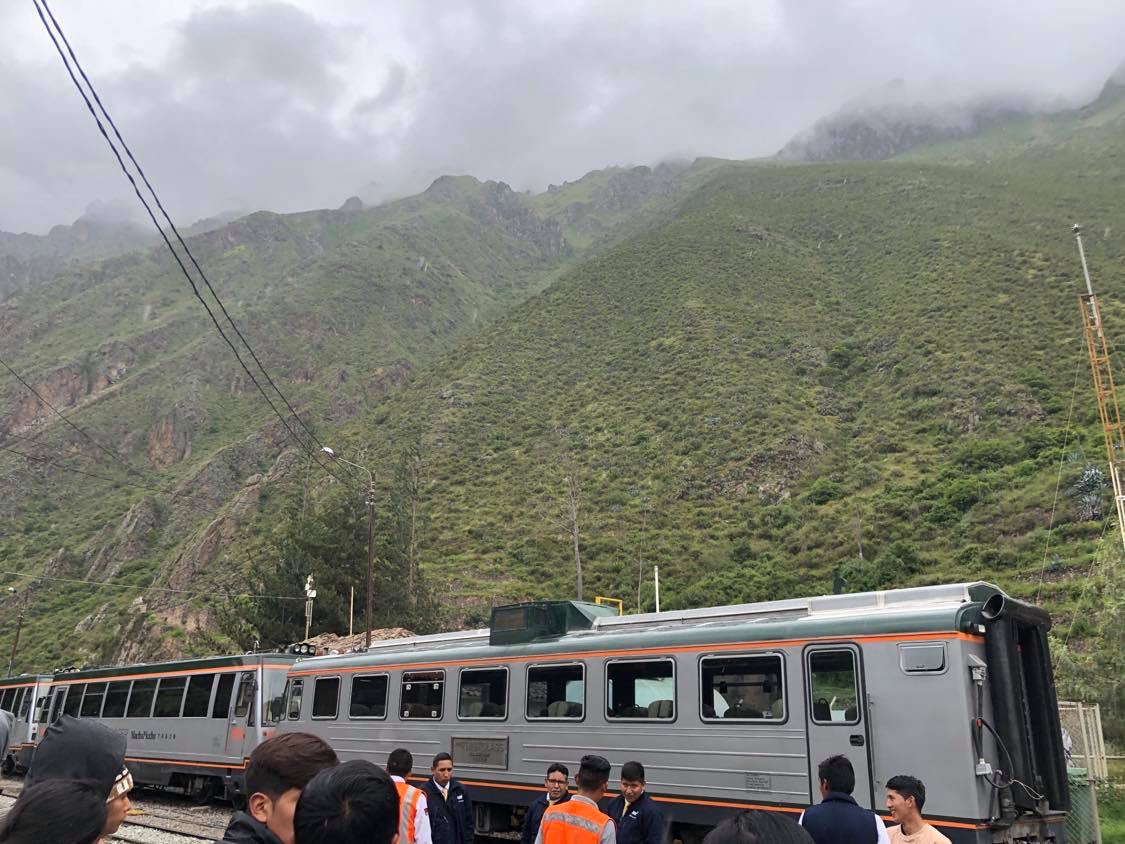
The bus took us to Ollantaitambo and then we got a train from there to Aguas Calientes.
Unfortunately due to timing only half of us were able to board the first train. The other half quickly boarded the next available train.
David’s James and Hannah GAllison, Kaitlynn, Megan and Mackenzie Kristen Not shown in these pictures is Austin, Morgan, Robyn and Jean
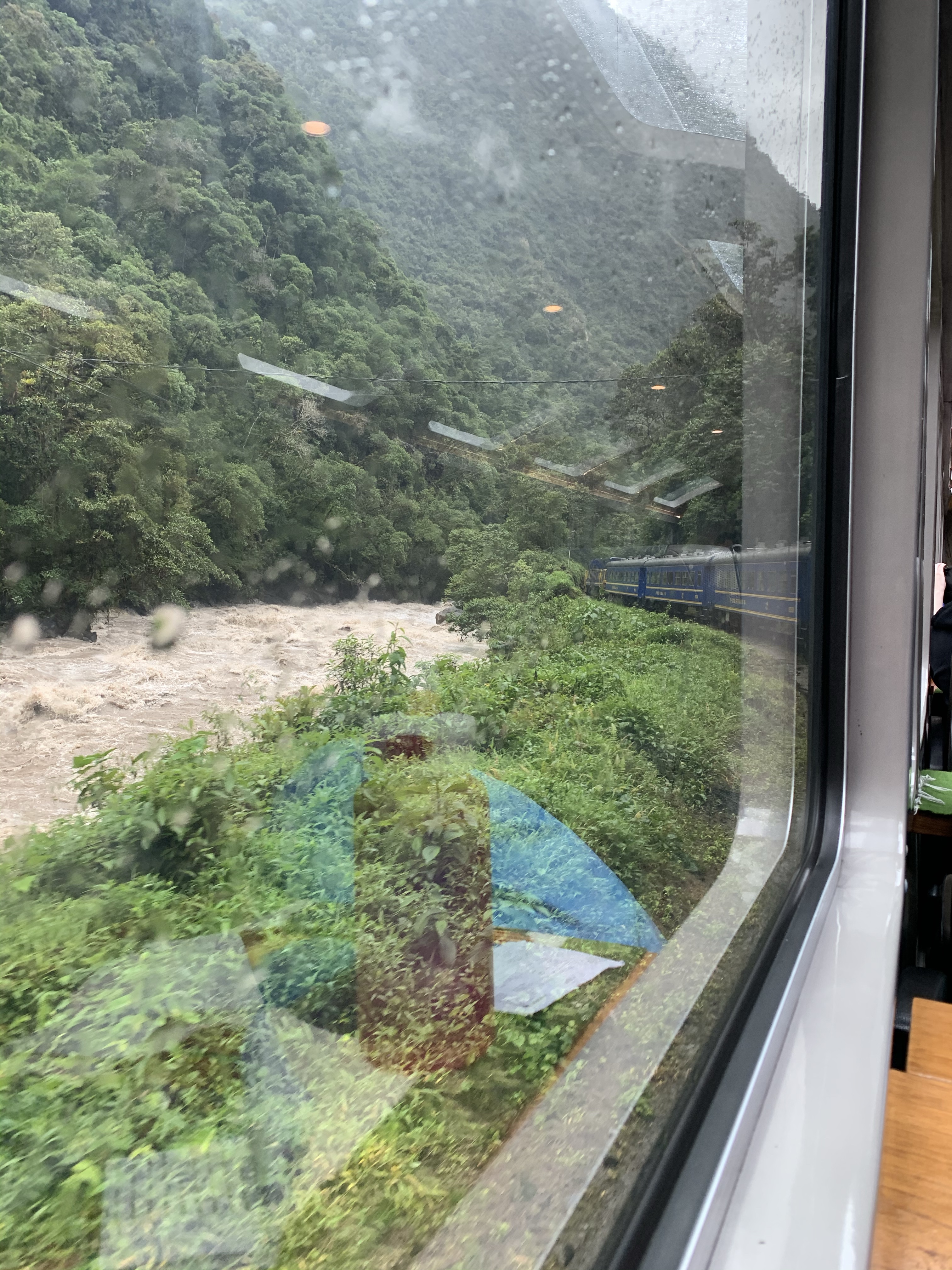
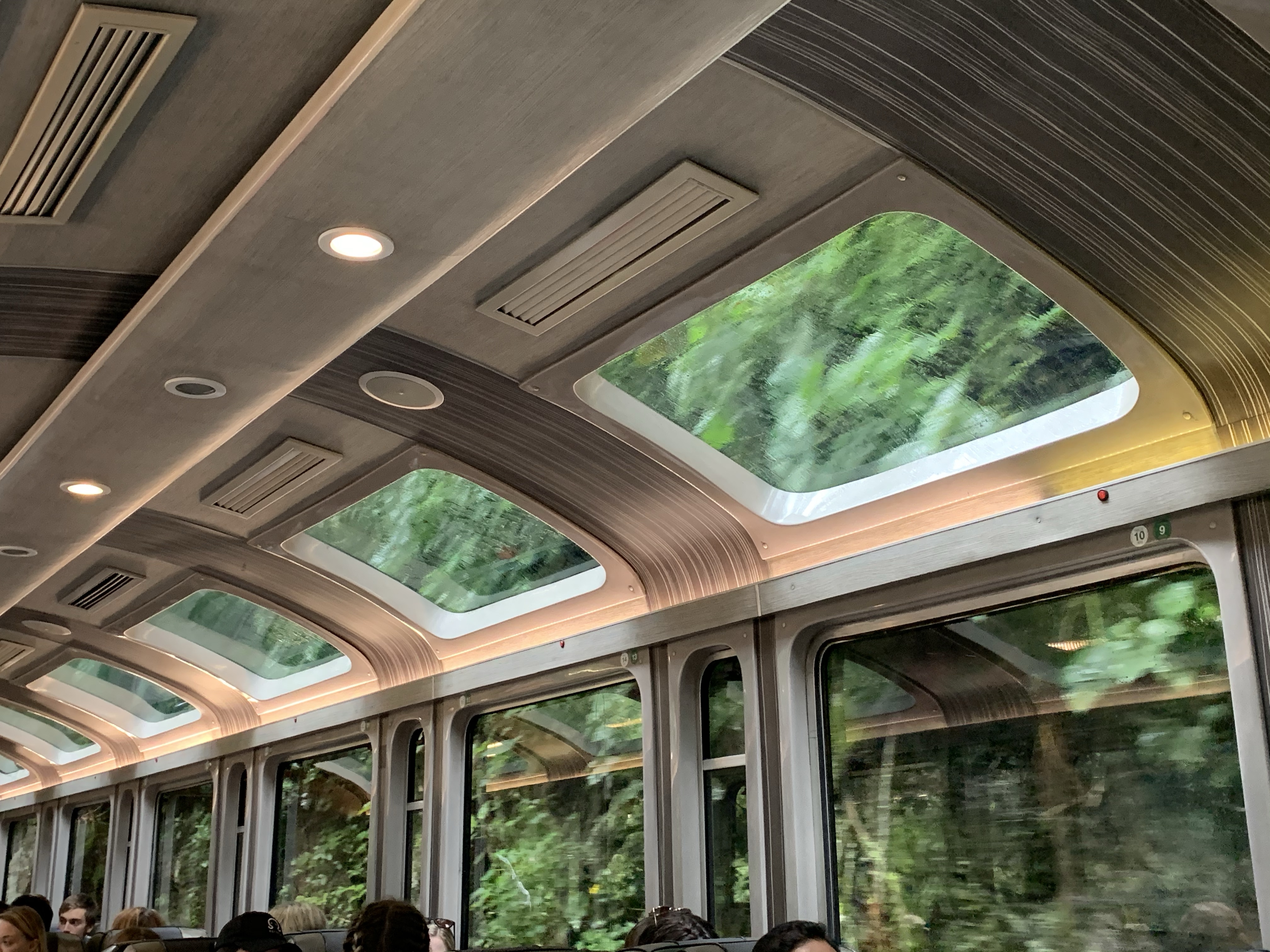
After a scenic train ride we arrived to Aguas Calientes and checked into our new hostel.
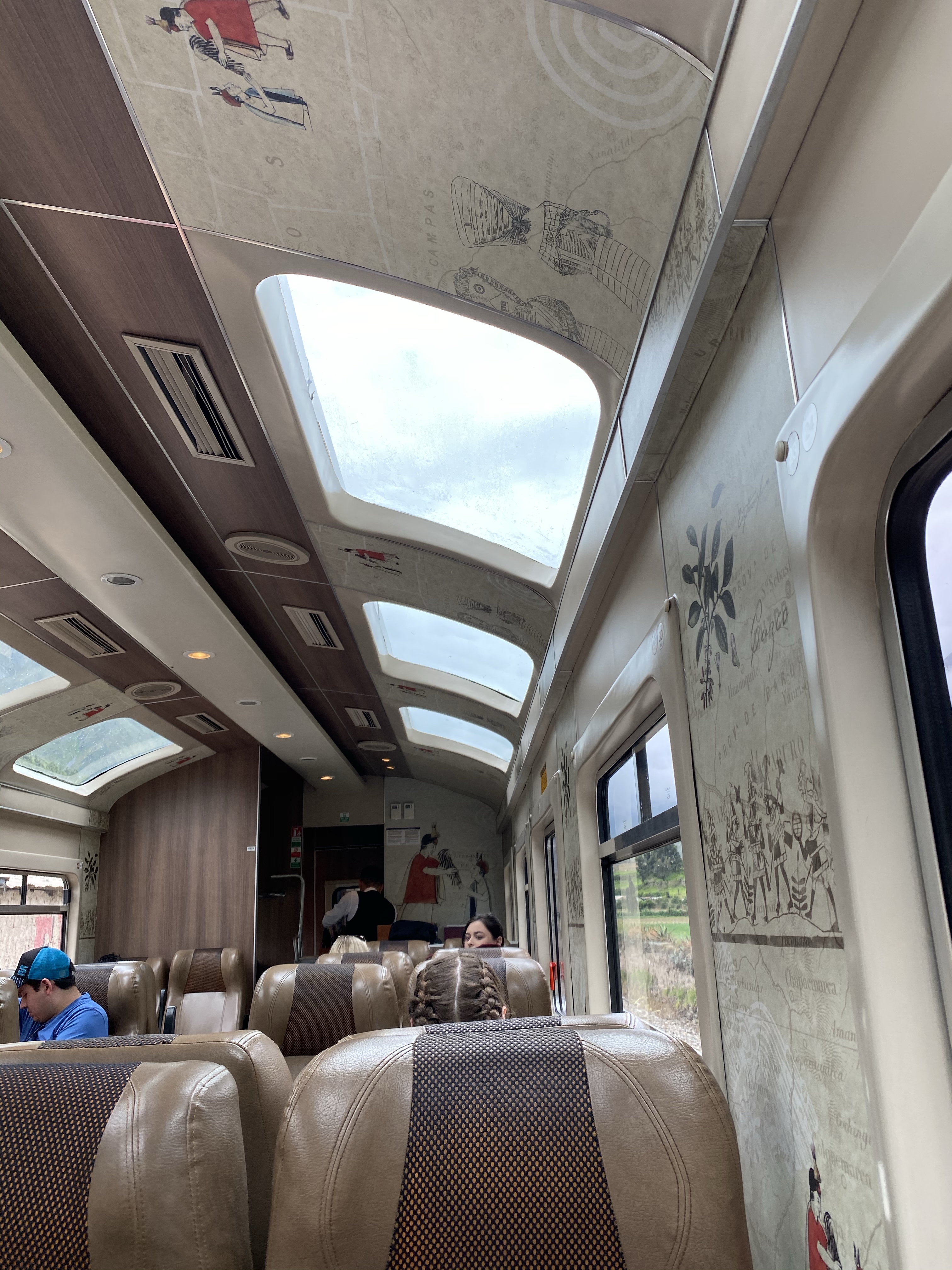
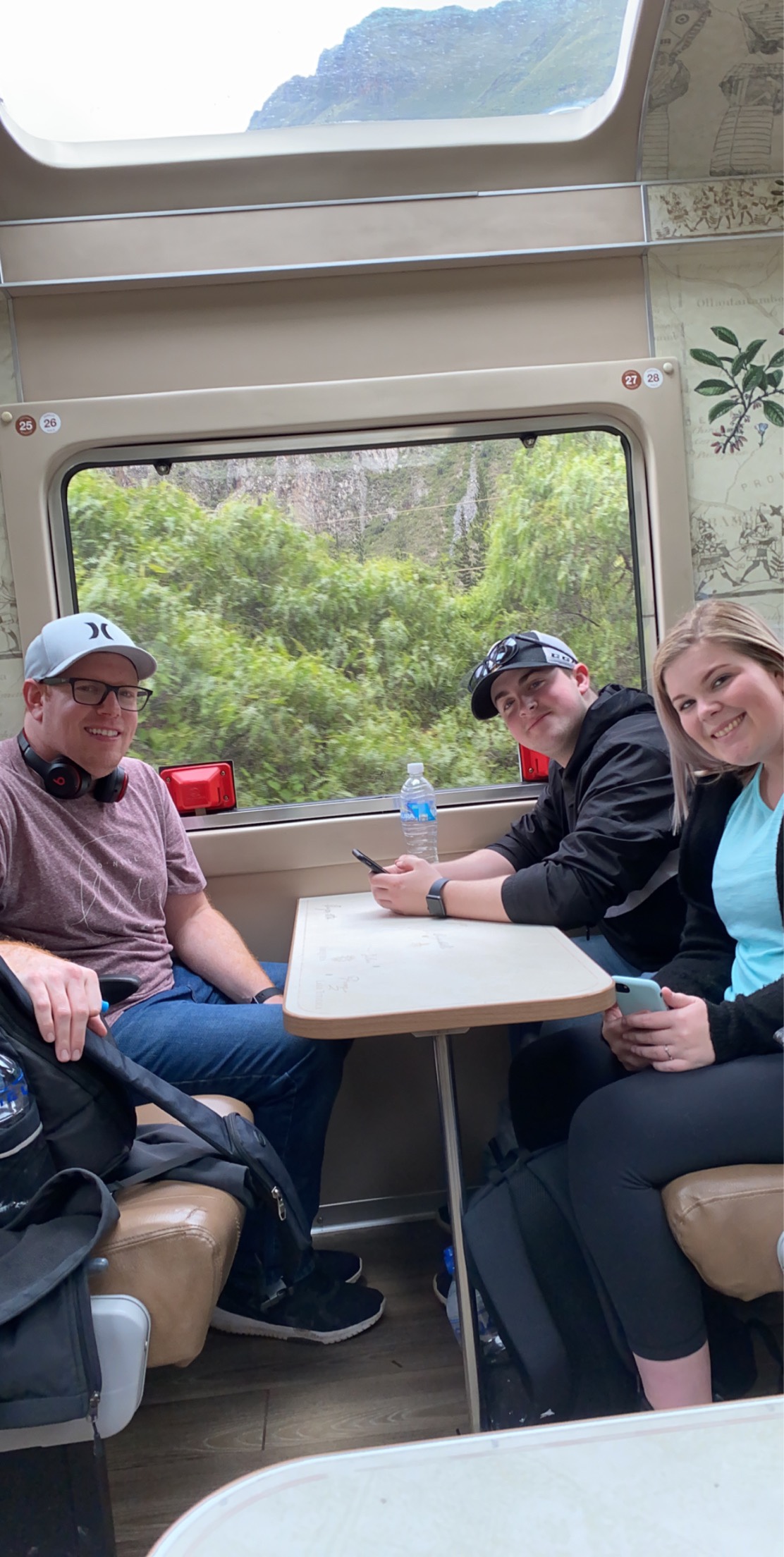
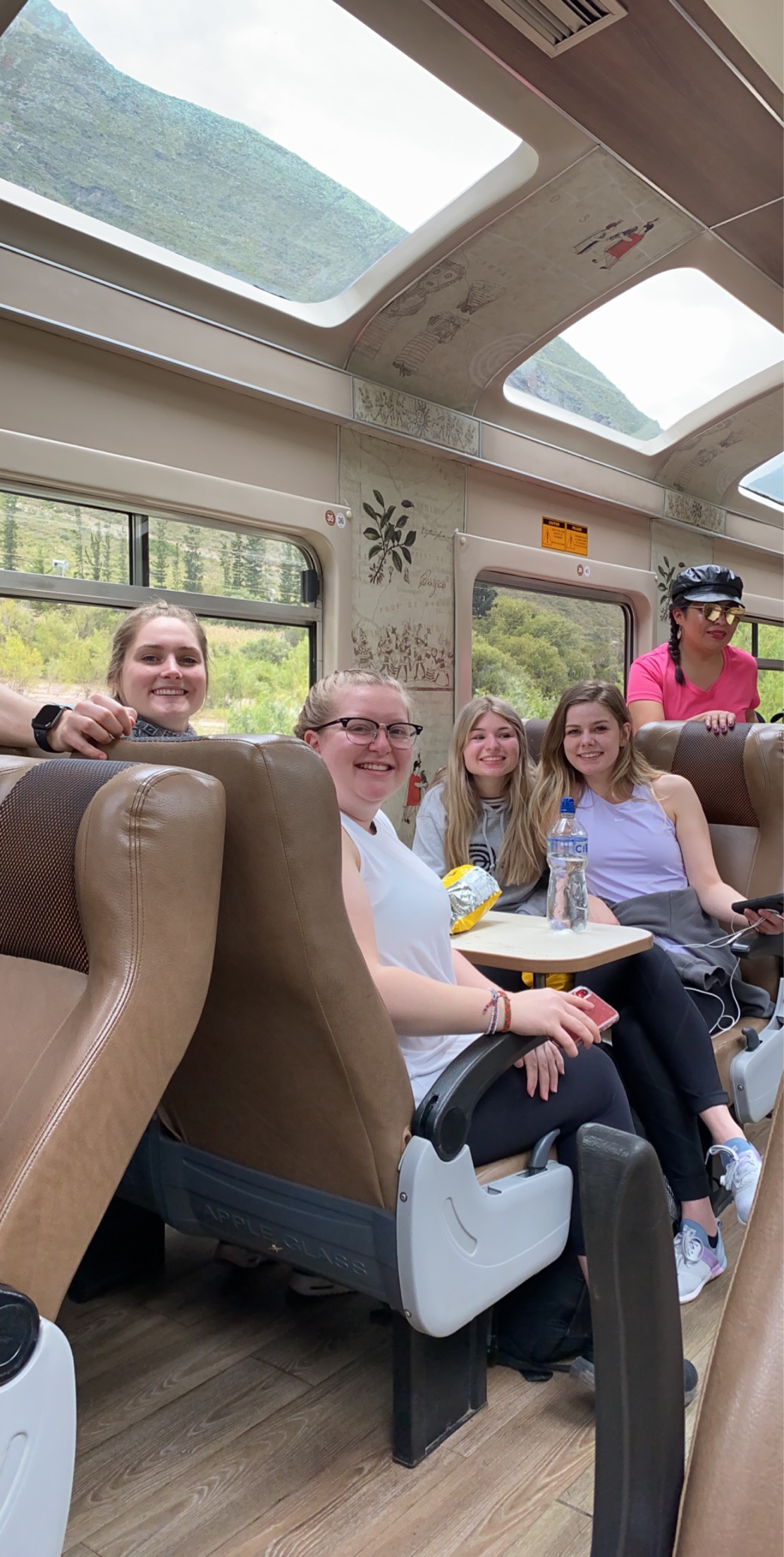
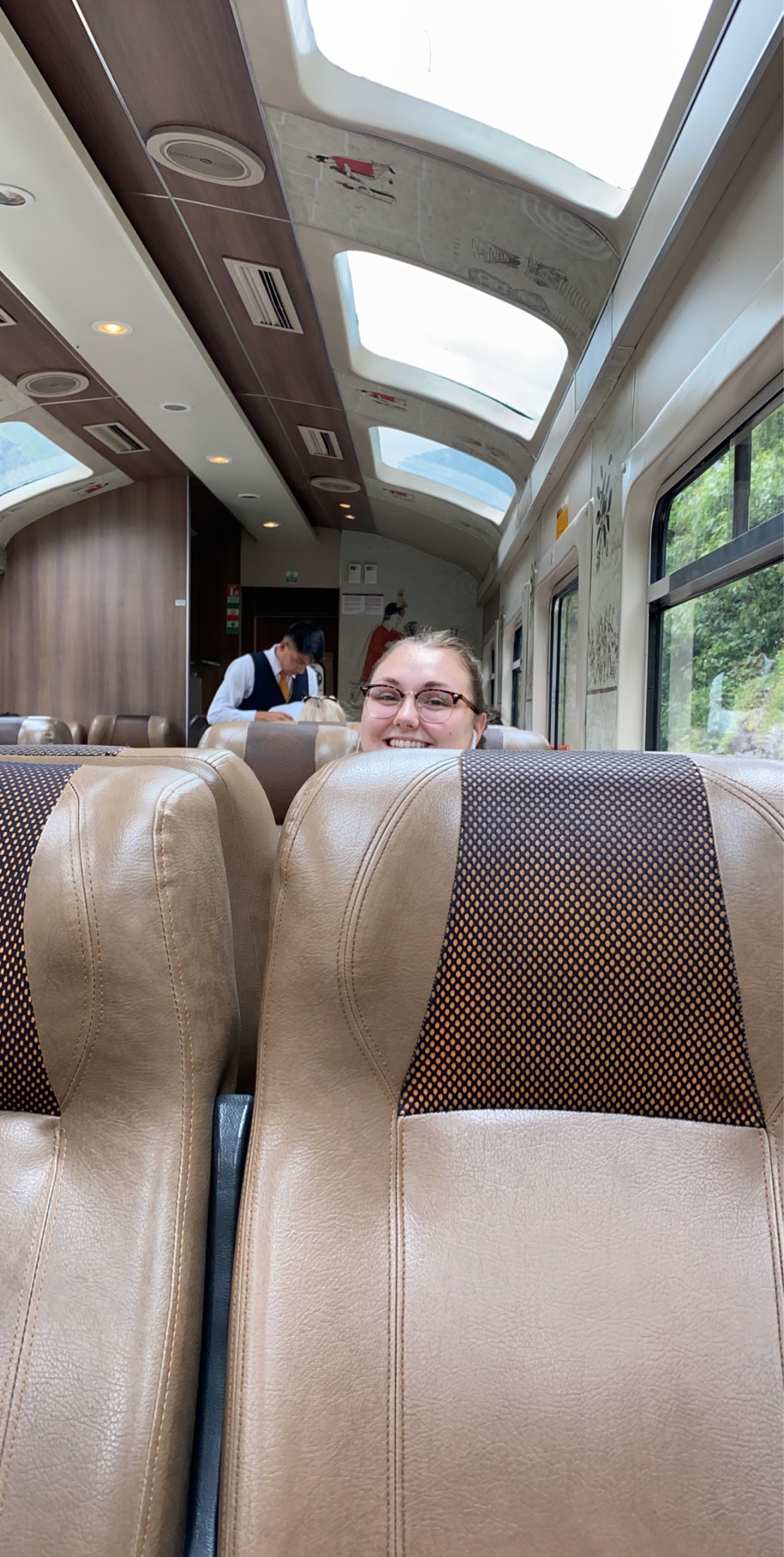
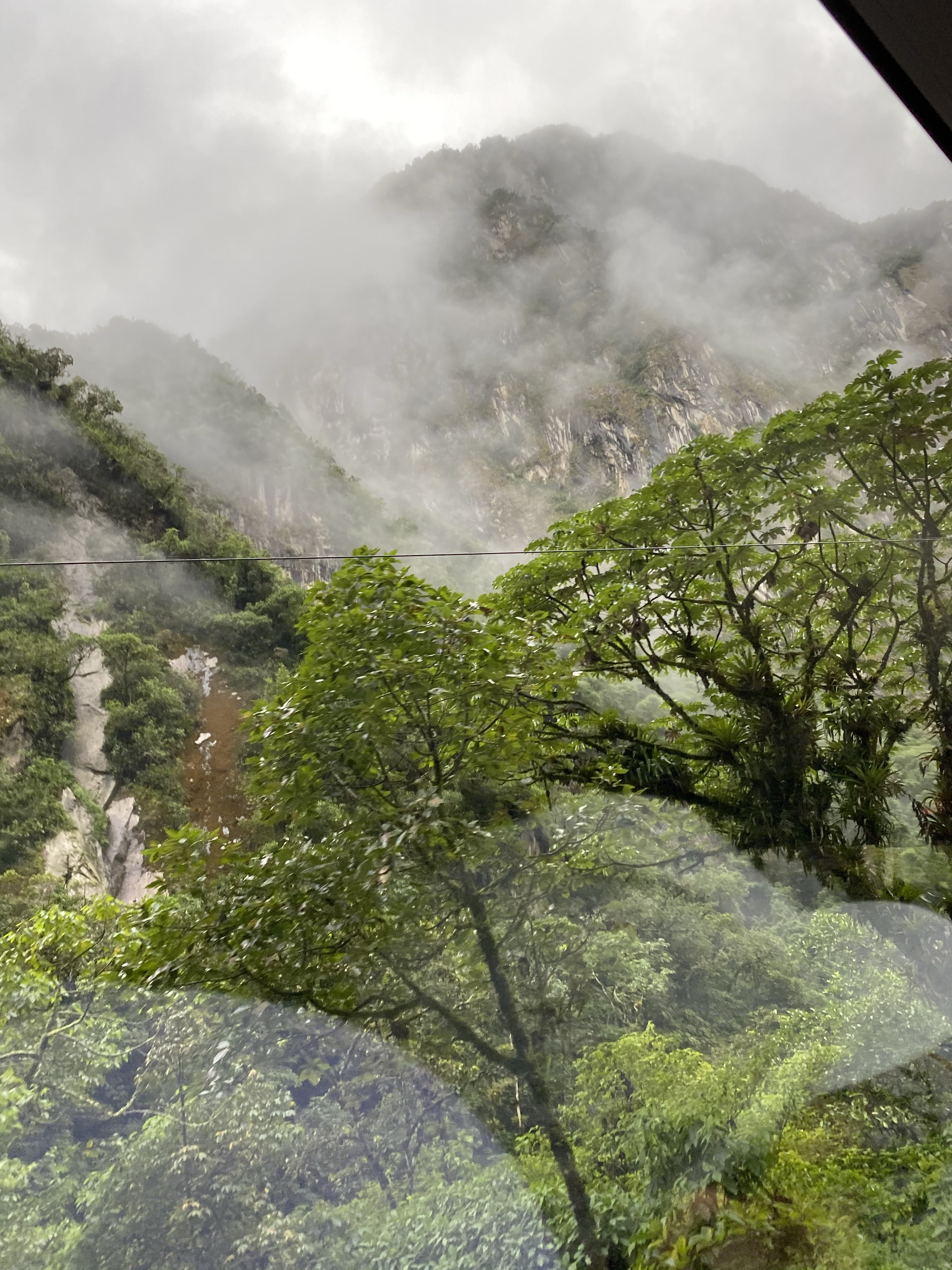
Some pictures from the train
After checking into our new hostel, the group that arrived first went out for some supper while we waited for the rest to arrive.
Some pictures of our new hostel for the night Left row (front to back): Allison Burke, Austin Chapman, Kaitlynn Hayes, Mackenzie Somers, Robyn Shibinette Back: Kristen Bach, Waitresses Right (back to front): Jean Lavers, Megan McNeil, David Gouthro, Hannah Gartland, James MacNeil
The other group boarded another train and arrived a few hours later. When they arrived they went to eat some supper and then we all enjoyed some free time in Aguas Calientes.
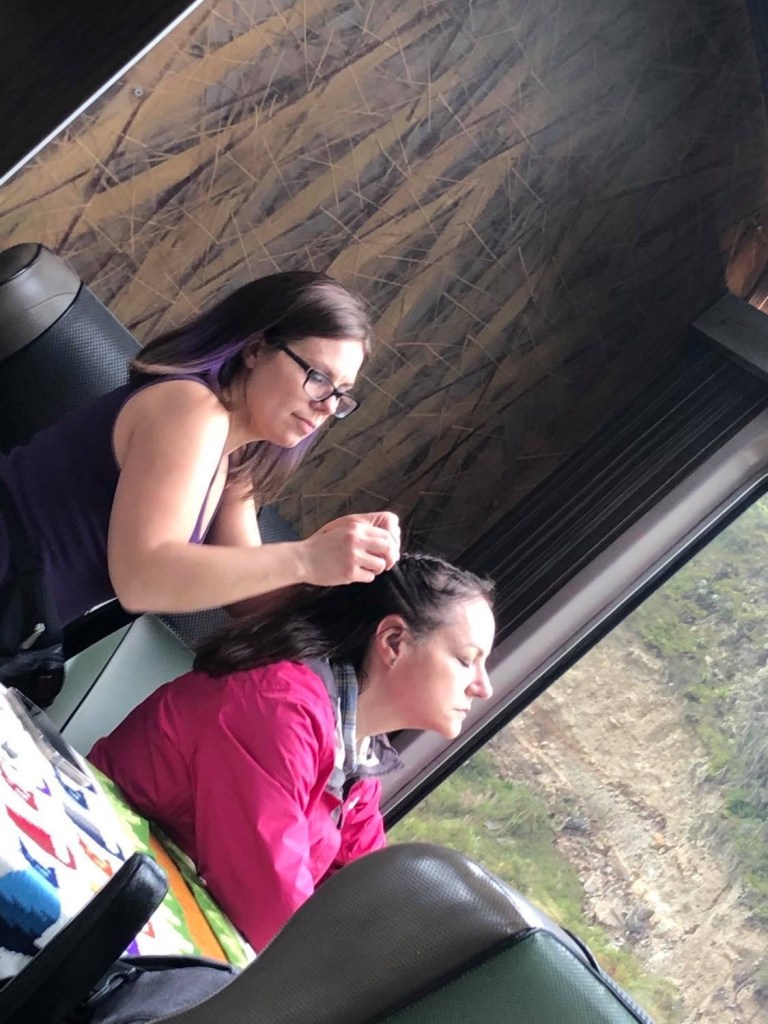
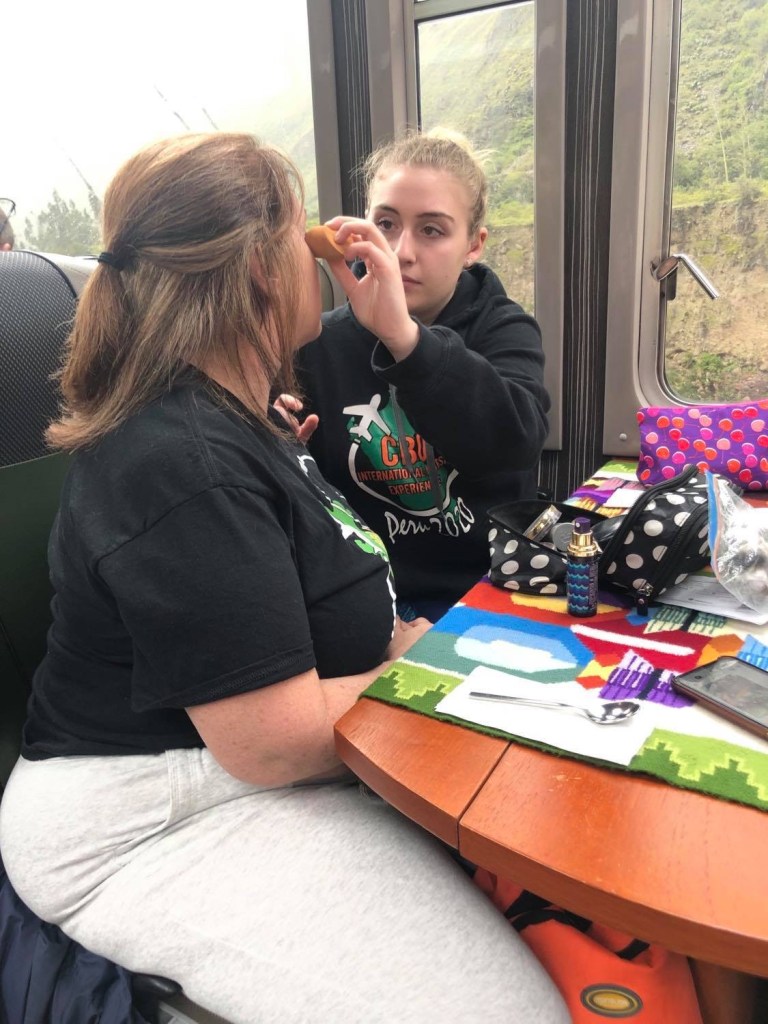
Brianna, Rebecca, Sonya and Annabelle enjoying their first class train ride upgradeHannah M and Terri:) Rebecca enjoying her Tea on the train Terri braiding Angela’s hair on the train to Aguas Calientes(Manchu Picchu)Jill doing Karen’s makeup on the train Video of the dancer on the first class train ride
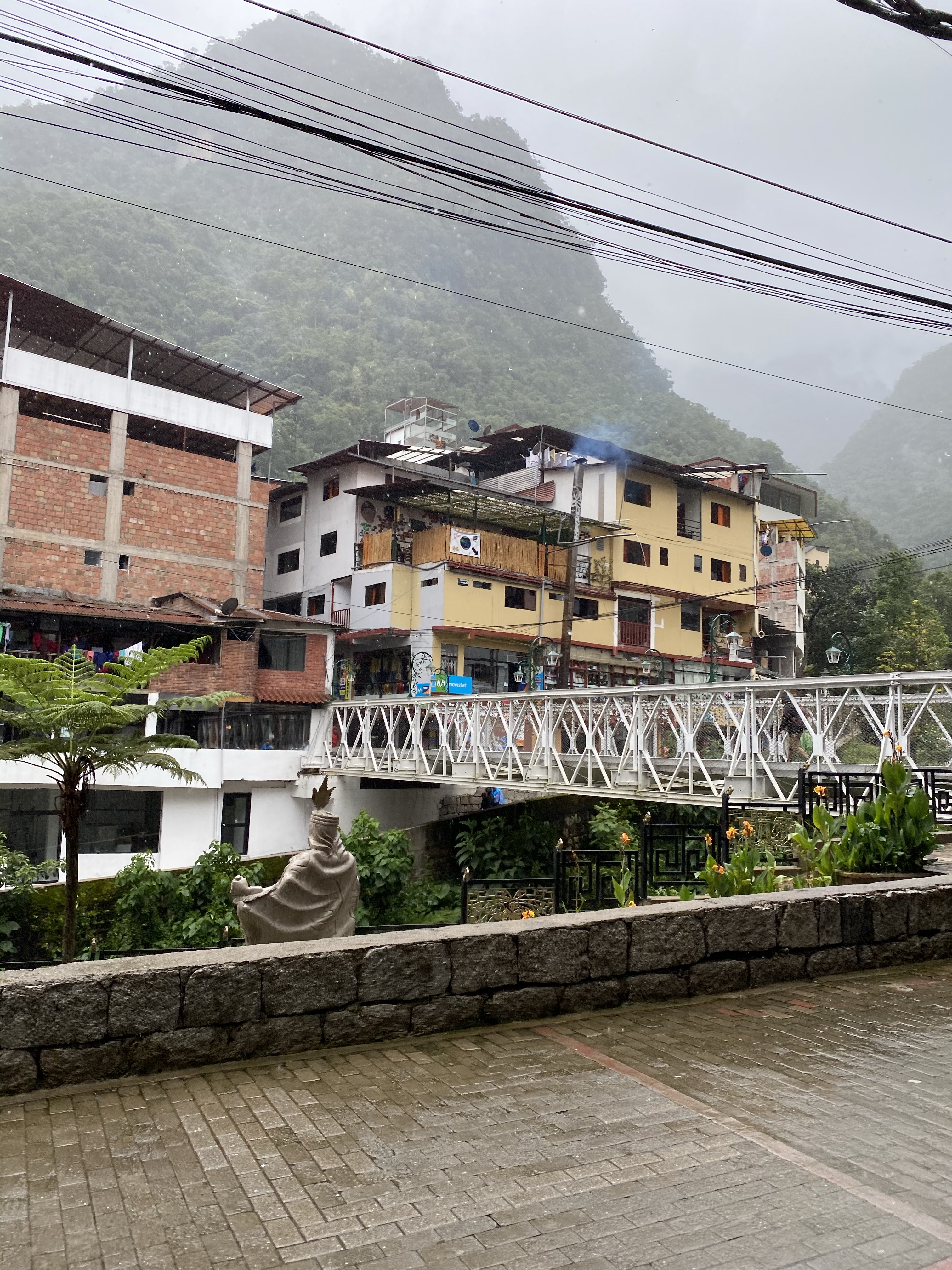
Today was mainly a day of travel and exploring a new city in the rain.
The majority of the group went to bed early because we have a big day tomorrow (Machu Picchu)!!
*WARNING THIS IS A MEDICAL BLOG- THERE MAY BE SOME PICTURES THAT CONTAIN BLOOD*
Buenos Diàs,
Today is our last day in the Cusco clinics. It is an emotional day all around for many reasons.
Today means our time in Peru is soon coming to an end. Our placements today were very different and fantastic experiences.
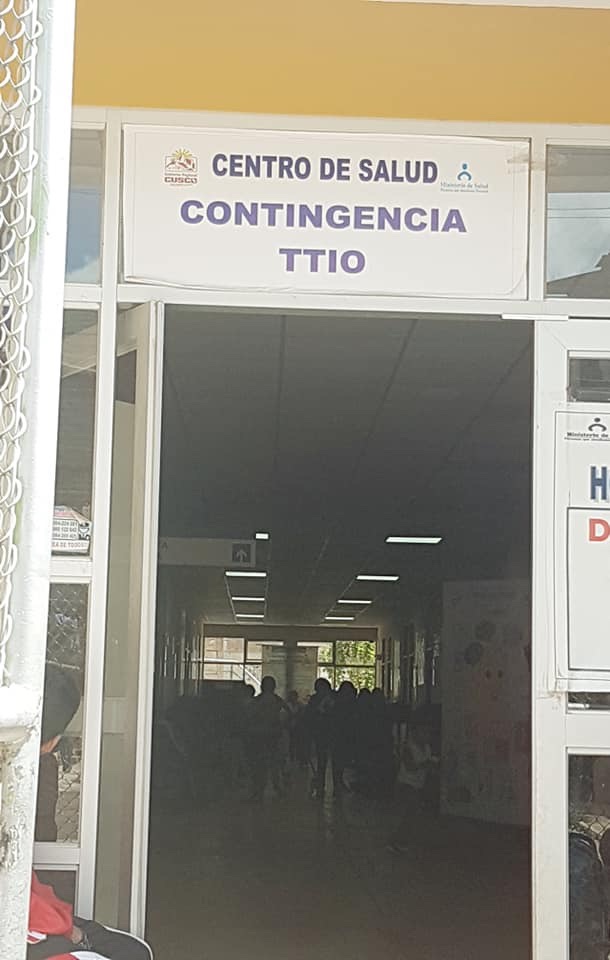
For the CLAS TTIO Group: we spent the morning in the clinic like a typical clincial day.
I (Austin) was placed with a Pediatric Doctor. It was a slower day because it was raining pretty heavy and it is a Friday. We saw 3 patients total for the day. Most of the patients were just in for a well-child check up or a medication refill.
Picture of the pediatrics doctors office.
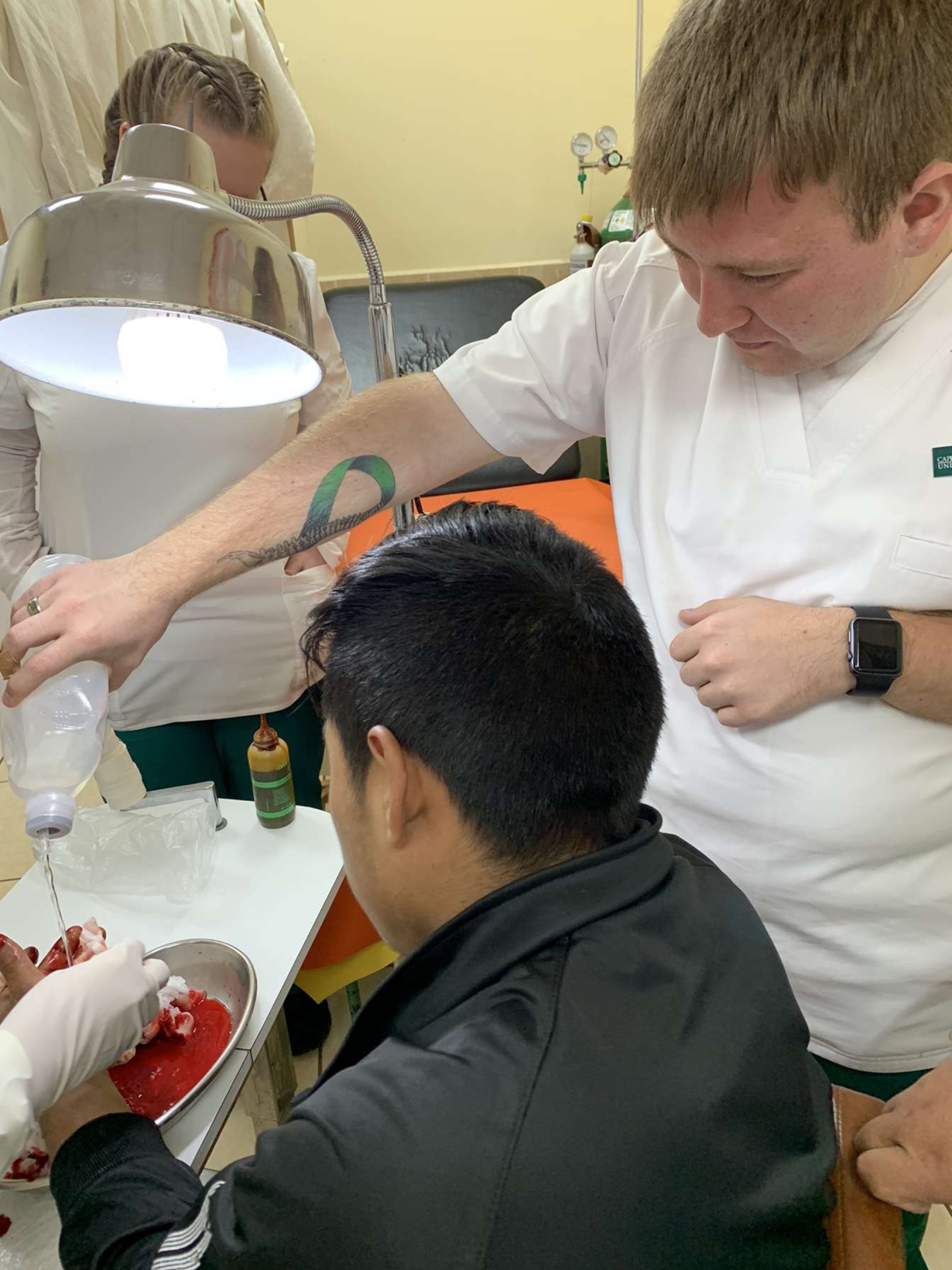
Our last patient for the day was a 17 year old boy who cut his hand with a knife while working/ cooking in the kitchen of a restaurant.
When he arrived to the clinic the doctor I was with took me to ambulatory care where I helped the doctors and nurses there cleanse the wound and assist the doctor while he was stitching up his hand.
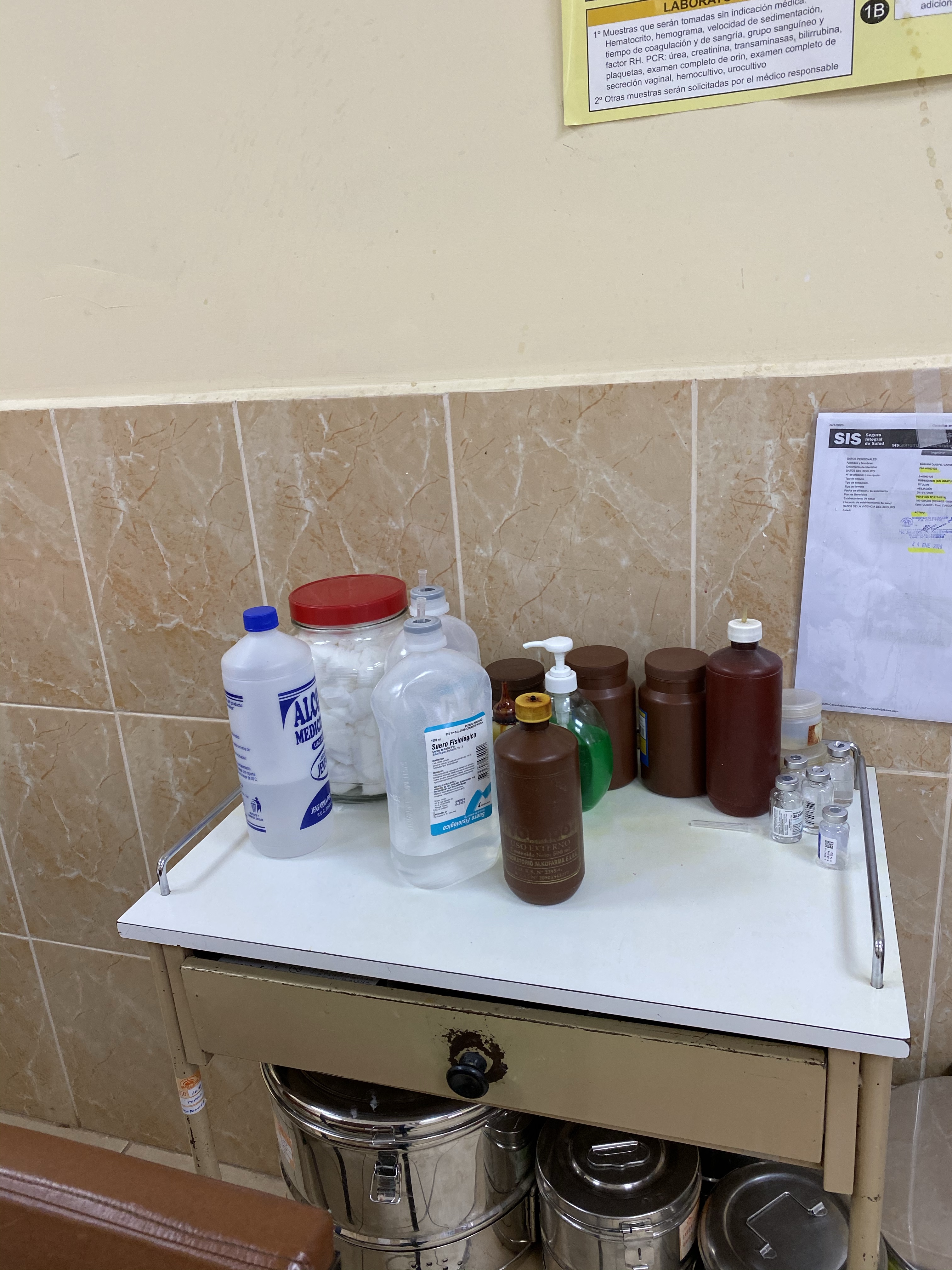
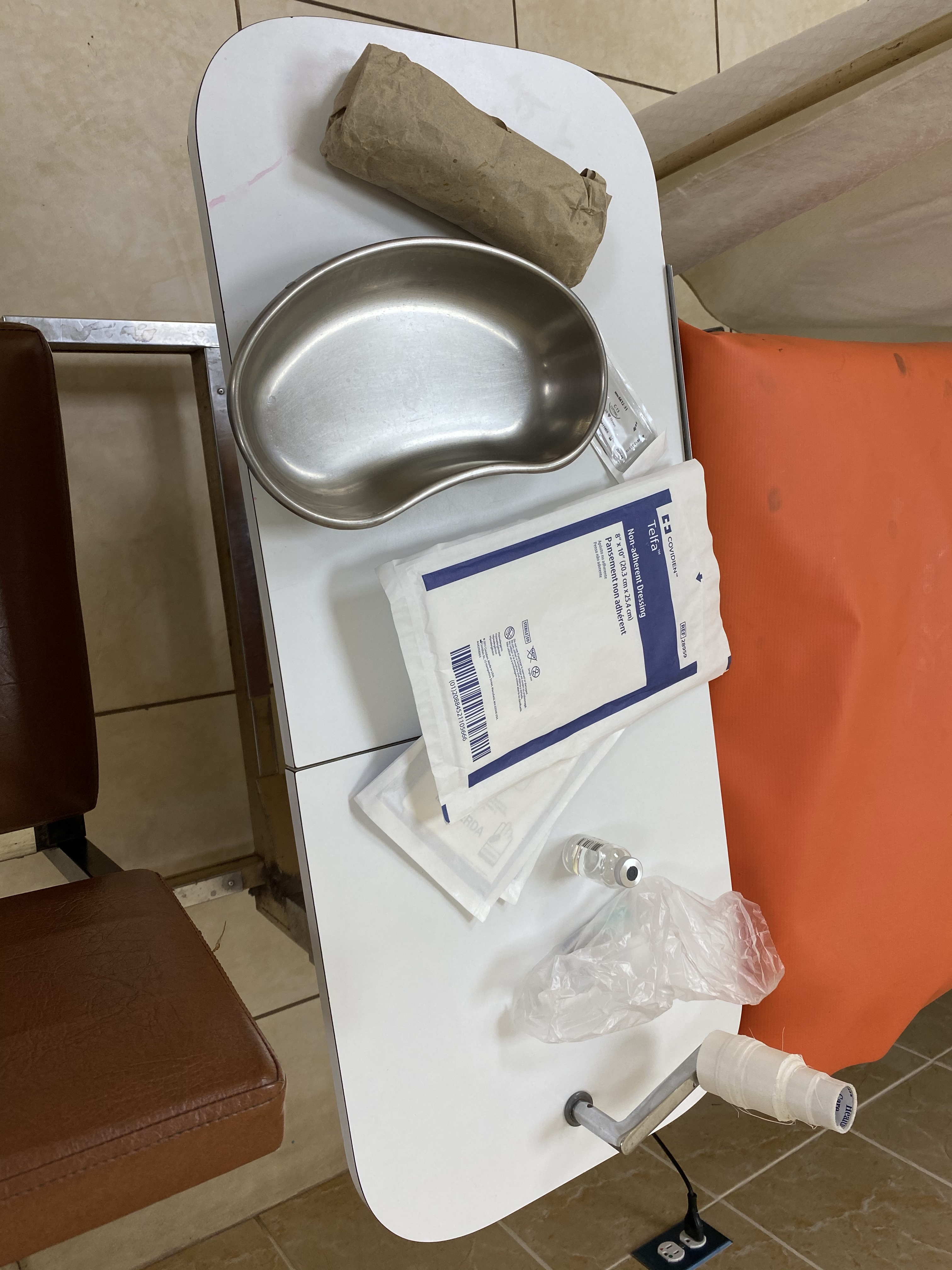
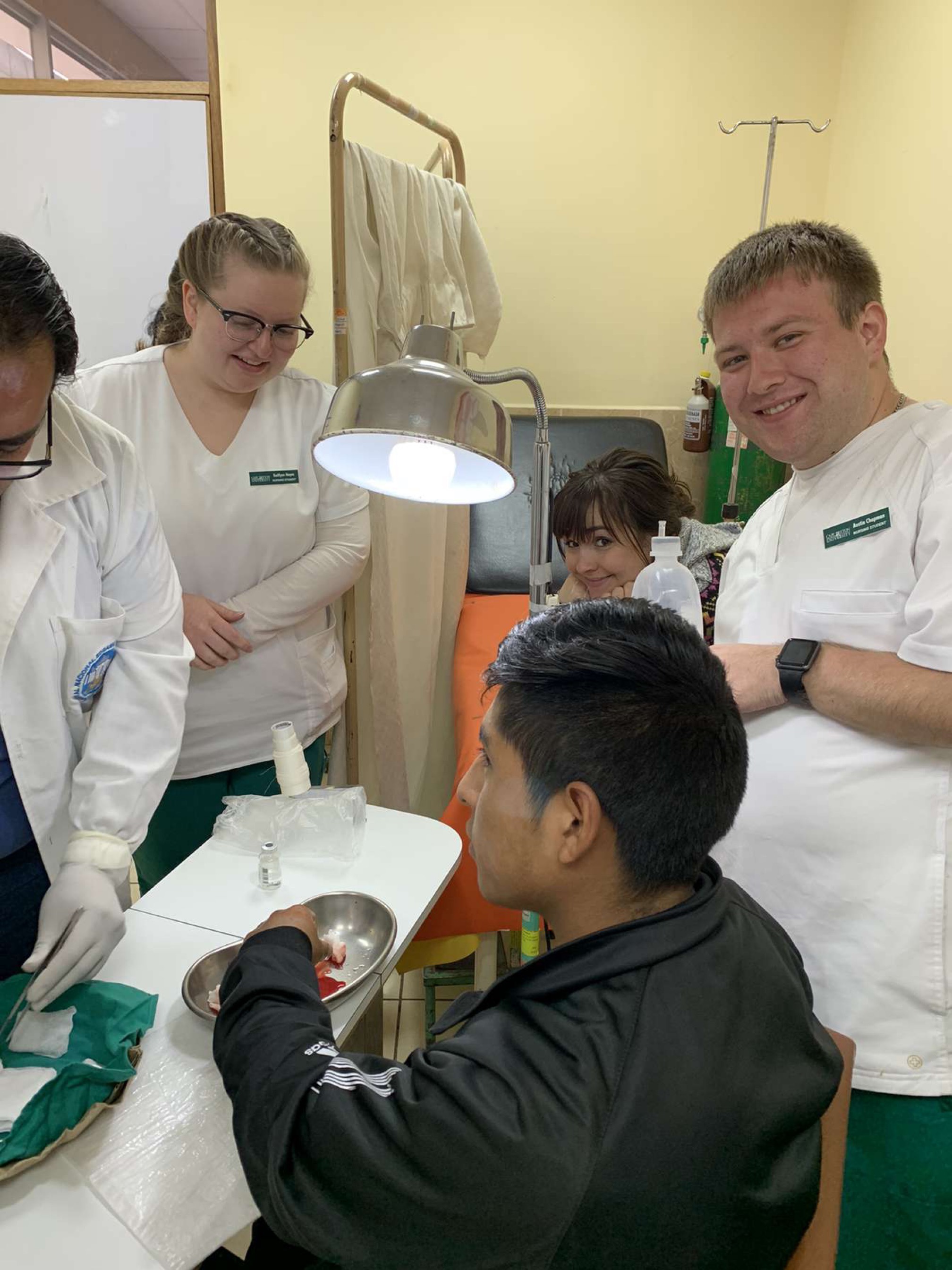
Some supplies used for the stitchesAustin assisting the doctor by cleansing the wound with saline. Austin, Annabelle and Kaitlynn watching the doctor stitch the clients hand.
The 17 year old teenager was a trooper throughout the whole procedure. He was in a lot of pain before the doctor added the first bit of freezing.
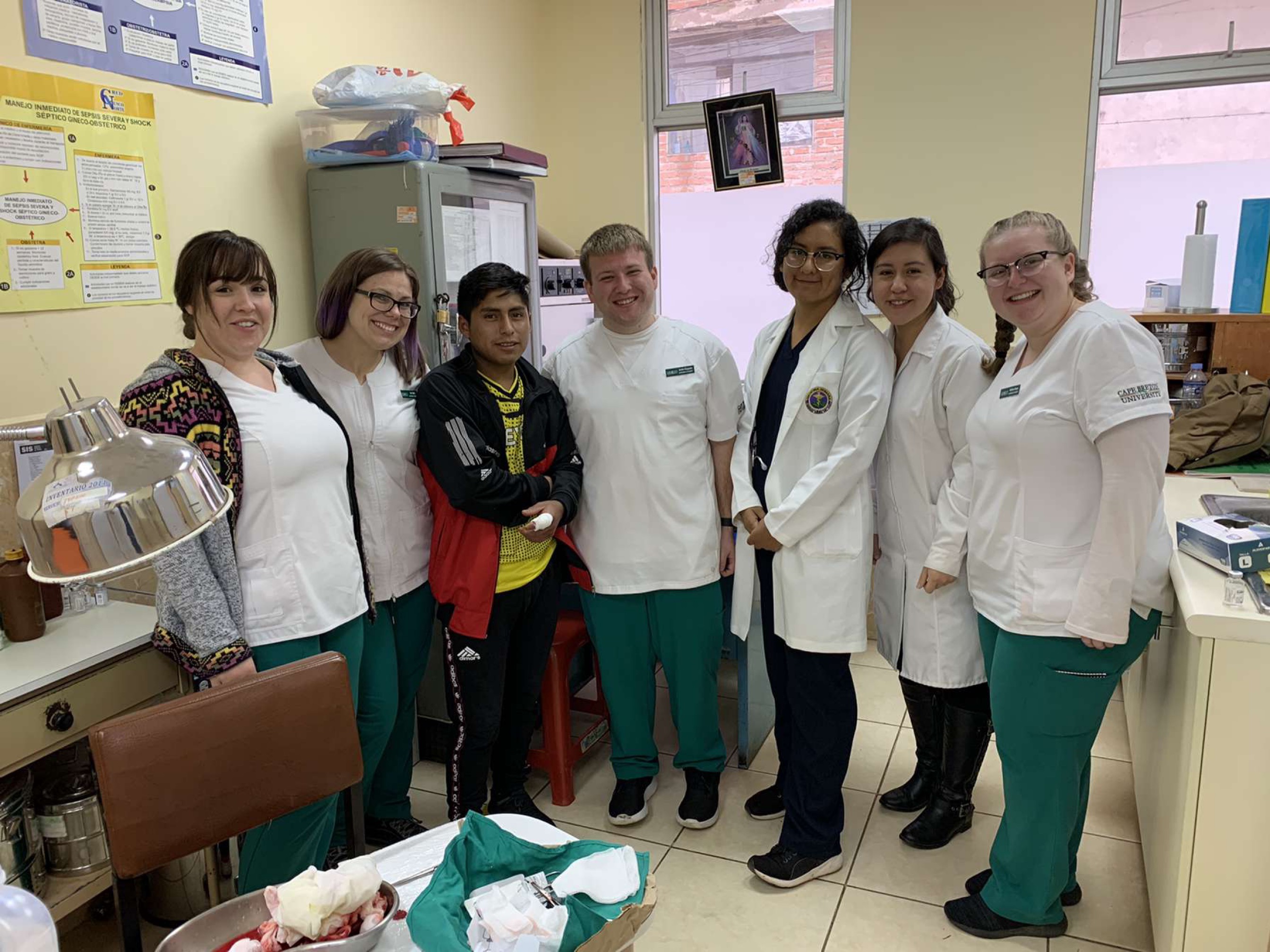
After he was all done with the procedure we all asked him for a photo.
Left to Right: Annabelle, Terri, client with a newly stitched hand, Austin, 2 medical students from the clinic, Kaitlynn
During this procedure the instructors gave the medical donations to the staff at the clinics.
The all seemed really appreciative of both our donations and our help at the clinics.
After spending the majority of the morning at the clinic we said our goodbyes and then made our way down to the orphanage for one last visit, but this time we weren’t empty handed.
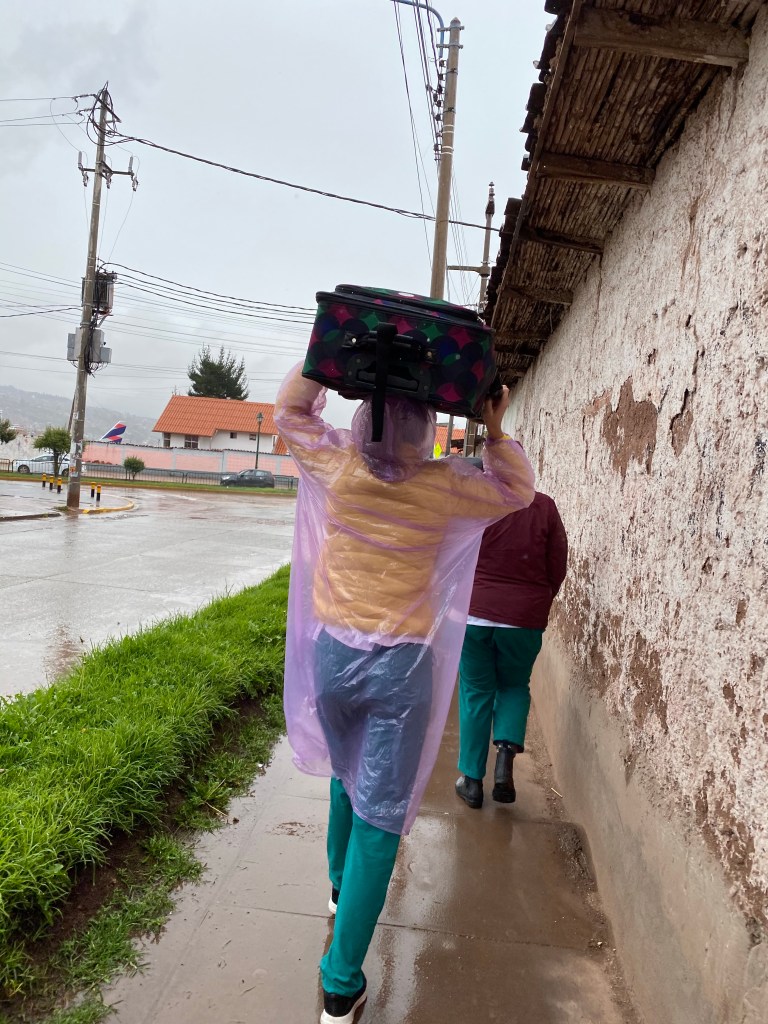
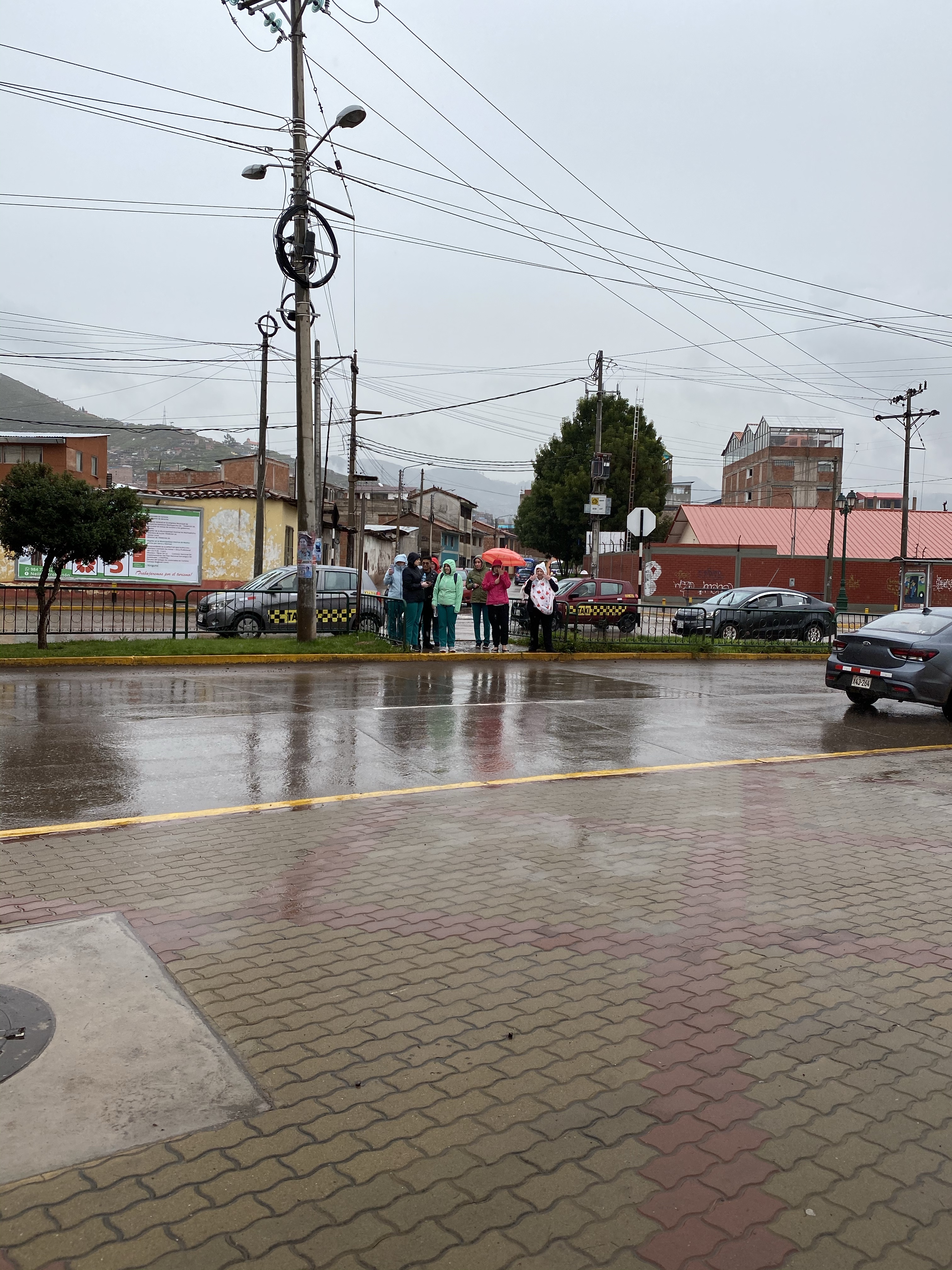
We walked a few blocks back to the all girls orphanage in the pouring rain to give them some donations that we collected for them. (Walking there in the rain was so worth the rewarding experience that came with being there and giving them the donations.)
Kelsey Muller carrying one of the suitcases full of donations to the orphanage.
When we arrived to the orphanage all of the chicas (girls) welcomed us with open arms. They were so excited to see us and see what we brought for them.
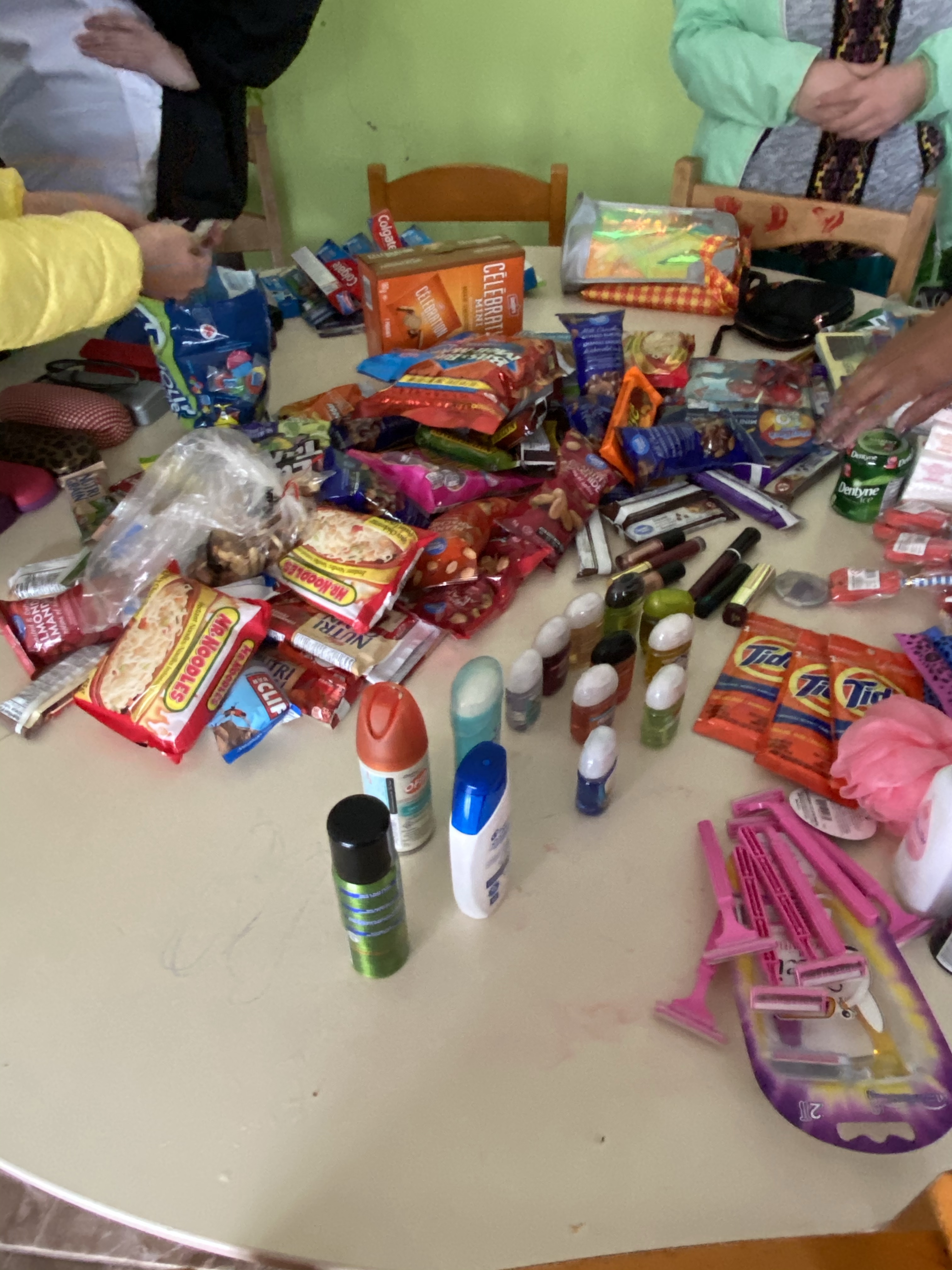
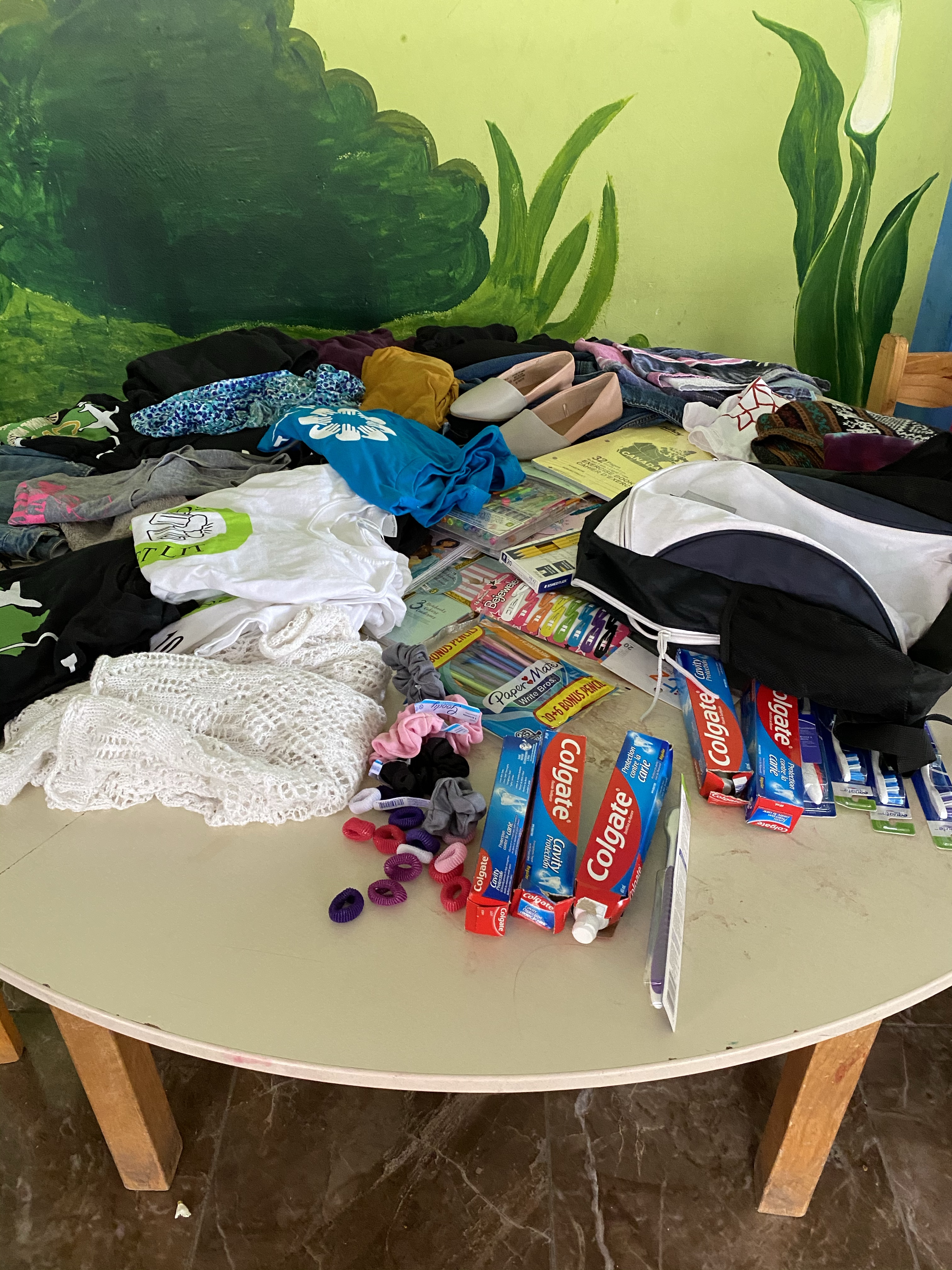
Pictures of some of the donations
We filled 2-3 tables with snacks, food, games, tooth brushes, clothes, glasses, etc. For all of the girls in the orphanage.
While we were there we danced, sang, talked, and laughed.
We showed them how to dance to The Mull River Shuffle (some of the kids joined in), they showed us how to do some of their dances (some of us joined in) and we all danced to the Macarena!
It was another fun and very emotional day all around.
When it was time for us to leave the director of the orphanage said a few words and thanked us for our help and our generosity.
A few of the girls also spoke: they said “thank you for being here and showing us love, thank you for the gifts. The door is always open for you to come back. We love you lots.”
When they started talking it was hard to keep in the tears, but that showed us that our work here in Peru and at the orphanage was a success.
The girls at the orphanage are happy and the people at the clinic appreciated our help.
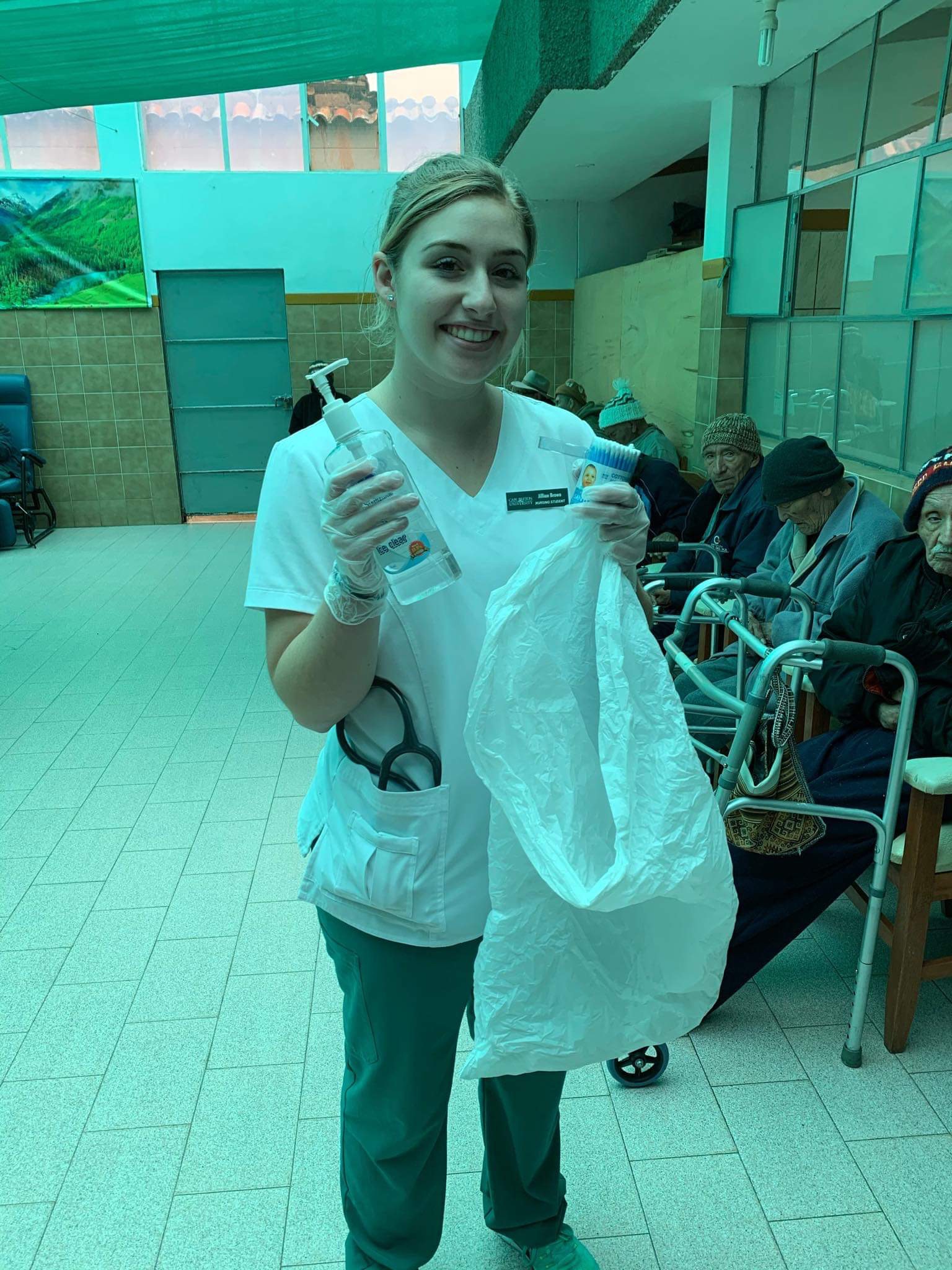
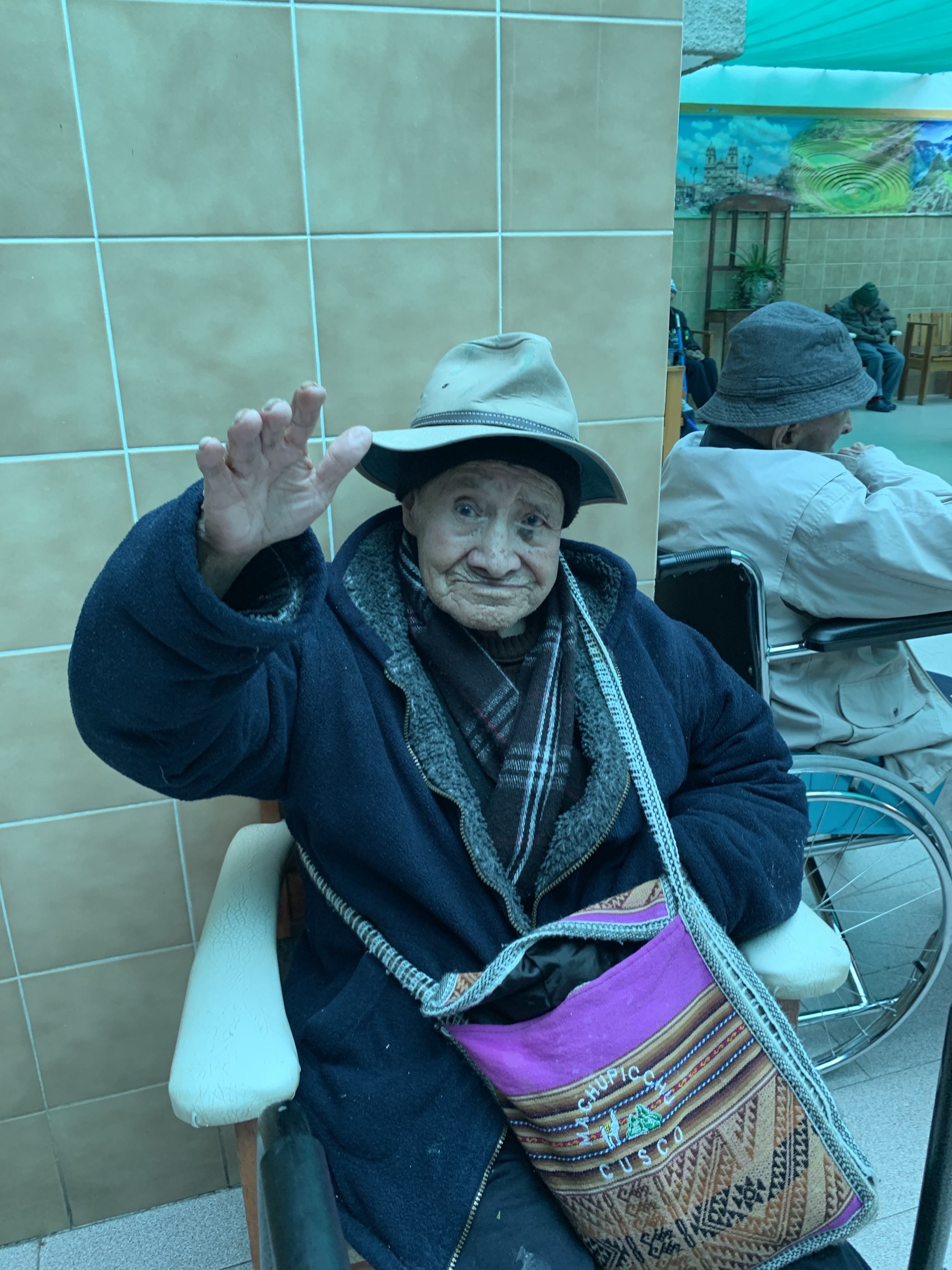
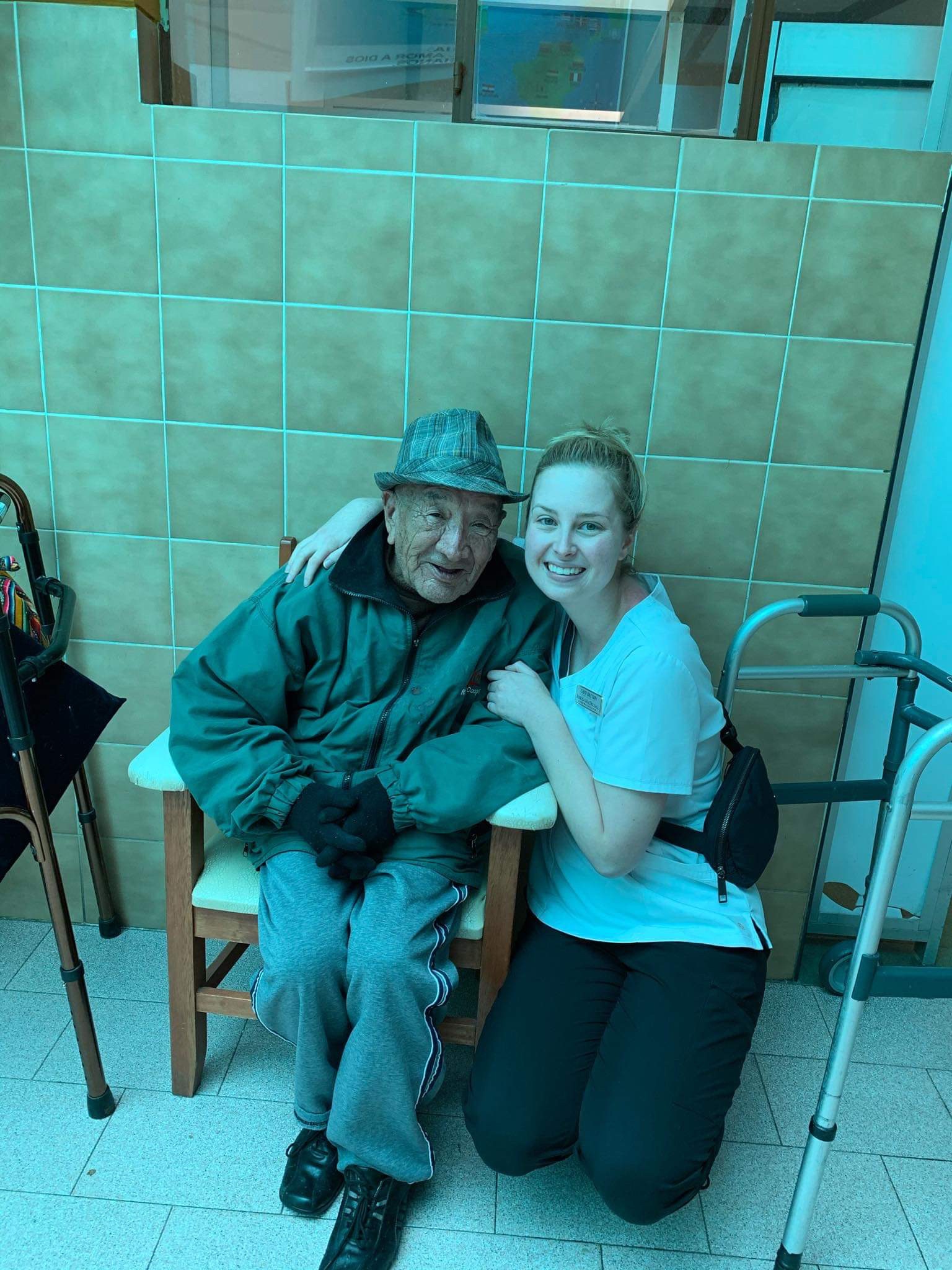
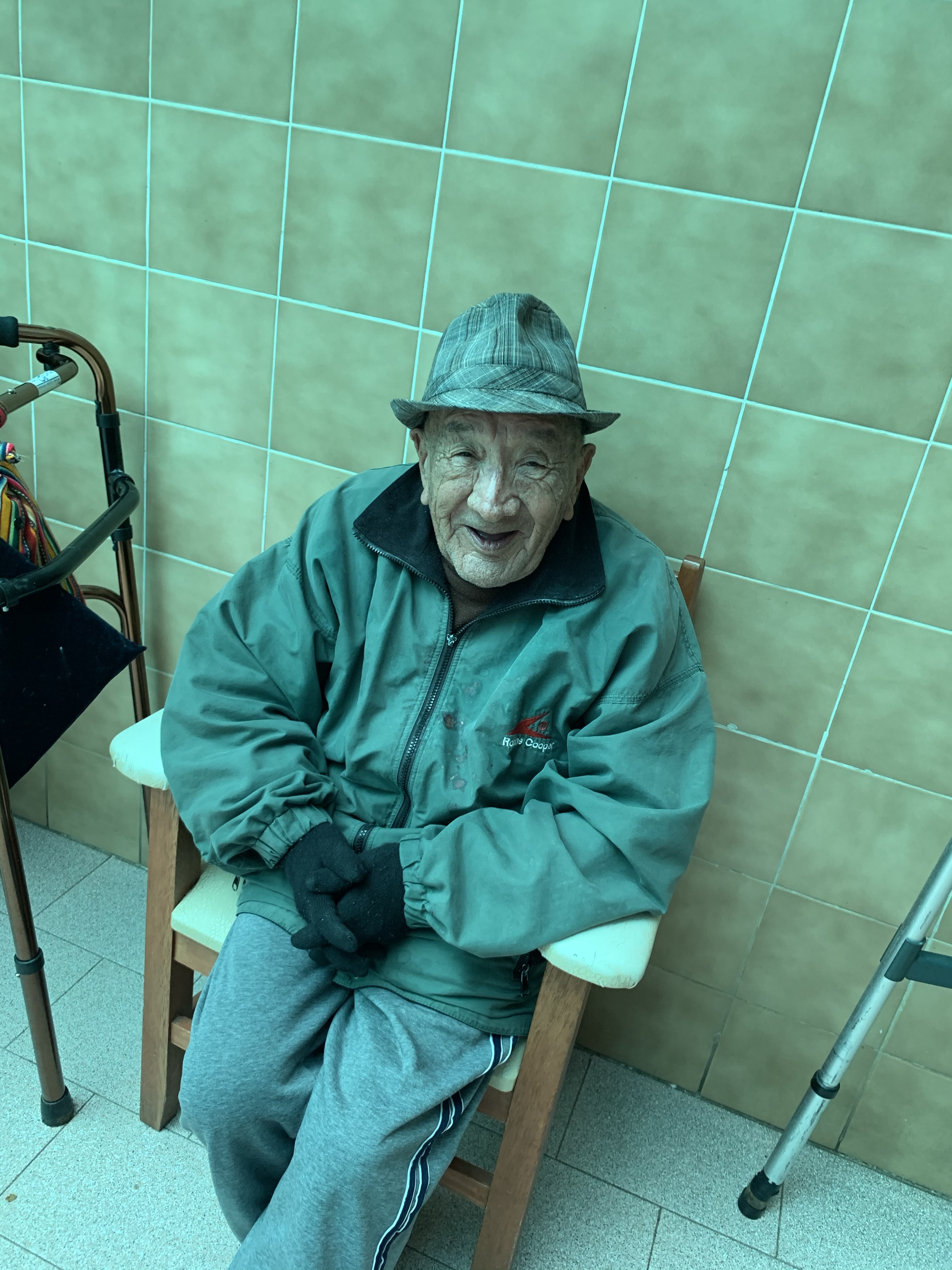
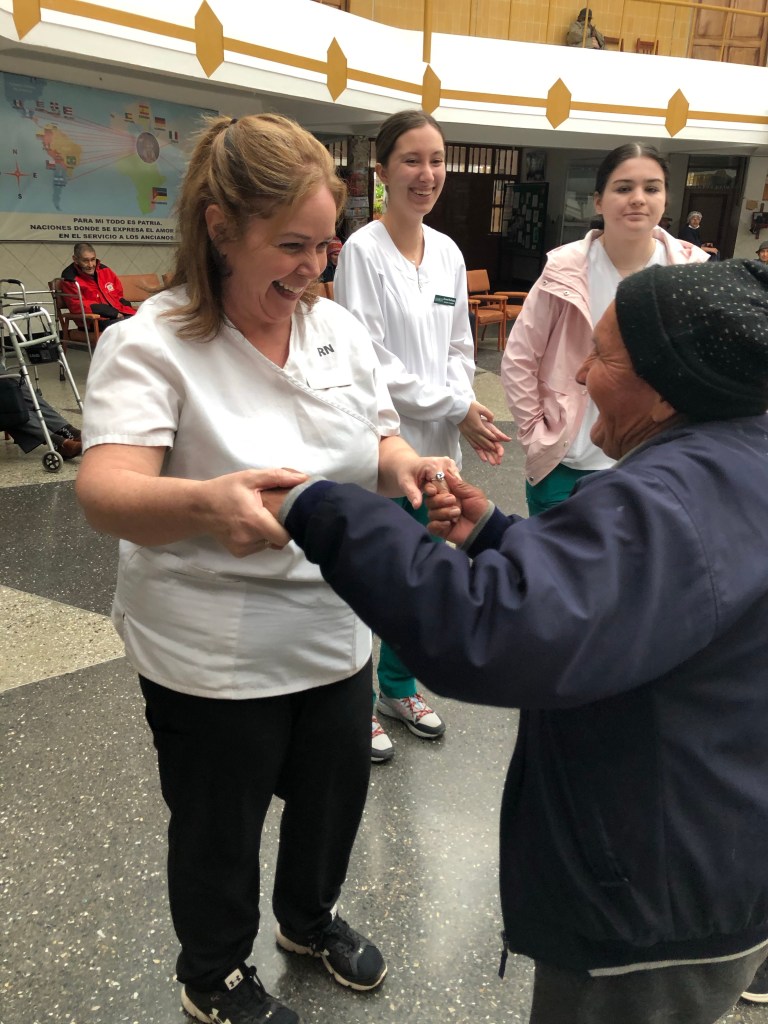
The San Jeronimo group went to a longterm care faculty today.
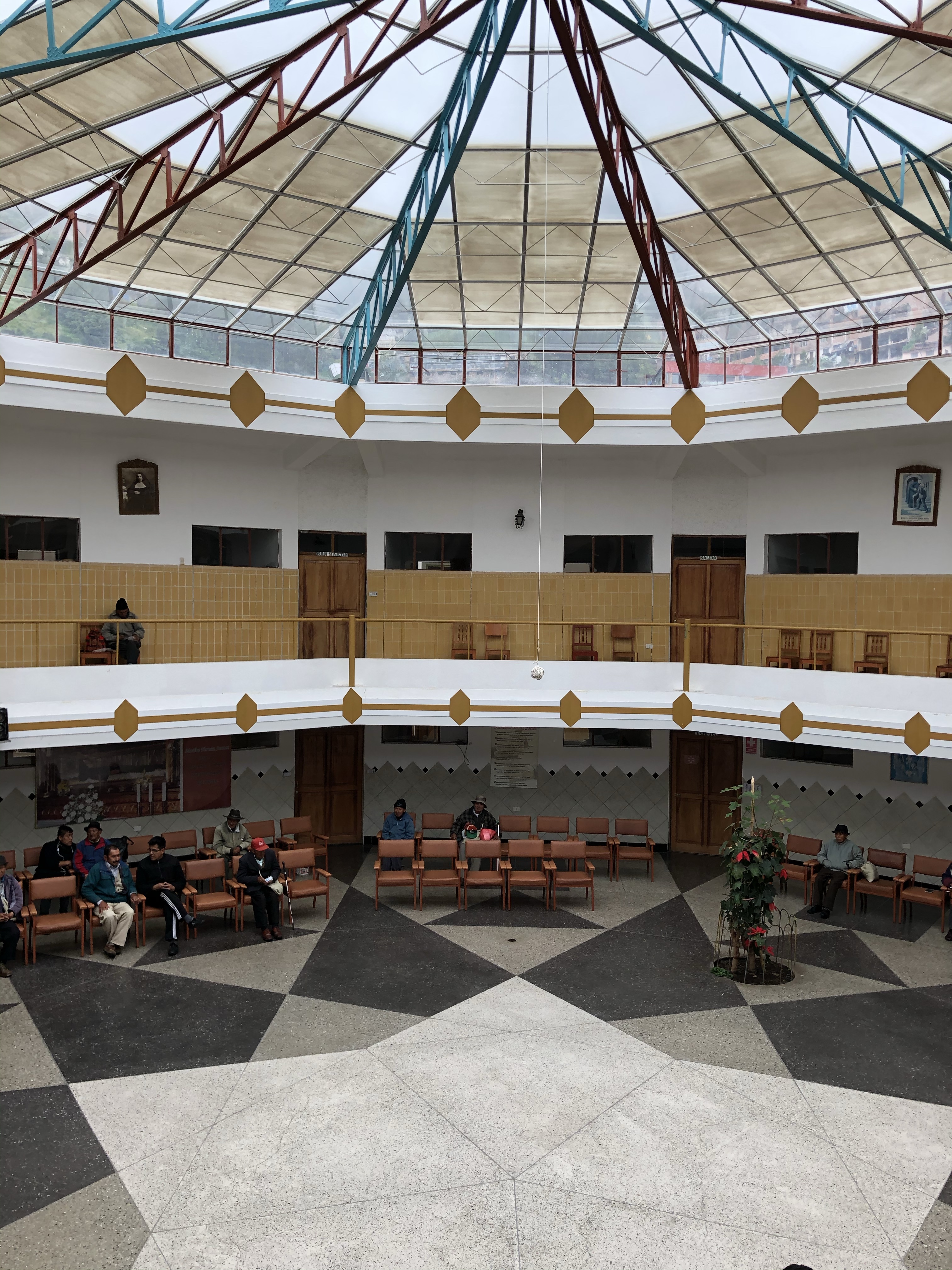
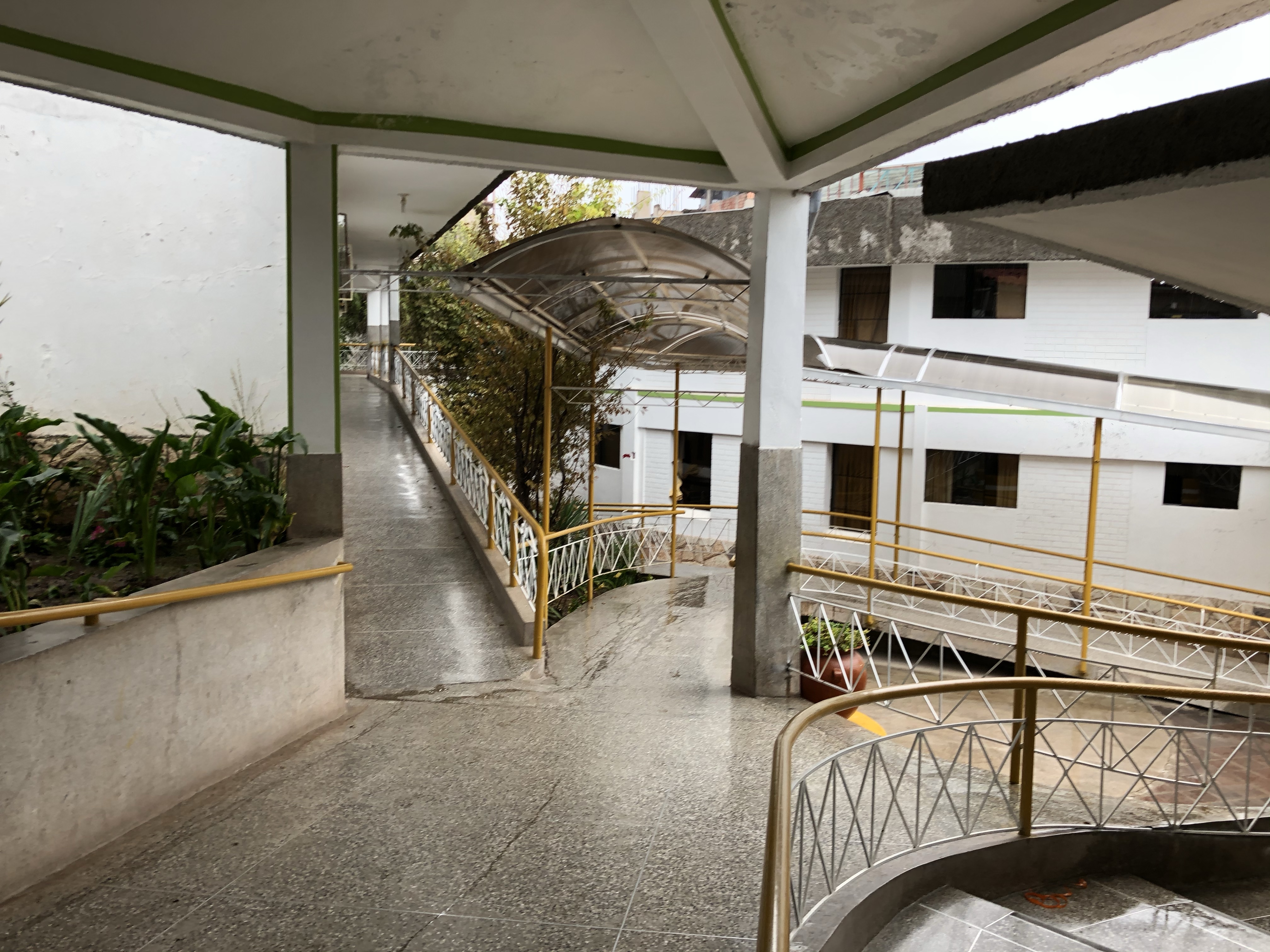
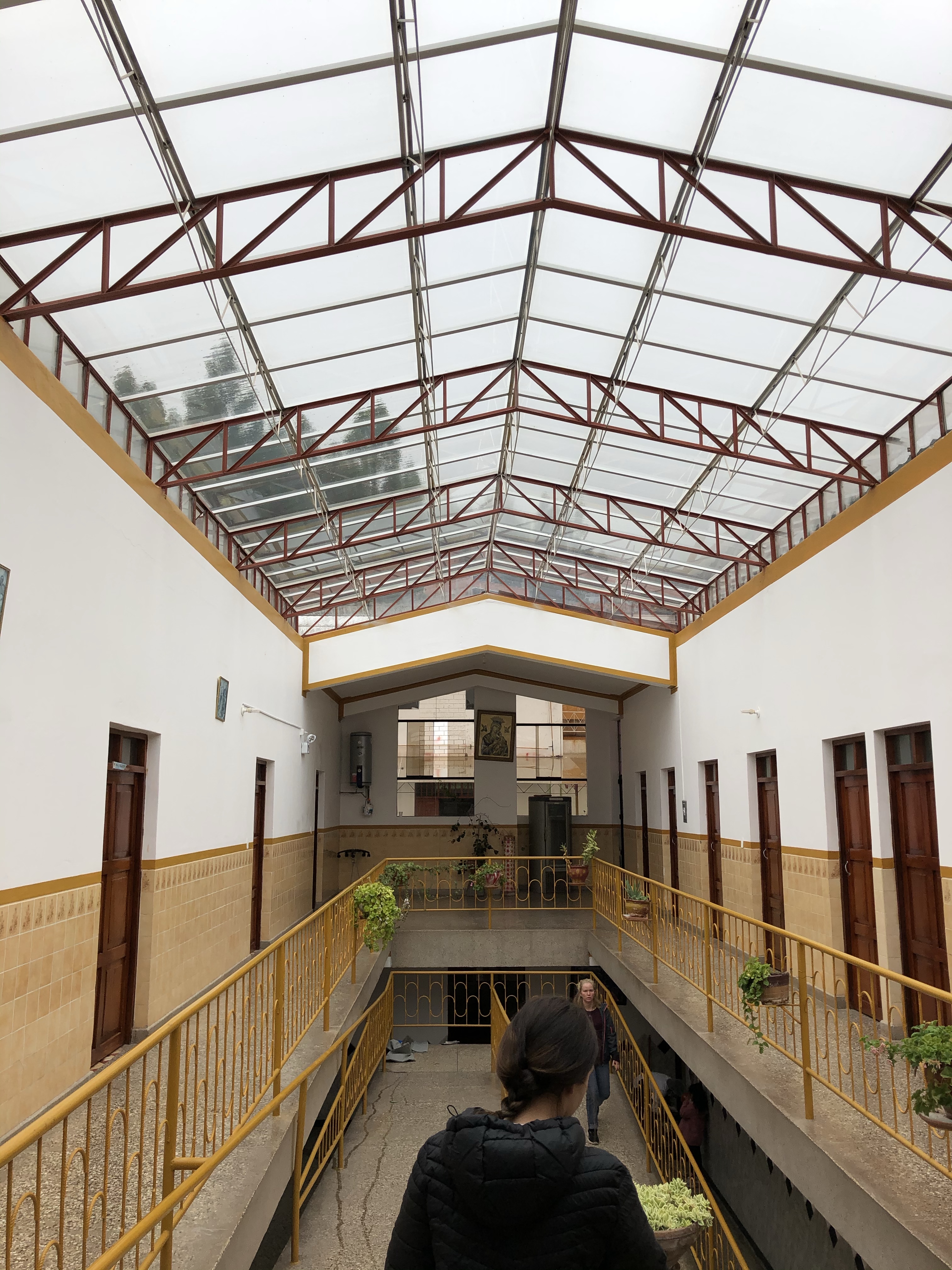
Some pictures from the longterm care facility (Centro Gerontológico San Francisco de Asis)
The group expressed their enjoyment as soon as they arrived back to the hostel about their experience at Centro Gerontológico San Francisco de Asis.
Back Row(L-R): Melanie Cochrane, Hannah MacKeigan, Brianna LaRusic, David Gouthro, Hannah Gartland, Karen Kennedy Front Row(L-R): Chelsie Cann, Jill Brown, Allison Burke, Megan McNeil
The residence/ facility is divided into male and female facilities.
The group of students was split up into different groups/sections.
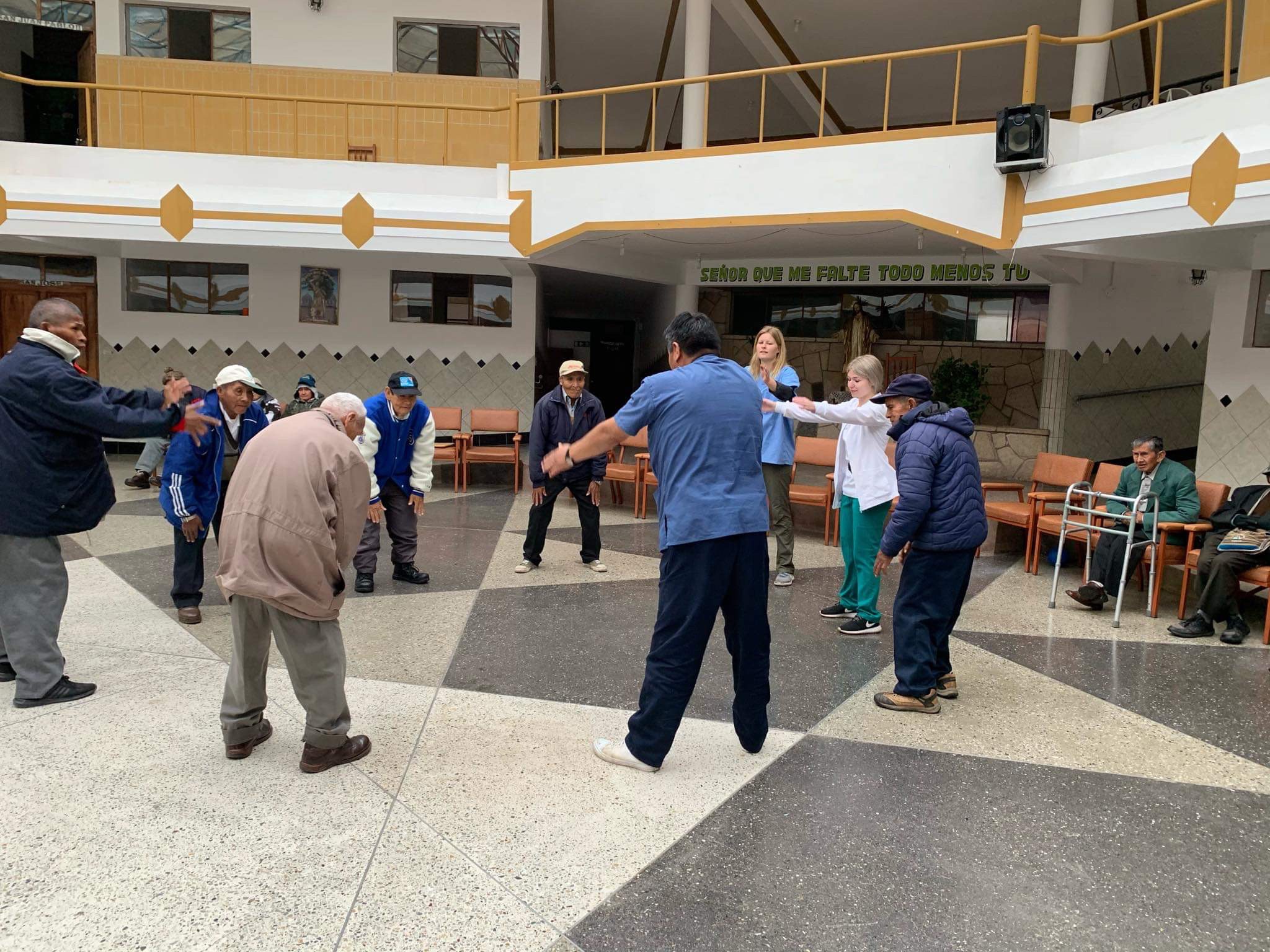
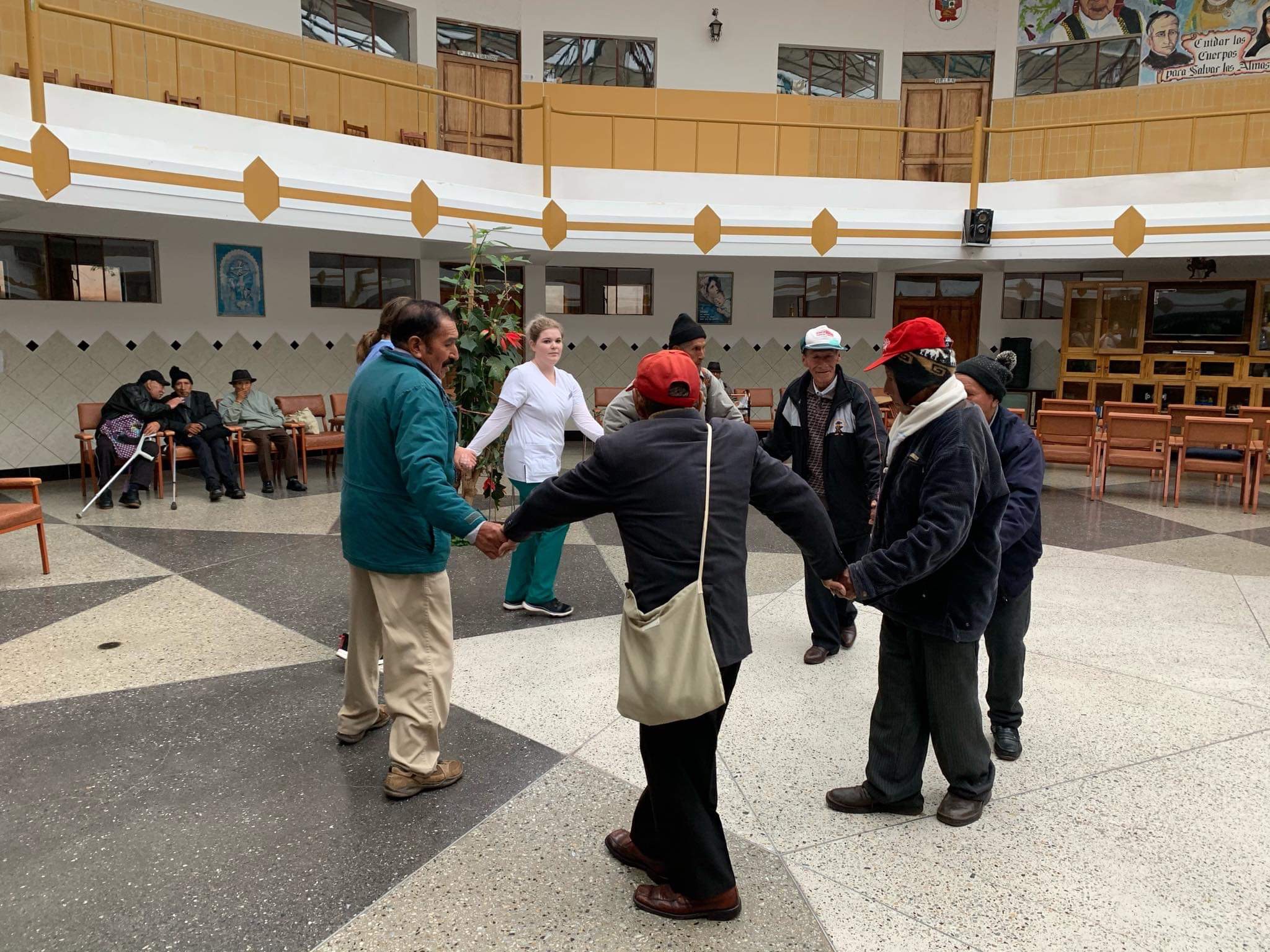
Some of the students were placed with Physiotherapy / the recreation department. They performed some exercises with the male residents.
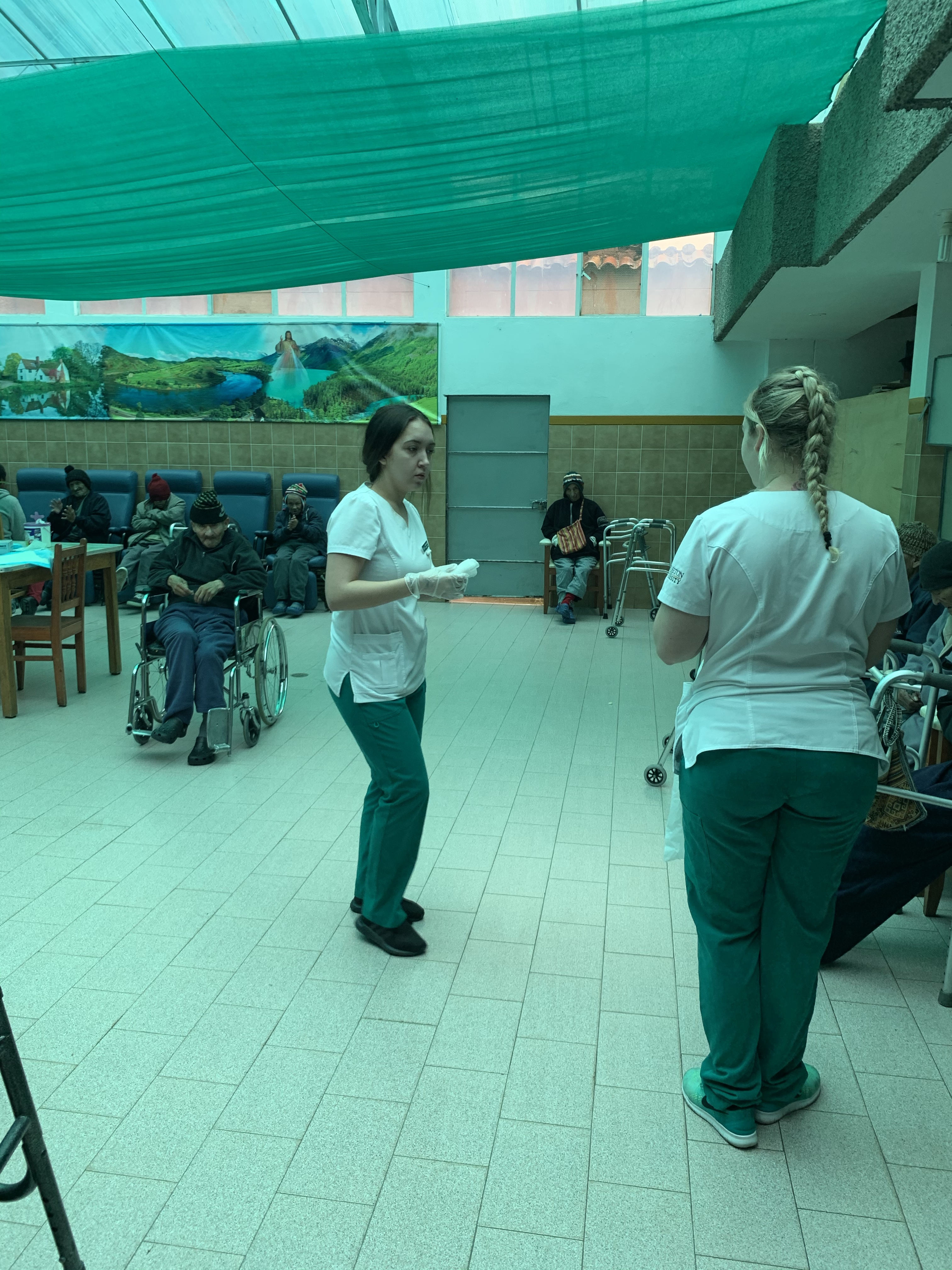
The group that was placed with physio also helped serve lunch to the residents and helped with the dishes in the kitchen.
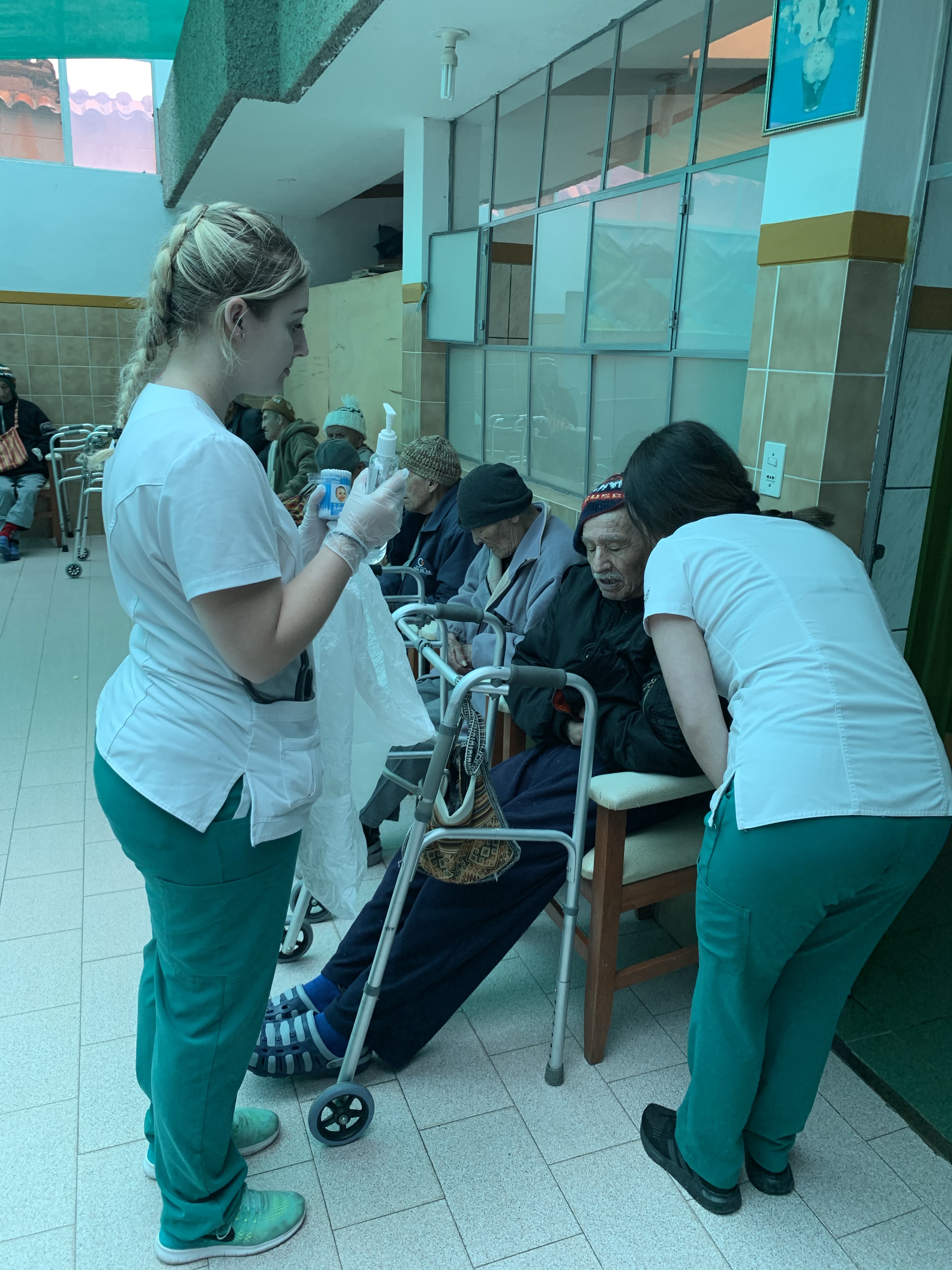
Two other students stayed with the male residents and helped feed them, clean their ears, wash their hands and talked to the residents.
A few more students stayed to help with laundry, peeled some potatoes and kept the residents company.
All of the other students helped the staff perform Range of Motion (ROM) exercises on the residents.
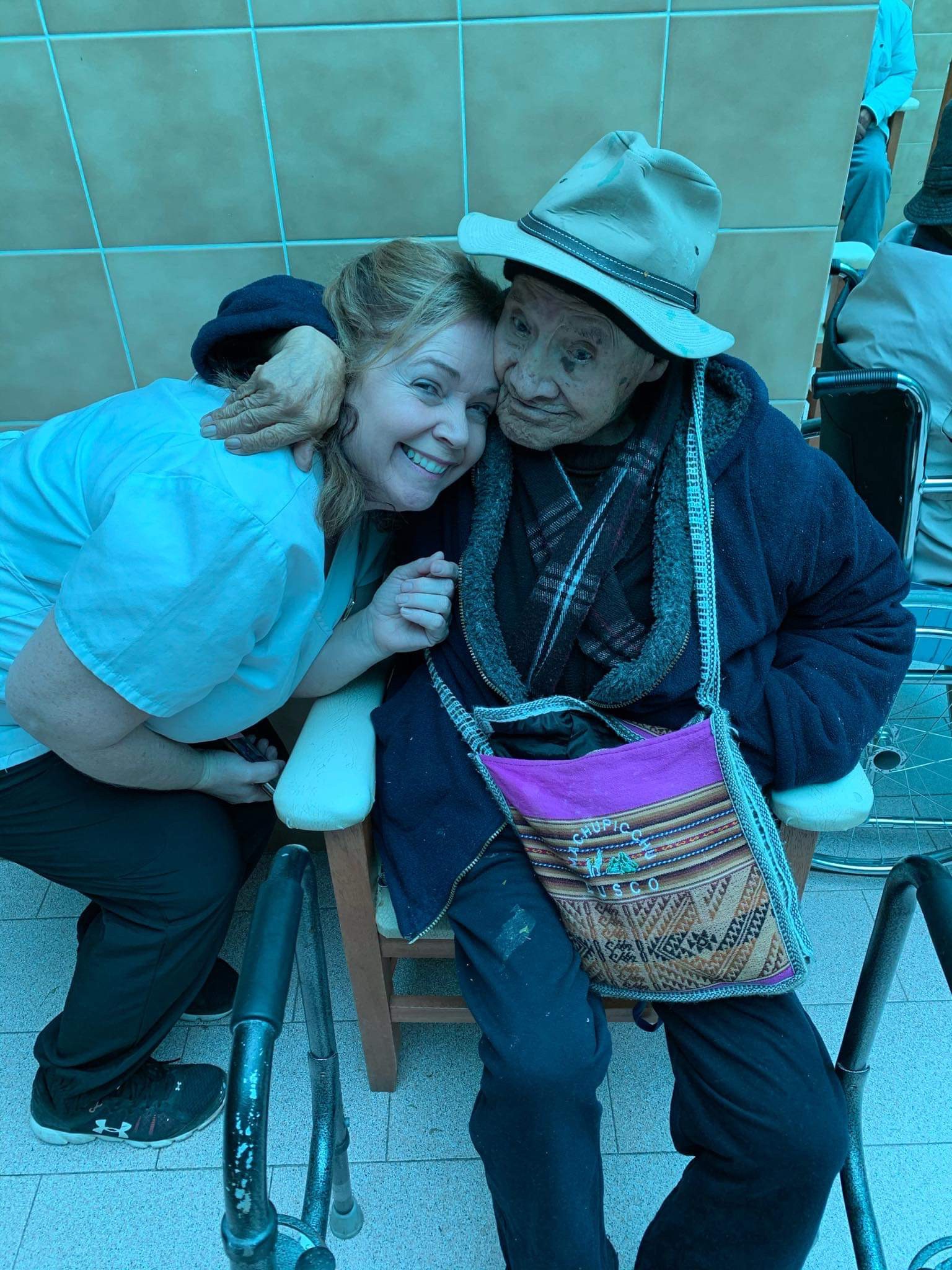
Karen dancing with a residentRebecca with some of the residents Hannah MacKeigan and one of the residents Melanie Cochrane with one of the residents
We learned that all of the food that the nursing home has is donated by outside sources and the community. The food is all made fresh and in big quantities.
The nursing home is run by nuns, volunteers and seminarists.
Instructors Karen and Rebecca along with students Jill and Brianna with the main/head nun of the home.
The head nun was so thankful for the help and donations to their facility.
Luka/Lukas who is one of the main volunteers of the facility from Germany showed the students all of the fun they have at the nursing home.
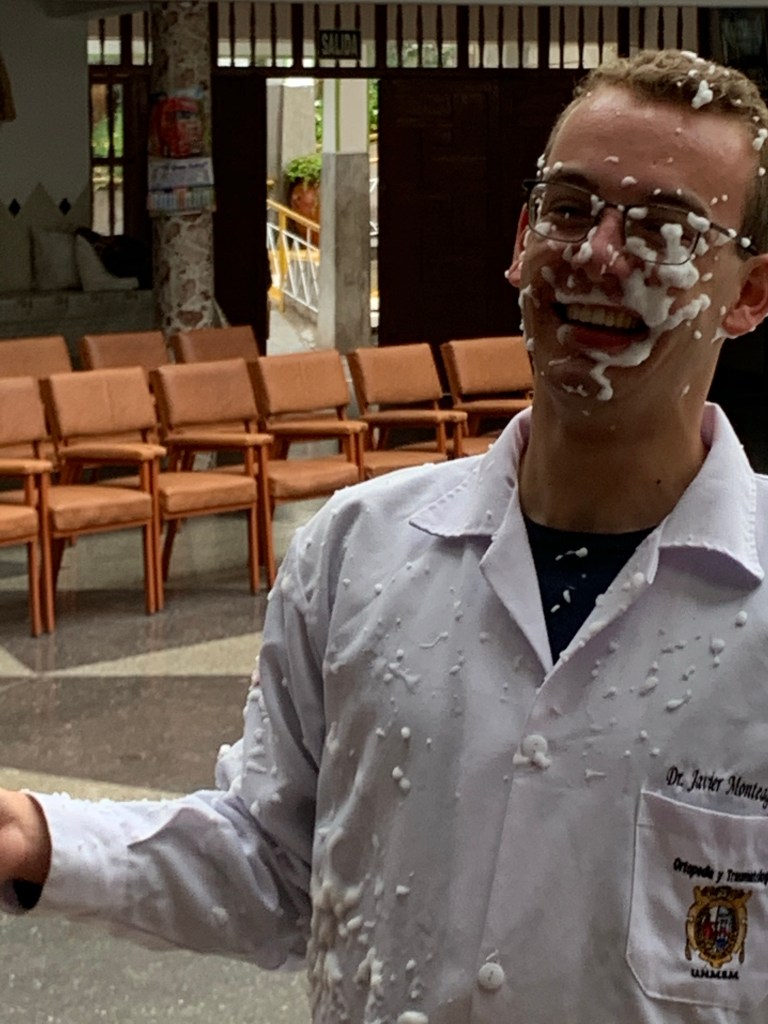
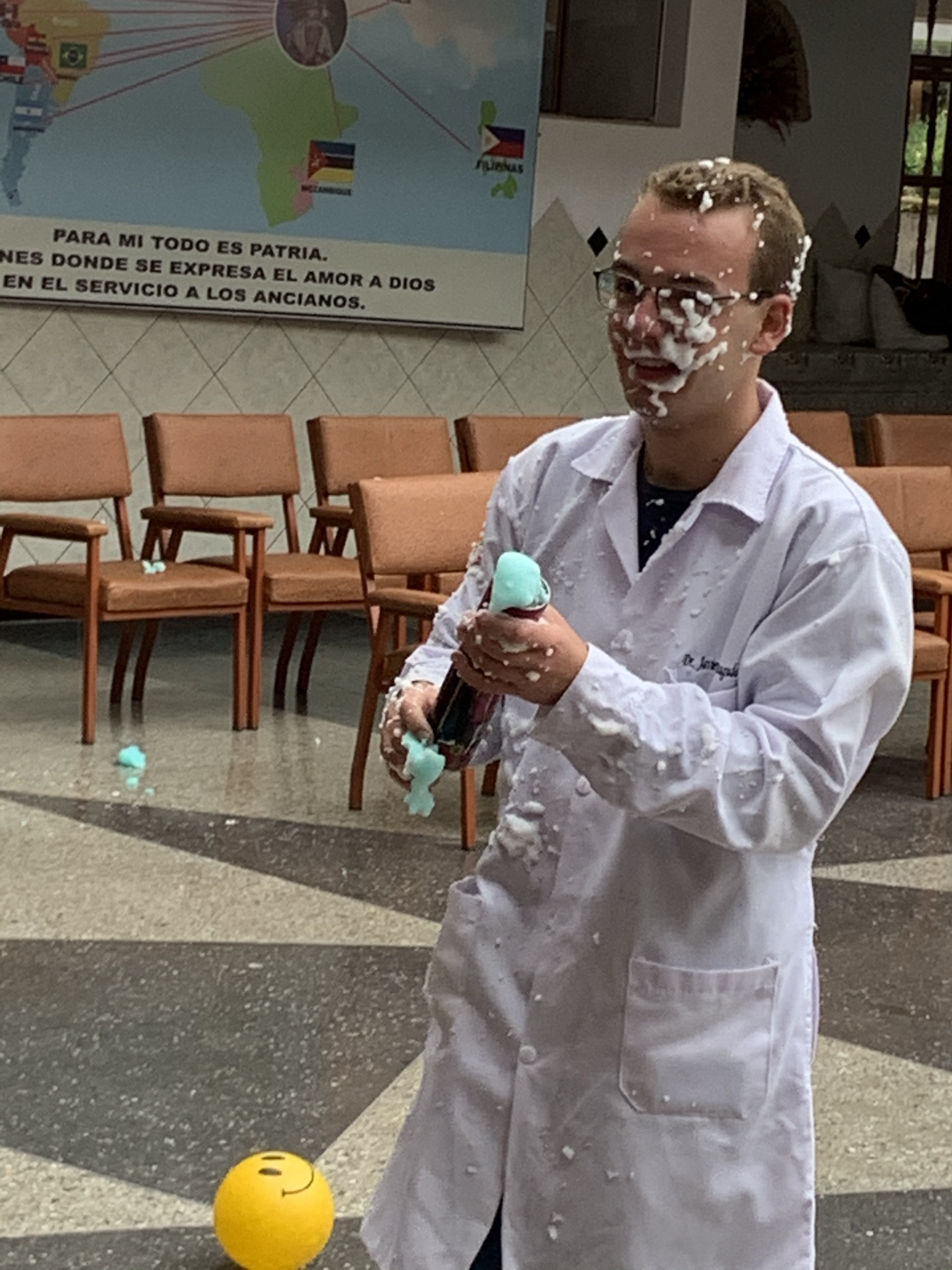
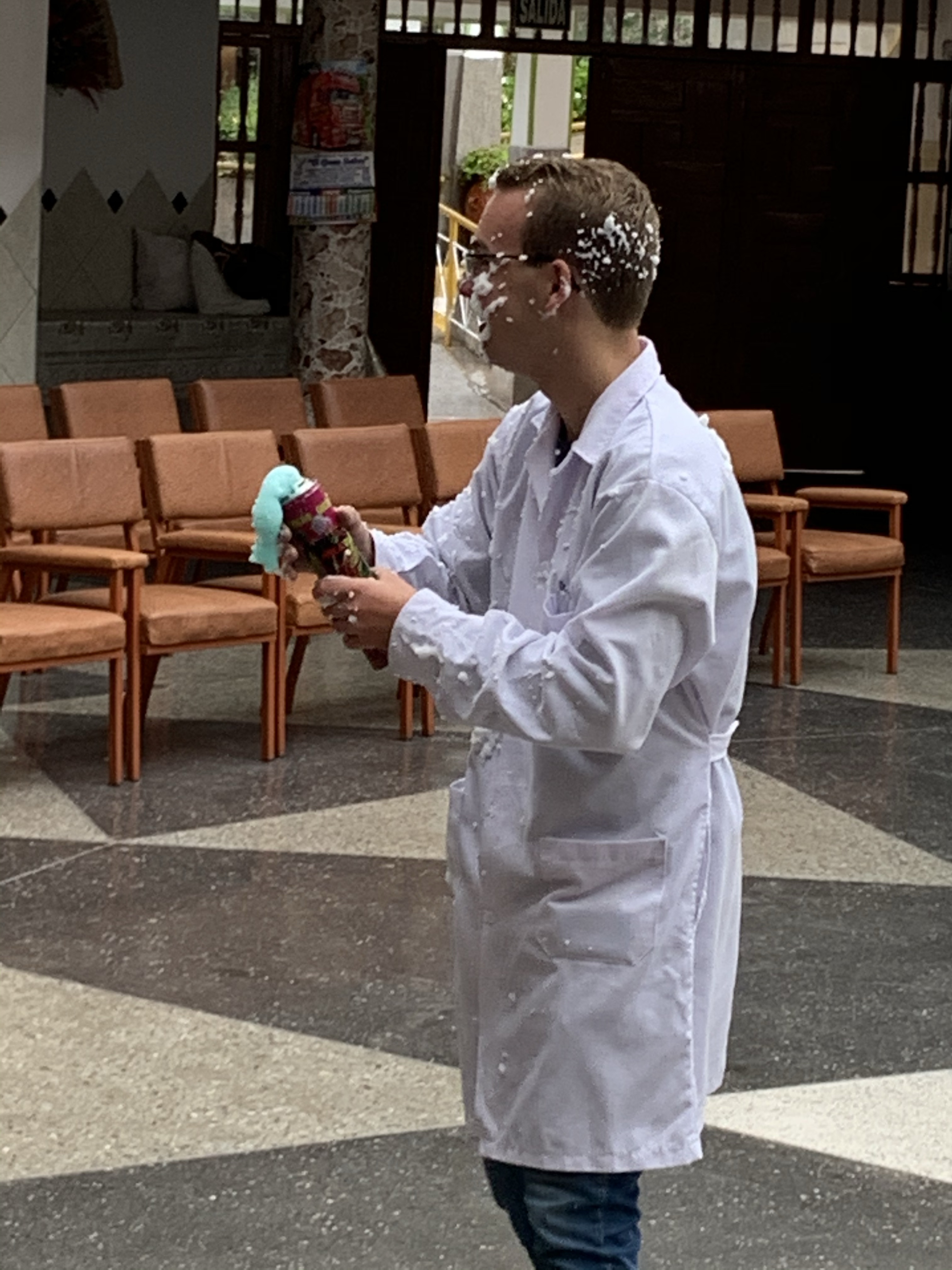
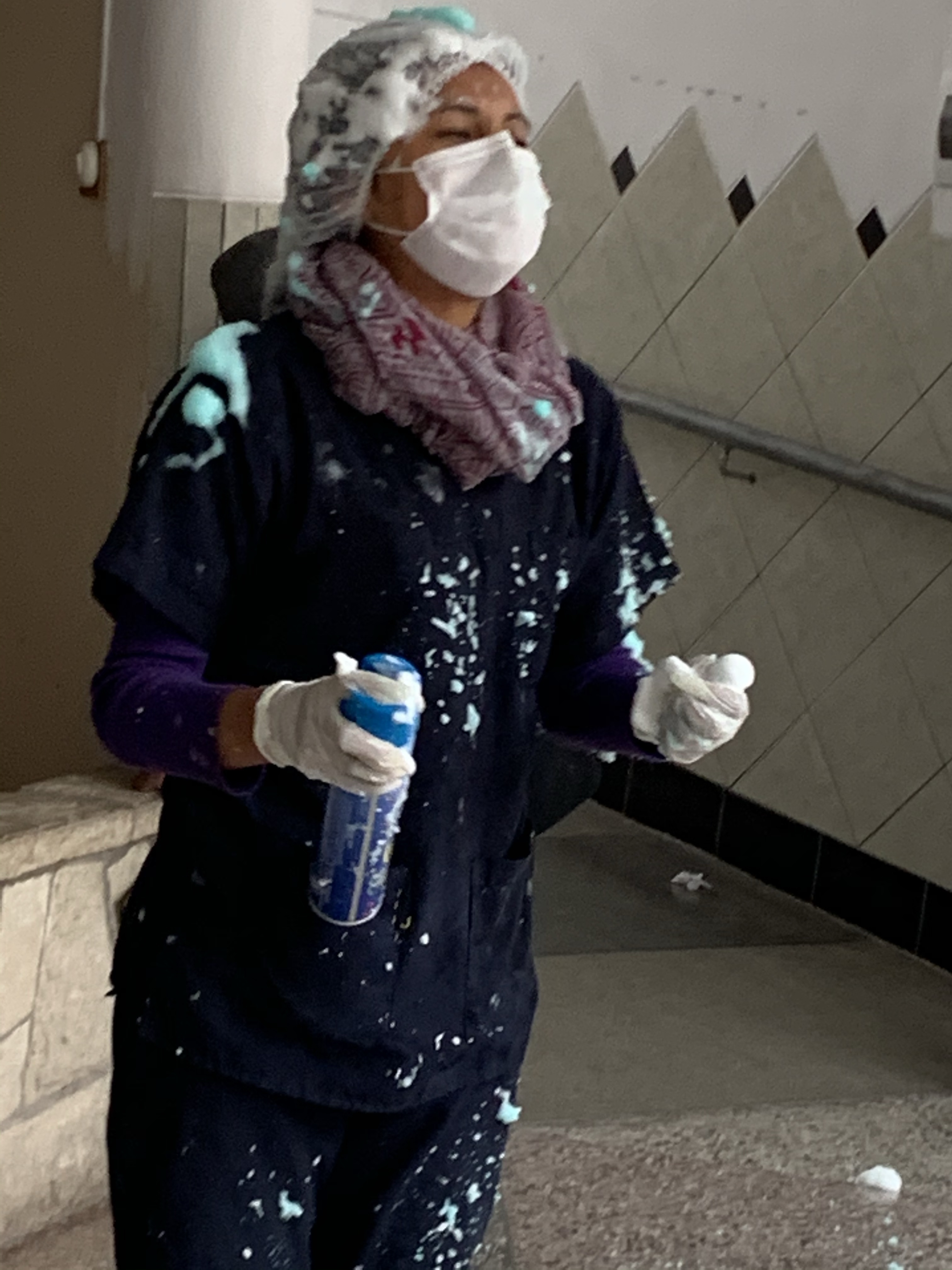
As it is some of the seminar students last day Luka had a silly string fight with them.
Shown here is Luca, a volunteer from Germany- the German government sponsored him to travel to Peru and volunteer.Video of part of the silly string fight
By spending the day in Centro Gerontológico San Francisco de Asis we truly realized the importance of mobility and proper nutrition.
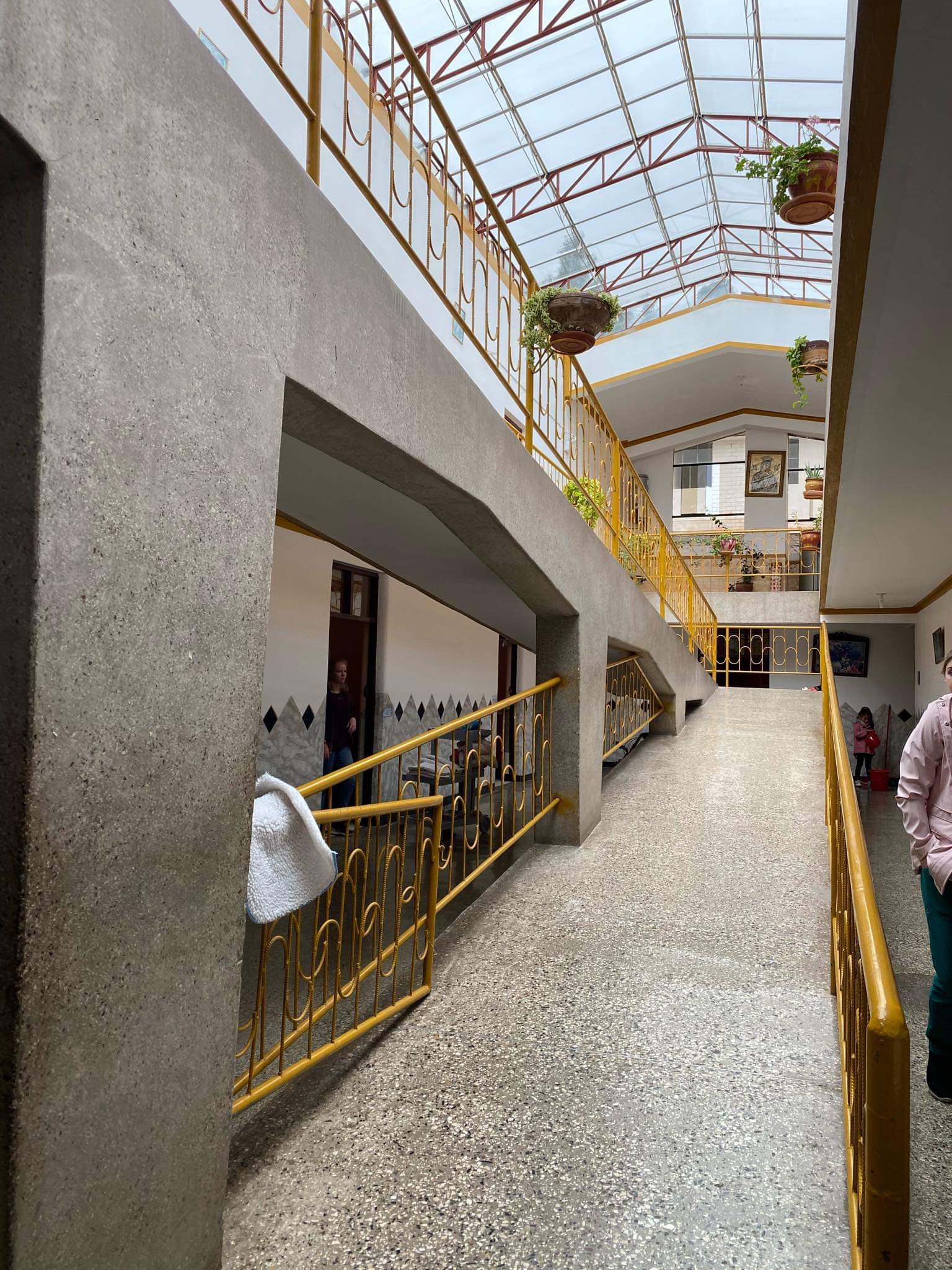
All the residents walk to their activities and meals; most of the time up multiple ramps or stairs. Some residents are in wheel chairs and there was only one resident who remained in bed.
Their mobility and proper nutrition is what is keeping them going.
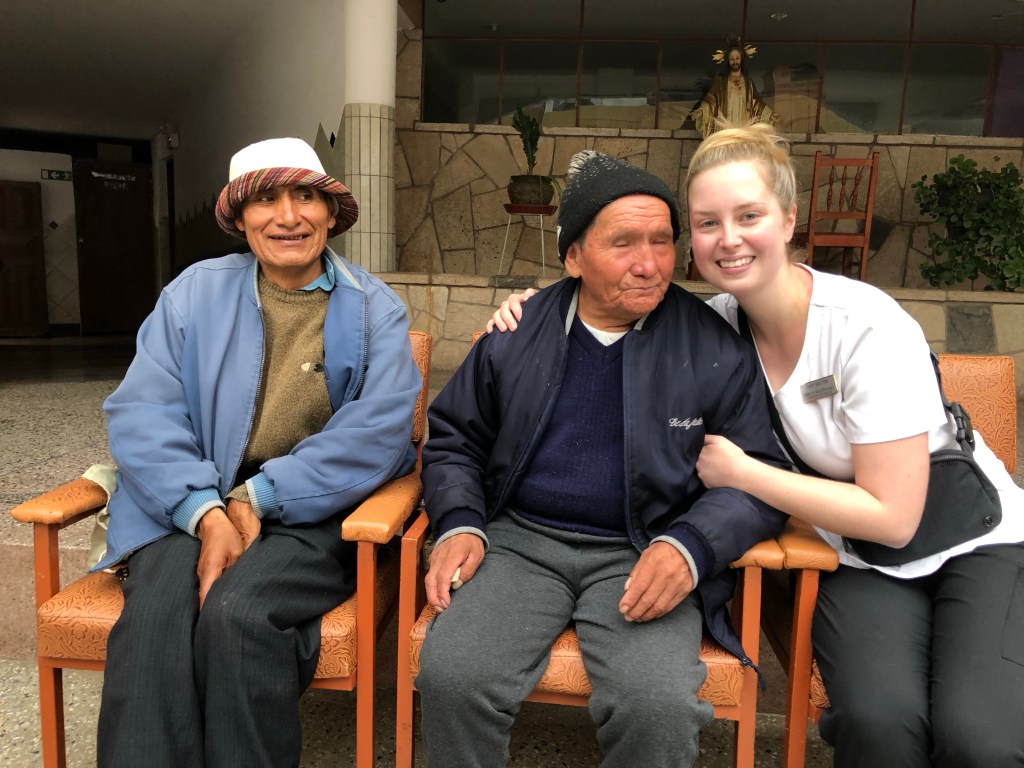
The residents of the facility also look after each other- two males in the more mobile group of the home are blind; If they need to go anywhere the other residents help them.
We learned a lot about the Peruvian culture and medical practices by being in the clinics and helping at the orphanages, day cares and Longterm care faculties.
Today is our second last day in the Cusco clinics. After having 3 days of Spanish lessons it is starting to become easier to understand people.
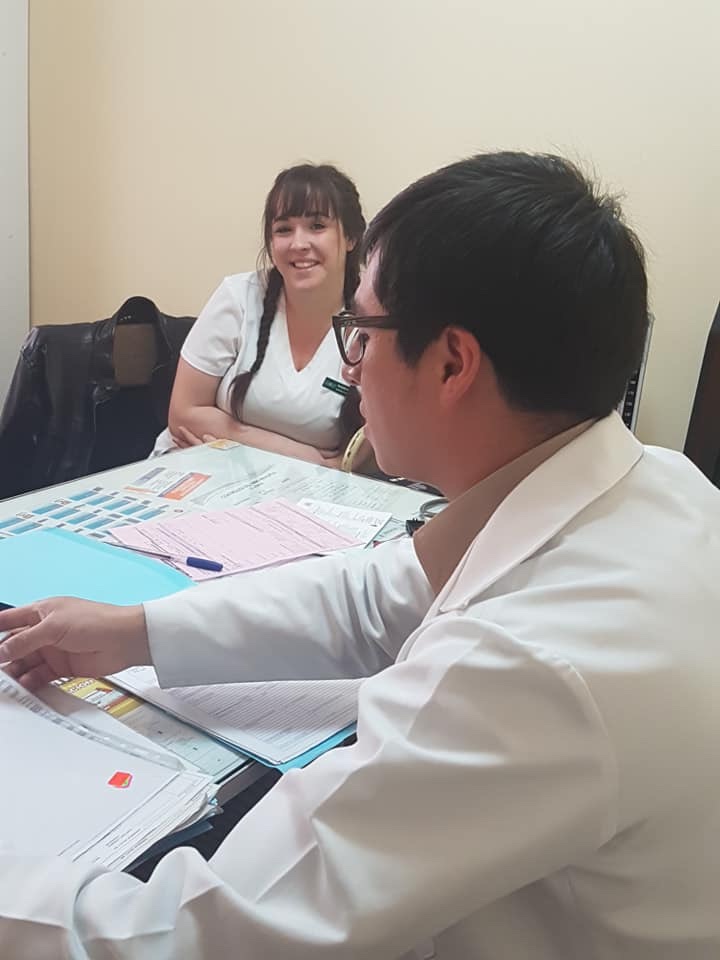
In the CLAS TTIO clinic James and myself (Austin) were placed placed in general medicine with a very nice doctor.
We seen numerous patients with many different diagnosis; but what shocked us the most was that we could understand a lot of the conversations and the medical aspects of what was going on, even though there was a language barrier.
I believe it was a mixture of having the Spanish lessons, being in Peru for a few days now and the fact that medial jargon does not change much, even when spoken in a different language.
After seeing a few patients the doctor then had us fill out some information on the billing charts where it displays a general overview of why the patient was there, who they are, their age, weight, height and diagnosis.
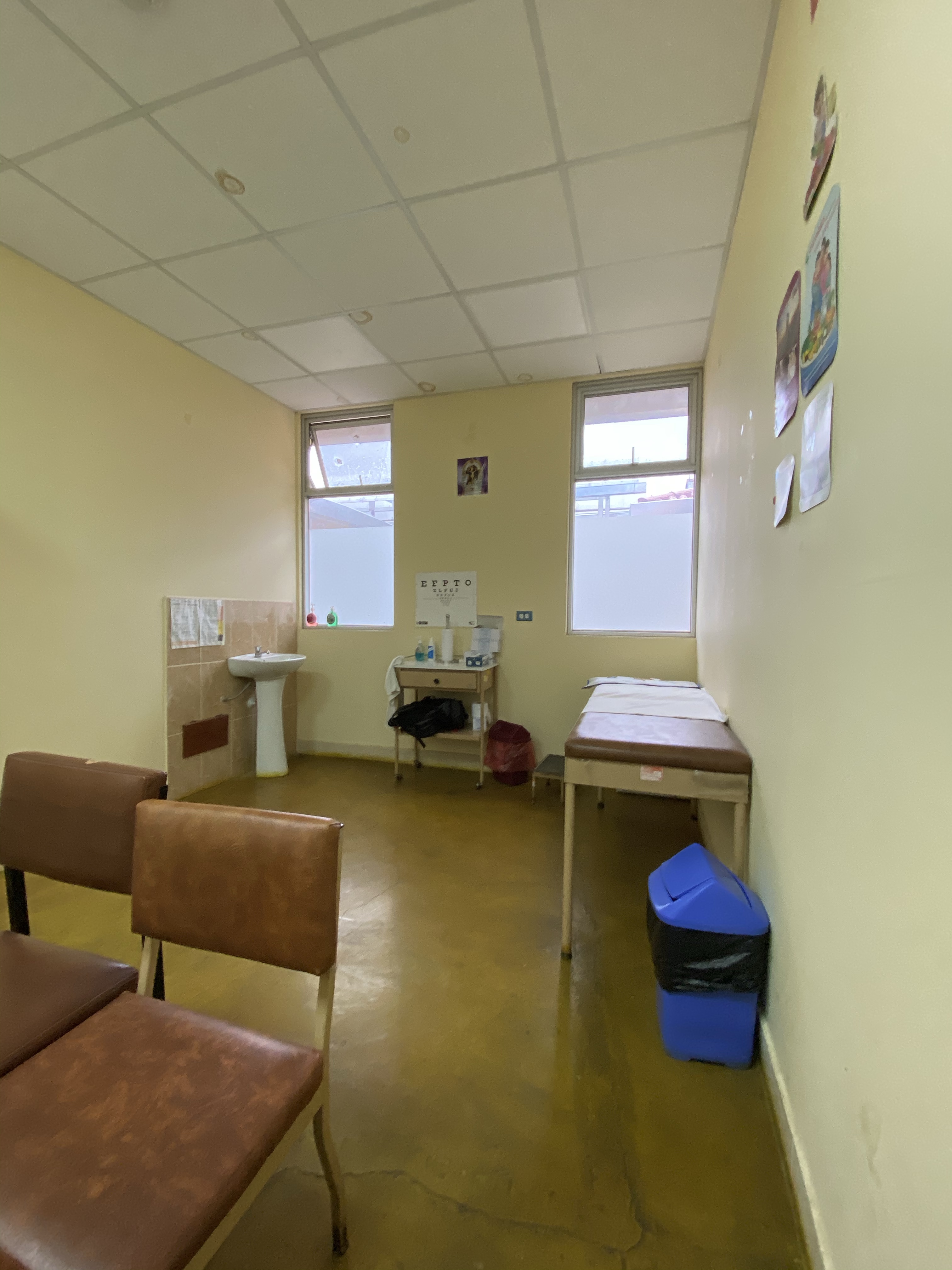
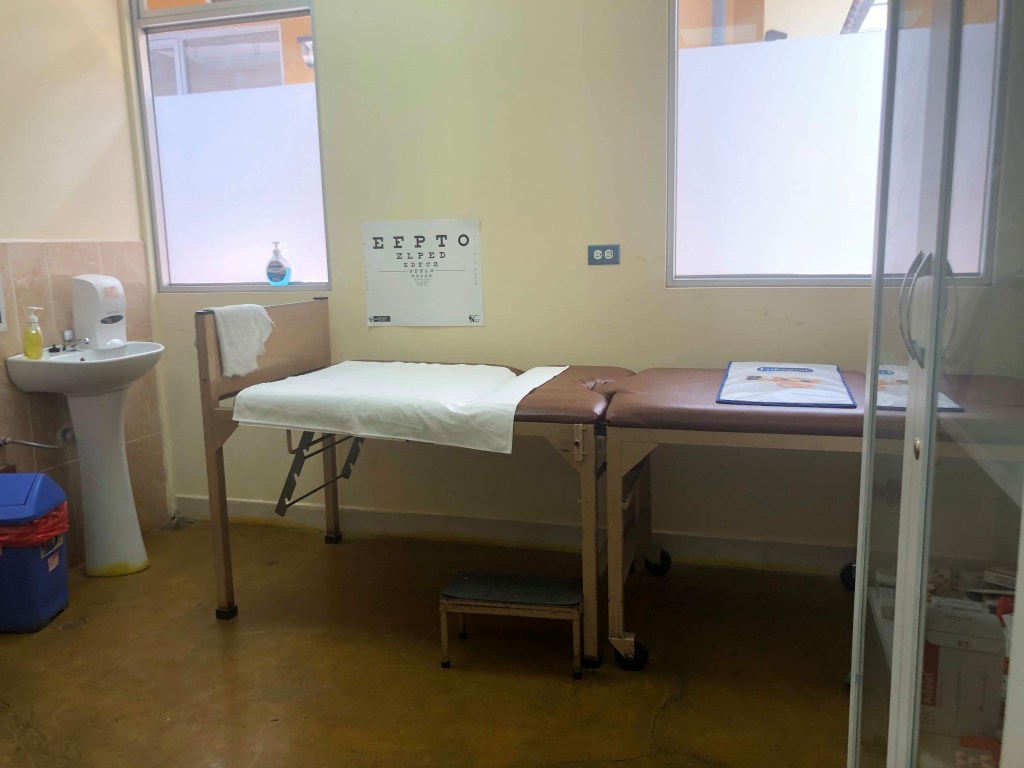
A picture of the medical examining table in the doctors office.
Annabelle was placed in the mental health clinic today. She seen a few patients with the doctor in the clinic but then they went and performed a home visit.
There was a Brother and a sister fighting over land and the judge ordered a psychological assessment.
Annabelle and the doctor travelled to the house by taxi that was paid for by the client.
When she arrived to the home; there was a large gate at the front of the houses. The home was attached to other homes kind of like apartment buildings. In the courtyard, just outside the home there is a toilet and sinks, as well as a washer and a clothes line (that she thinks is shared among all the houses in the area/courtyard).
When she walked inside the home there was a very small kitchen, and a hallway that led to a tiny bedroom that mainly consisted of just a bed. Around the corner of the kitchen was another bed. There was no living room or shared common area besides the kitchen that she could see.
When they arrived at the home they took a look a look at the house and the environment to see if it is safe and if the person living there is responsible and capable of owning the land.
The doctor told her that the other party (the girls brother) is getting an assessment done elsewhere as they are not getting along.
If this assessment is not done the outcome could be bad. Sometimes if mental issues or illnesses are present the people involved could become severely hurt or they could severely hurt someone.
The client then paid for some bus tickets (public transport) for them to get back to the clinic.
Due to this being someone’s home there was no pictures taken.
Furthermore in mental health, Annabelle and the doctor assessed a teenager that was referred to adolescent mental by his principal because he was missing so much time. They were trying to see if there is anything underlying; like depression, anxiety, etc. As to why he was missing so much school.
Today for triage Kelsey Muller and Sonya Wambolt helped with weights, blood pressures, heights, etc.
Kelsey Muller and Kristel (an RN from Ontario, Canada who is volunteering at CLAS TTIO)
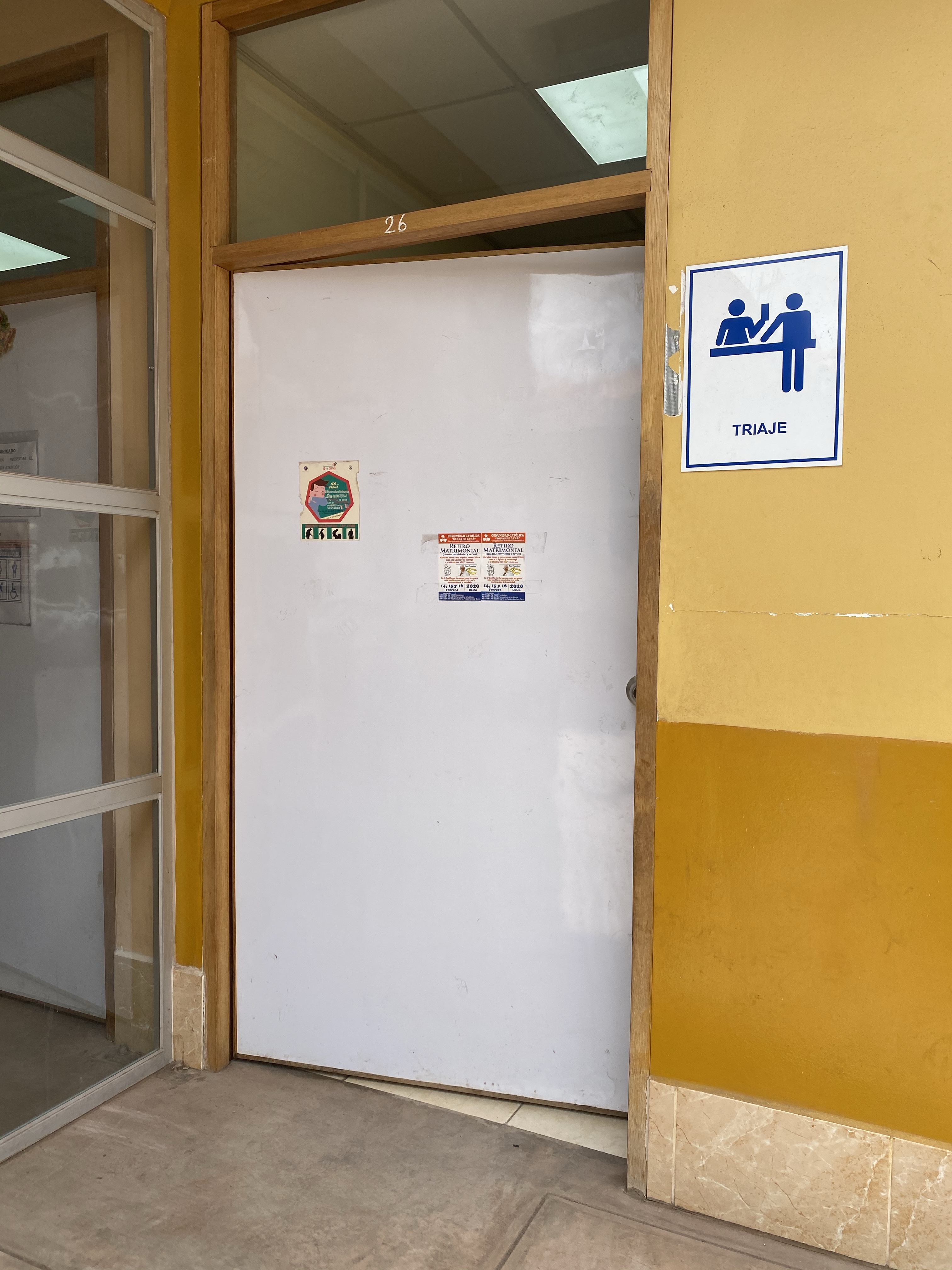
For triage you sit outside the clinic then when called you enter and are given “ticket” to wait and go see a doctor.
Triage door right outside the clinics main entrance
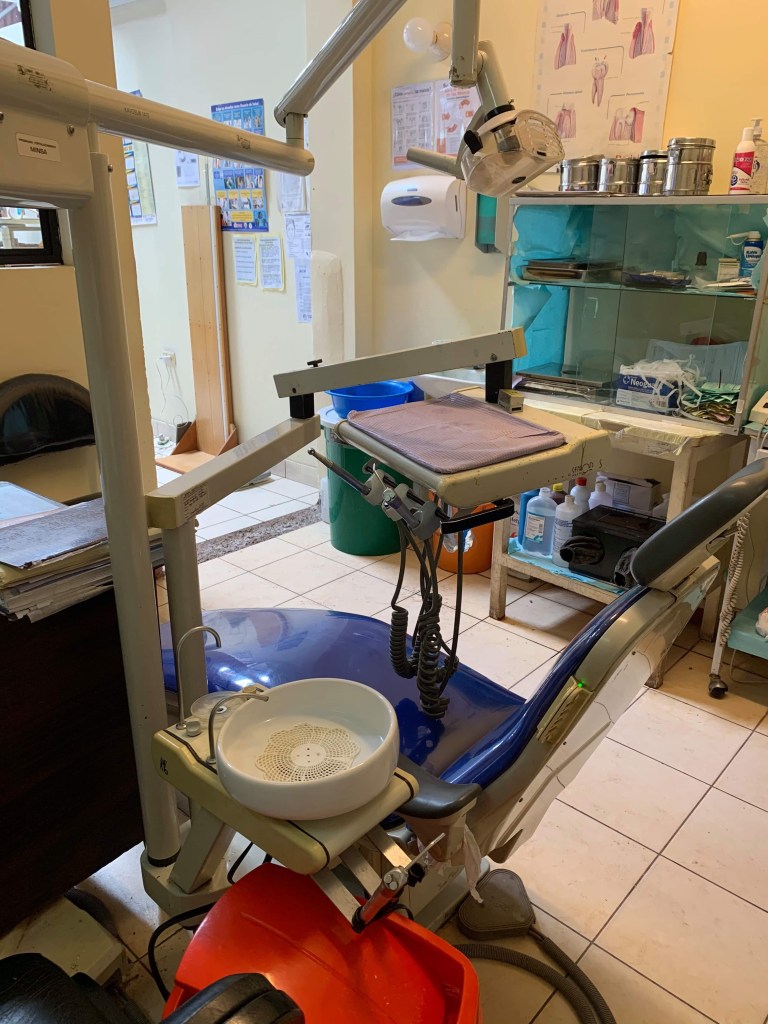
In the Dentist’s clinic Kaitlynn Hayes experienced a very touchy moment despite a language barrier.
A little girl walked into the clinic and she was very scared. Kaitlynn, not being able to talk to the girl as she only knows a little Spanish and the girl can’t speak English; was still able to comfort her by reaching out and holding her hand. Kaitlynn told her to squeeze it she feels the need to. The little girl understood and was instantly comforted.
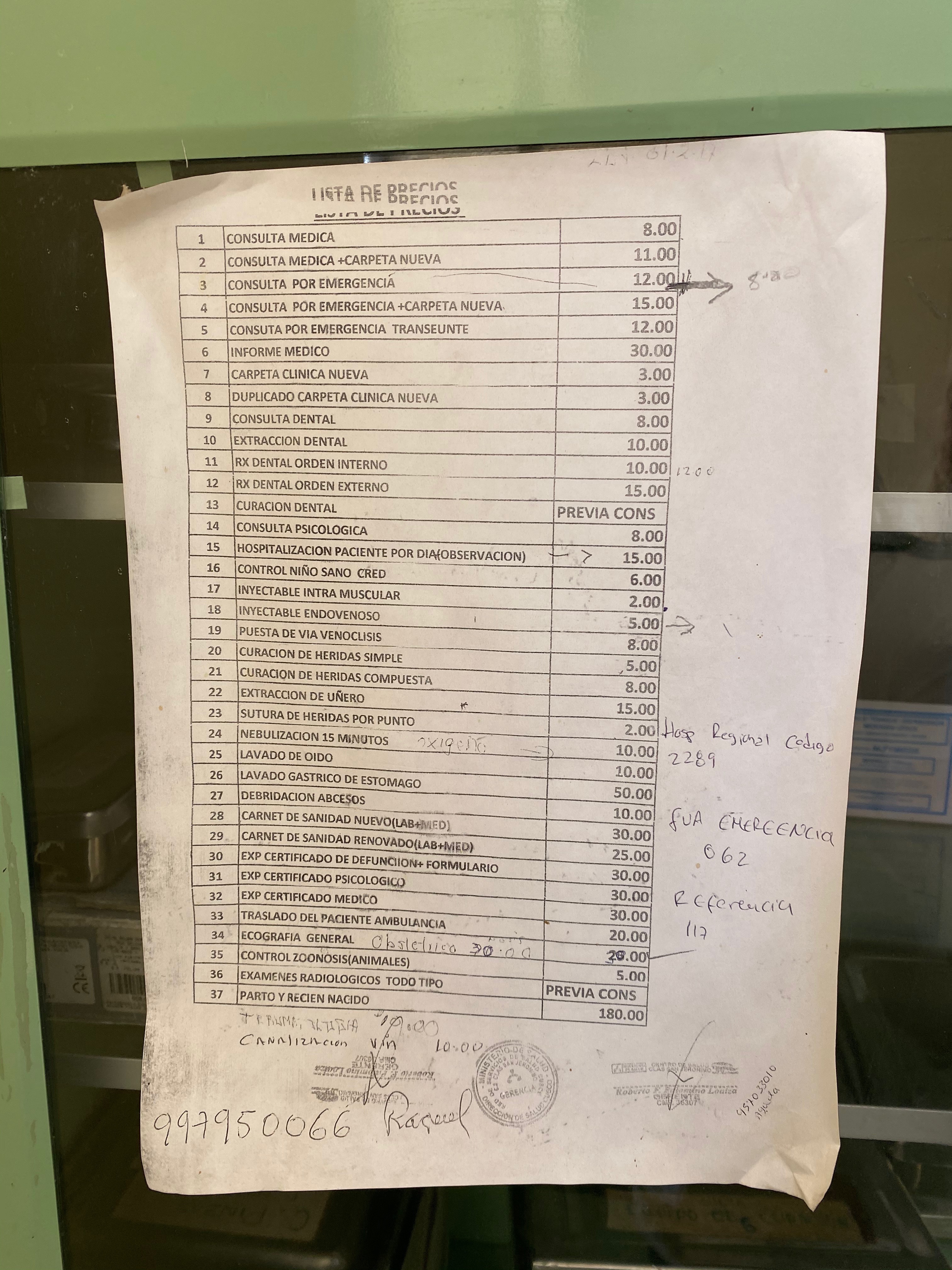
We leaned that there are multiple insurance companies that help cover the costs of procedures and medical supplies; especially for the poorer populations.
For the SIS insurance company- someone goes into the clients home and assesses the home, their income, living situations, etc. to say that they can’t afford to buy medical supplies or pay into procedures.
Most insurances cover all sexual health items- condoms, IUD, birth control, etc.
If you work for certain areas in the government like the police your insurance does not cover sexual health items.
A price list for individual items that need to be paid for if there is no coverage
Some students in the other group at San Jeronimo had an experience with attending a day care/ nutrition centre.
“ On Thursday, Melanie and I (Hannah Gartland) went to a nutrition centre for mothers and their children. While there, we had the opportunity to sit in on a cooking demonstration where one of the nutrition staff from San Jeronimo taught the mothers how to make a meal that was high in iron to help manage and prevent anemia.
Following the preparation of the meals, we got to watch the staff and mothers get the children ready to eat.
Before their meal, they prayed, sang songs about food, and learned table manners during mealtimes.
Following the meal, we got to play with the children and sing songs with them while the nutrition staff and the mothers cleaned up the table and the kitchen before the centre closed for the afternoon.” -Hannah Gartland
Brianna LaRusic and Hannah MacKeigan were also placed in a day care where they gathered some information about anemia and nutrition from their clinic at San Jeronimo and brought it to the day care to teach them and their parents about healthy eating habits.
They also played with the kids and helped make them a healthy snack and help feed them if needed.
Hannah Mackeigan and Brianna LaRusic with some children from the day care.Brianna and a child from the day care Hannah Mackeigan and a child from the day care.
While some students were at the daycare others stayed at the clinic.
At San Jeronimo clinic Kelsey Brown assisted the staff in the wound clinic with simple dressings on a 15 year old boy’s leg who had road rash (fell and scraped his leg).
She also seen an older gentleman have a catheter inserted but was unsuccessful. He got sent for some further testing.
Furthermore she seen a dressing get removed of a man with a dog bite.
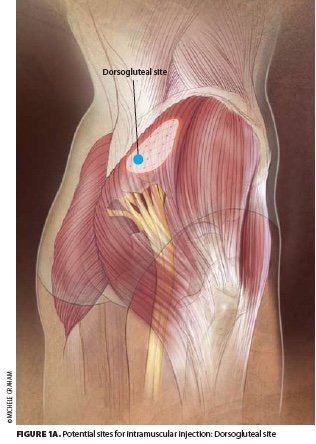
Kelsey has also seen a lot of injections in the dorso gluteal muscles (which is an older practice back home).
Some other students and the instructors at San Jeronimo clinic passed out some colouring supplies and talked to some children outside the clinic.
Some students also got some pictures with George the information guy at the clinic who treats us like we are family.
The students with George
After our clinical today we had Peruvian cooking lessons at the Spanish School across from our hostel.
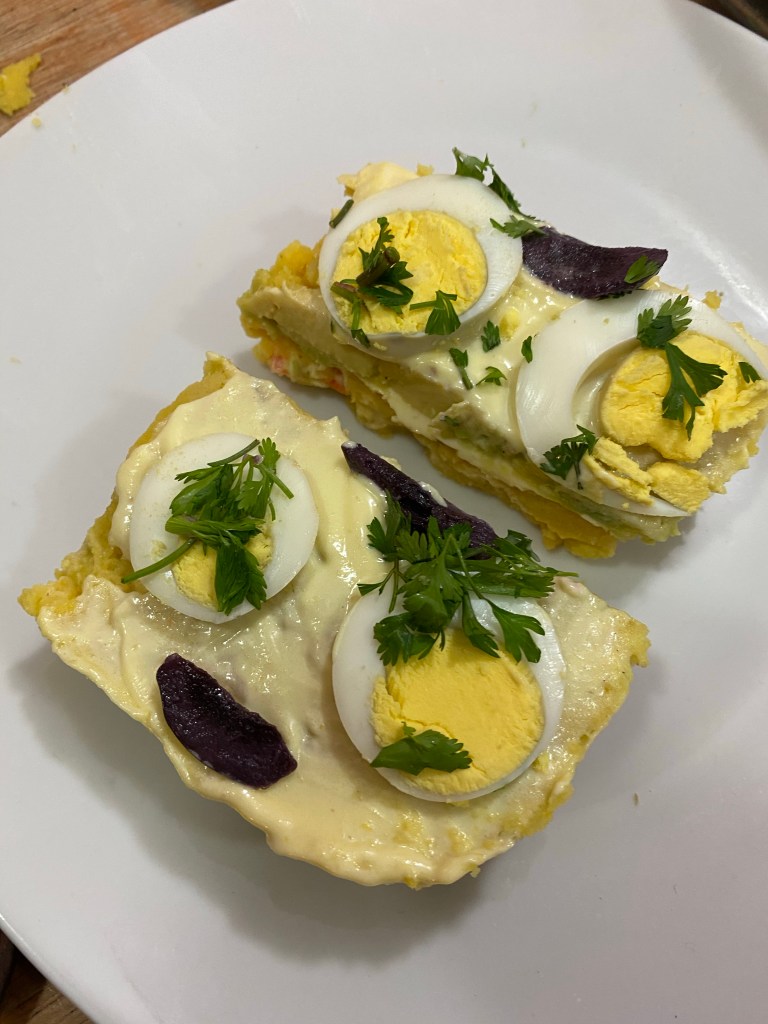
The dish was called Causa- it is a cold potato cake with many different layers.
The dish originated back in 1921- it was a dish that the independent army once ate.
Causa- made by the chef/cooking teacher
The chef/cooking teacher made a dish and showed us how to make it step by step and then we made our own version of the dish.
Today was a rollercoaster of emotions for the group of us visiting Clas TTIO. We arrived in the morning at the clinic as per usual and awaited our assignments. We then found out that all of us would be visiting an orphanage.
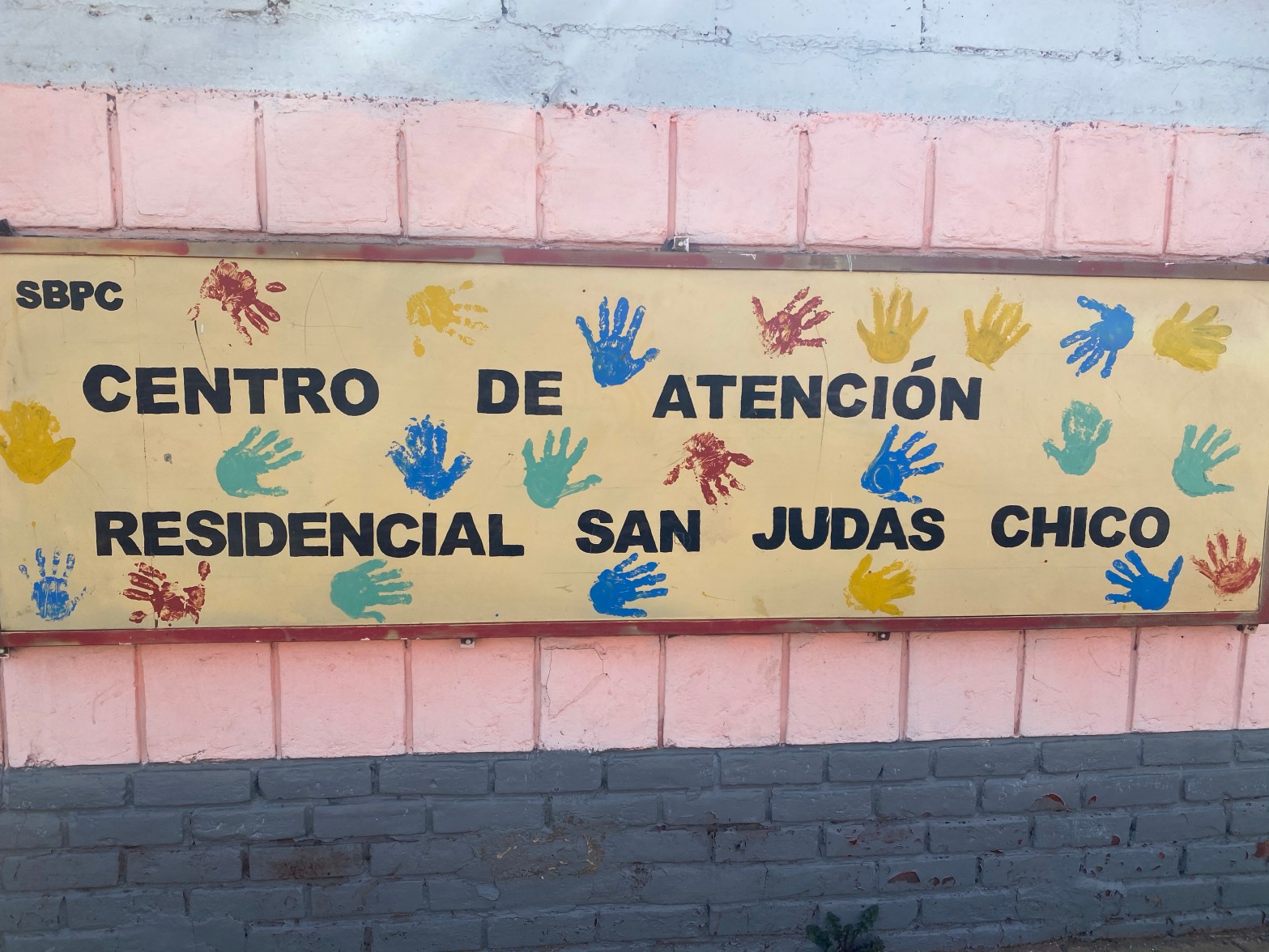
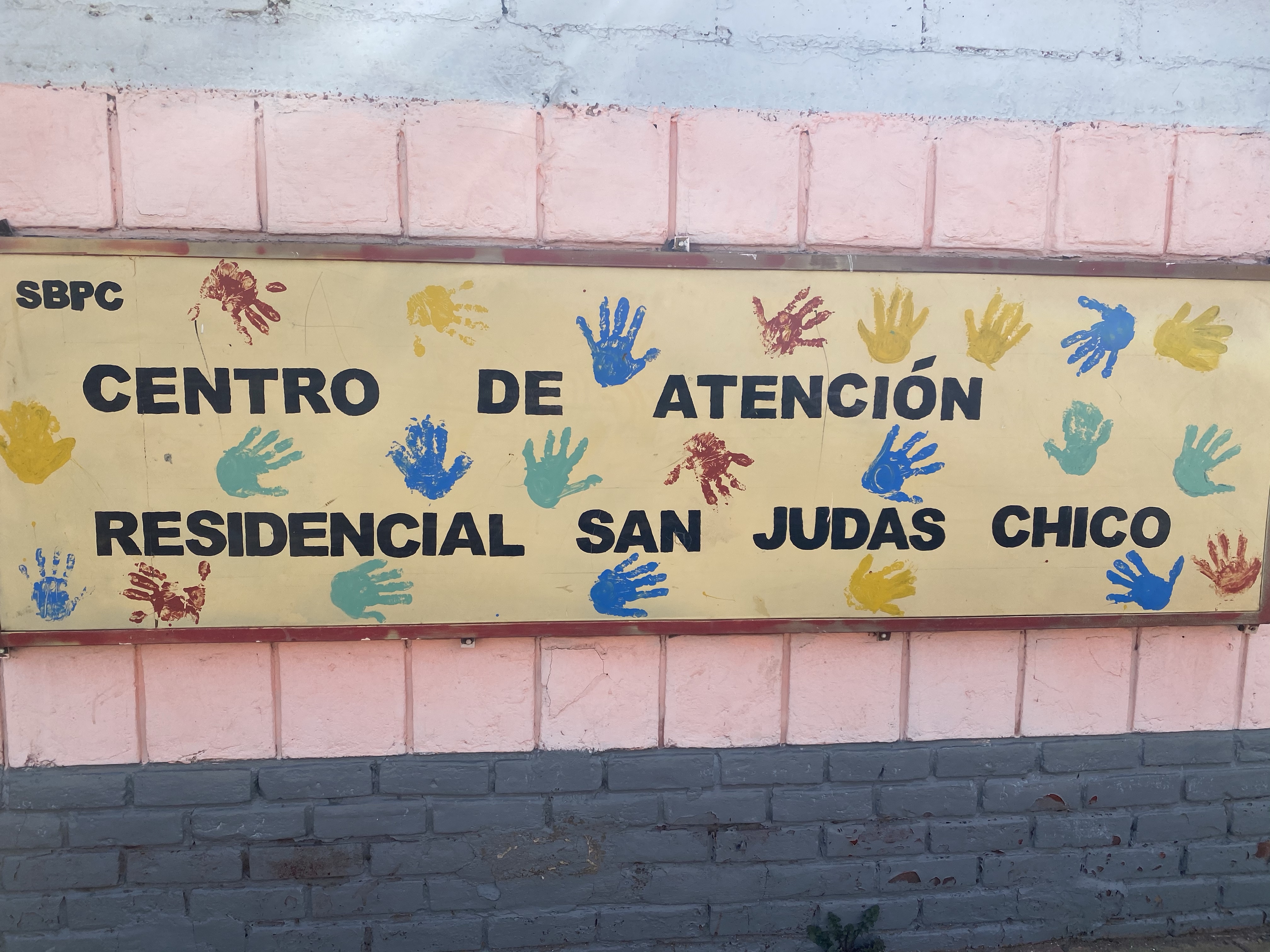
There are three orphanages in town, two of which are co-ed and the one we were going to is all-girls called Centrode Atención Residencial San Judas Chico
The dentist from the CLAS TTIO clinic walked us from the clinic to the orphanage. When we arrived we were broken up into small groups. 4 students accompanied the dentist to help teach teeth-brushing, flossing, and check-ups. 3 students assessed the girls at a station that measures the girls’ heights, weights, and waist circumferences. 6 students performed eye-testing using the Snellen eye chart at two different stations.
Meanwhile, a healthcare worker from the clinic was checking the girls’ blood glucose levels; a practice that is done every 2 months.
The six students at the eye-testing stations were generally shocked at the amount of girls with extremely poor vision, without glasses. Fortunately, some of us brought old glasses and asked if we would be able to donate them to the orphanage. Angela and Miguel (the translator) discussed donations with the director of the orphanage and we will arrange to bring them on Friday.
After the girls cycled through all of the stations, we had the opportunity to hang out with them for a little bit before ending our visit. We danced, we laughed, we hugged, we played outside, some girls were braiding our hair, and overall everyone enjoyed themselves.
The girls told us that the doors to the orphanage are always open for us. One girl thanked us for giving her attention. It was a heartwarming and heartbreaking experience all in one.
We won’t be sharing photos of the orphanage to respect the girls’ privacy as it is their home.
However, a few notable characteristics were quotes on the walls that translate to, “Opportunities don’t come back,” “Don’t leave for tomorrow the things you can do today,” and “Time is like gold, don’t waste time,” a garden in the courtyard where they learn about agriculture, and a couple of recreational rooms.
The girls are not allowed to leave the orphanage unless they are given special permission, however, they do leave the orphanage to attend school with all of the other children in the community.
A lot of the girls also get jobs around age 14-15. We learned that they have a celebration for the girls’ 18th birthdays, then at that time they leave the orphanage.
Most of the girls have places to go as they have connections and friends from public school. Unfortunately, some girls are not as lucky and are unprepared. Hearing about this directly from the source of where it occurs was a harsh smack in the face of reality, and we all had to reflect on how grateful we are for our lives at home.
At the end of the day, there wasn’t a dry eye on the bus ride back to the hostel. Typically we have a post-conference on the bus ride back, but this time it was rather silent as we all reflected internally.
On the other hand, the group at San Jeronimo visited their clinic and spent the day there.
Kelsey Brown accompanied a general medicine physician for the day. She got to witness the physician assessing for kidney pain via CVA tenderness, and assessing unknown abdominal pain through auscultation and palpating then sending the patient for further testing.
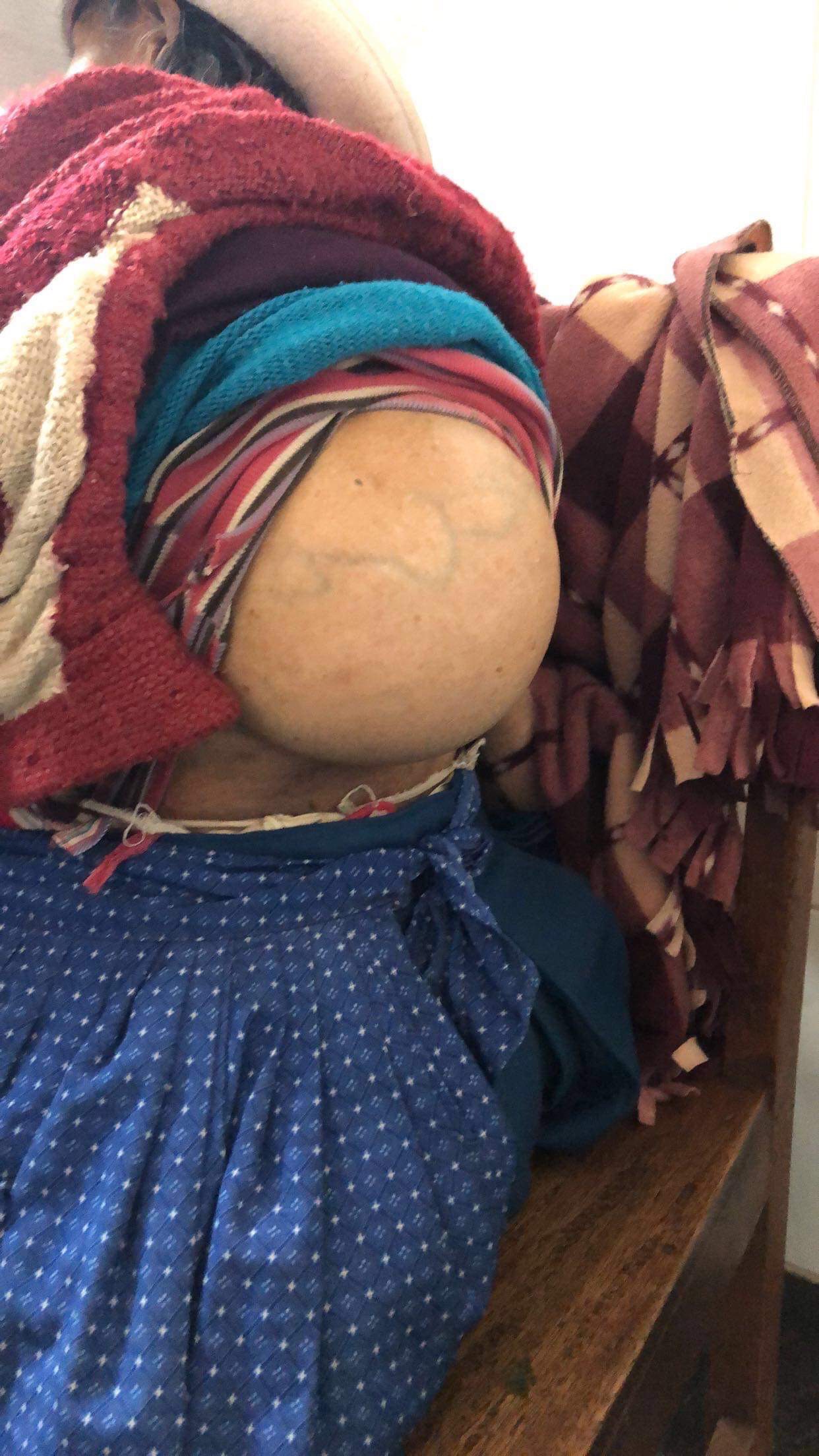
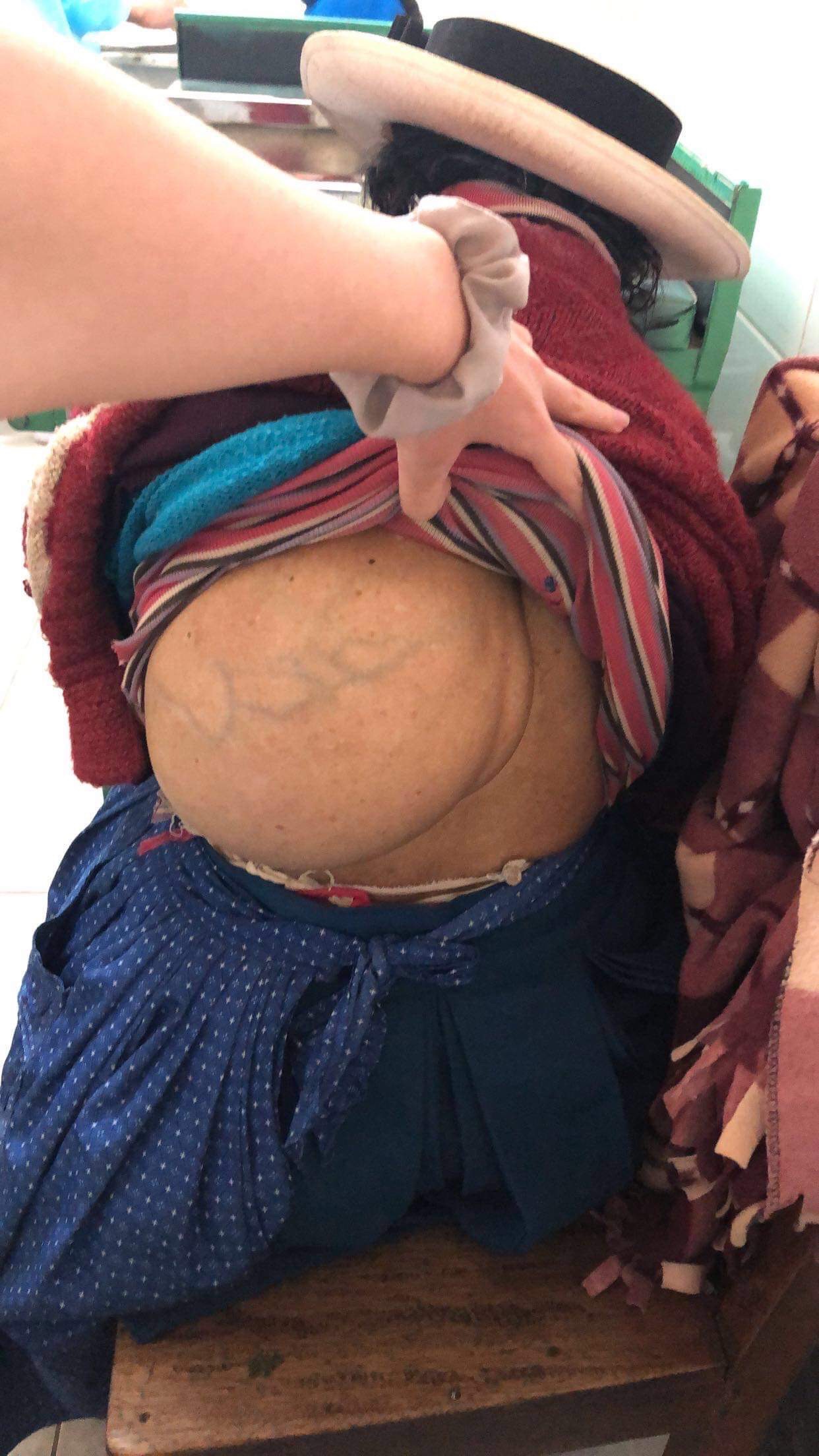
Another patient came into the clinic with a sore shoulder. Kelsey did not understand what had happened to her shoulder due to the language barrier. Moreover, the patient had a rather large tumour on her back that both Kelsey and Brianna LaRusic got to see.
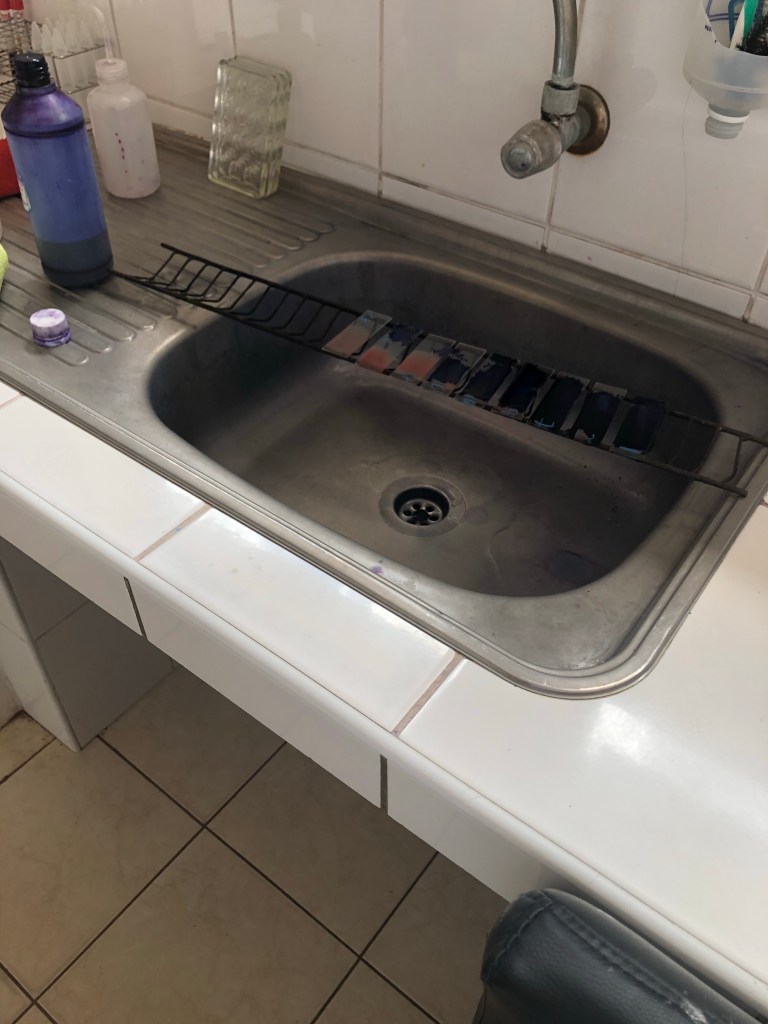
David Gouthro was placed in the lab, they performed Venus punctures, rapid testing for hemoglobin, a lot of glucose testing, parasite testing. They see an average of 70 patients per day. Shown in the picture above is blood that was activated with a purple solution. The developing agent was then looked at by the lab technicians and doctors.
Hannah Gartland was also with a general medicine physician today. The most interesting case that occurred today involved a jaundiced child.
The child had a kidney infection that the mother was unaware of. She just knew that her child was complaining of pain. She kept giving her child acetaminophen (Tylenol) in an attempt to ease the pain but it was unsuccessful.
She accidentally administered more than the daily recommended dose everyday for a week straight, resulting in liver damage. The physician assessed for CVA tenderness which led him to the diagnosis of a kidney infection.
He also showed Hannah the child’s hands where she noticed the yellowish-colour in between his fingers. He also pointed out the yellow patches along the child’s jawline which further indicated liver damage.
San Jeronimo group with “George the fantastico“ George is one of the information people at the clinic. He was very welcoming and joked around a lot making us all feel like we belong here and are home.
In the poorer areas of Peru, the physicians, nurses and other health care workers must rely heavily on their physical assessment skills. They do not necessarily have the advanced technology that we have, therefore, they must make do with what is available. Assessment techniques are key to a healthy population.
After our time in the orphanage and the clinic, we all met back up for more Spanish lessons.
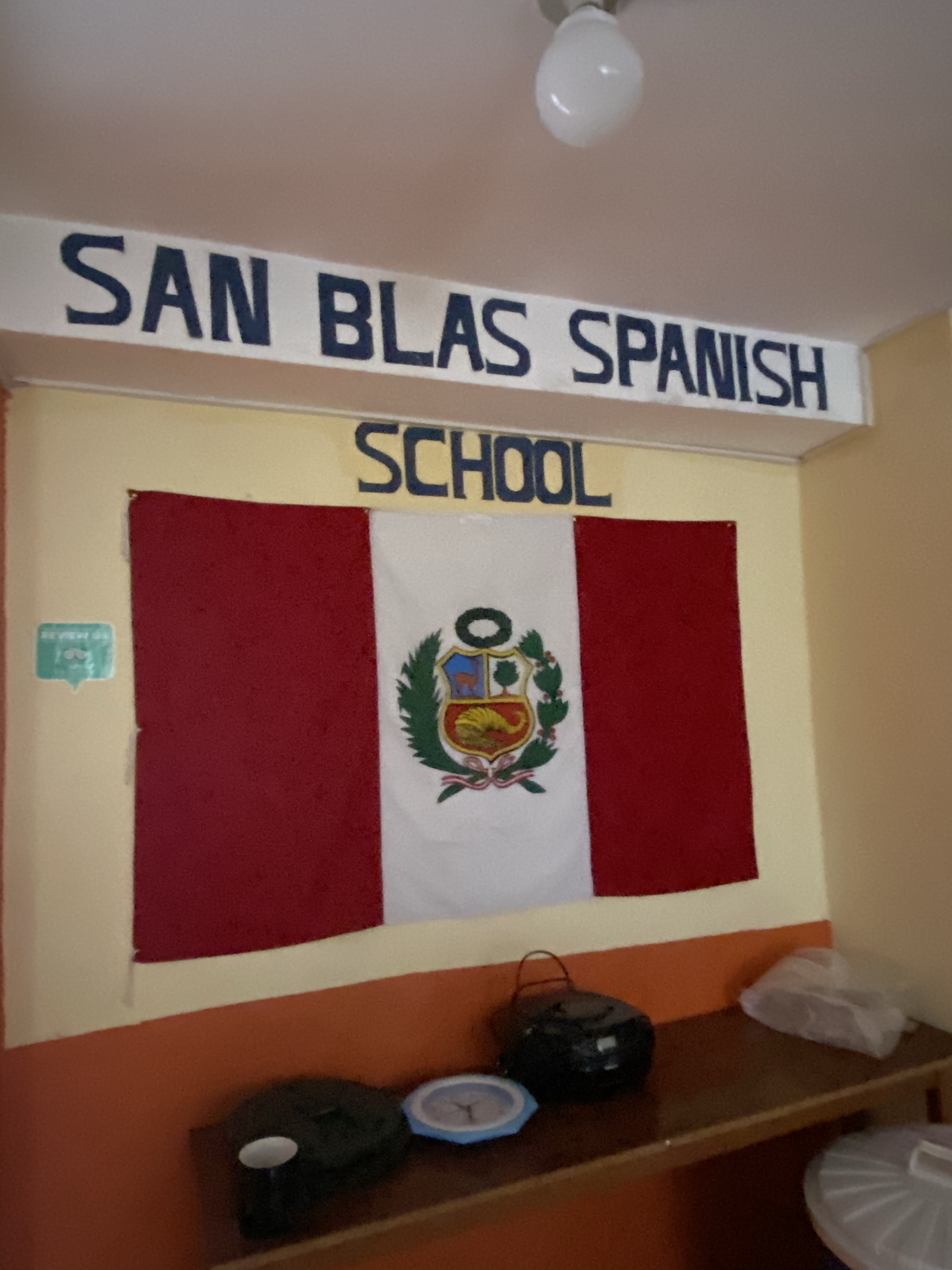
In Spanish lessons we were broken into 3 groups of 6-8 students. We learned the alphabet, numbers, pleasantries, and some medical jargon that we thought might be useful in the clinics. Throughout the Spanish school you could hear everyone’s laughter as we tried our best to speak Spanish and the instructors kept correcting us.
Hans’ Spanish group played a game of Más o Menos: greater/more or less. It is a game that helped us learn and practice our numbers
Time to get some rest for another day of clinical tomorrow. Buenos noches!
After our first clincial experience and our first Spanish lessons at San Blas Spanish School we felt a little more confident going into clincial today.
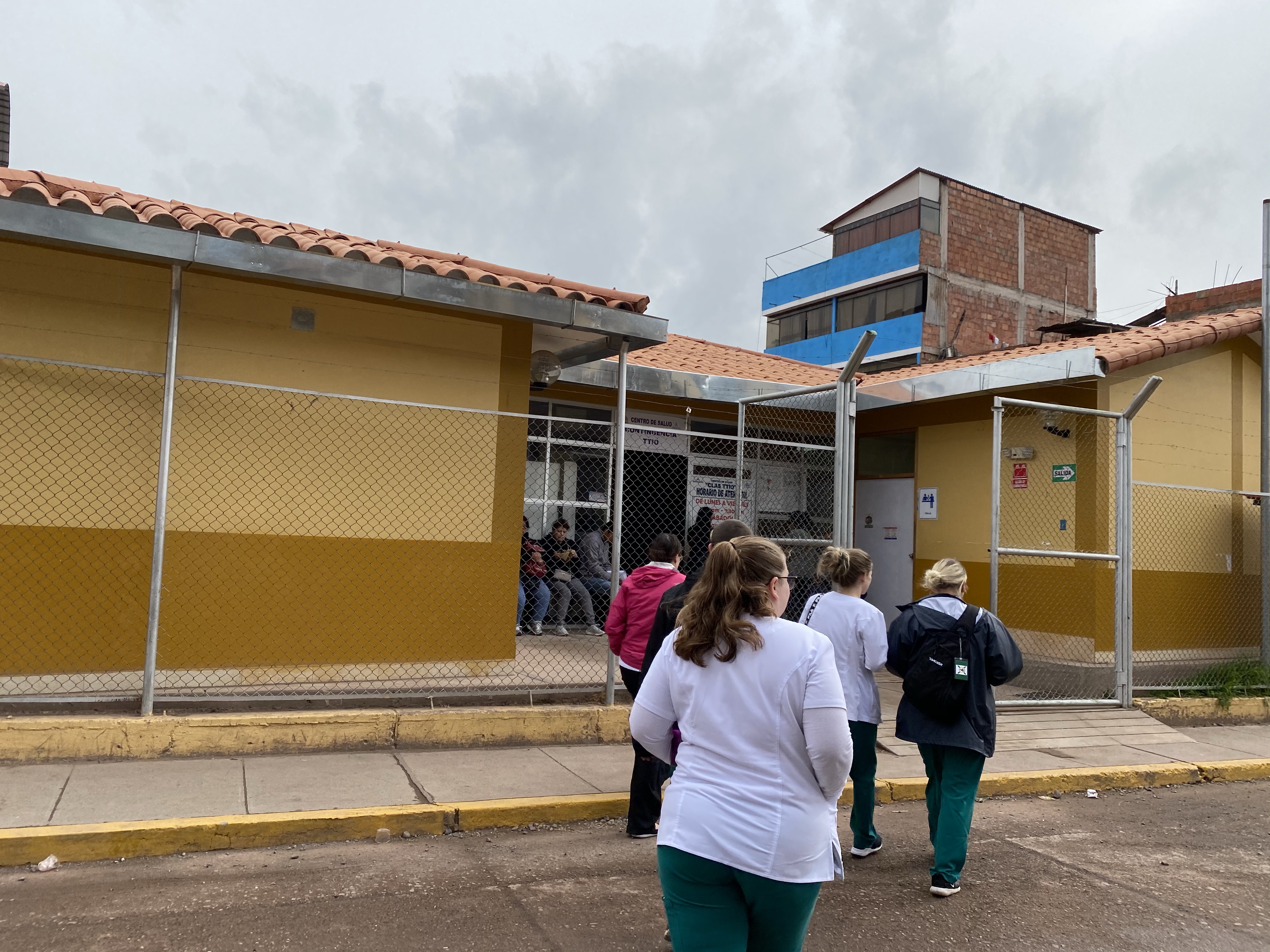
Some students walking into CLAS TTIO on day 2
The students at the San Jeronimo clinic- written by Hannah Gartland:
To start our second morning of clinical, Manfred took us on a tour of the hospital we are working at.
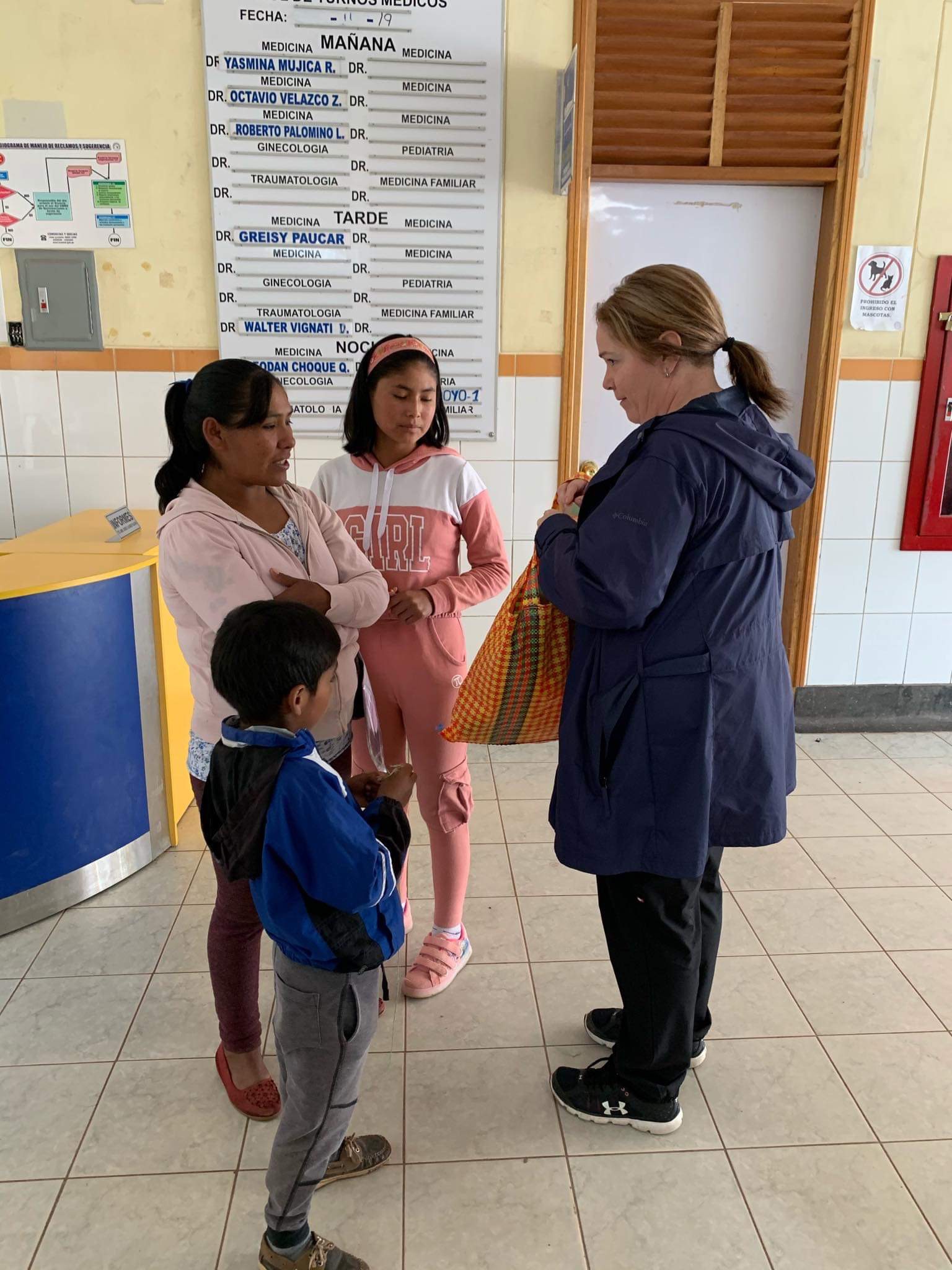
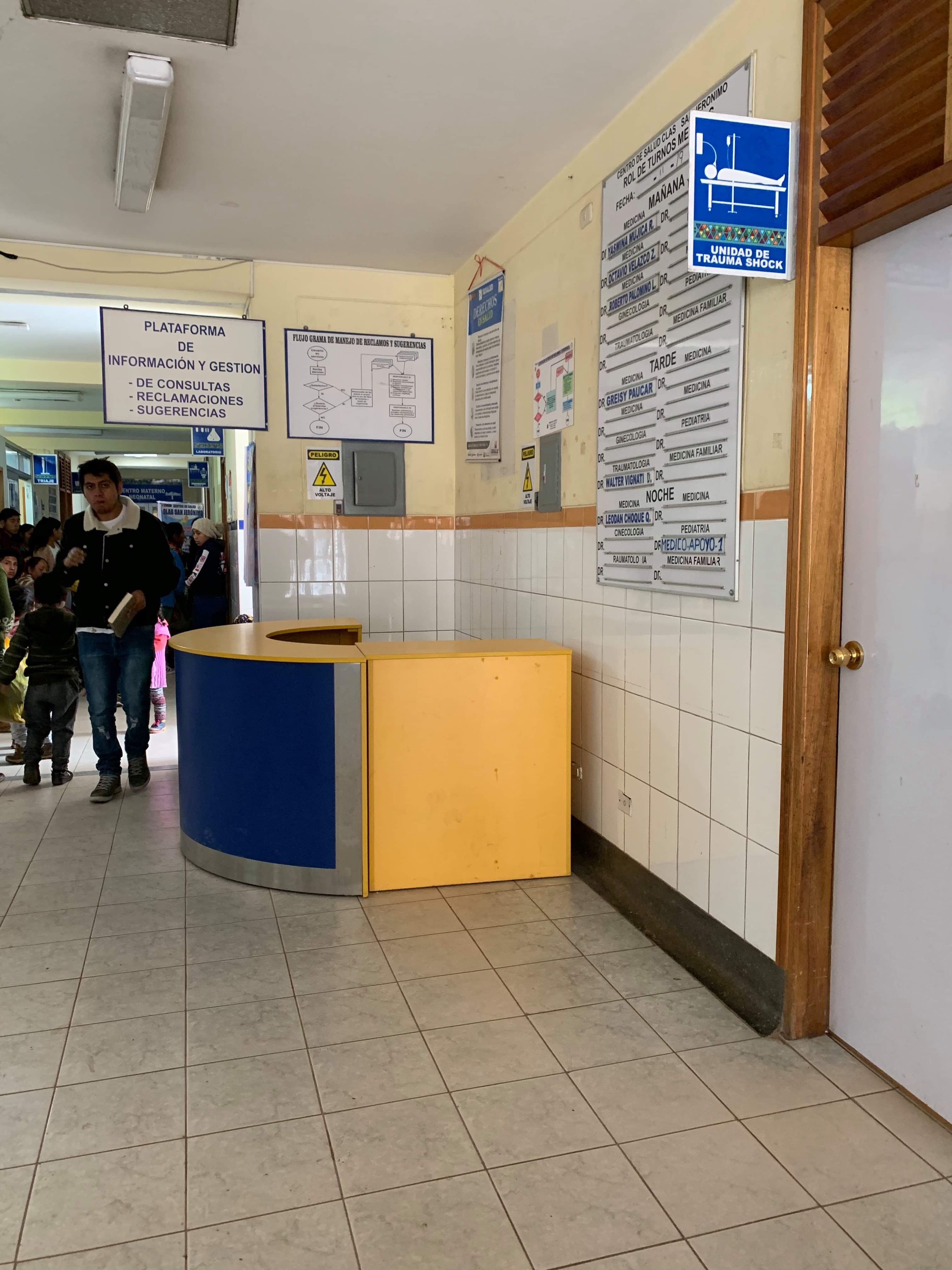
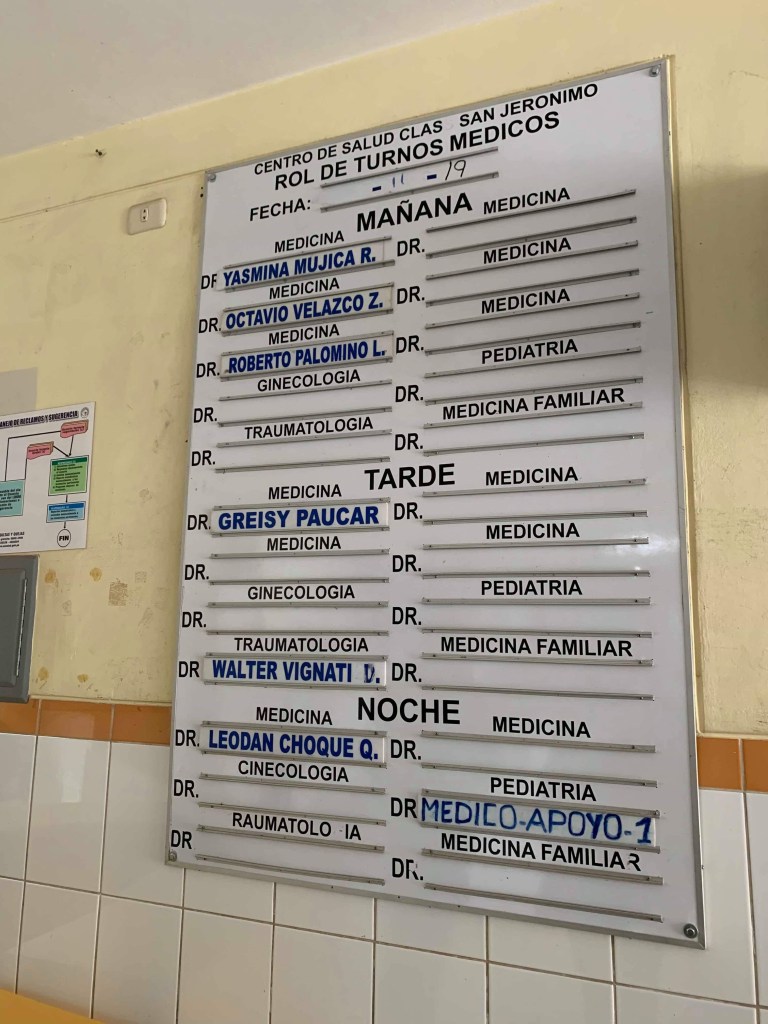
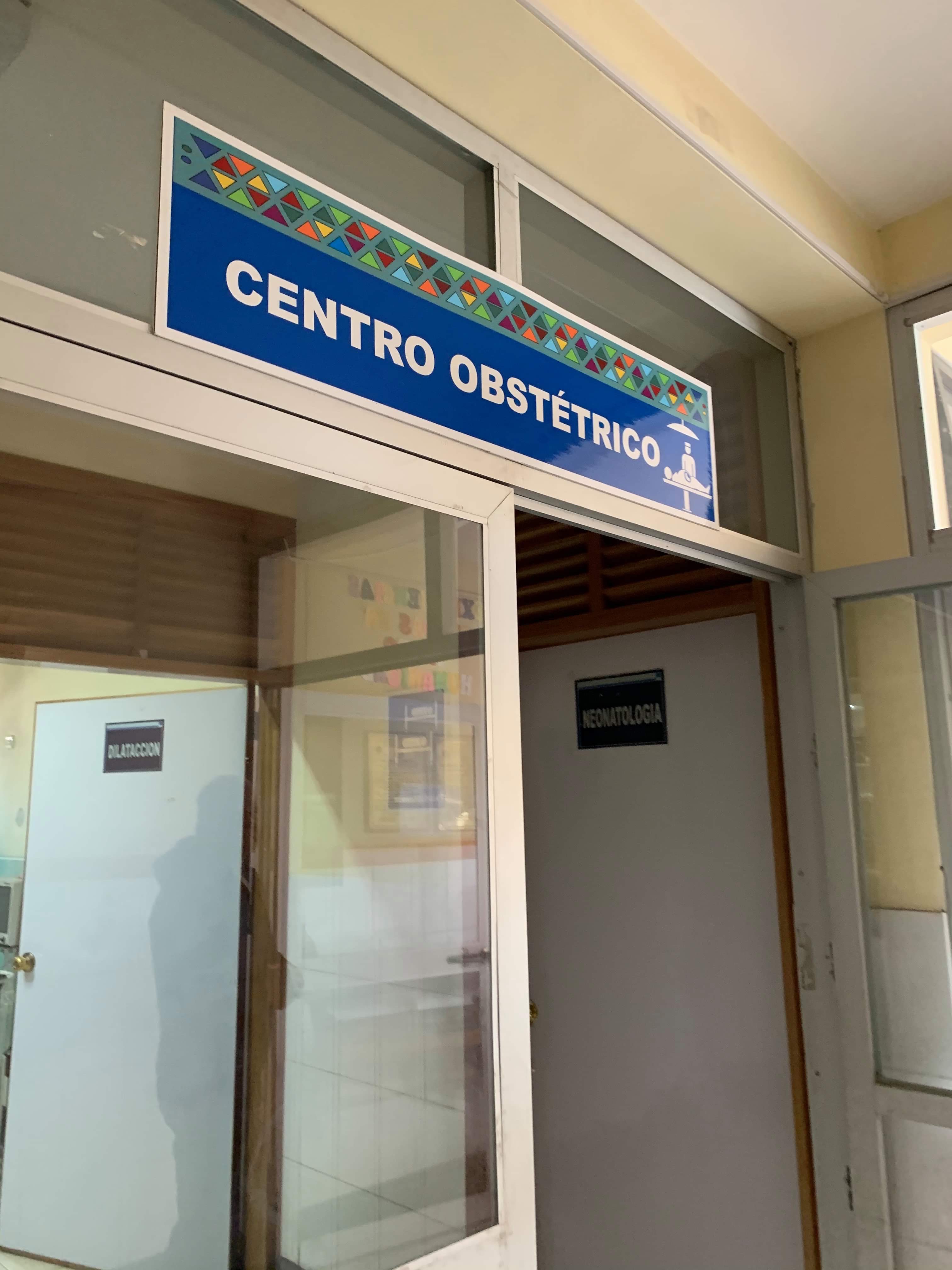
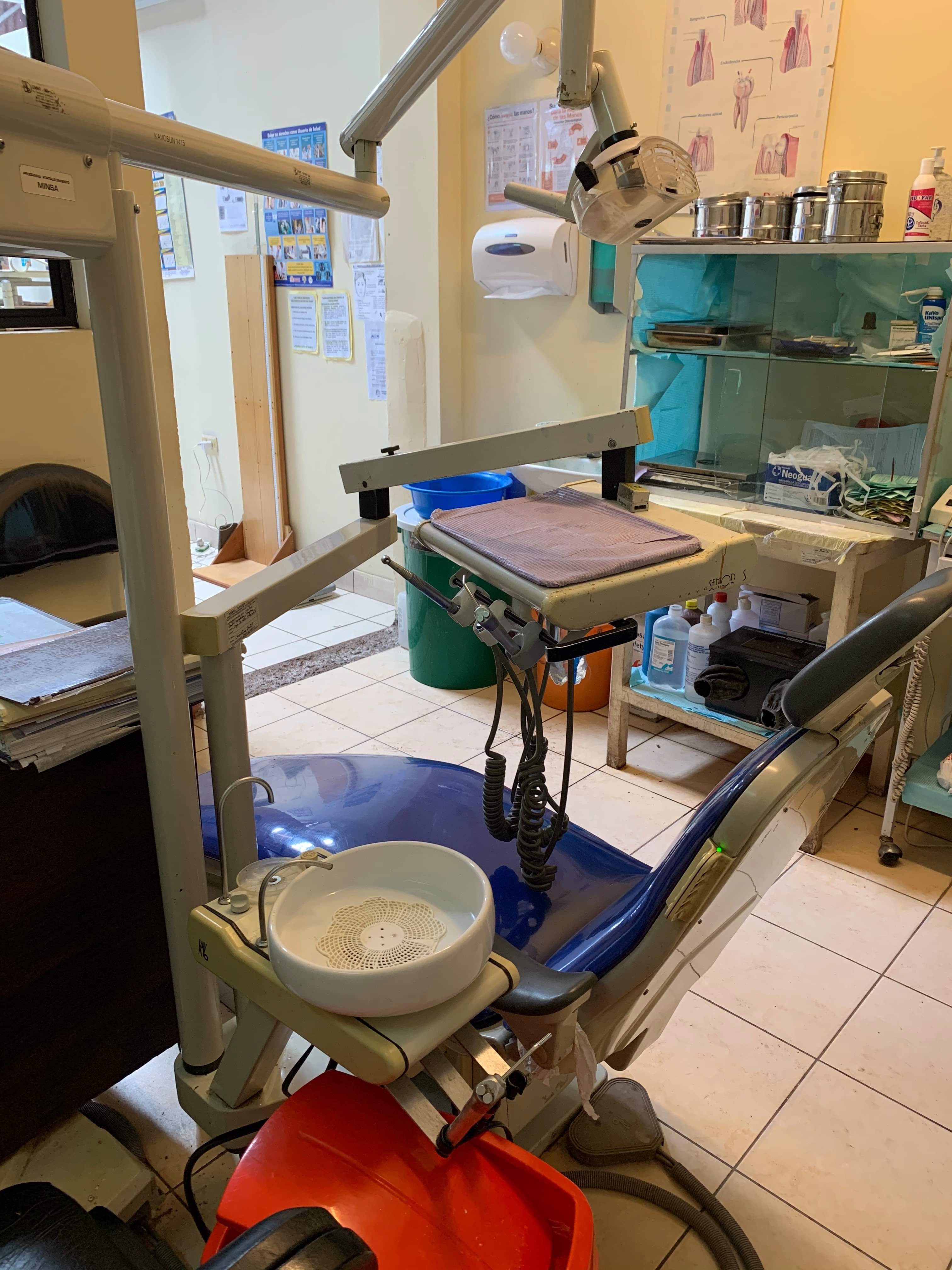
The main lobby area of the clinic, beside the trauma room. A directory of all the physicians and specialist. Mañana = morning, Tarde =Afternoon, Noche = NightObstetrics clinicInside the dentist office/clinic
Today we learned that our health clinic is for the public of lower socioeconomic status, and that the Peruvian healthcare system has private hospitals for military and police. They also told us that the working class of Peru pay into healthcare in a similar way that we do at home, and they are able to access the hospitals easier than those of lower socioeconomic status.
San Jeronimo serves the city of Cusco as well as the surrounding area (up to 40 minutes away). There are specialized centres for care available (ie. cancer care) but they are further away from the city centre and cost more for people to access.
The biggest issue they face in Peru is malnutrition, which leads to anemia.
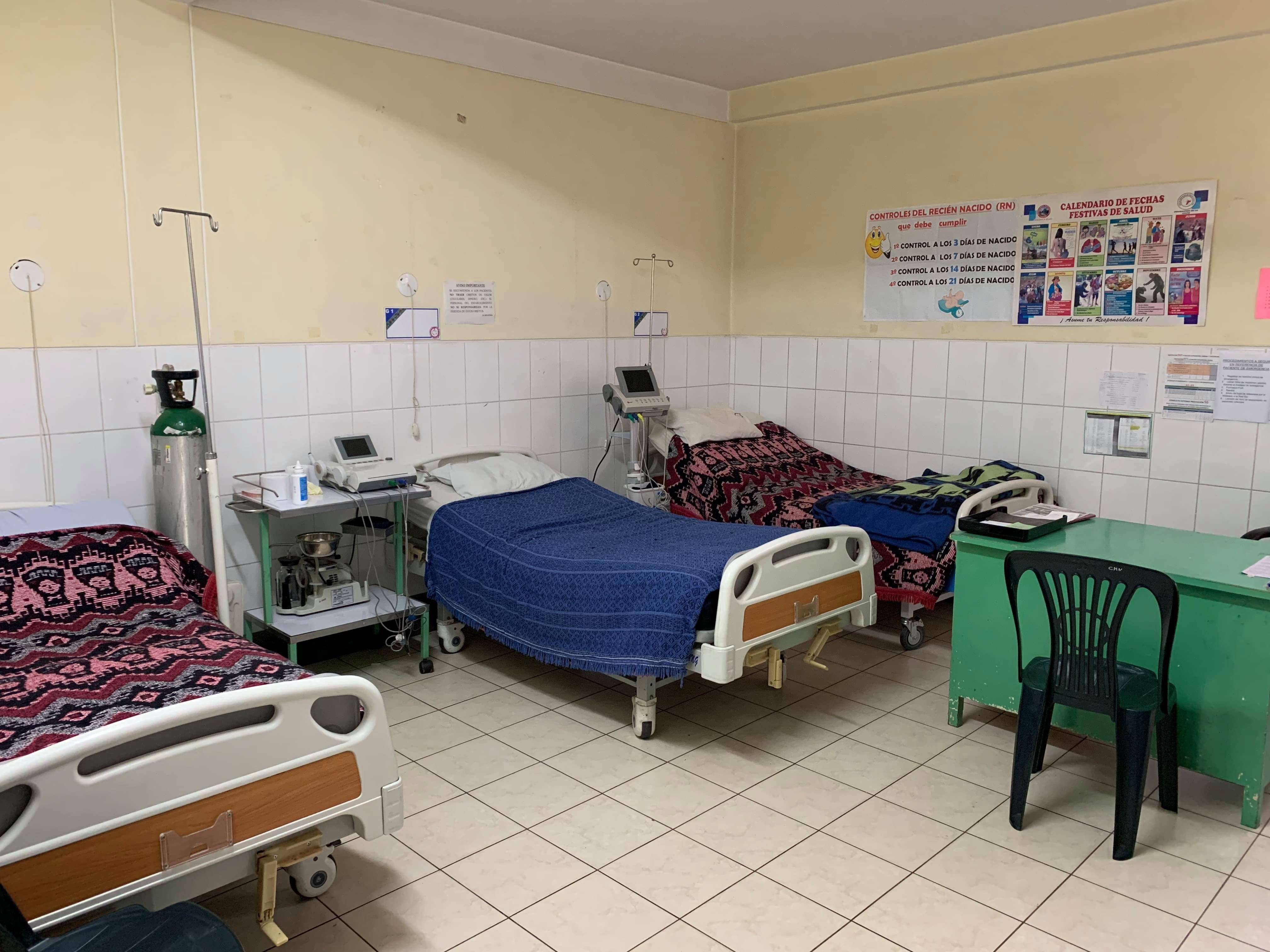
The main area of San Jeronimo is used for different clinics and consultation rooms, however there is a small hallway used as a maternity ward for mothers immediately following the birth of their child.
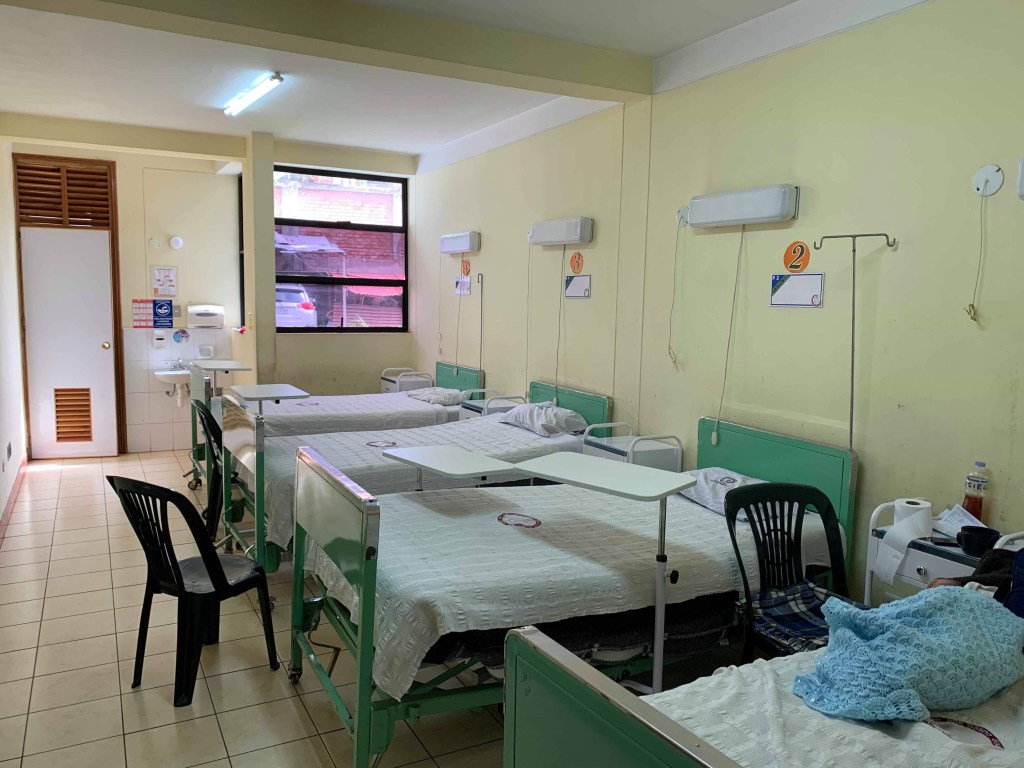
Inside the obstetrics ward/clinicAnother medical room with some hospital beds
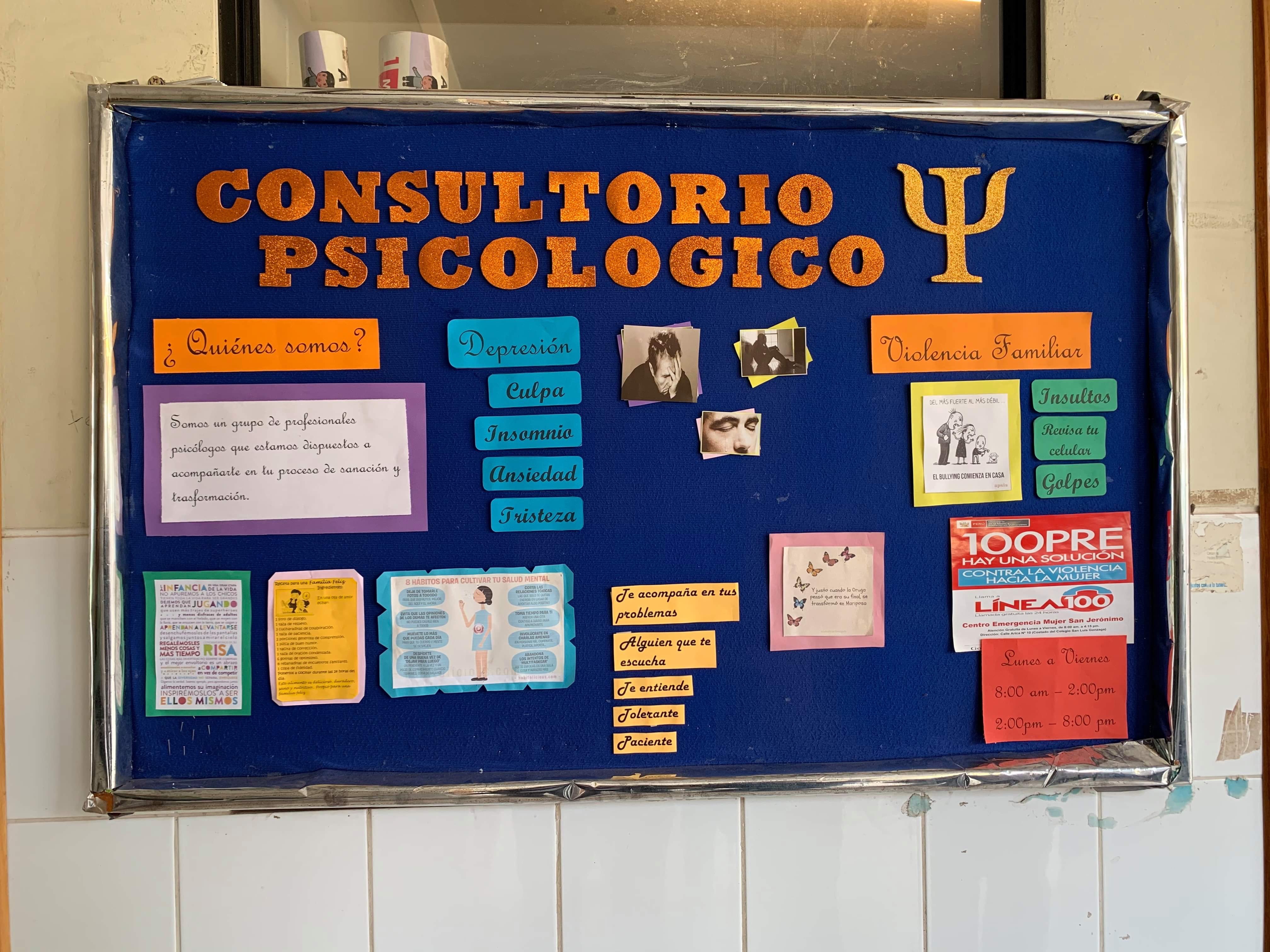
Domestic violence is also a significant issue in Cusco. San Jeronimo has a clinic run by a psychologist to assess families and individuals for violence at home and to put them in contact with services to assist them.
During clinical, students had the opportunity to help present a nutrition education session to a daycare full of anemic children and their parents. As well, students were working one on one with the doctors in their offices, and again working in the pediatric clinic. Students also had the opportunity to help get supplies ready for the wound clinic, and help clean and dress different kinds of wounds. – Hannah Gartland
Megan and Hannah Mackeigan getting things ready to do some dressingsKelsey Brown’s new Amiga. She is a midwife from Belgium 🇧🇪 Kelsey getting a picture with one of the doctors in San Jeronimo that could speak English.Jill Brown with some nurses in the clinic.Melanie Cochrane, Hannah Mackeigan and Megan McNeil standing by ambulatory care at San Jeronimo
The students in the other clinic CLAS TTIO had a very exciting day with some new experiences and cases.
CLAS TTIO group!!
Today we learned that the CLAS TTIOs Clinic is open Monday to Friday 7am-7pm and Saturday 7am-1pm. The clinic is closed in the night and on Sundays. If there is an emergency they suggest going to the hospital (Cusco Regional). Nurses work on average 6 hour shifts; they have one day off throughout the week and everyone has Sundays off.
Robyn Shibinette was placed in the dental clinic. She observed some fillings – which are done with no freezing because they how deep the cavity is. She also observed some tooth extractions; they do use some freezing when pulling teeth. Robyn met a 15 year old nursing student named Ruth at the dental clinic who was quickly drawn to Robyn. Every time she sees her she asks how she is doing and gives her a hug.
Robyn and Ruth
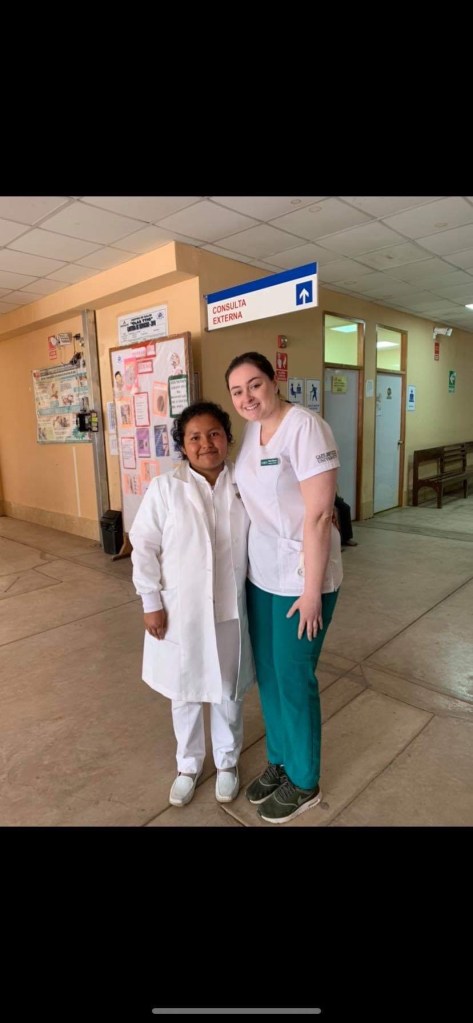
Today Jean and James were placed in a procedure room/ ambulatory care. In this part of the clinic there is an American Nurse named Adam; he was able to translate a bit and help them communicate with other healthcare providers and patients.
James and Jean seen an older couple with 4 venous leg ulcers caused by the altitude creating cardiomegaly.
If the patients need an IV and it’s less than 20ml of Fluid they use a 20ml syringe, dilute the fluid/meds and push it through a vein slowly with a needle attached to a syringe. They push slowly in hopes that the vein doesn’t blow. When patients come to the procedure room/ambulatory care they have to bring/ buy all of their needles and medication; if anything breaks they have to go buy more, so we must be very careful not too damage anything. They wash all of their sterile equipment with laundry soap and they clean their wounds with green hand soap.
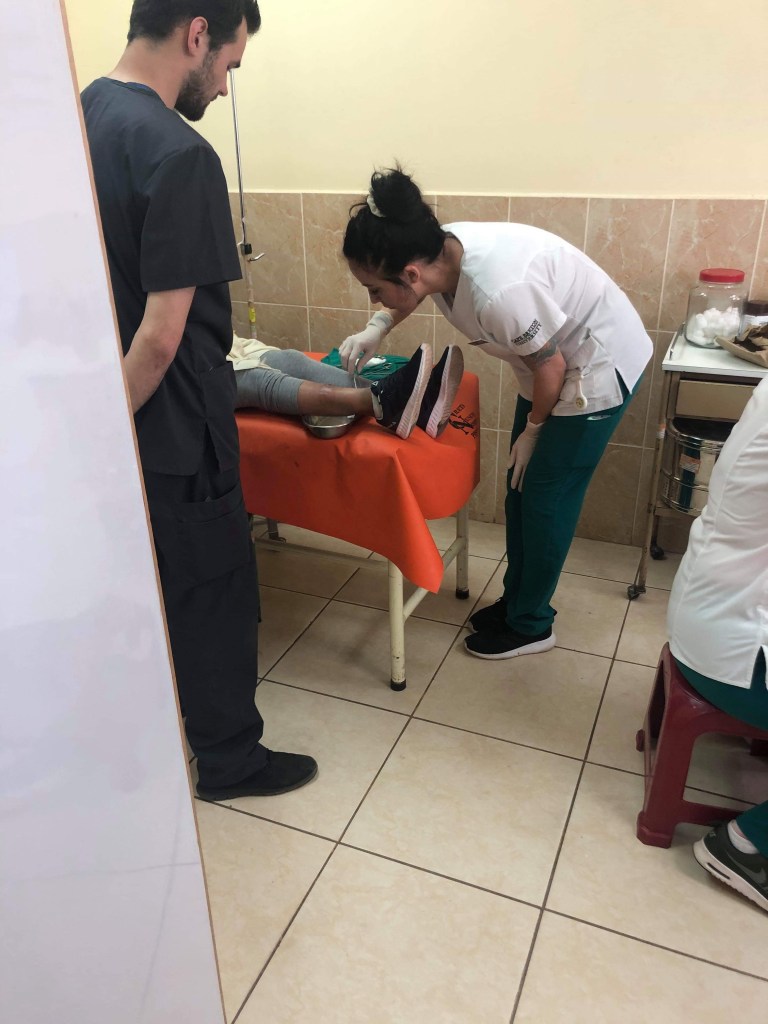
Jean Assisting the RN with cleaning a wound. She helped washed the wound with hand soap and water (according to their best practice techniques) she helped the RN “debride” the wound and added a Vaseline type cream/ointment and then helped them redress the wound
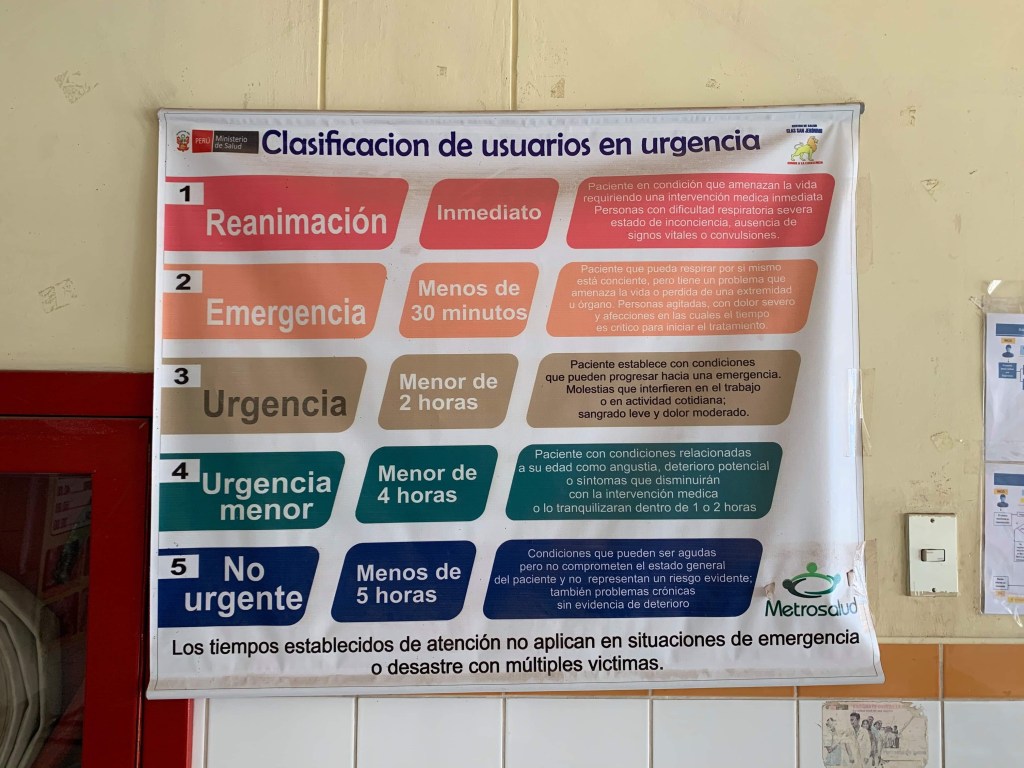
Kristen Bach was placed in triage where she measured heights, weights, vitals and practice her numbers in Spanish.
Triage urgency criteria
Annabelle Welsh was placed in a pediatric clinic. She helped assessment kids aged new born- 5 years old, making sure they are developing properly. She also measured some weights, heights and vitals. She noticed that there were a lot of recs for hemoglobin.
Kaitlynn Hayes was in an OBS ward where she completed some baby checkups. The nurse that was with her gave the parents a lot of information/ teaching on anemia and nutrition. Kaitlynn said she seen with Mongolian spots on the bottom of their back- softer skin.
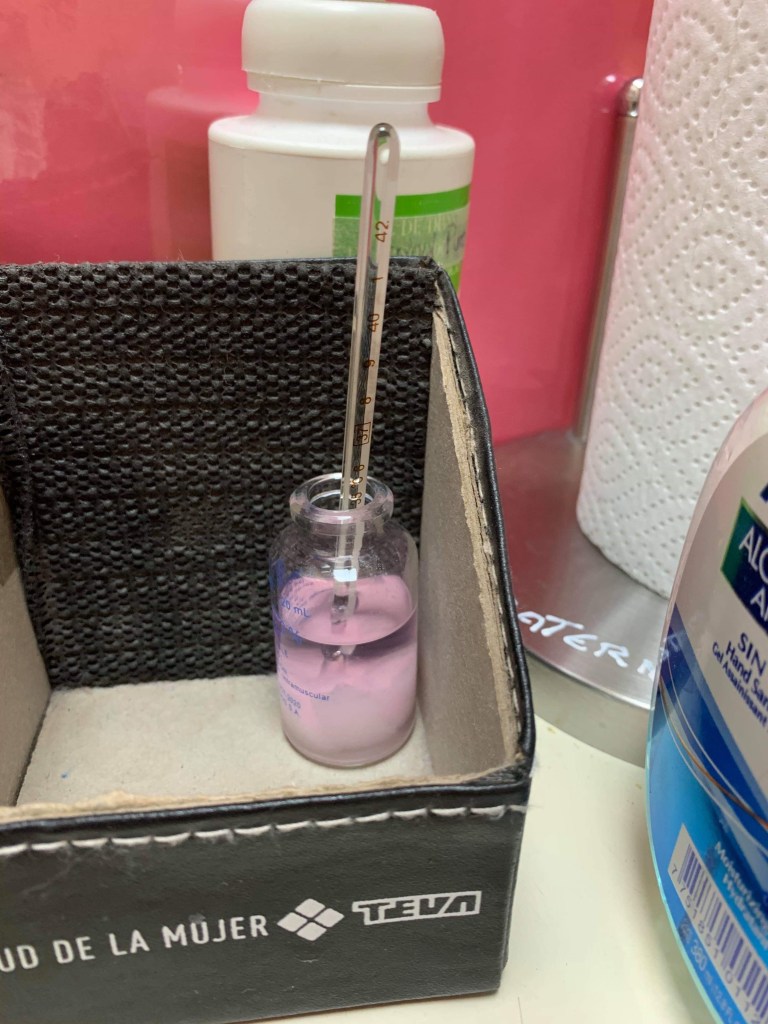
An old mercury thermometer- it was most of our first time seeing this. Learning how to use it was pretty tricky.
Mackenzie Somers had a great day in mental health/ psychiatry clinic. They do assessments for all types of reasons, and Almost anyone can refer them for assessments. Mackenzie said she had 2 people complete assessments because they wanted to be preschool and kindergarten teachers. They had the assessment done to make sure that they are fully capable of working with children.
Anyone who wants to get a job or sell their land they just have an assessment done to check their mental capacity/ capability.
The psychiatrist gets the patients to draw a person in the rain. The way they draw this; depending on what they include and their interpretation of the drawing means different things. For example, if they draw a person holding an umbrella it means that they feel protected. If they draw no umbrella it means that are facing it all head on; no extra protection or precautions.
If they draw the eyes forward it means they face their problems head on. If they draw their eyes to the side it means they avoid their issues. If the shoulders are straight it could mean they are aggressive or angry. If they drew the shoulders curved it means they are somewhat content; this is seen as a good thing.
The doctor then asks who they drew in their picture. The patients usually say themselves. The doctors think that doing this lets them think back and Reminisce about their past. They sometimes forget their childhood. This drawing is said to say a lot about a person.
Today Kelsey Muller was placed with a nurse in a Pediatric clinic. She performed some assessments and played with some kids, while assessing developmental milestones. She said the blood glucose machine is a little different here than at home. When poking the finger to get the blood they use a single needle (pin) instead of a retractable device like we use. You place the blood on the middle of the strip closer to the glucometer.
Terri Vallis was with the Obstetrics clinic today. The person that was performing the assessment called her self an obstetrica, which is one step down from a doctor (kind of like an NP- specialized in obstetrics.) Terri said they mostly did HPV screening. During the PAP tests she seen all normal cervixes. They clean the inside of the vaginal canal with acetone. Terri said she helped write some prescriptions for condoms/ find some educational info for the patients.
There was a 33 year old Female that was getting an IUD inserted but was unsuccessful after 2 tries. She later found out that these IUDs were covered through her medical because she was of a poorer population/income.
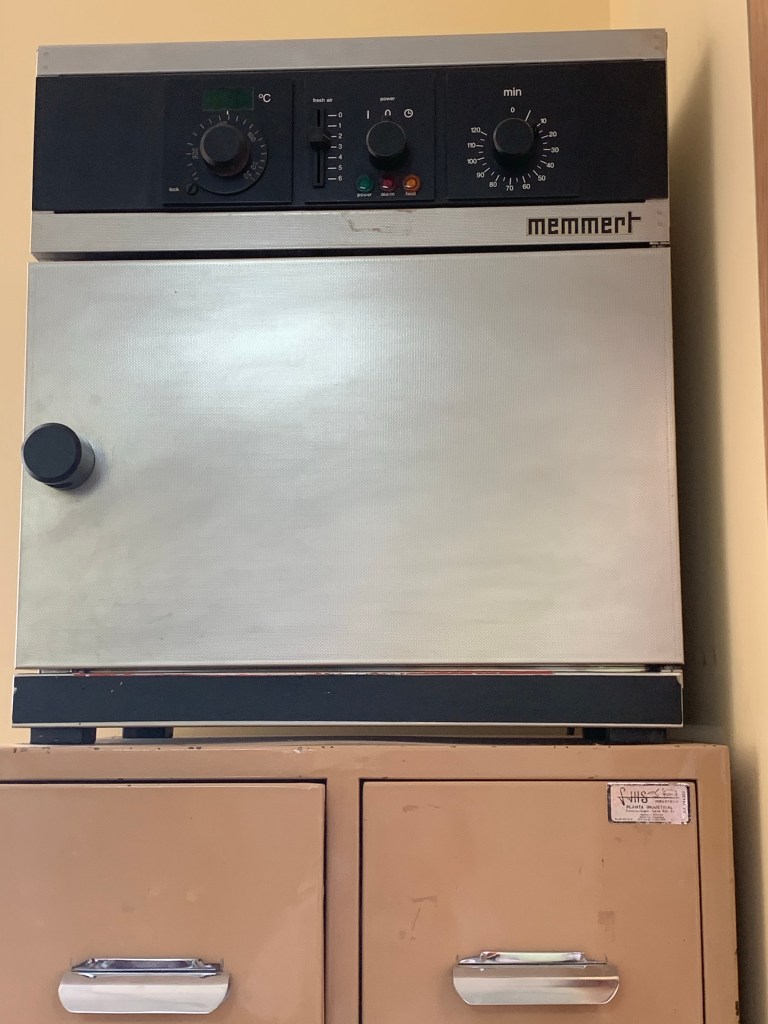
All of the equipment was sterilized in the room (OBS room). It was washed in the sink and then placed on a tray and put in a sterilizer.
Sterilizer in the Obstetrics clinic
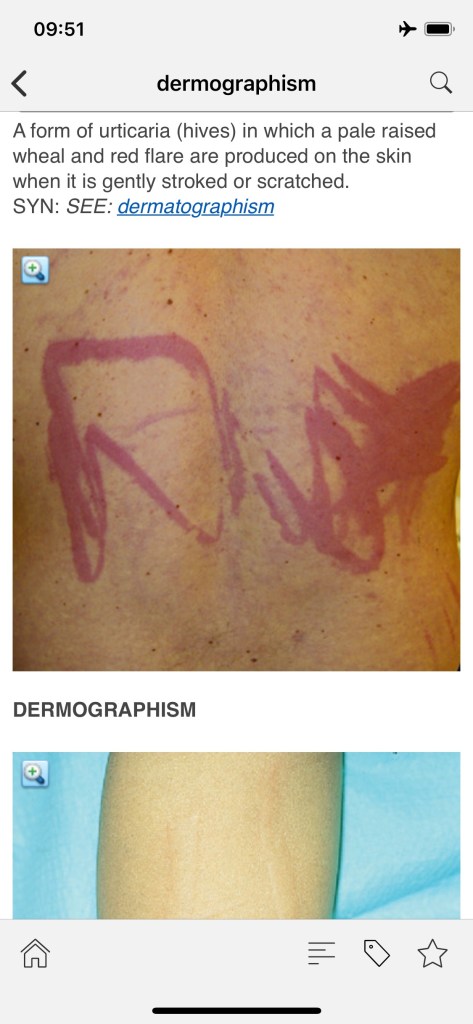
Sonya Wambolt was placed in a general medicine clinic with a doctor. It was manly observation for her today but she seen some really interesting cases. This lady had a scratch on her hand that wouldn’t go away. The doctor performed a test and determined it was Dermographism (which is the formation of hives in which a pale raised wheal and red flare are produced on the skin when it is gently stroked or scratched).
So the doctor took a tongue depressor and drew her name on her back lightly. It welted white and then a red flare occurred which indicates hives.
A picture of dermographism from Nursing Central
Sonya also experience a case of a lady with no taste buds in the middle of her tongue- the doctor sent her for mouth care/ the dentist clinic.
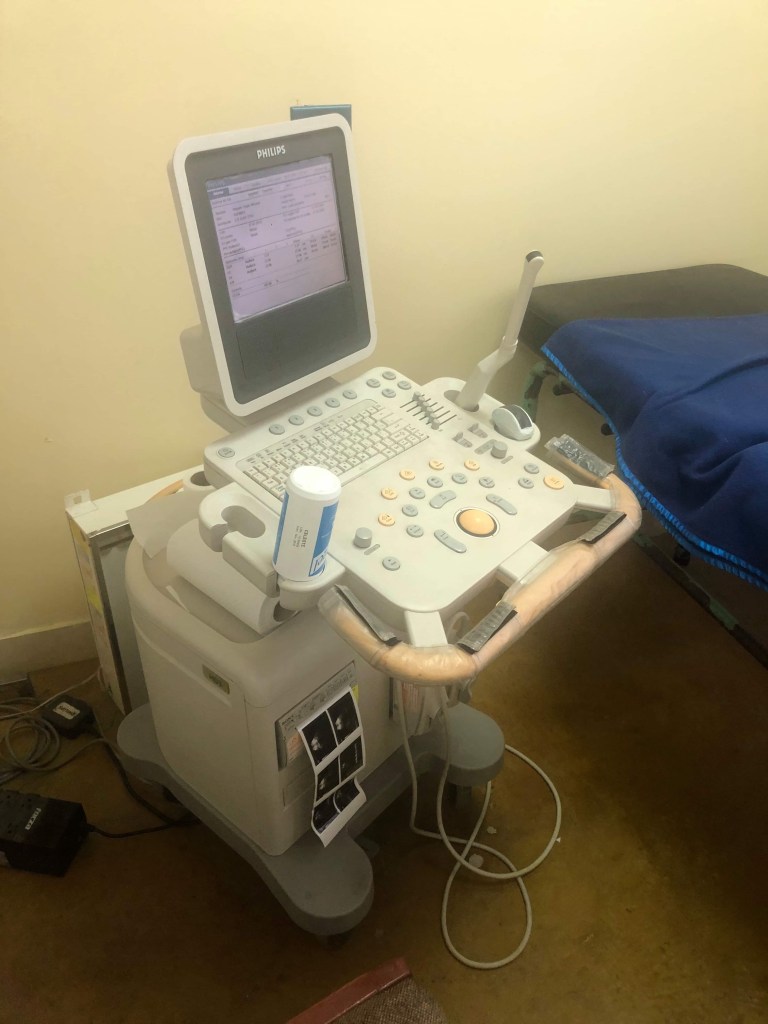
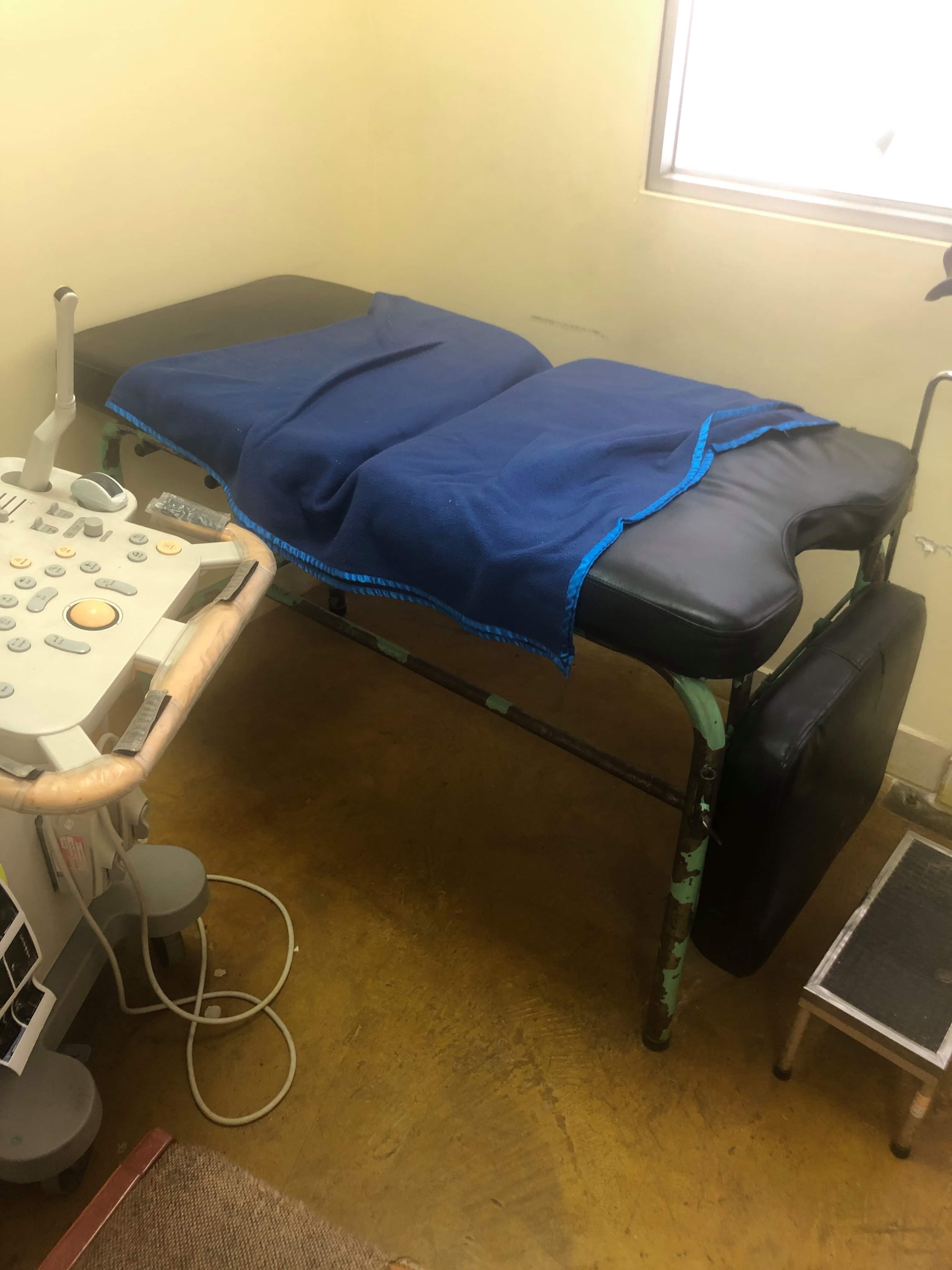
She then was taken to see an ultra sound of a mother who is 30 weeks pregnant and is experiencing a lot of pain. They found on the ultra sound that the baby is breeched. She was sent for some follow up care.
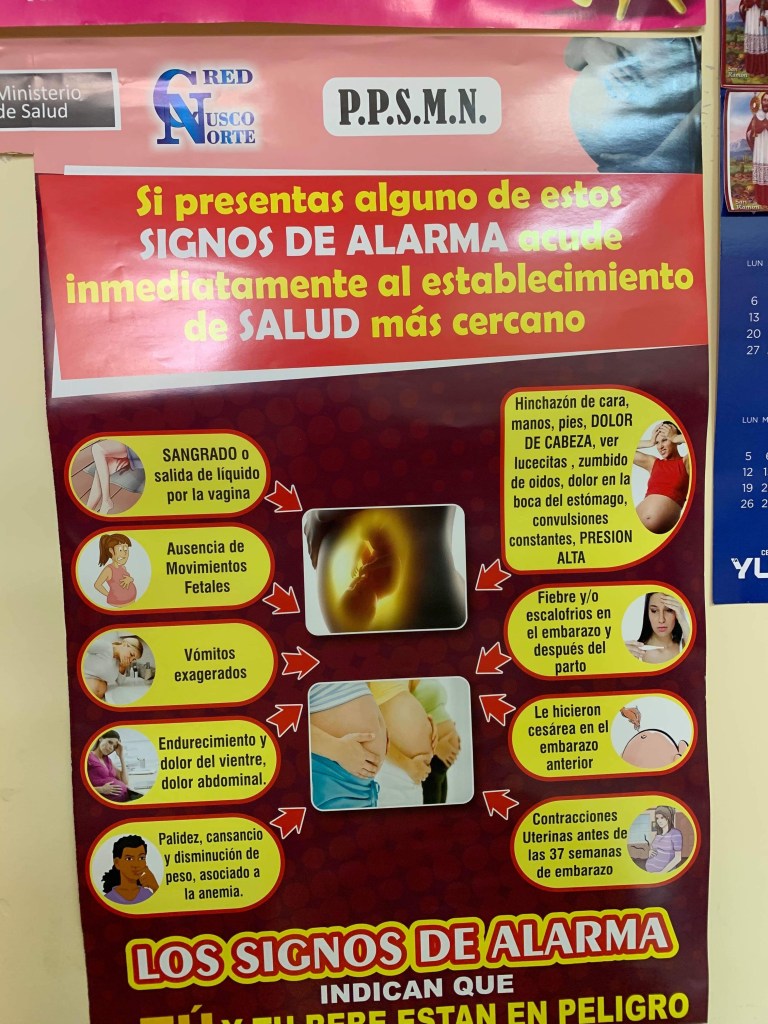
Ultra sound machine Things you should watch out for if you are pregnant
Sonya also observed a check up with a young boy who recently had a circumcision and was having glans pain. He was sent for some tests.
Today Morgan Edwards was placed in a prenatal clinic. She did some assessments, vitals, observed the doctor feel for fundal heights. Their was a lot of education given and questions about how they are feeling and their emotions. Those who were further along were asked about how they want to have their baby delivered; at home or in a hospital.
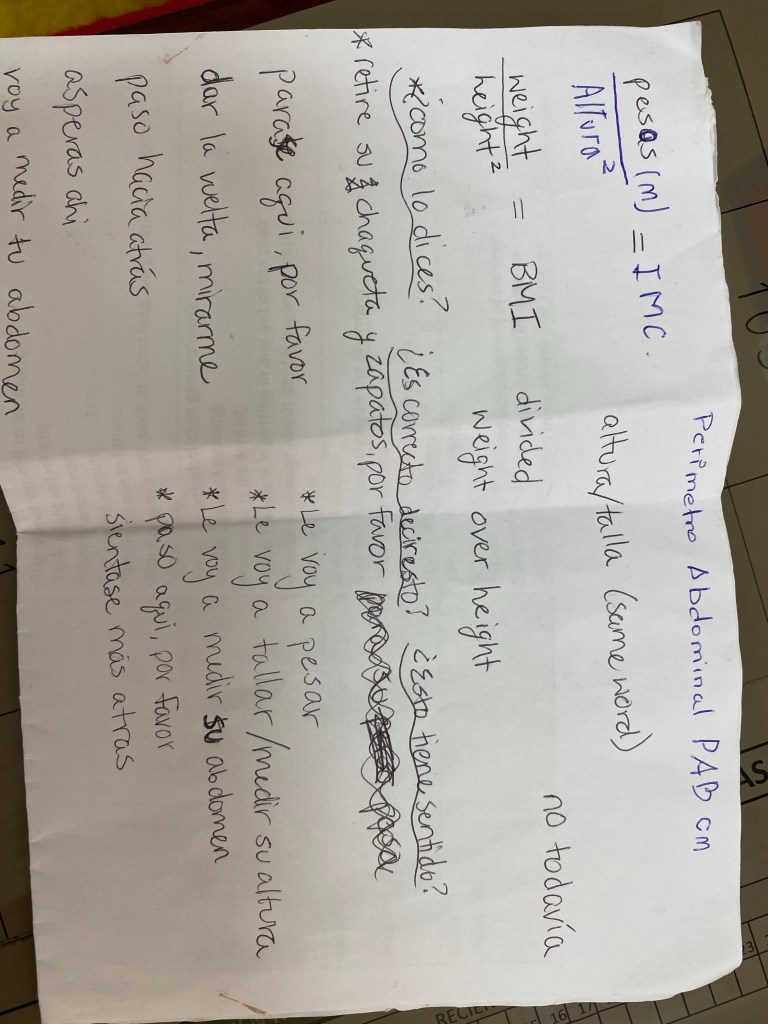
I (Austin Chapman) was placed in a adult assessment and checkup/ triage room. I was with a nurse and a volunteer nurse from America named Brianna. Brianna spoke fluent English and a lot more Spanish than me so she was able to translate when needed. She taught me a few new Spanish words and phrases like “take off your shoes please”- “Retire SU zapatos por favor” and “I’m going to weigh you now”- “ Le voy a pesar” (see picture below).
Some phrases Brianna wrote down and taught me that related to the clinic we were in.
I learned that the clinic is used mainly for adults but anyone over the age of 5 can be assessed in this clinic. A lot of the Pediatrics clinics in CLAS TTIO do not have glucometers and are not as well equipped for eye assessments.
After observing how the clinic works/flows for a bit I then began to weigh patients, measure their height, abdomen, take their temperature, clean the thermometers and ask a few simple questions in Spanish.
We assessed/ took vitals on about 25 elderly patients aged 50-85 and one 5 year old boy who needed his sugar and eyes tested.
After they leave our clinic the majority of them then take the paper with their vitals and go see a doctor.
After clincial we got back to our hostel grabbed a quick bite to eat and walked across the street to San Blas Spanish School for our second day of Spanish lessons.
The group of 22 is split into 3 groups of 6-8 each with their own instructor. Hans, Miguel or Edward.
Miguel is also the translator that follows group 2 to CLAS TTIO and Edward is the translator that follows group 1 to San Jeronimo.
In Hans’ group we focused a lot on medical terms and common phrases today so we can work with that in the hospitals.
Our lessons lasted about 2 hours and it was focused mostly on what we think is most important to know for our clincial experience and what is important to know for the language in general being in Peru.
After Spanish lessons people dispersed in groups and either went to eat, went shopping for some souvenirs/ gifts or went back to the hostel to rest after a very busy day!
Today was our first day in the Peruvian hospitals. Our group of 22 was split into 2 as we are practicing in two different clinics.
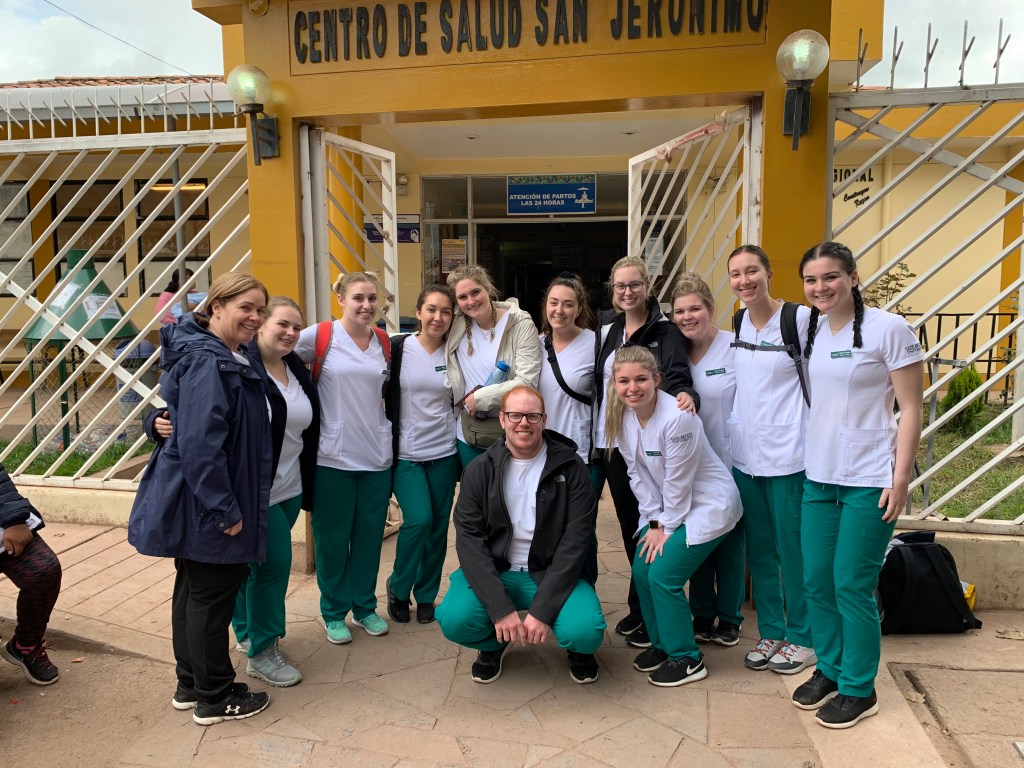
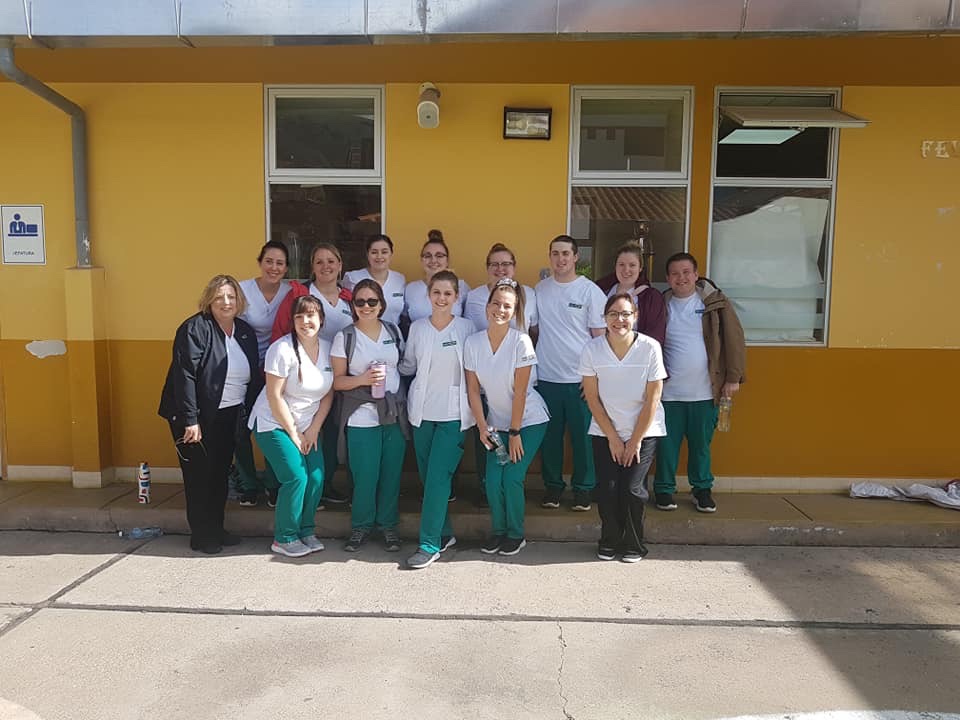
Group one at Centro de Salud SAN Jeronimo- Back Row (L-R): Karen Kennedy (Instructer), Kelsey Brown, Jill Brown, Brianna LaRusic, Allison Burke, Chelsie Cann, Rebecca MacDougall (Instructer), Hannah Gartland, Hannah Mackeigan, Melanie Cochrane Front Row (L-R): David Gouthro, Megan McNeilGroup two at CLAS TTIO (clinic)- Back Row (L-R): Jean Lavers, Sonya Wambolt, Robyn Shibinette, Kristen Bach, James MacNeil, Morgan Edwards, Austin Chapman Front Row (L-R): Tracy Lillington (Instructer), Annabelle Welsh, Terri Vallis, Mackenzie Somers, Kelsey Muller, Angela MacDonald (Instructer)Hannah Gartland wrote the blog on behalf of her group at San Jeronimo clinic
The first half of the students on the trip, were working in the San Jeronimo clinic, which serves prenatal, labour and delivery, immediate postpartum mothers, and general medicine; including an emergency department and immunization clinic. We had students working in many different areas, including with the nutritionists doing presentations on foods used to prevent/manage anemia in different age groups, performing well-baby assessments for children aged 4 months to 3 years of age, working in the emergency room, as well as sitting in on doctor’s appointments and observing in the immunization clinic.
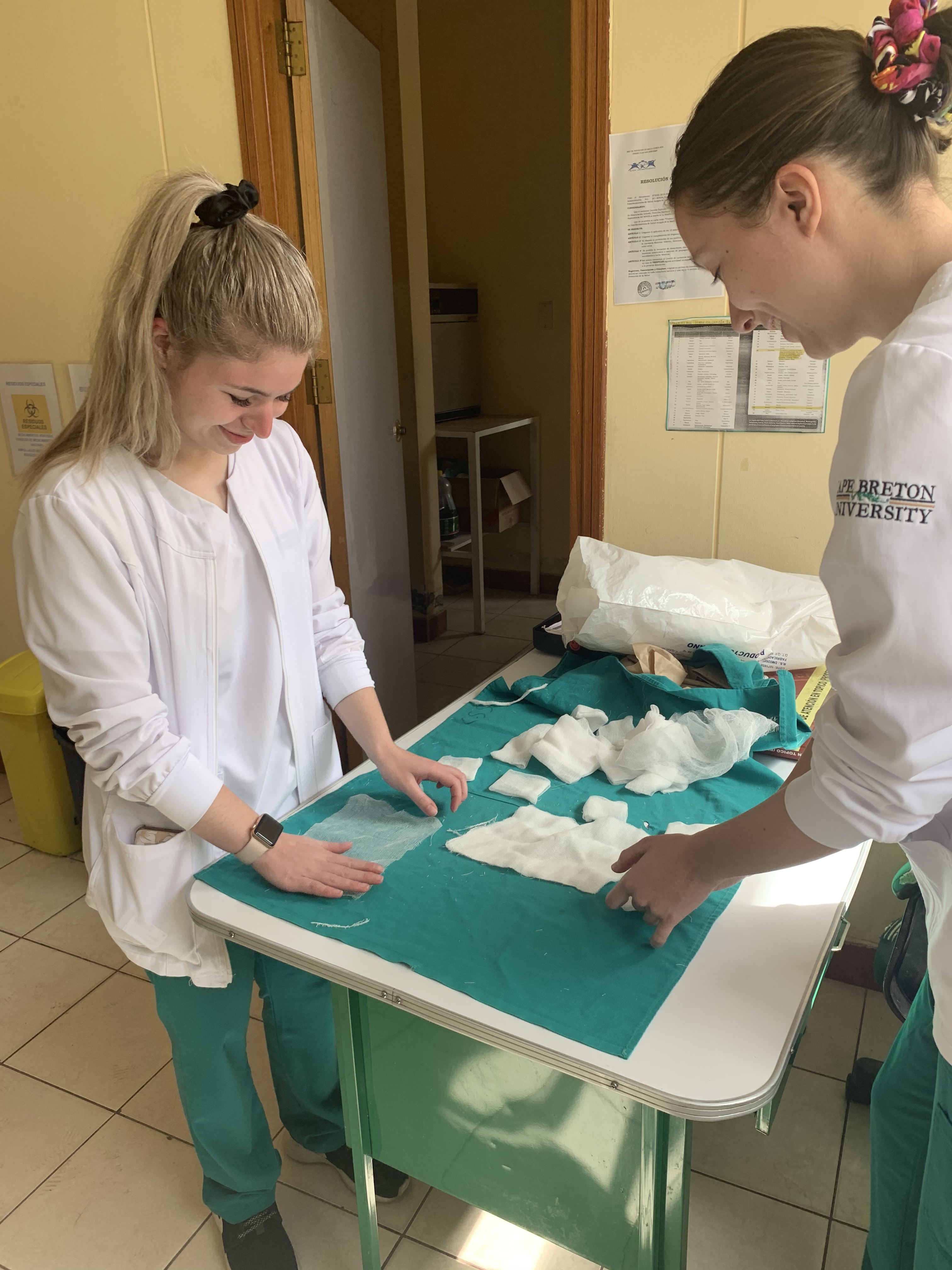
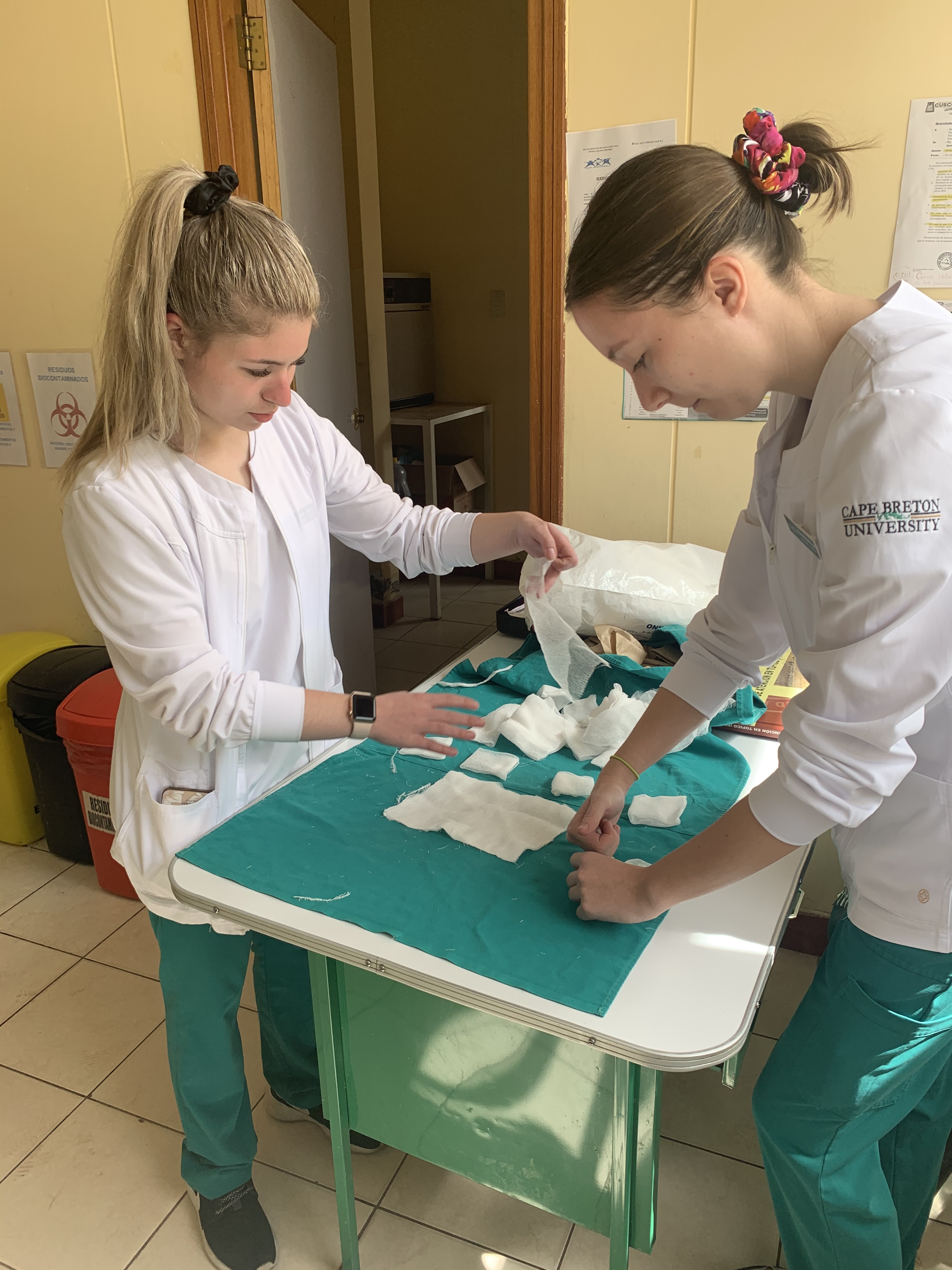
We learned how to properly cut and serialize gauze to use as 2×2 in dressings
It was so overwhelming and a culture shock on the first day, but we are incredibly excited to go back for the rest of the week!
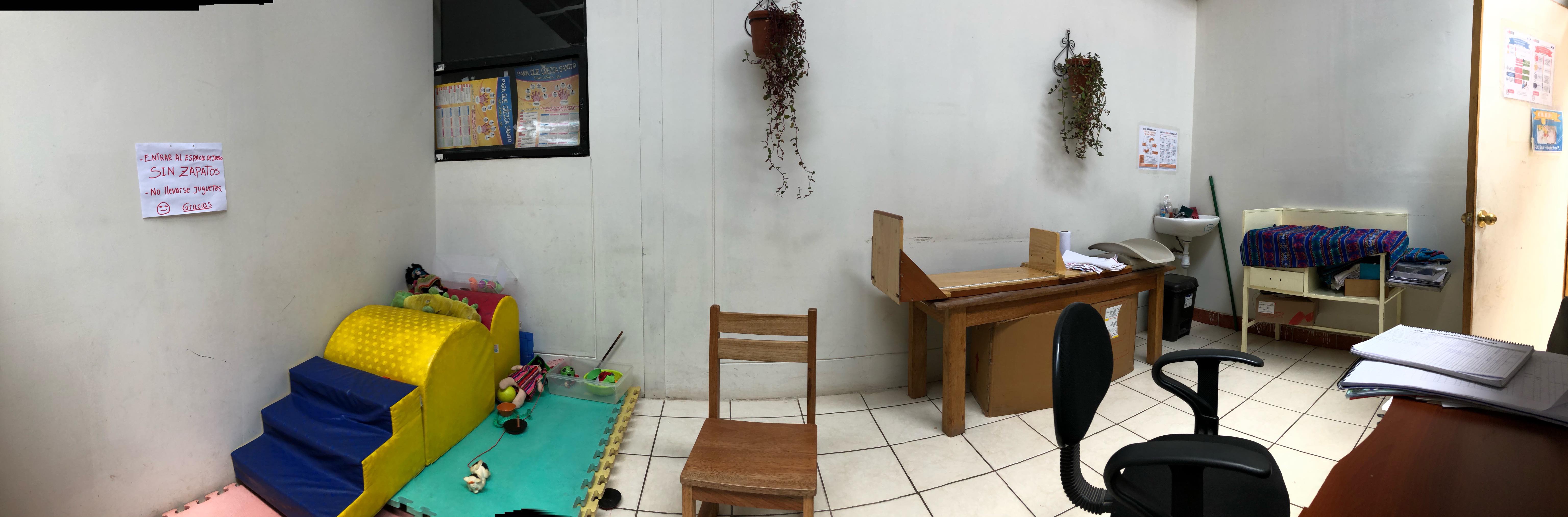
Well child assessment room- at San Jeronimo
We are switching placements in the clinic every day so that we all have a chance to experience every aspect of care in the clinic environment.
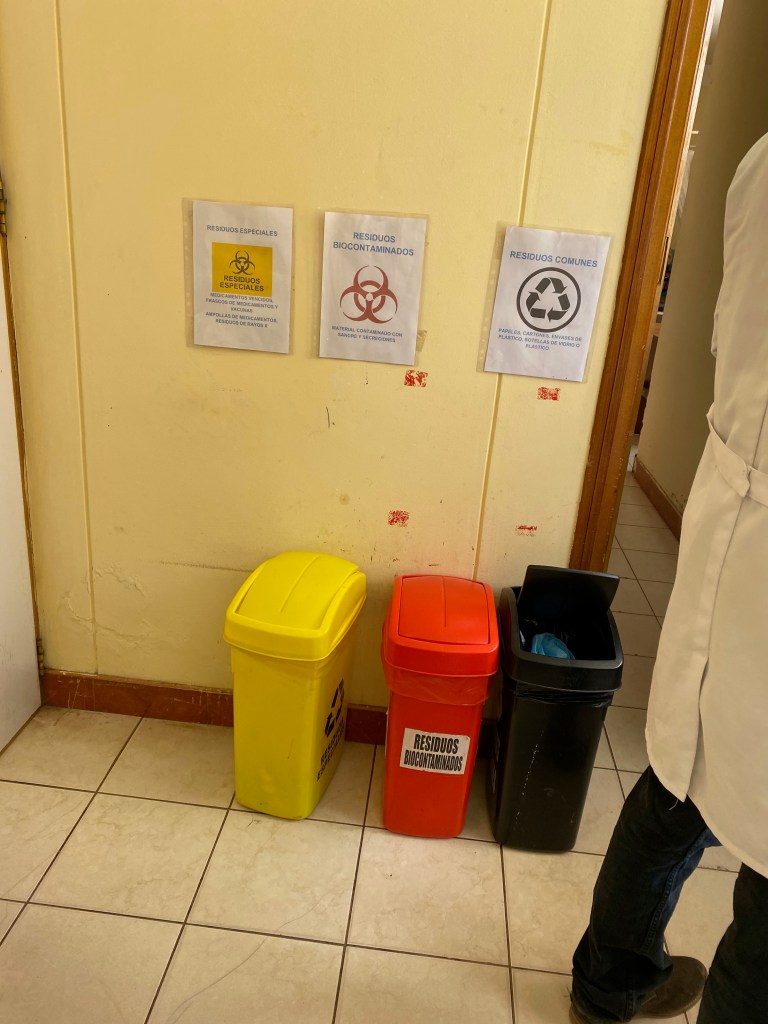
Yellow garbage can is for chemicals, red is for blood products or anything in contact with blood and the black is the regular garbage.
The other group went to CLAS TTIO. This Clinic does a lot of the same as the San Jeronimo clinic. There is a triage centre which is very busy, James MacNeil was placed there. He said they triaged 58 patients in the matter of 4 hours- their ages ranged from 20-65. In this part of the clinic they took vitals, height, weight, and asked about primary concern. They would take multiple patients in at one time to triage more efficiently.
The clinic also has a few pediatic assessment rooms/ well child clinics, some Obstetrics clinics, well baby clinics/ check ups, a check up room for the elderly or adult population. They also have ambulatory care, a dental clinic, a psychiatric/ mental health clinic and a pharmacy.
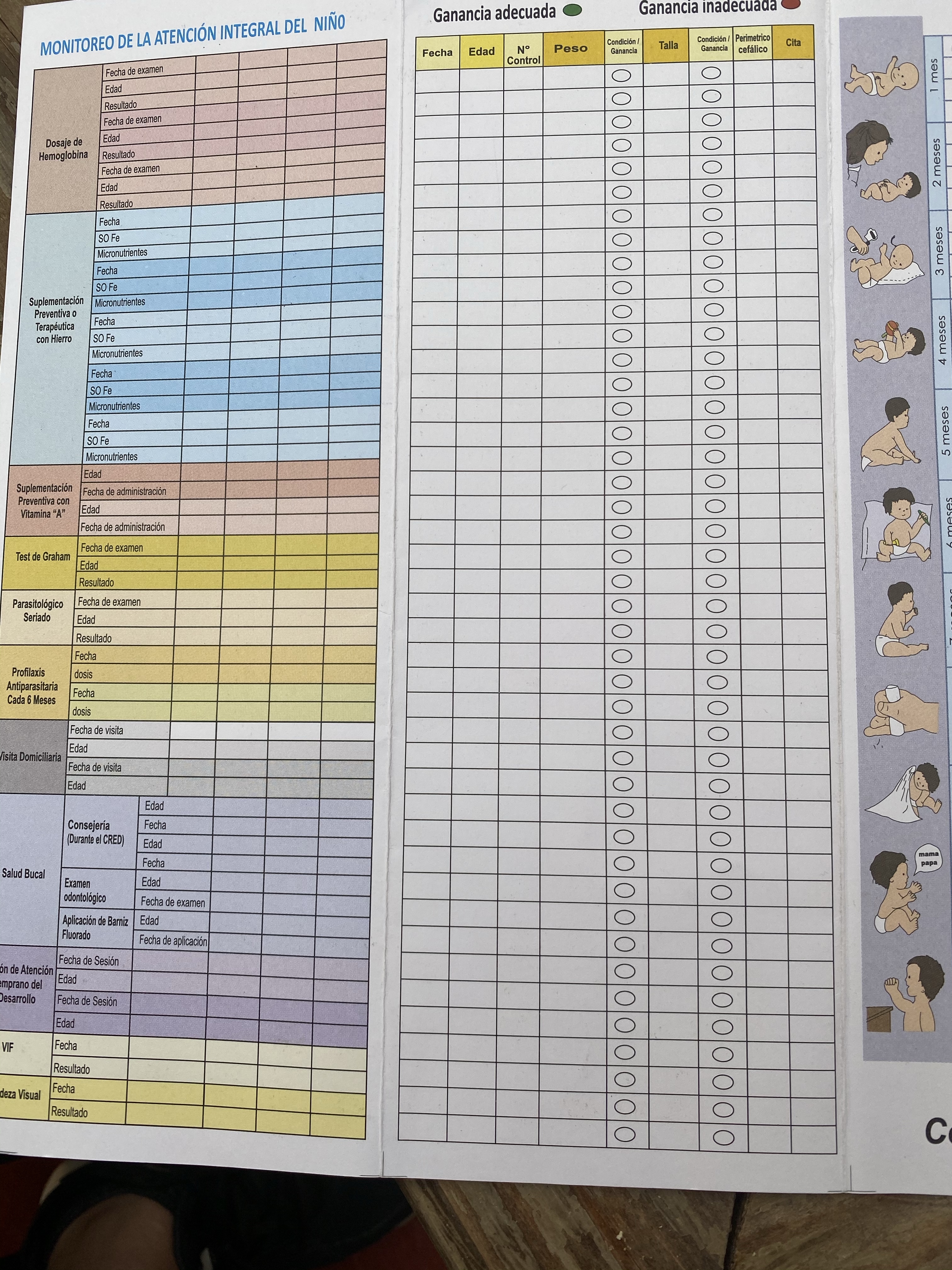
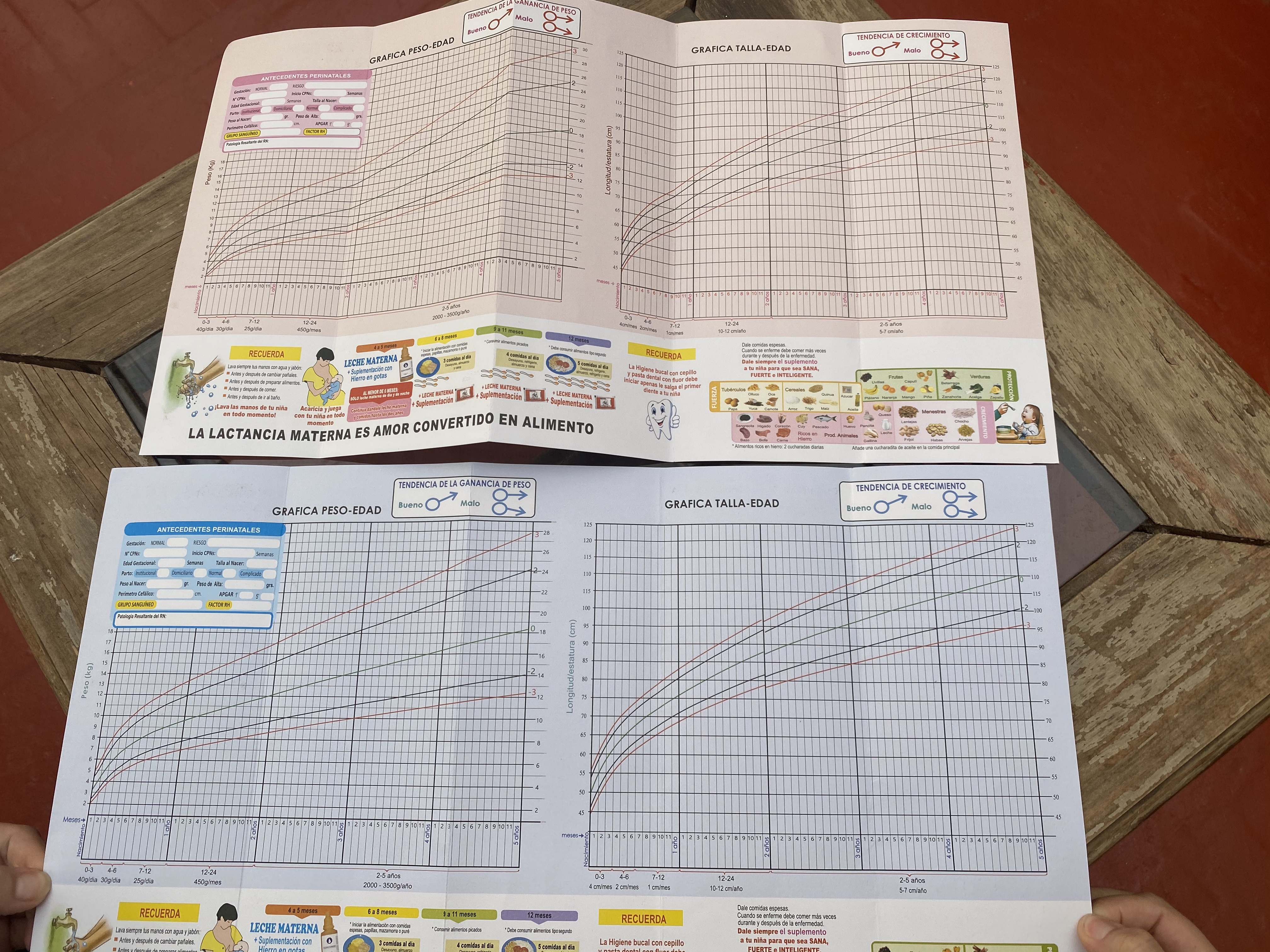
I (Austin) was in a well child assessment, Sonya Wambolt was in the other child assessment clinic. We measured height, weight, length, head circumferences of some children, their temperature and their Apical heart rate. One thing we both found interesting was that the patients/ patients parents bring all of the paper work and information with them. They carry the growth charts, medication info, developmental info (Nipissing) , etc with them to the appointments. The nurses provided education to the patients and showed them all how the growth charts work/ what they mean.
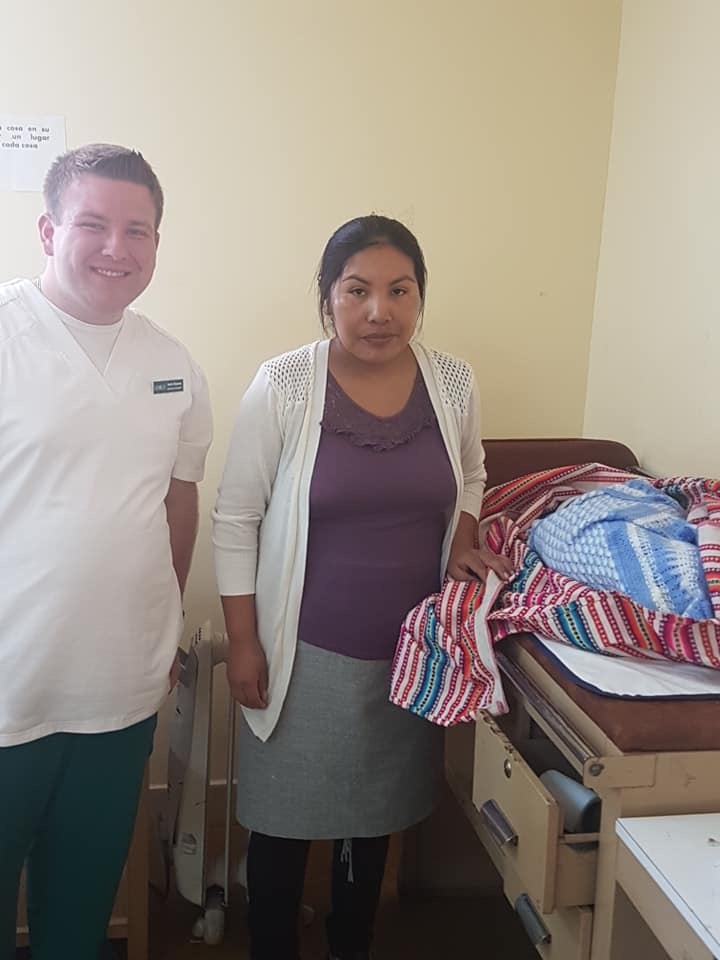
Sonya with Tracy (Instructer) in one of the well child assessment clinicsAustin in a well child assessment clinic with a new mother. Her baby is only 1 week old (wrapped in the blanket)
Growth charts
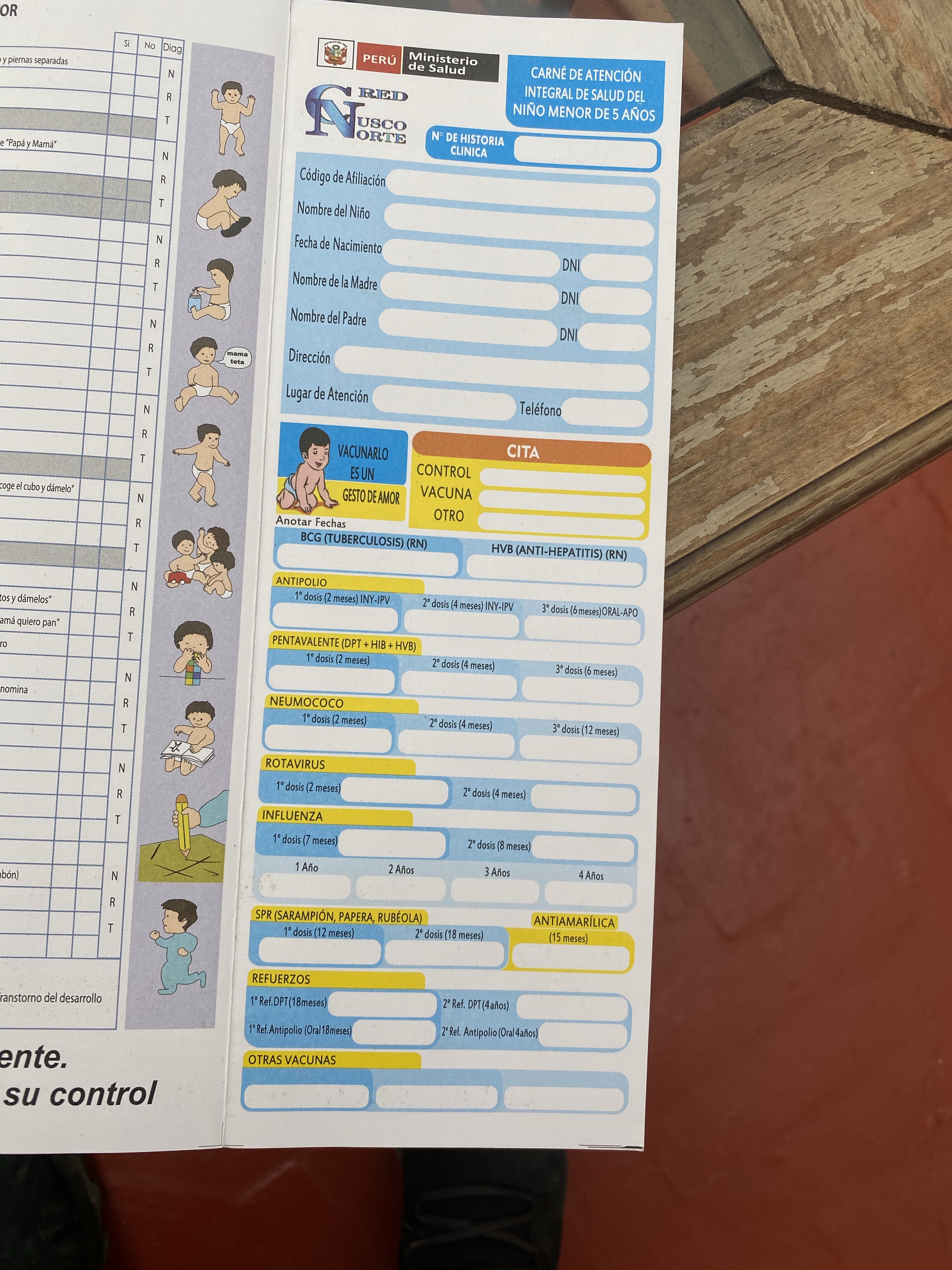
Personal and immunization info
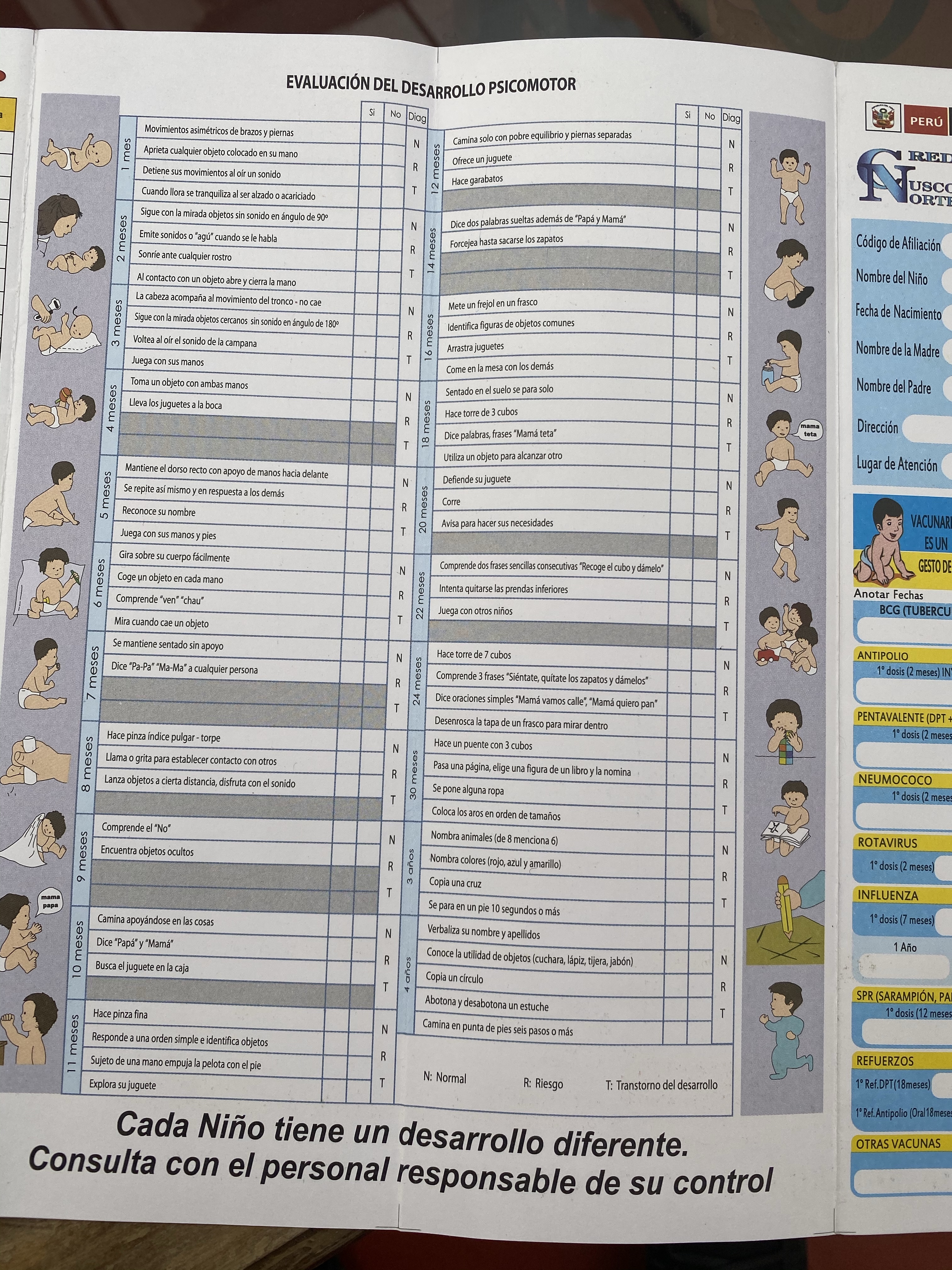
Developmental
This is what the parents bring in for the children’s assessments.
Mackenzie Somers was placed with dentistry. In dentistry she observed some cavity fillings and a tooth extraction.
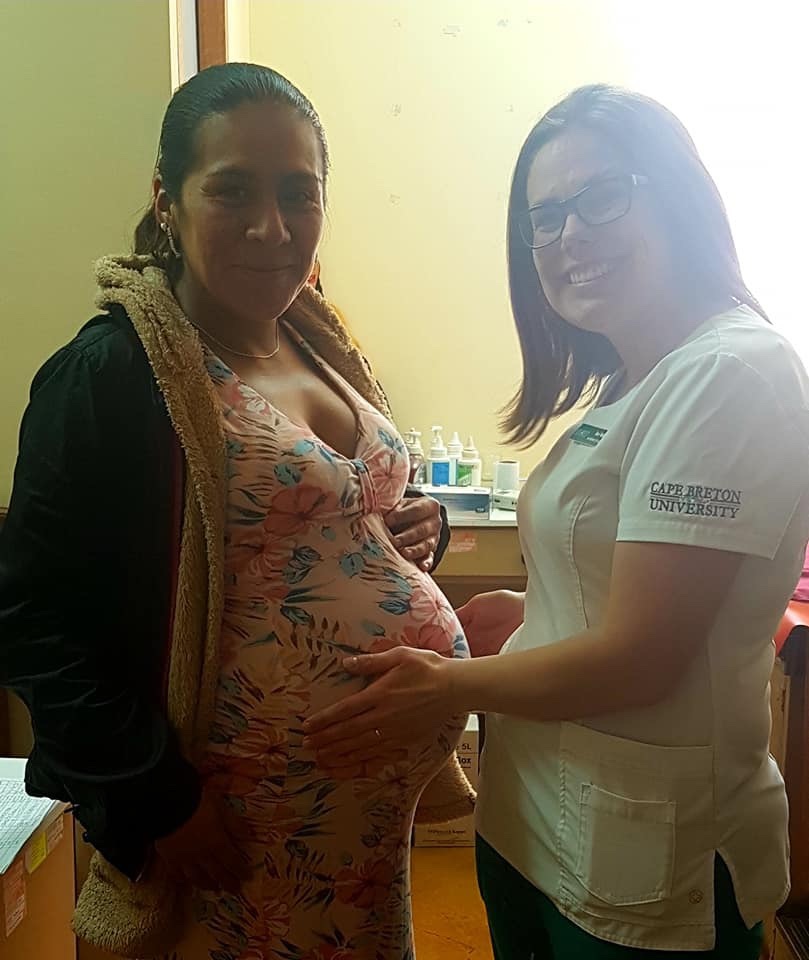
Terri Vallis was placed in the prenatal clinic. They completed assessments like they would back home. They took Blood pressures, temperatures, weight, heart rates, fundal measurements/height, breast exams, they check for edema in the ankles and also check reflexes. The nurses there provide a lot of education on nutrition and how to properly nourish your baby.
Terri Vallis with a pregnant mother in the prenatal clinic
Kristen Bach was placed in a procedure room at CLAS TTIO. Kristen observed some Intermuscular (IM) injections of dexamethasone. She also assisted in changing some dressings for patients who had dog bite wounds and watched them take out some stitches.
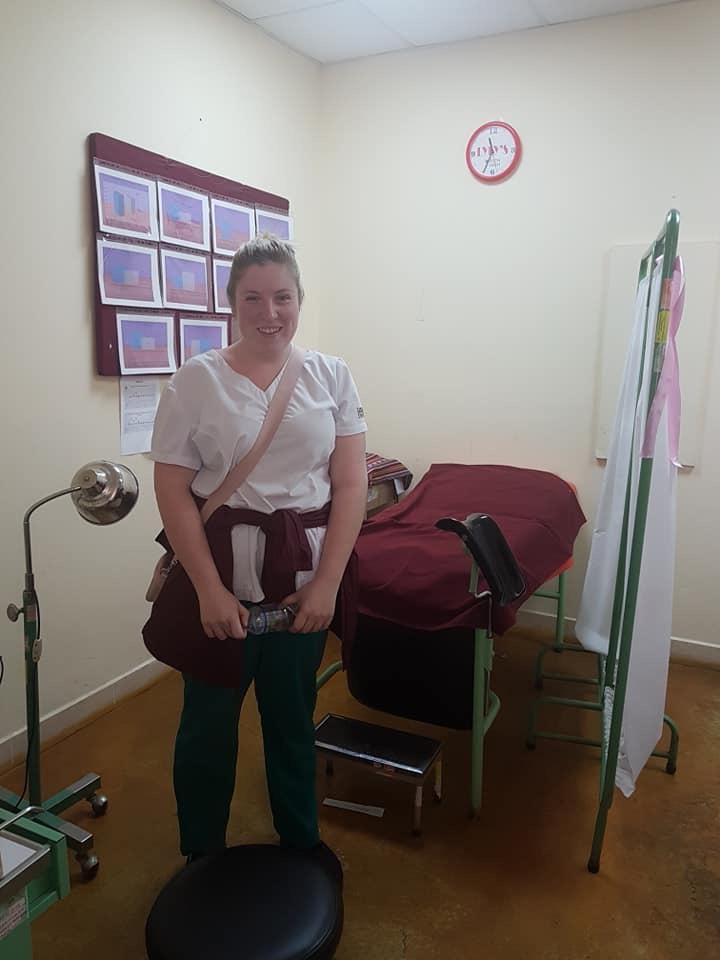
Morgan Edwards was placed in a well woman’s clinic.
Morgan standing in the well woman’s clinic
“The first day of clinical in Peru was an experience I wasn’t prepared for. I was placed with an OB/GYN physician. She allowed me to assist her with multiple Pap tests as well as associated paperwork.
I noticed a few similarities between Pap tests back home and the ones I was a part of today, but the differences were remarkable. For example, the physician used acetone a lot, which I didn’t understand. I also couldn’t question this practice because of the language barrier so this will be something I will have to research further.
The other areas with the greatest difference were in sanitation and privacy. I noticed in the clinic that the physician did not wash her hands or her equipment to the standards that we uphold in Canada, and it was not unusual for anybody (staff or patients) to enter the clinic room while she was performing a Pap. This would not fly at home.
Overall, this would have been a typical day back in Canada, however, she didn’t speak any English and unfortunately, I don’t speak Spanish. She was extremely friendly and helpful, we got along well, and we had a lot of laughs when our communication was failing. I am extremely grateful for the opportunity, but I must admit that being placed alone with people that you can’t effectively communicate with can be a bit overwhelming.” -Morgan Edwards
Kelsey Muller was placed in general medicine: “I spent my day with “junior”. I learned documentation which I did all morning. I was able to preform exams, help with diagnosis, and do hands on skills such as blood pressures, throat inspections, auscultating lung sounds, etc. A lot of diagnosis were seen such as bronchitis, conjunctivitis, abnormal bone growth in 10 month old legs, mosquito bite which turned into dingue (infection), etc.”- Kelsey Muller
Kelsey Muller with the doctor “Junior”
Both groups learned a lot from their clincial experience, it was definitely difficult and a bit of a culture shock but it was eye opening. We are going to use this experience in our future nursing practice.
Stay tuned for our next clincial experience.
-Austin Chapman, Hannah Gartland, Morgan Edwards, Kelsey Muller
Hola! Today was a very eventful and adventurous day.
We started our day with some breakfast either at our hostel or down the street at a small local café. We then met Manfred and Callie at the bus down the street.
We boarded the bus, picked up our tour guild Arlich and started our day with the Sacred Vally tour!
Ciao!
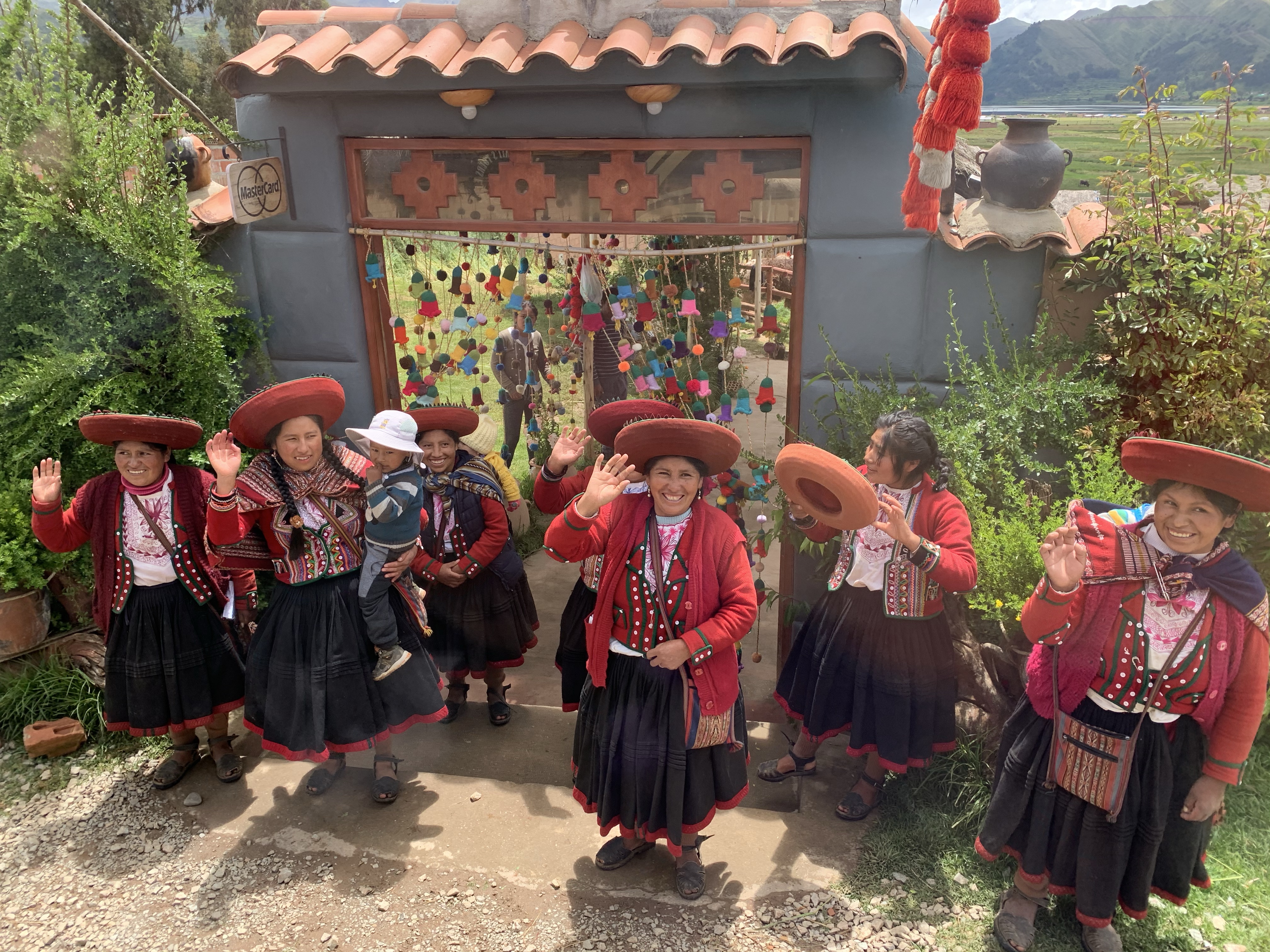
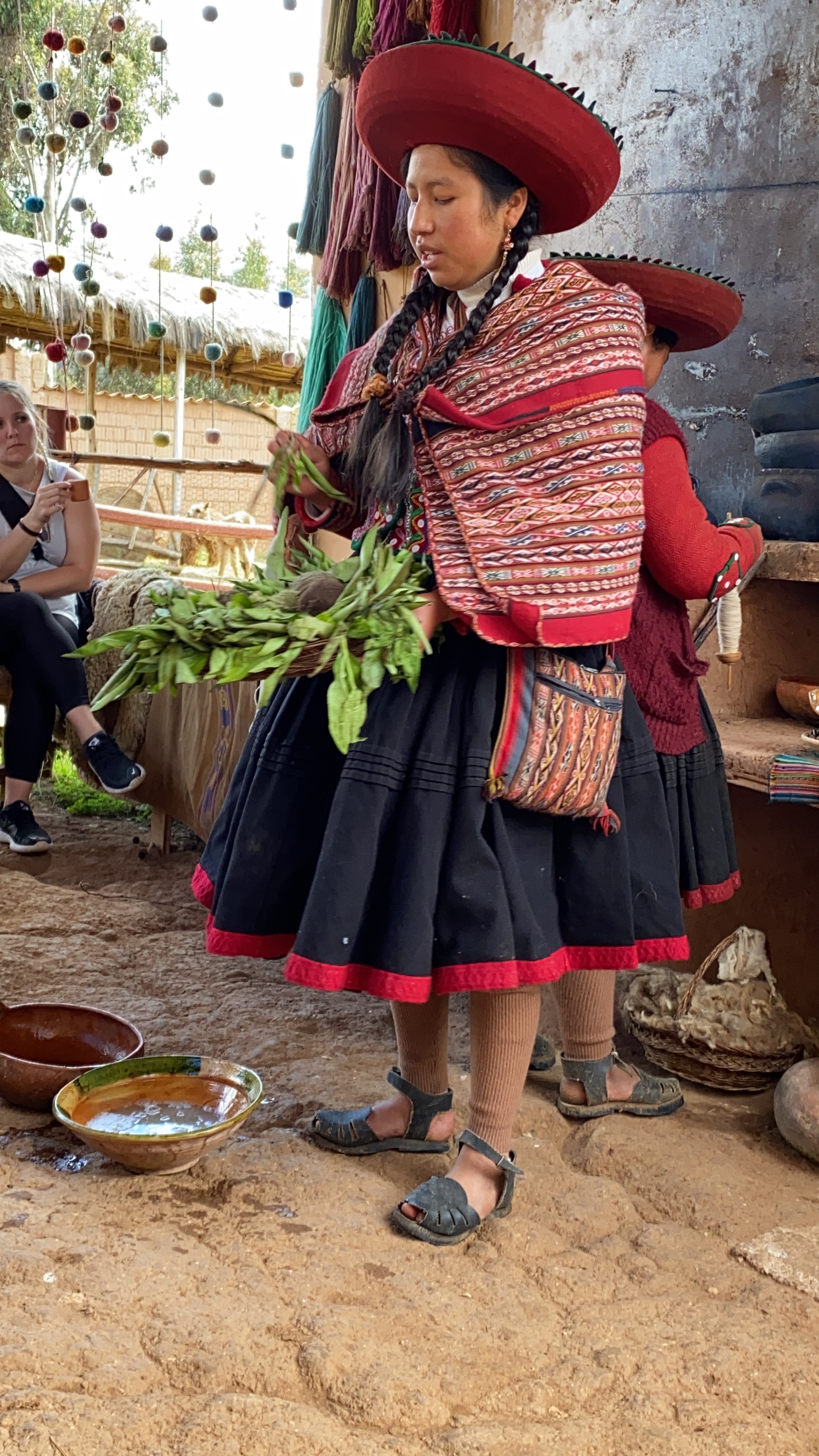
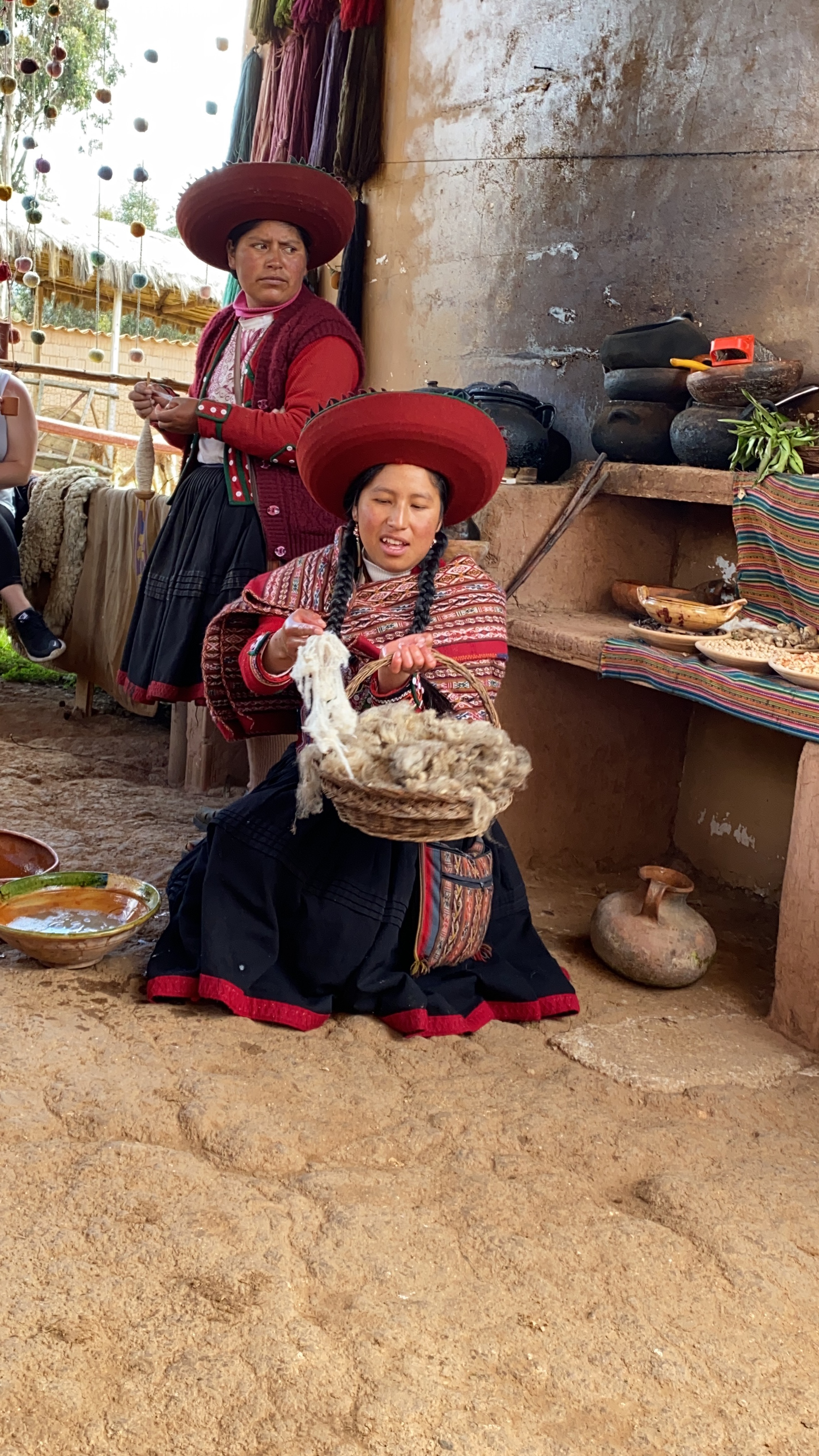
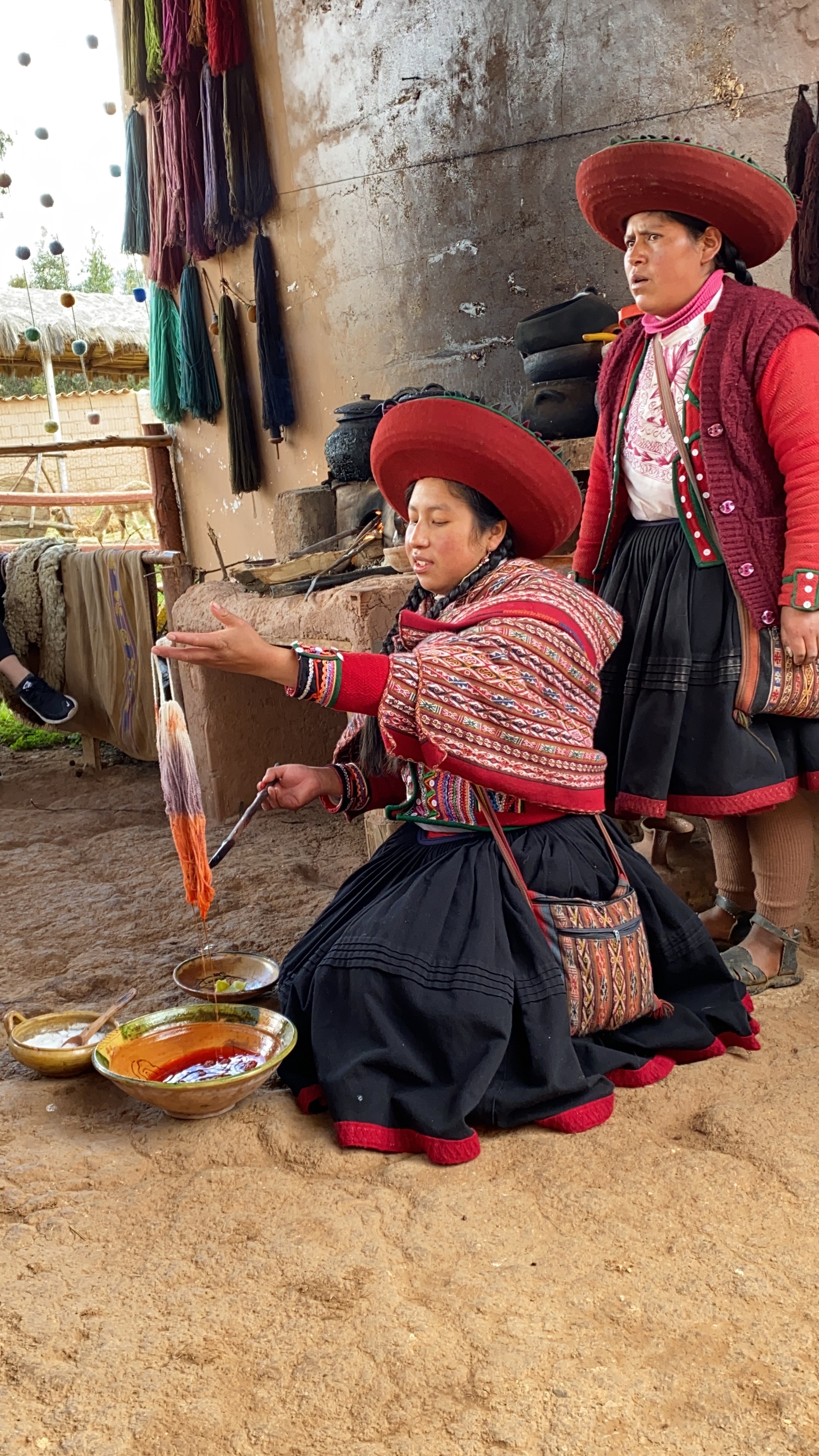
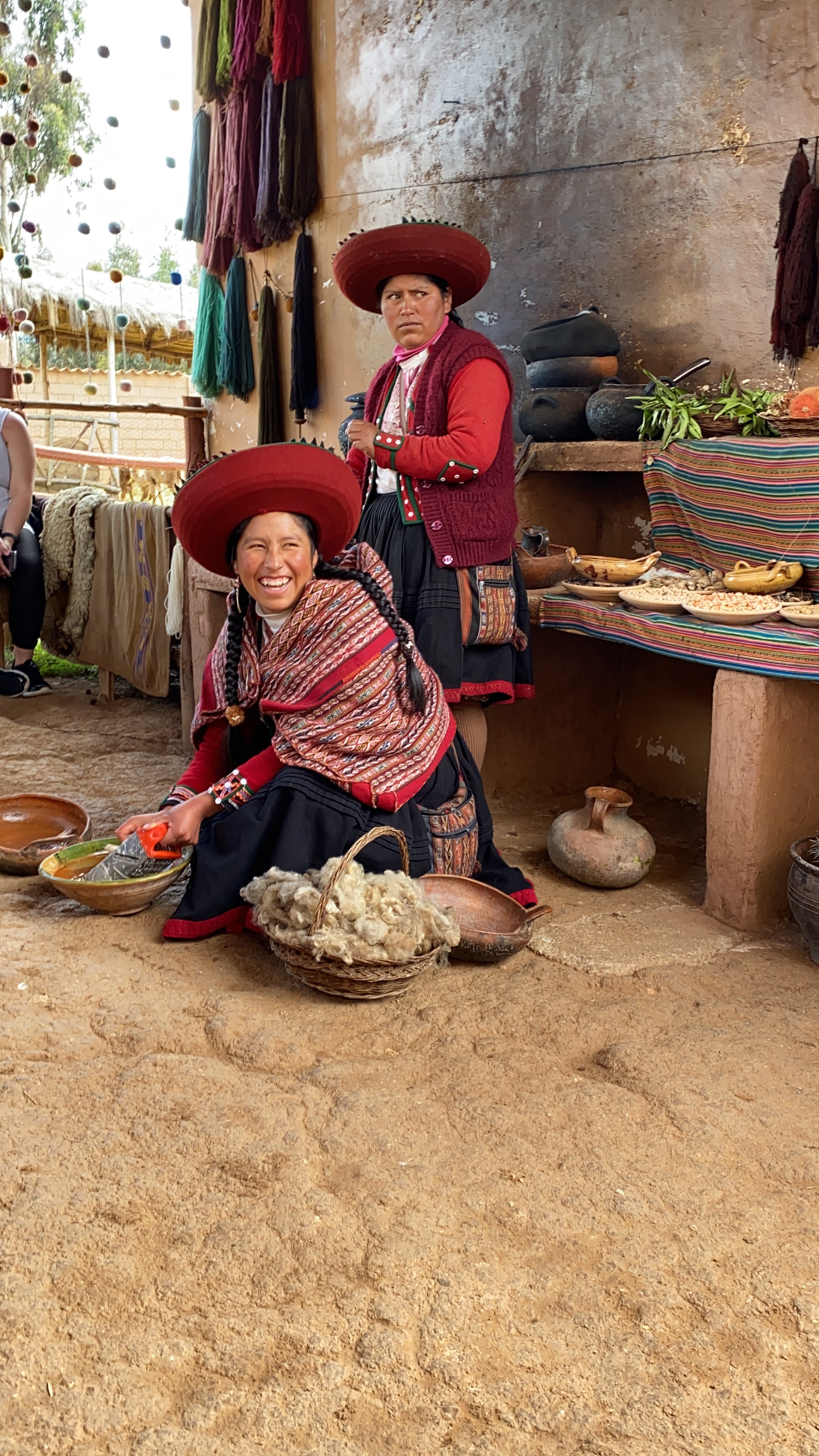
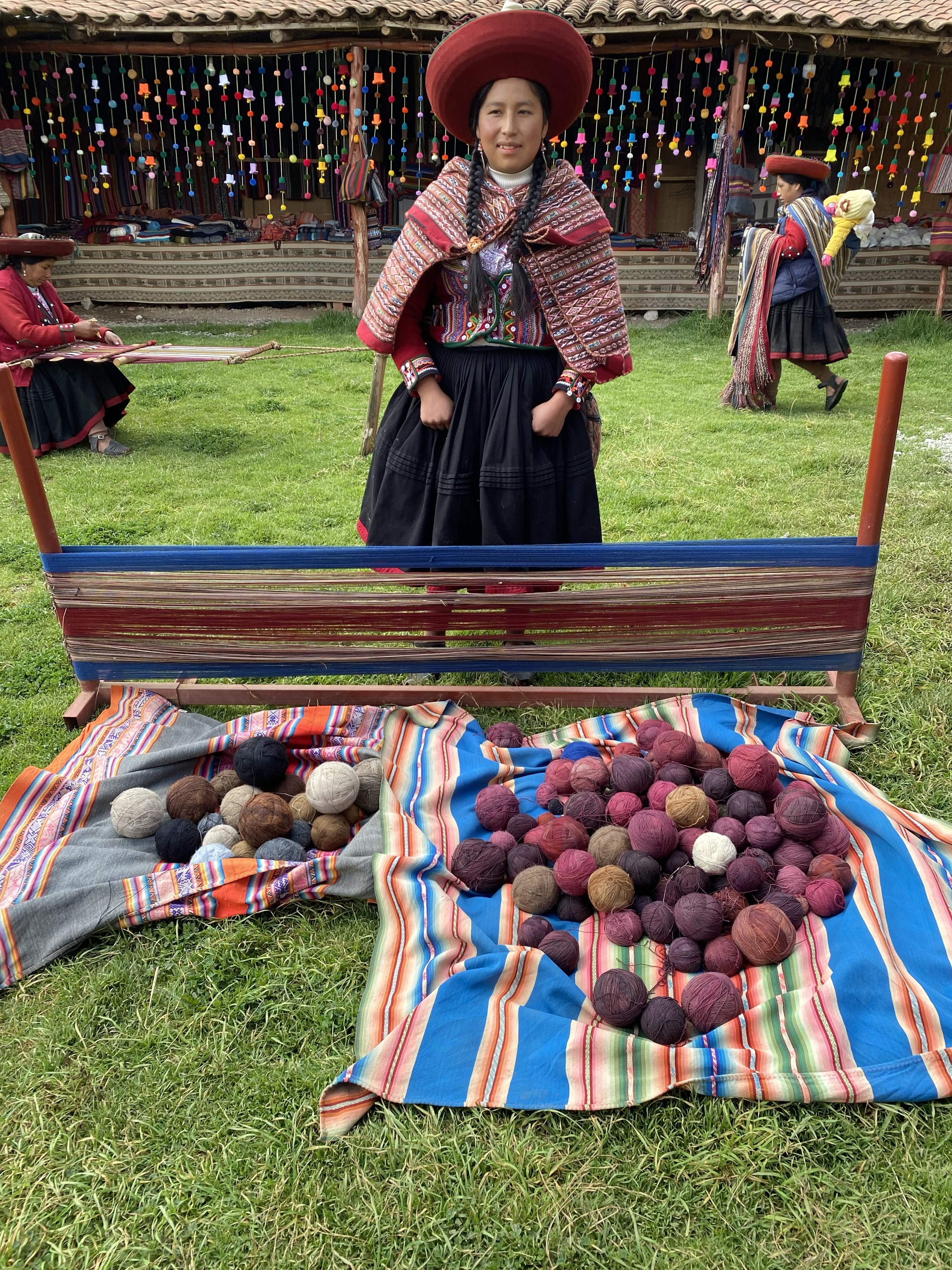
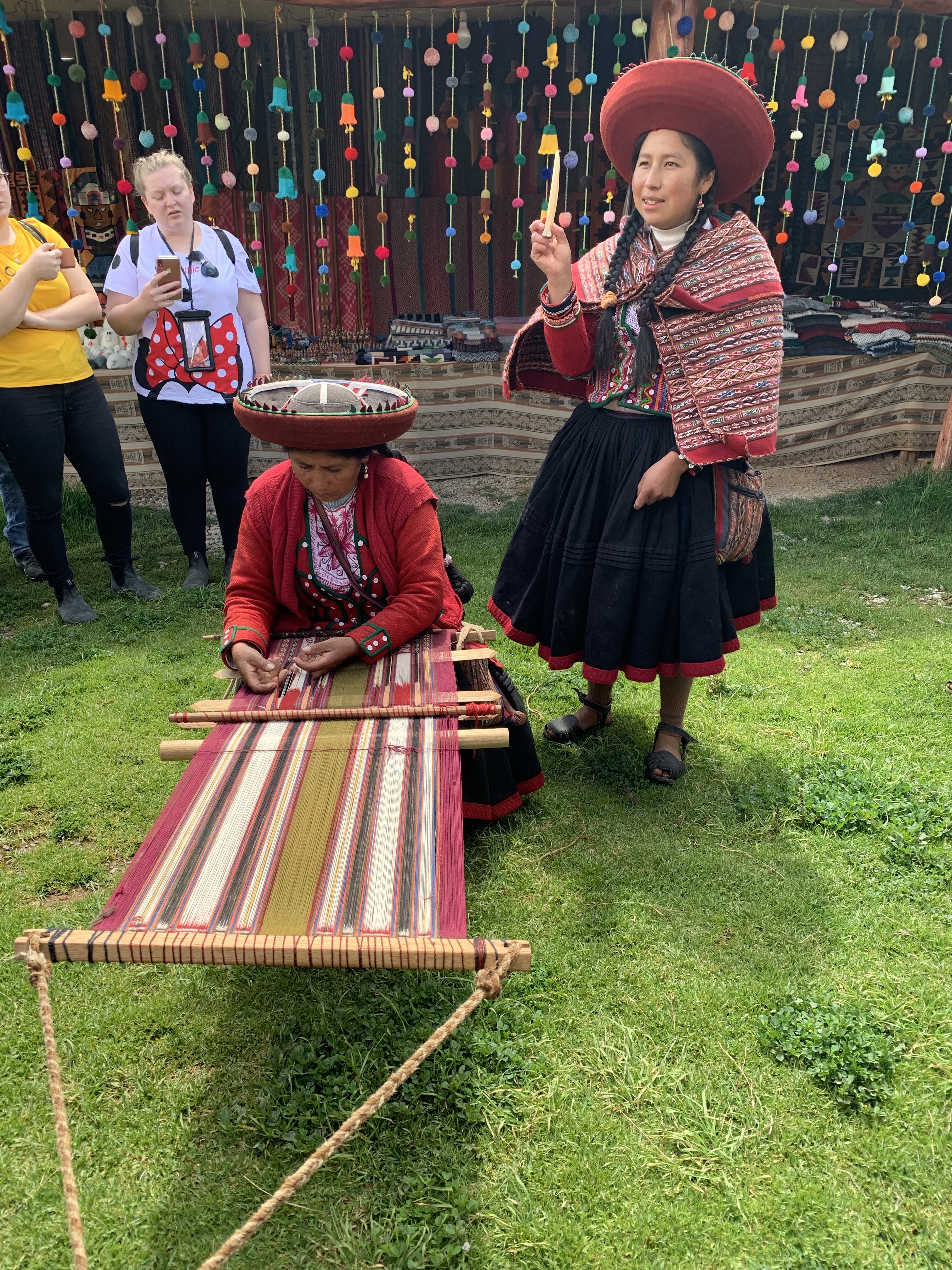
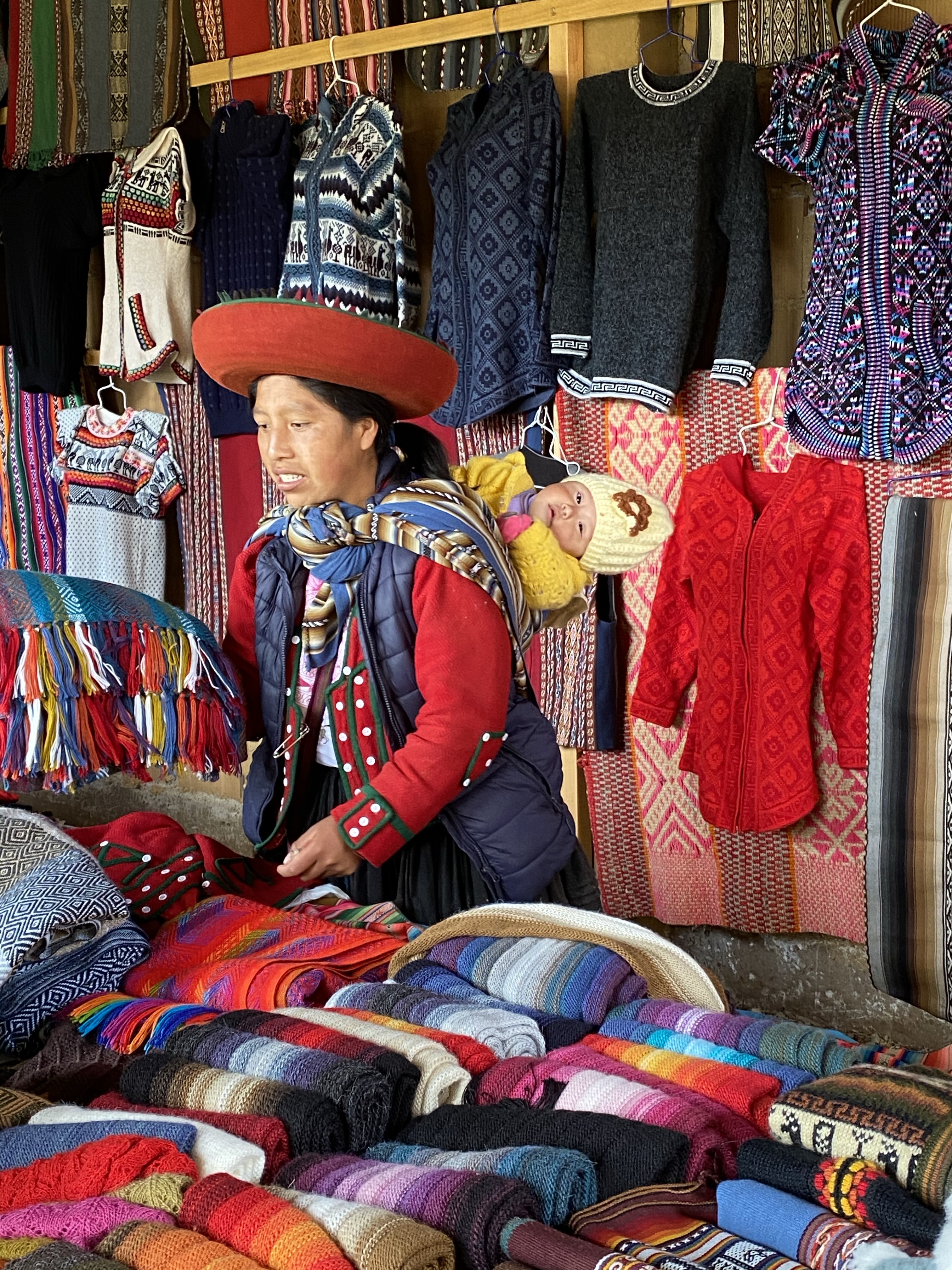
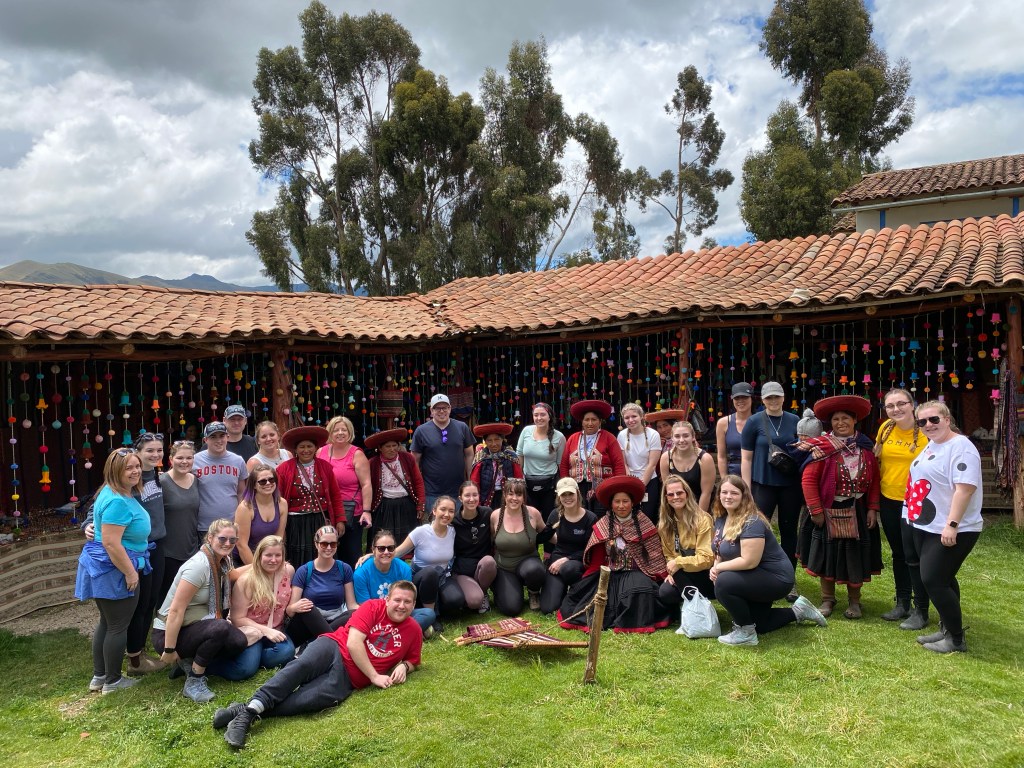
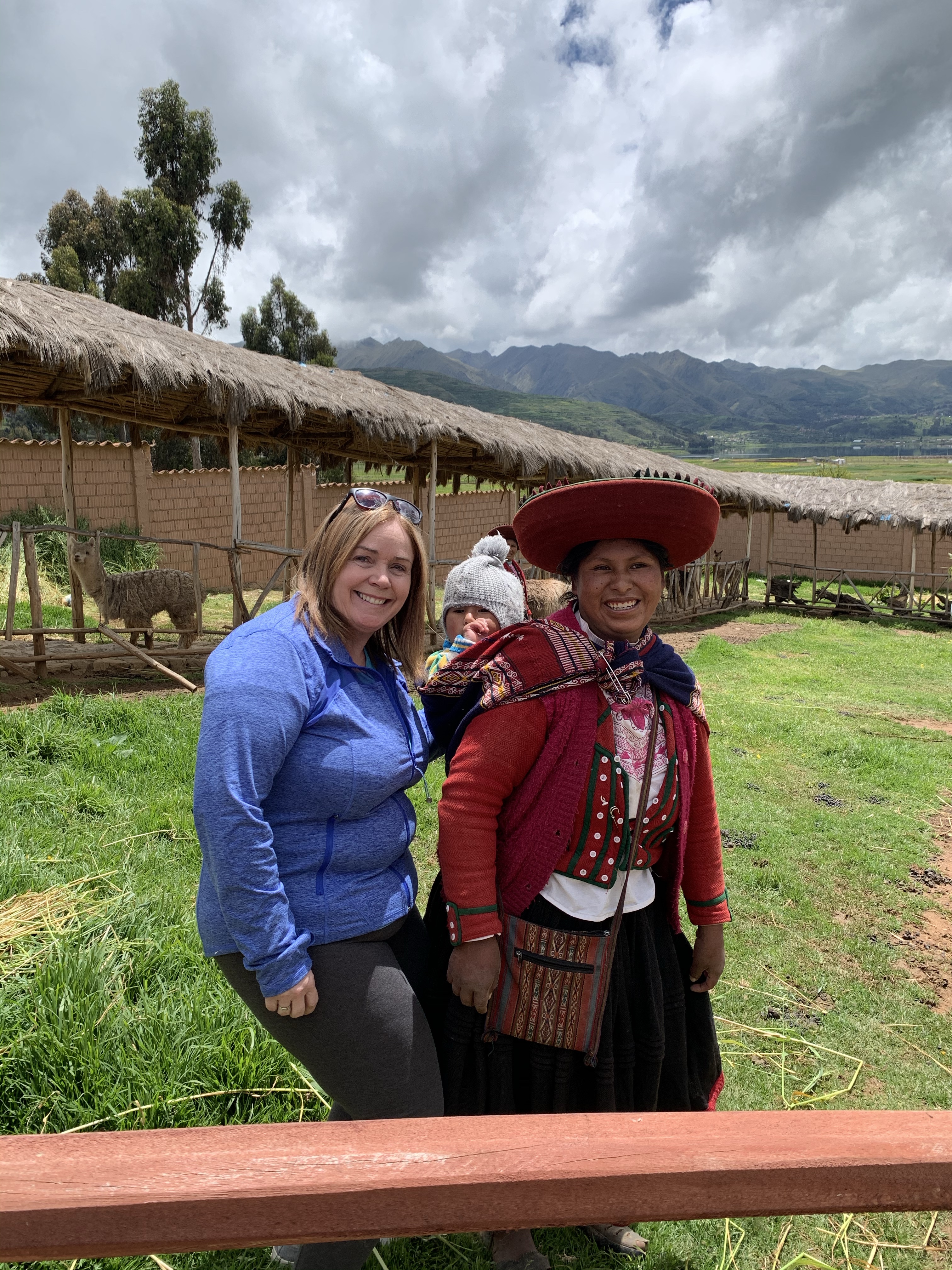
Our first stop was in a city named Chinchero at Centro textil Lluvia. Here we met some wonderful ladies who showed us about cleaning and colouring of different wools.
The soap the lady made turned the alpaca wool from grey (dirty) to pure white. The lady made a comment saying it could get rid of grey hair Karen made a comment that she could use some of that The lady then quickly made a very funny remark saying “sorry it’s too late”. Everyone burst into laughter! (See video below)
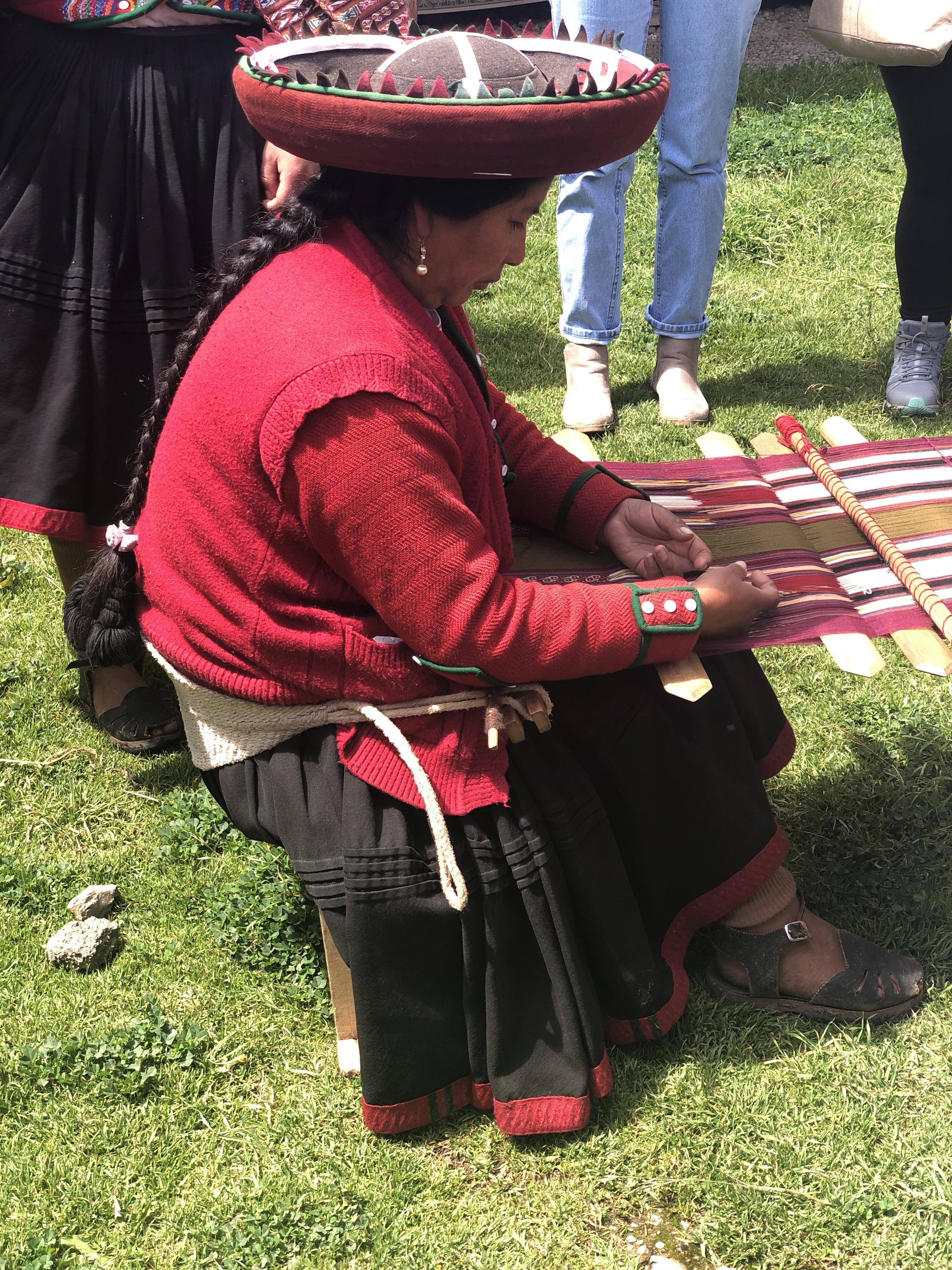
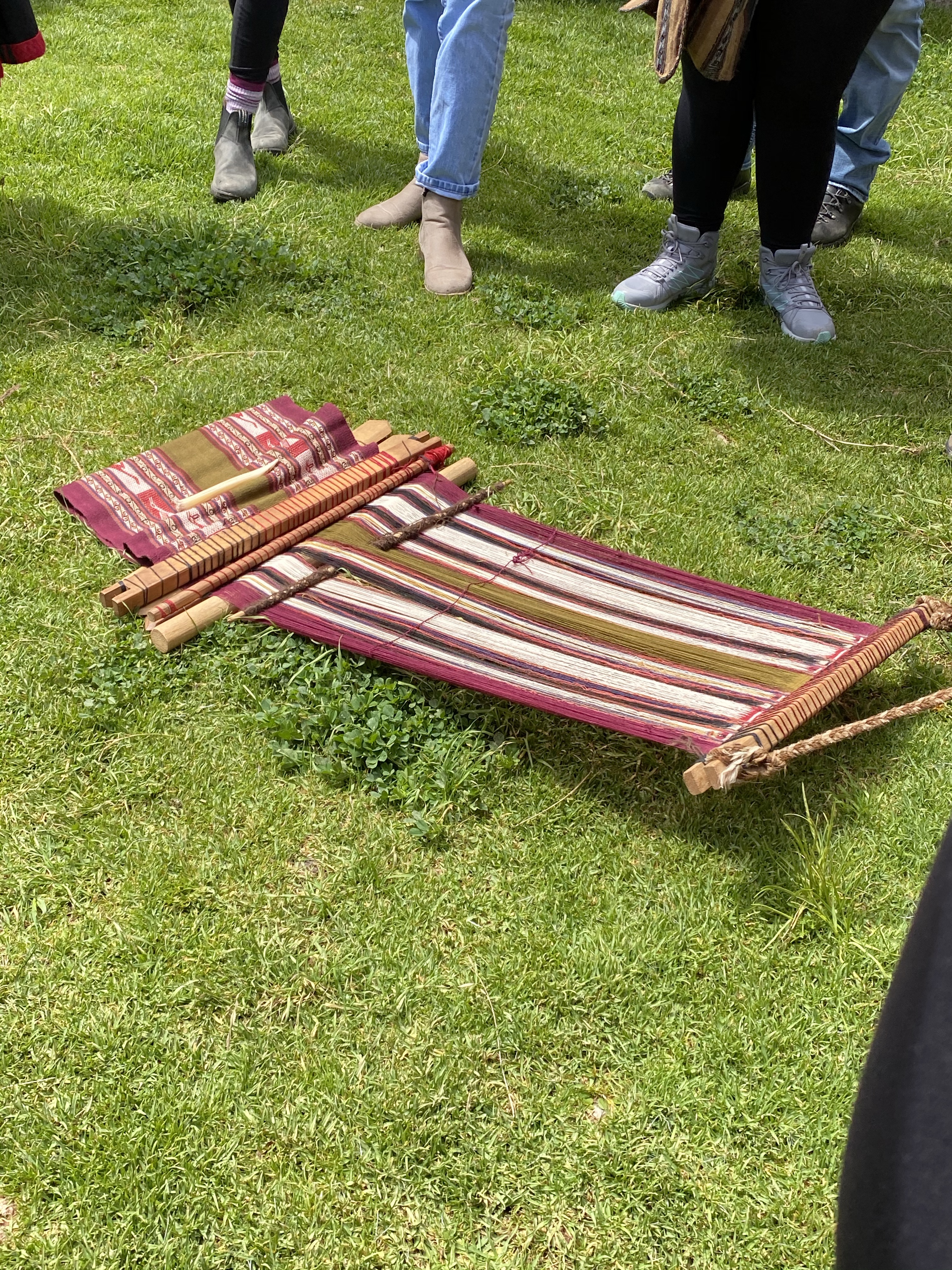
The ladies then took us over to where they weave their blankets, scarves and table runners. They showed us the process. We were told that each blanket or table runner takes about 1 month to make and they take about 4-5 hours of each day to work on them.
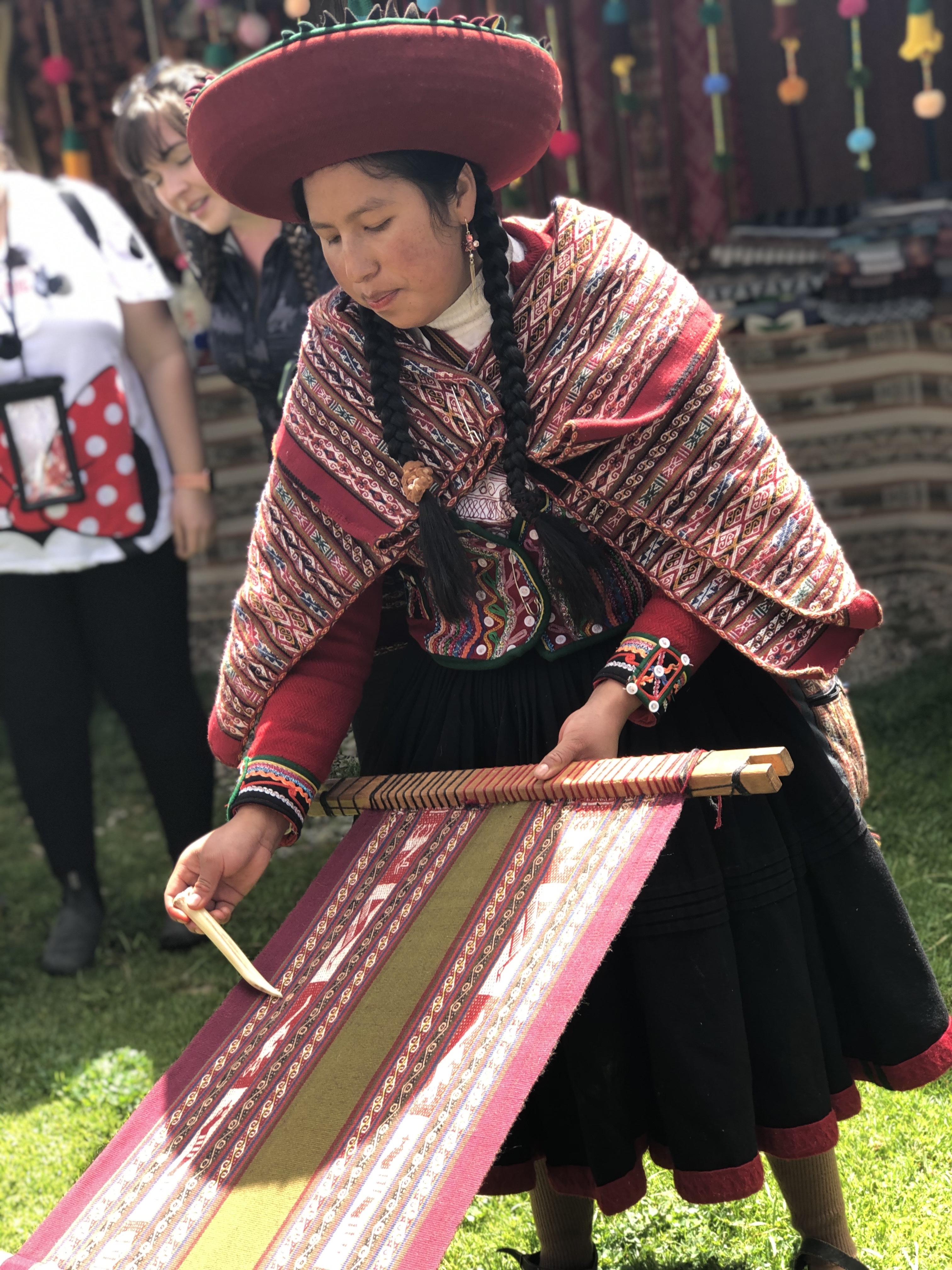
They then showed us a beautiful design on one of the table runners and broke down what each piece/symbol means.
Explaining what the symbols mean. She is pointing with a llama/ an alpaca bone
She explains that there is a Snake, puma, and a candour- each representing a different thing( like strength, wisdom, power, etc. )The colour green running down the middle of the table runner represents Mother Earth and the land. The zigzag design represents the Inca trial, it is finished with a border that they call the princess eye.
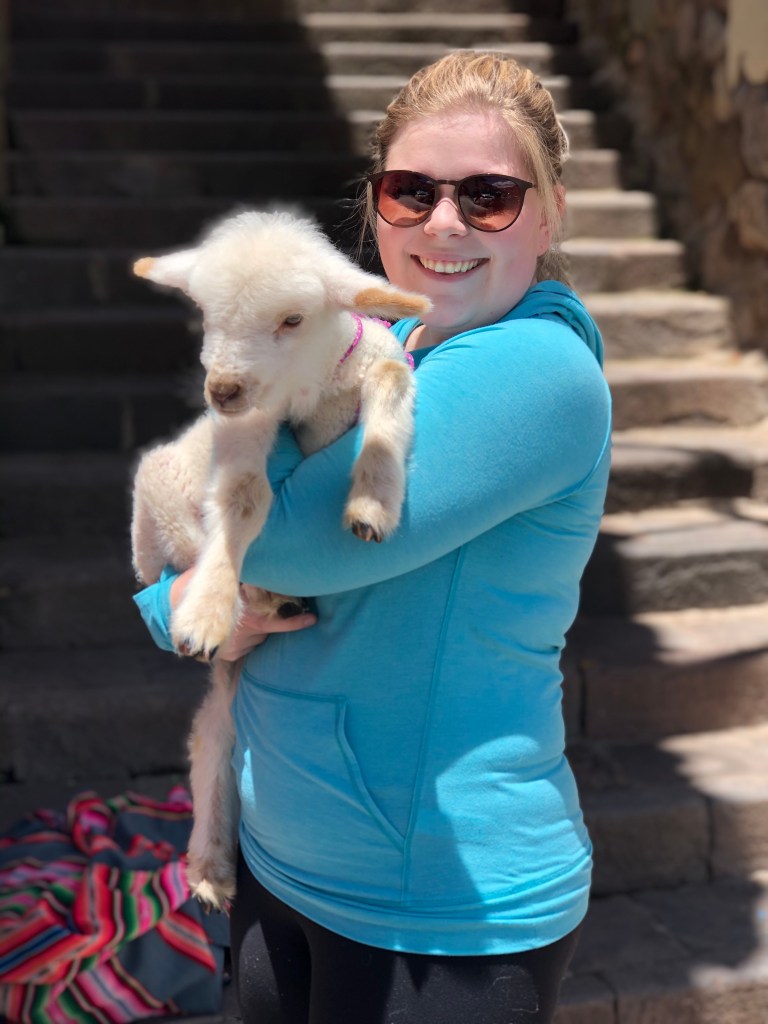
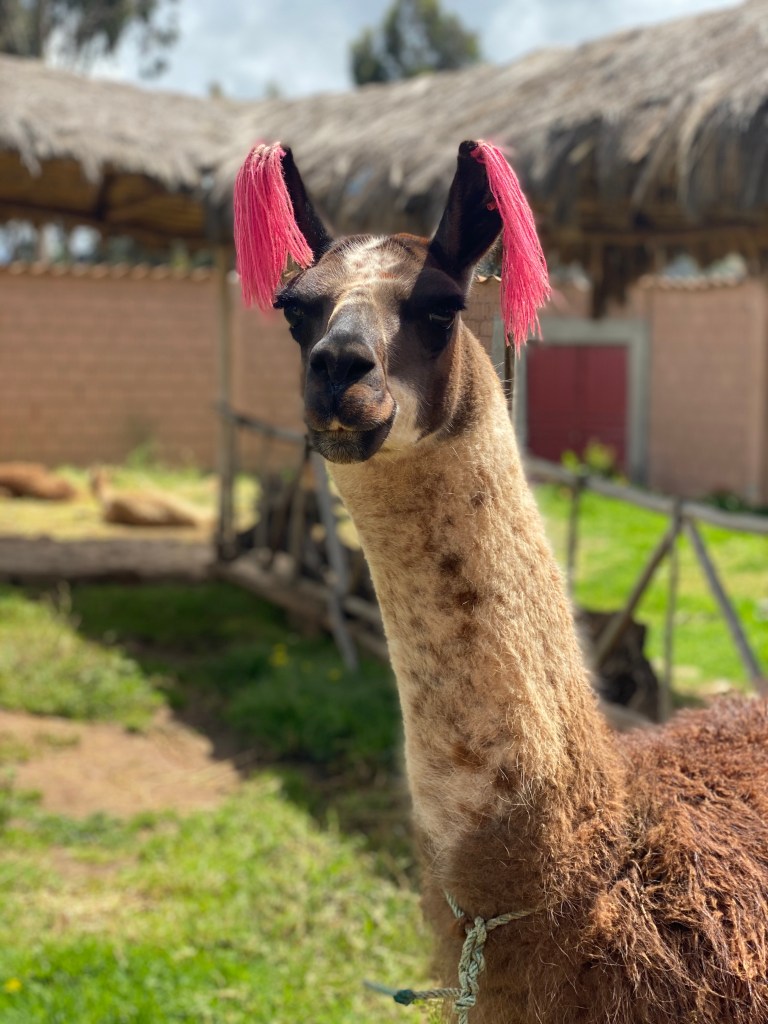
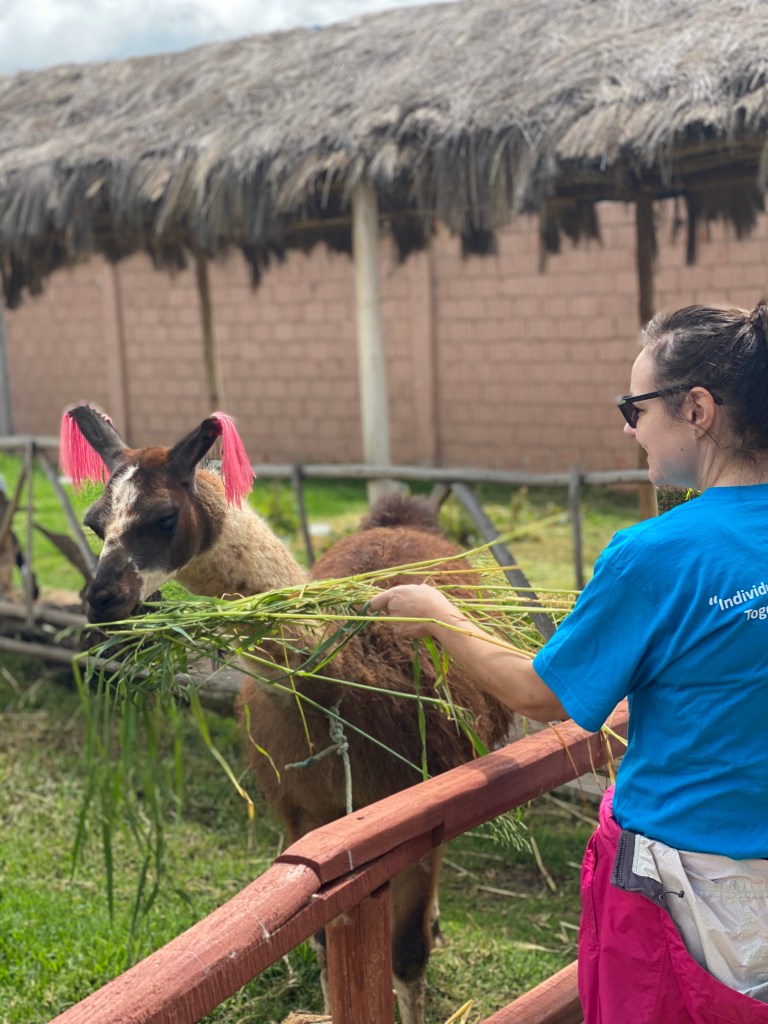
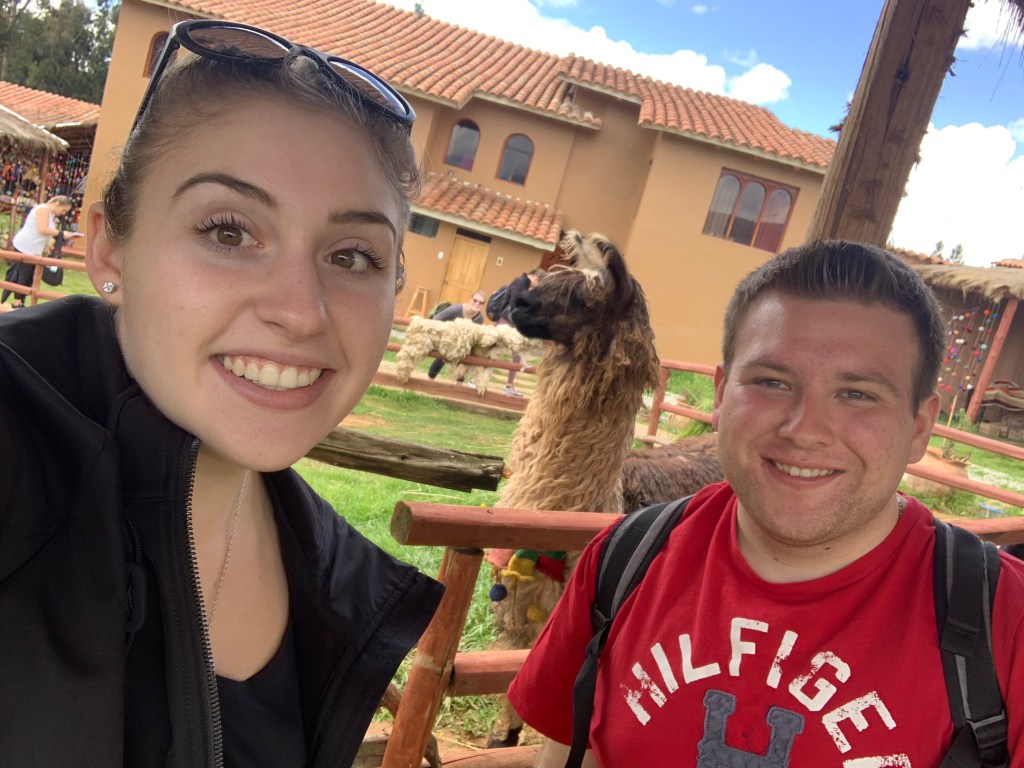
They dye the hair in the ears pink to signify property. This is their llama Instructor Angela MacDonald feeding the llama Jill Brown and Austin Chapman taking a selfie with an alpaca
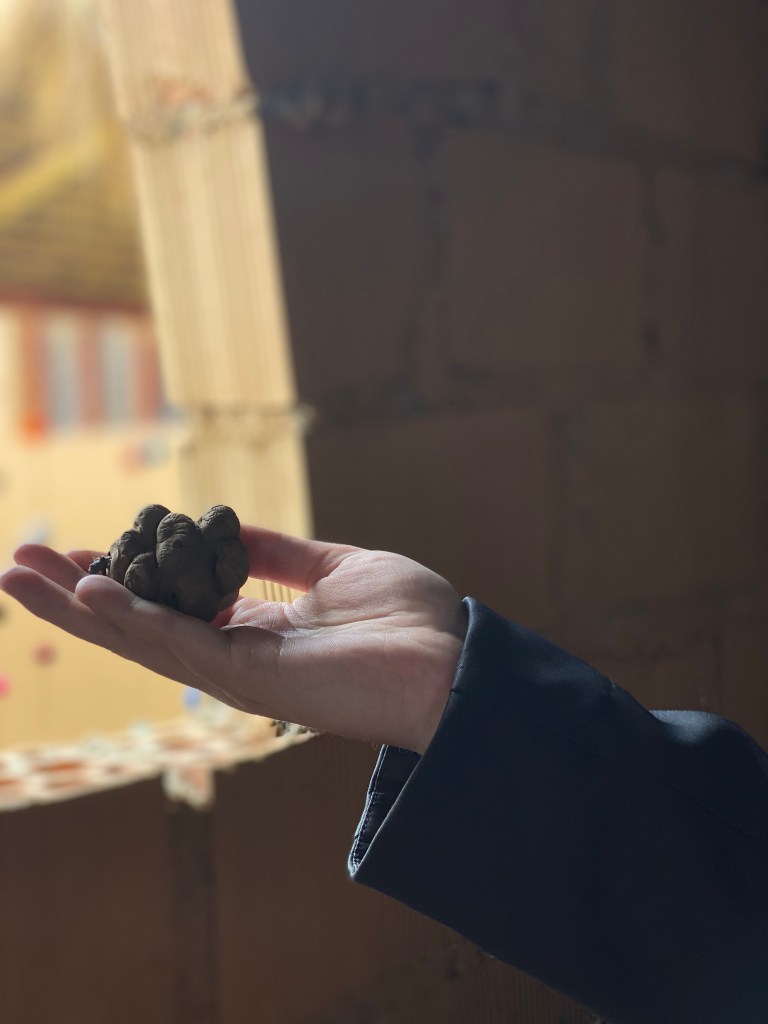
It was said as a part of a marriage ceremony the woman must peel a potato to show she has good cooking skills.
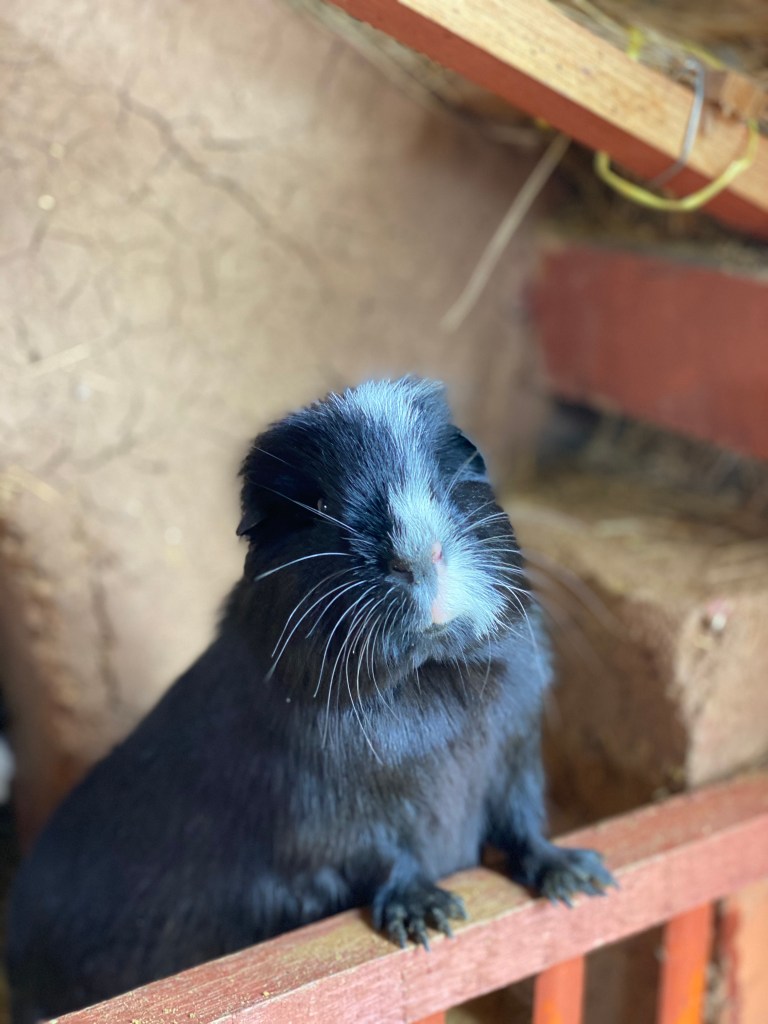
Photo submitted by Chelsie CannGuinea pig AKA super Group picture at the Centro textil Lluvia.
After enjoying our time at Centro Textil Lluvia we went and continued to tour the scared Vally. We came across some Andes Mountains.
The instructors enjoying their time in Peru
All of this land is used for farming production and agriculture
Enjoying the top of one of the Sacred Valley mountains looking out to the AndesJust another group photo:)
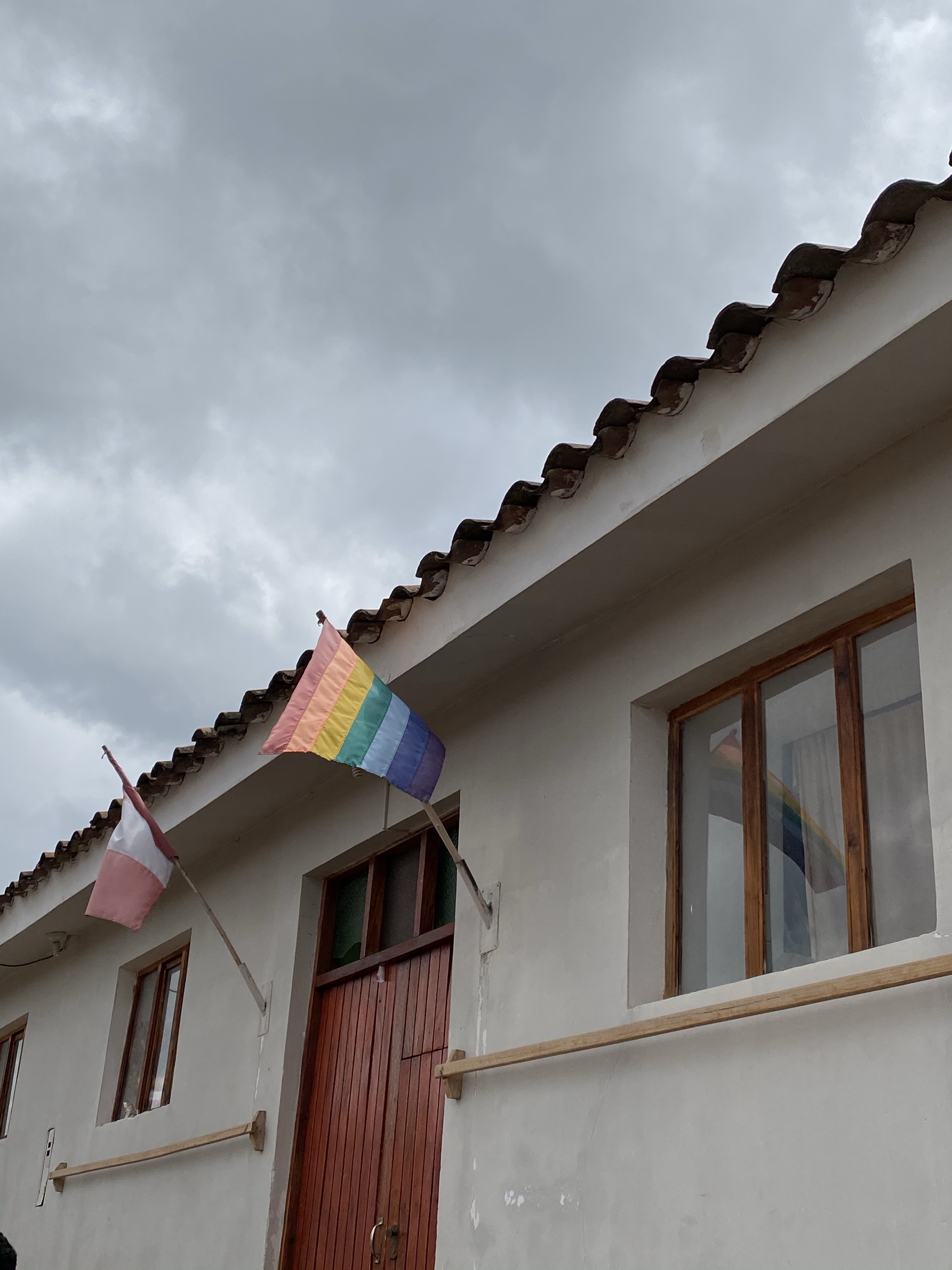
Arlich showed us the Cusco flag which resembles closely to the Pride flag (rainbow) the main difference is the Cusco flag has 7 colours and the pride flag has 6. The Cusco flags extra colour is the light blue.
Peru flag to the left, Cusco flag to the right
As we worked our way back to the bus it started pouring! We all quickly rushed back to the bus being extra careful because now all the rocks and cobble stone streets were slippery.
After getting out of the rain and boarding the bus we quickly drove Through a town/city called Maris. Our next stop was Moray!
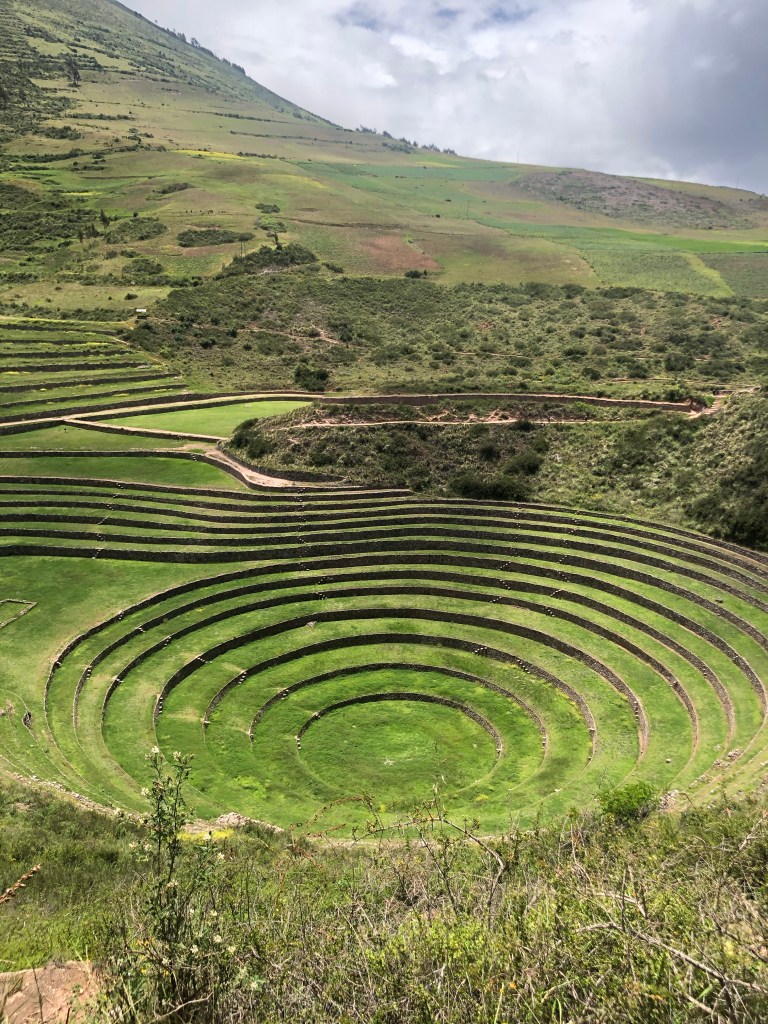
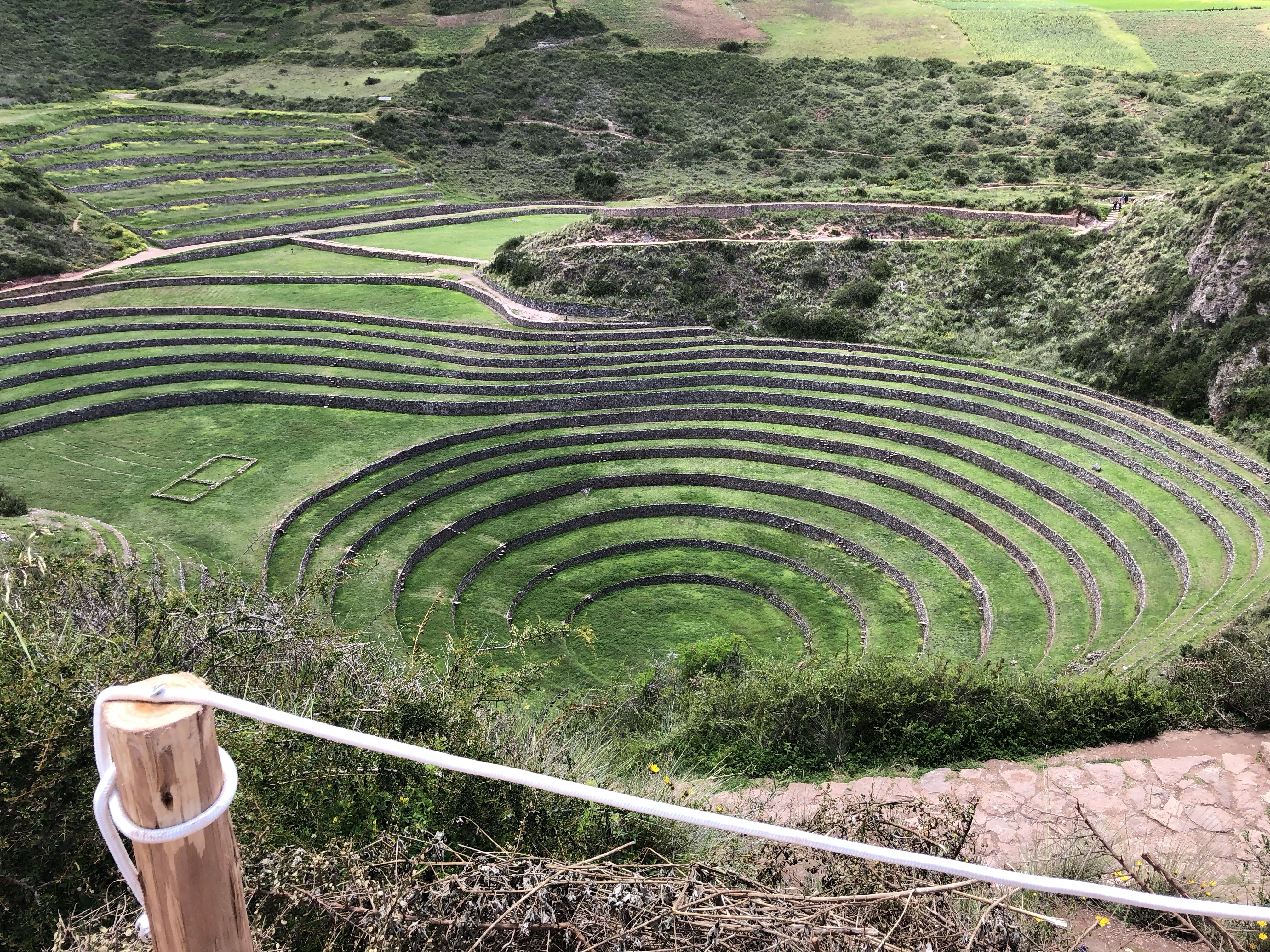
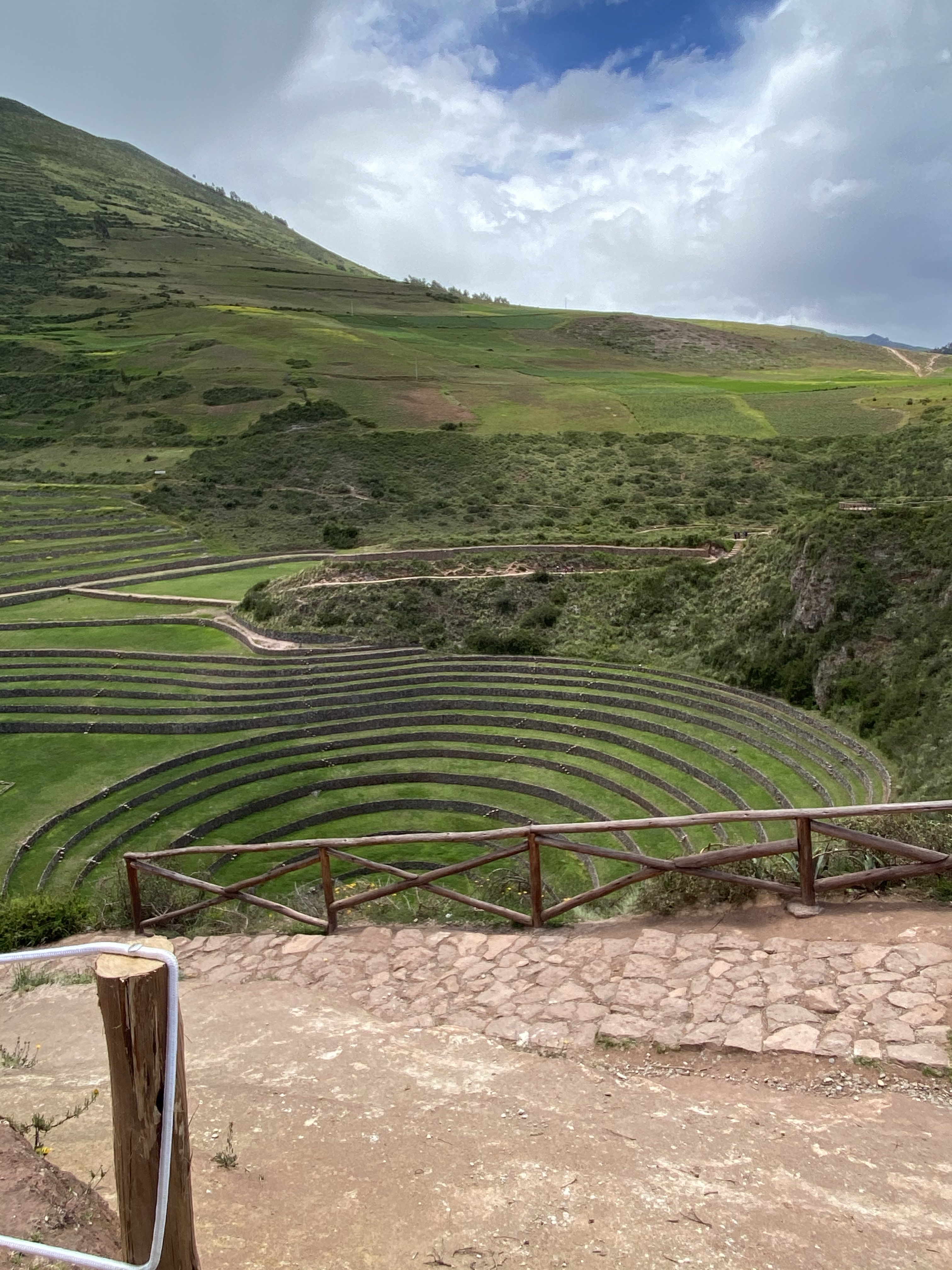
Moray was formally known as being an agriculture lab. A circle as seen below was built both by natural formation and hard work from the locals to adapt agriculture for the environment in the 13th Century.
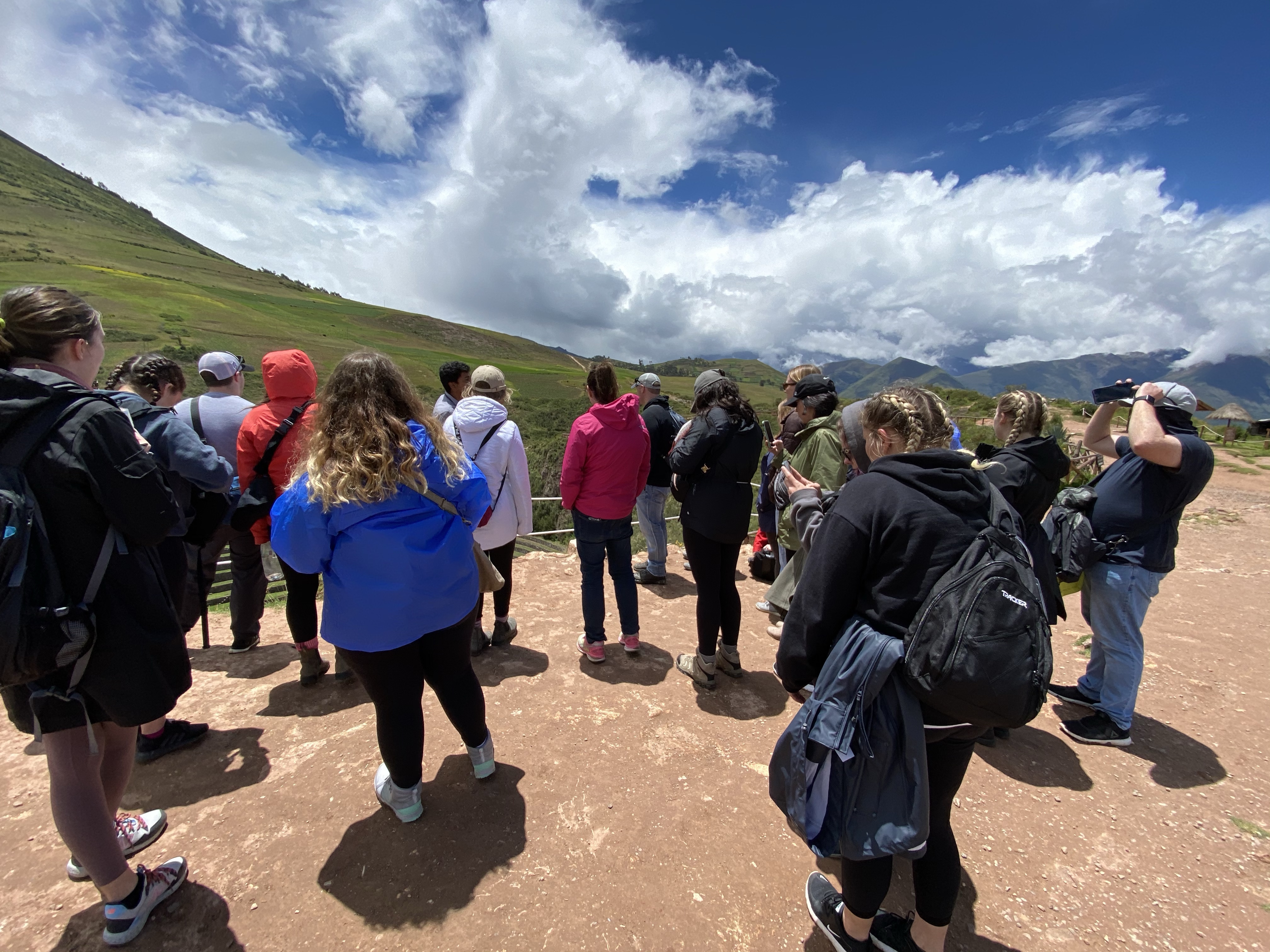
Have a look at this amazing view and agricultural land!
Arlich told us that inside the circle “IMoray” there is a difference in temperature than the point we were looking at it from. There is 150 metres from the point we are looking at this to the bottom/ last circle. Inside the circles varies between 0-15°C. Furthermore each level/new circle has a change in temperature. They fluctuate about 1-2 ° for each new level. Warmest at the centre. The wind plays a major role in this. All of the walls block the wind. Being designed for agriculture it was very clever!
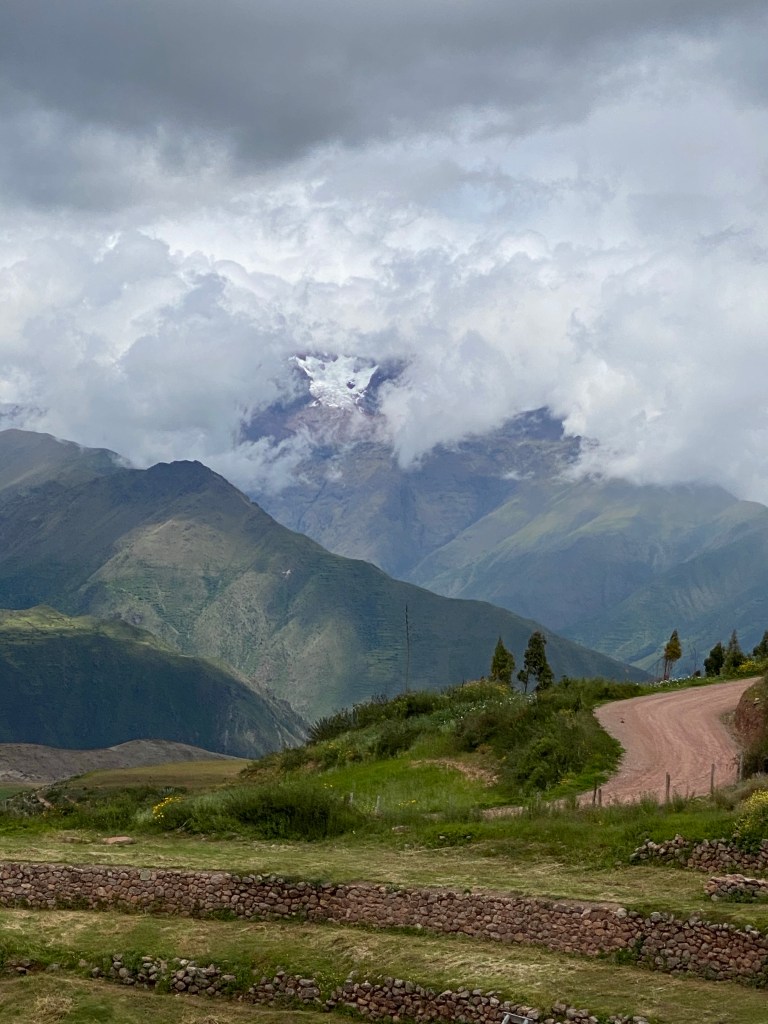
We were then taken to see the Andes mountains (you can see some snow on the top)
After seeing the Andes we got back on the bus and drove to Urubamba for some lunch.
Urubamba is considered the biggest city in the Sacred Valley and is the Capital City of the Valley.
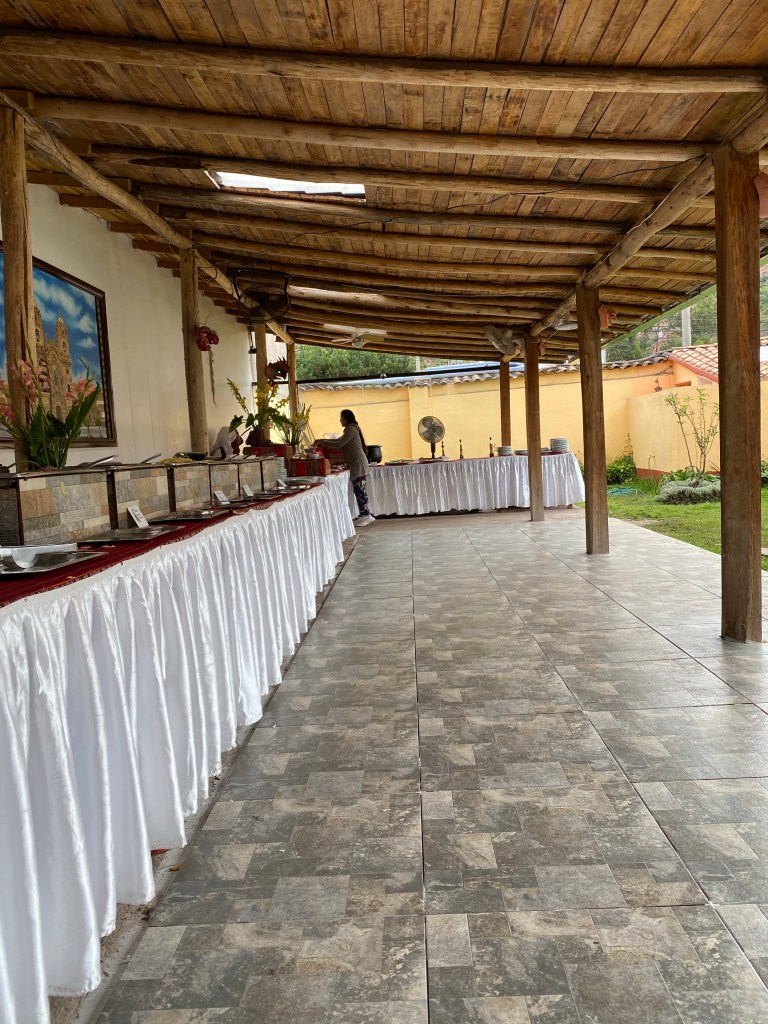
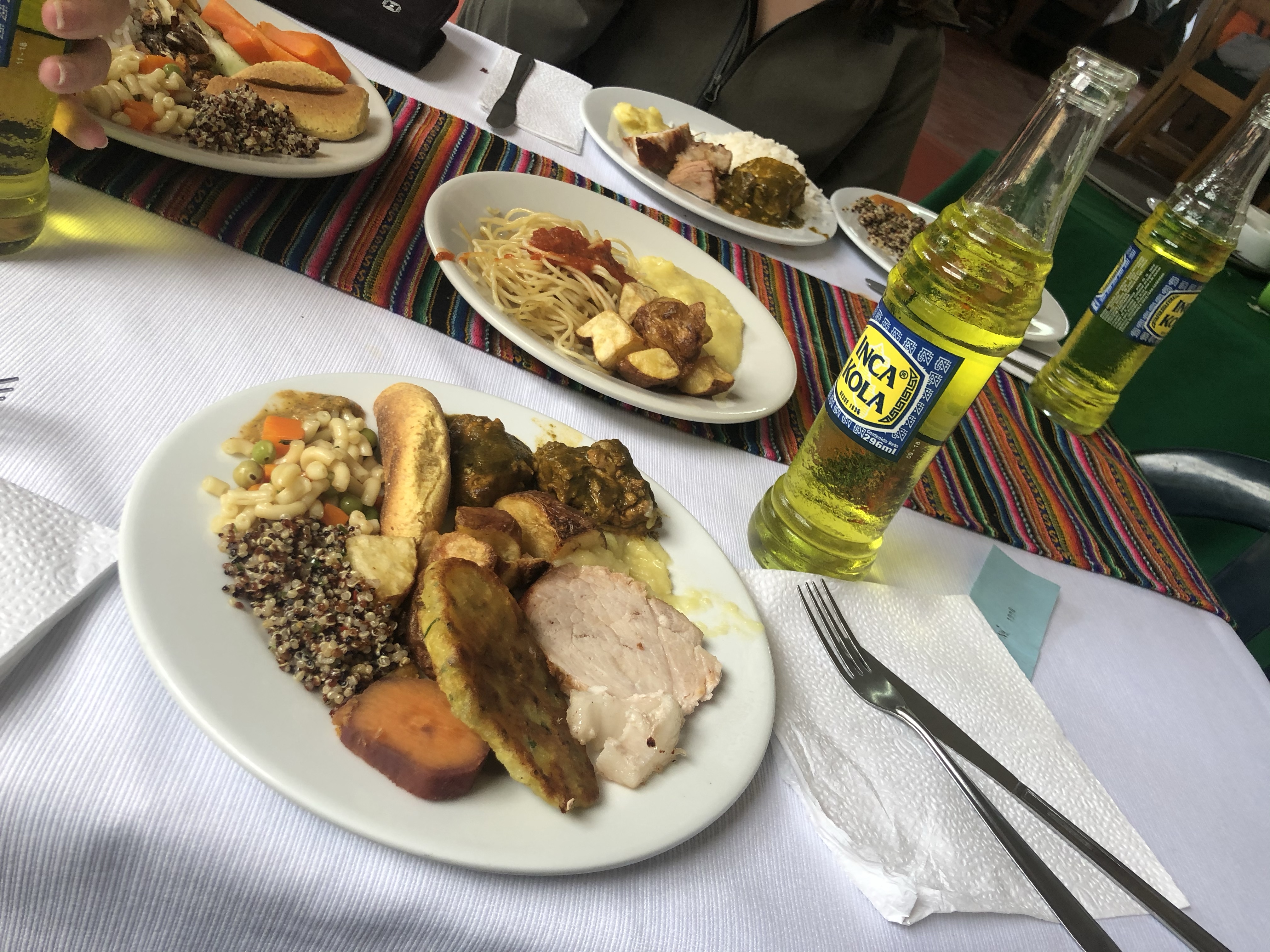
Lunch was served at maïs Sal and it was served in a buffet style.
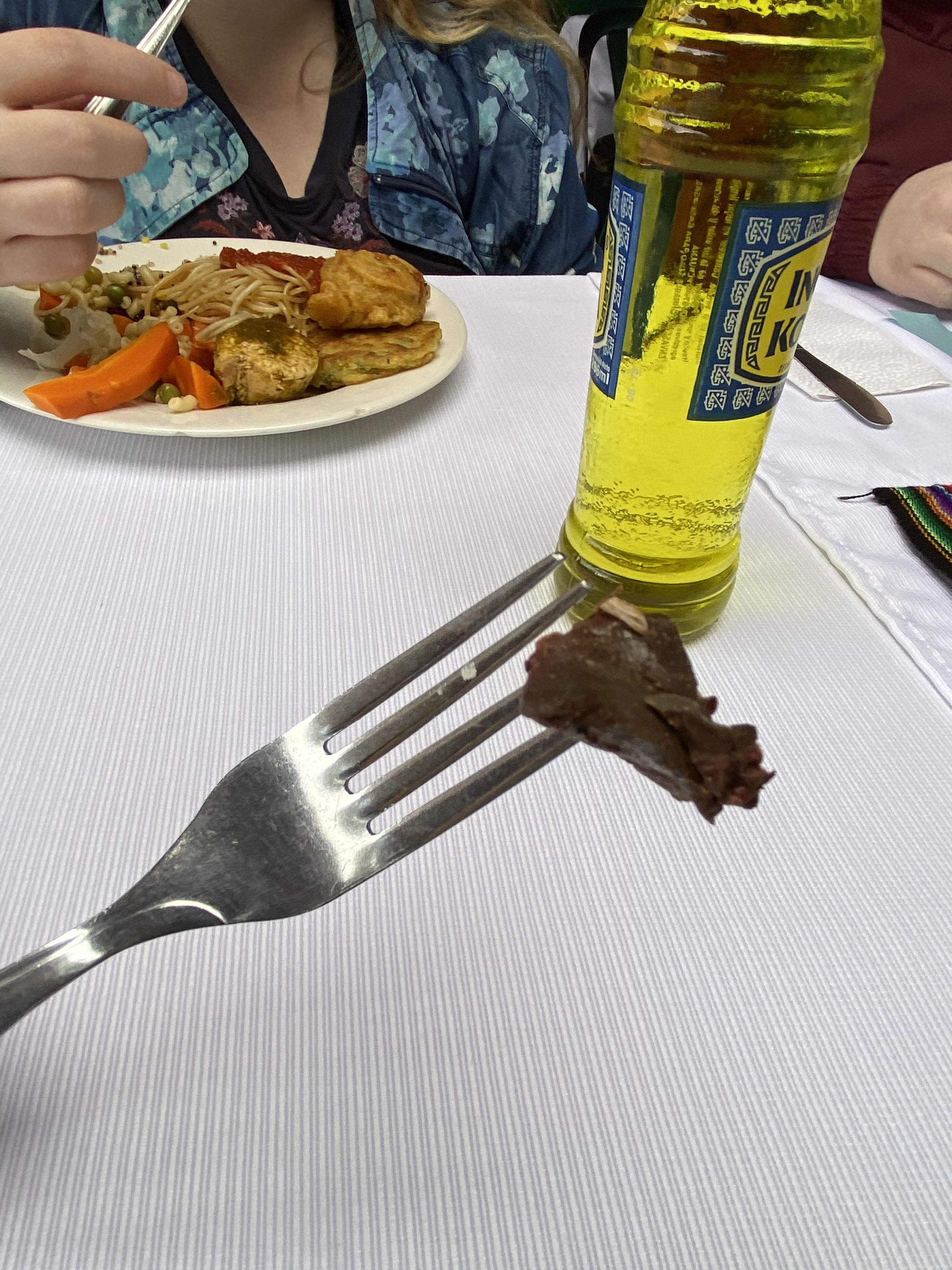
Some of us had the chance to try some guinea pig!
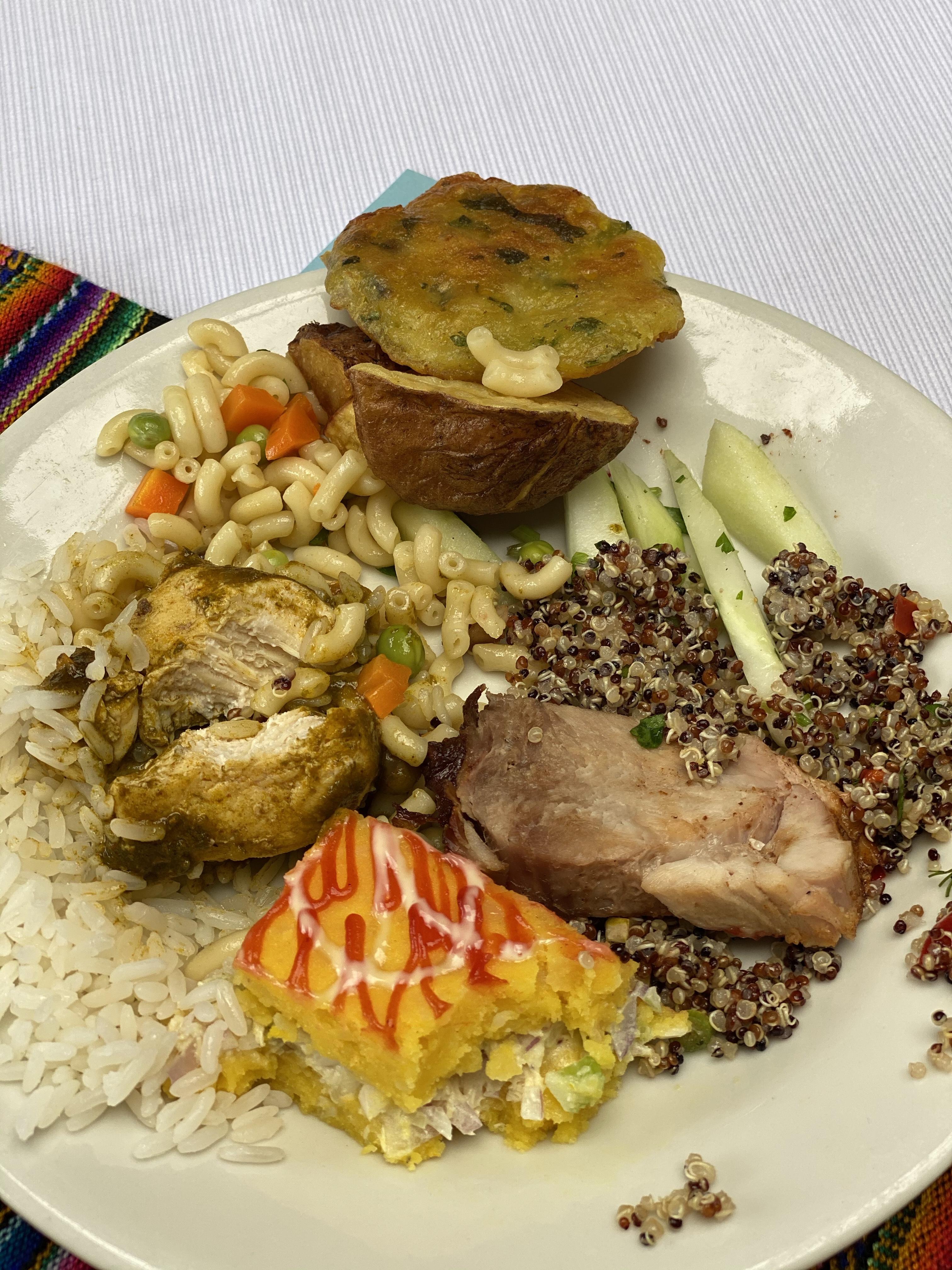
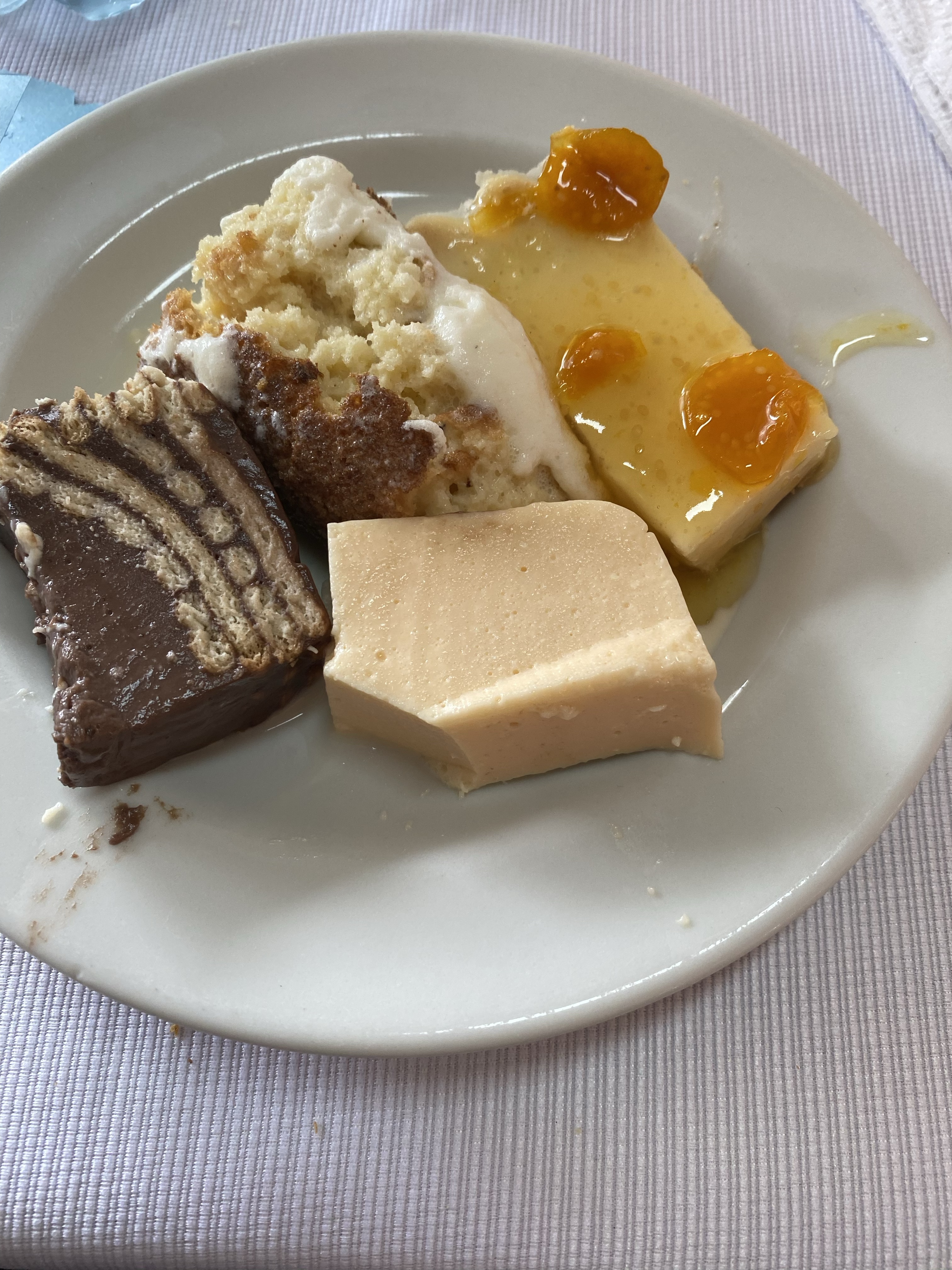
Some food from the buffet! The glass bottle is the famous Peruvian Inka Kola- it tastes kind of like cream soda with extra/a few different tastes to it.
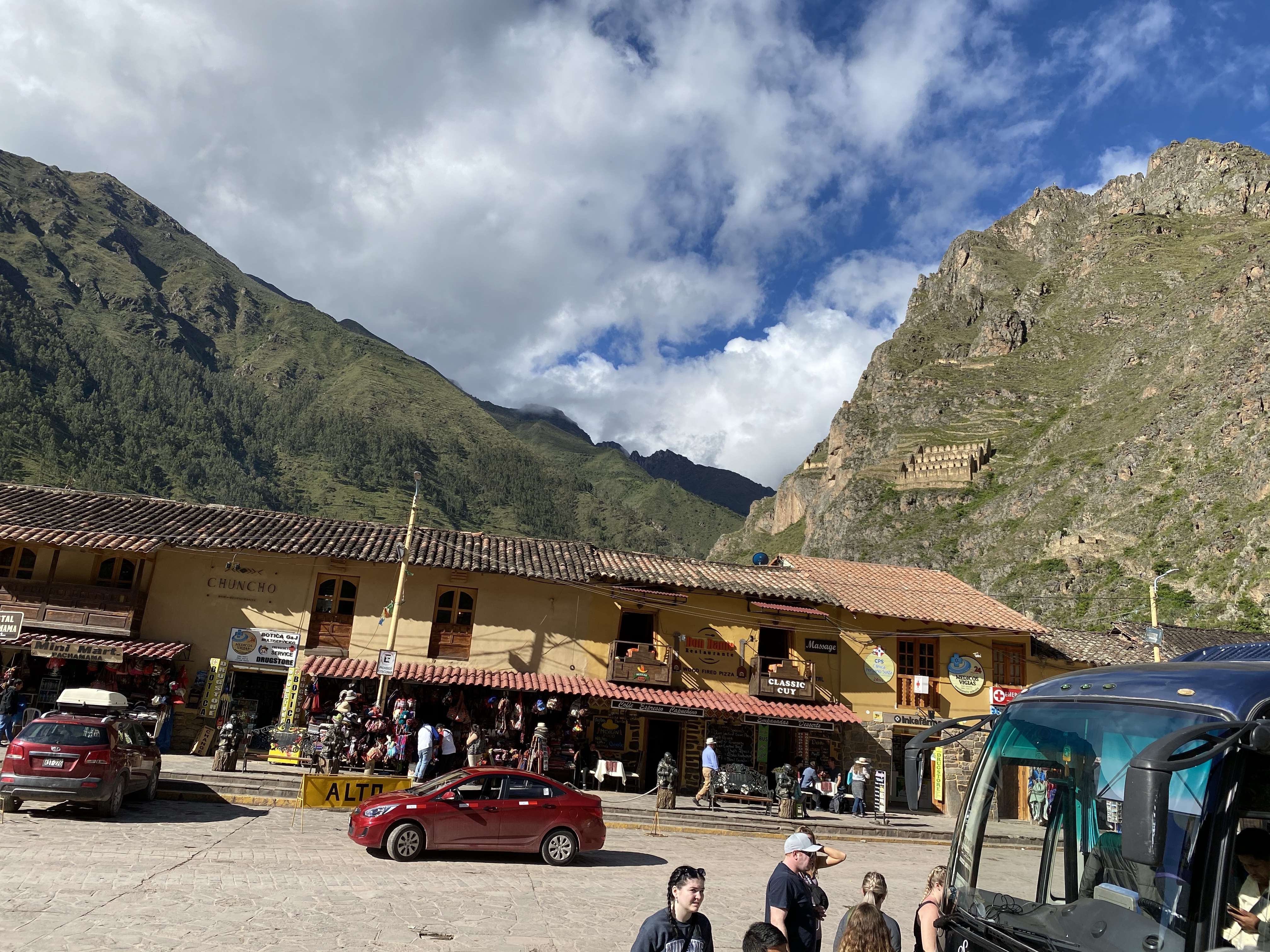
After we ate we all travelled to our last stop for the day Ollantaytambo.
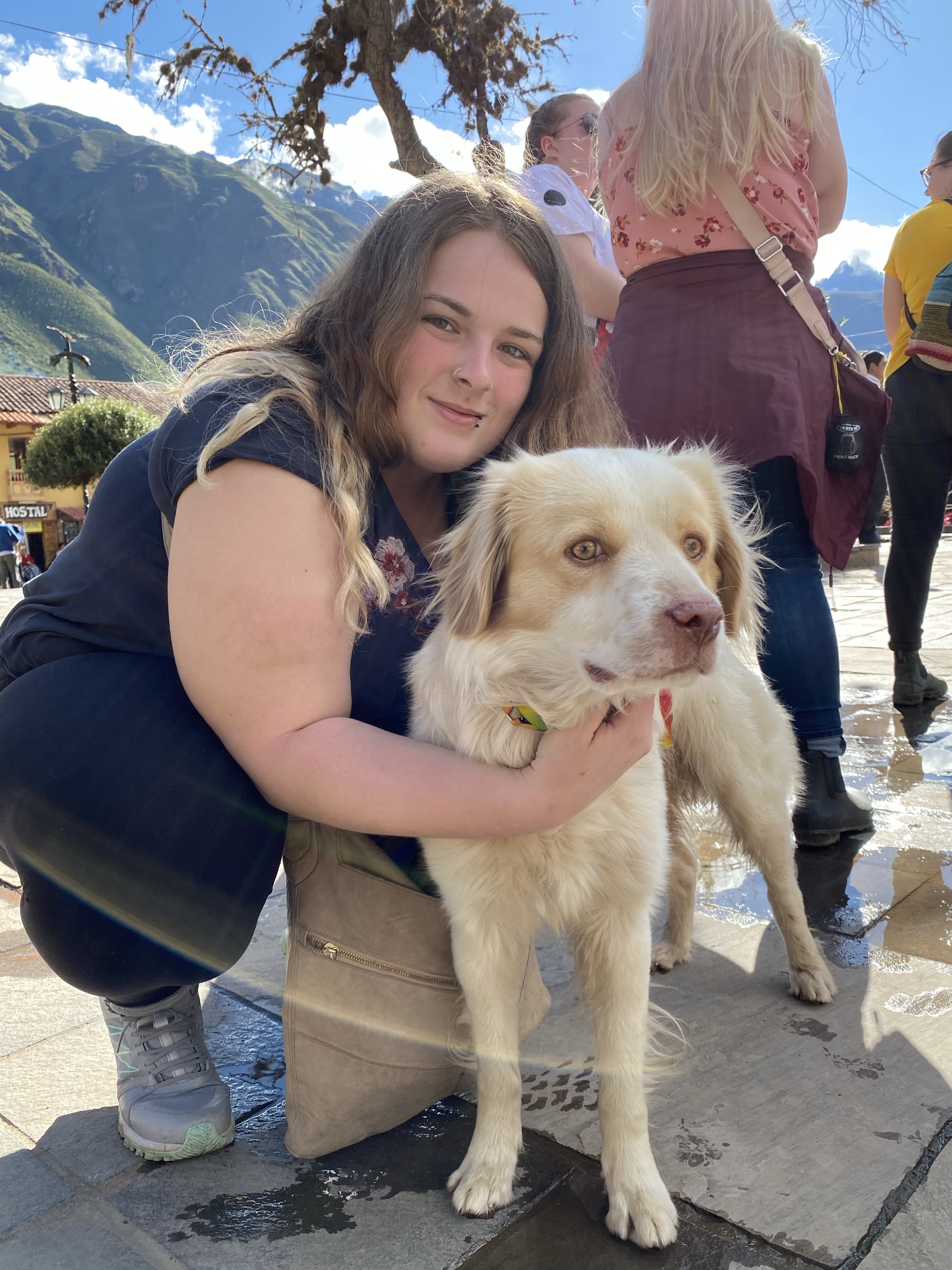
Kelsey Brown posing with a dog
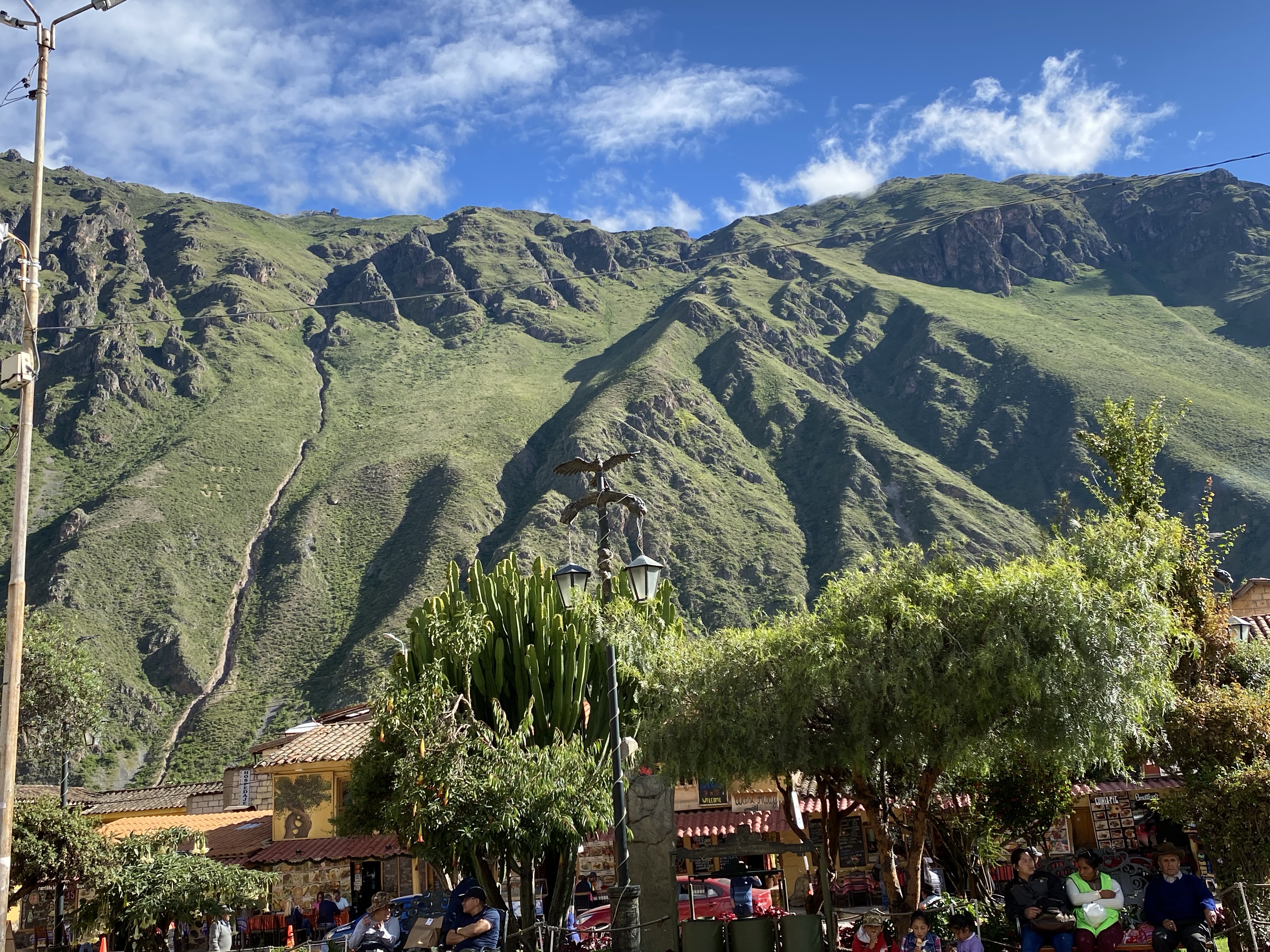
Ollantaytambo
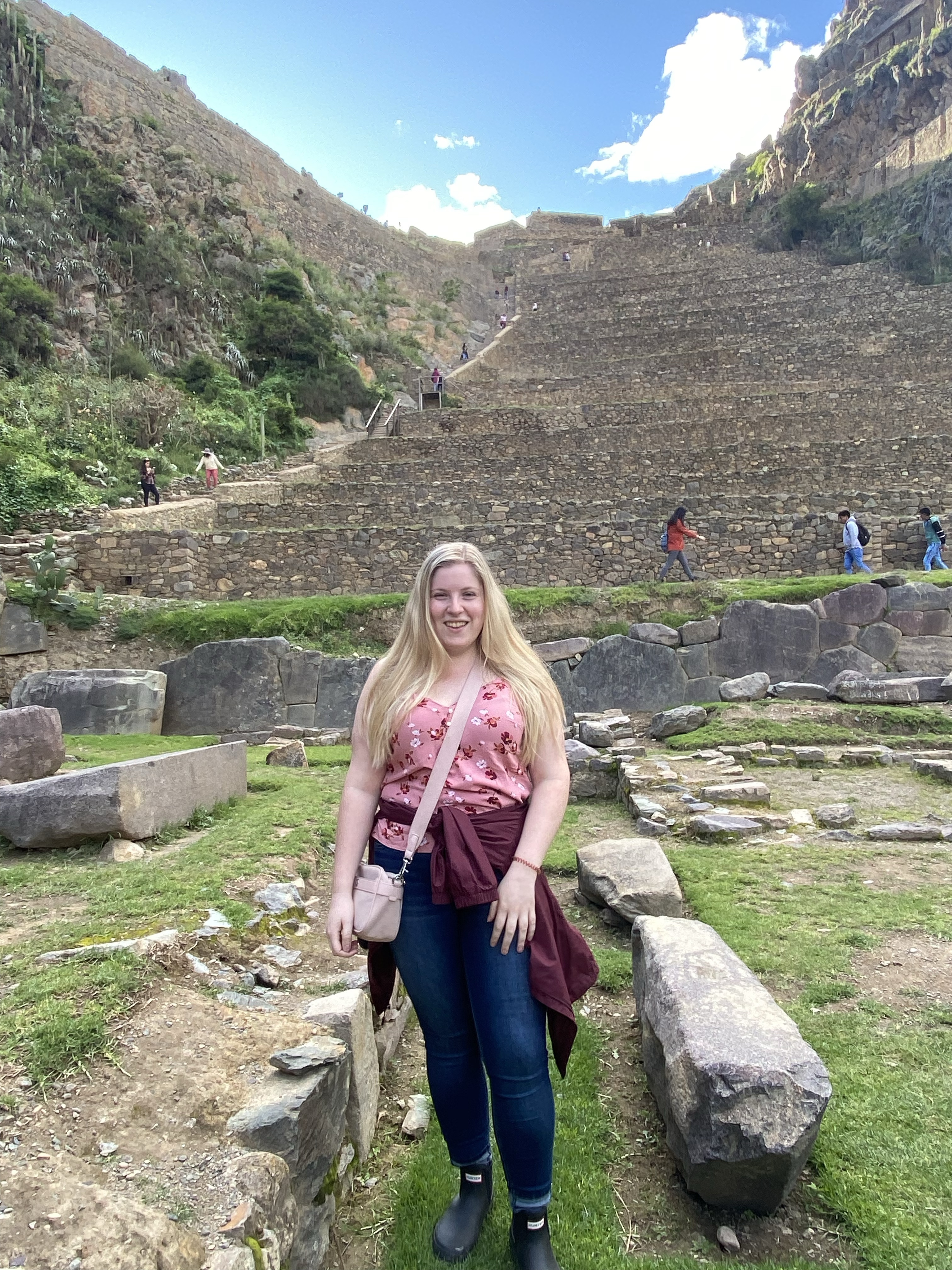
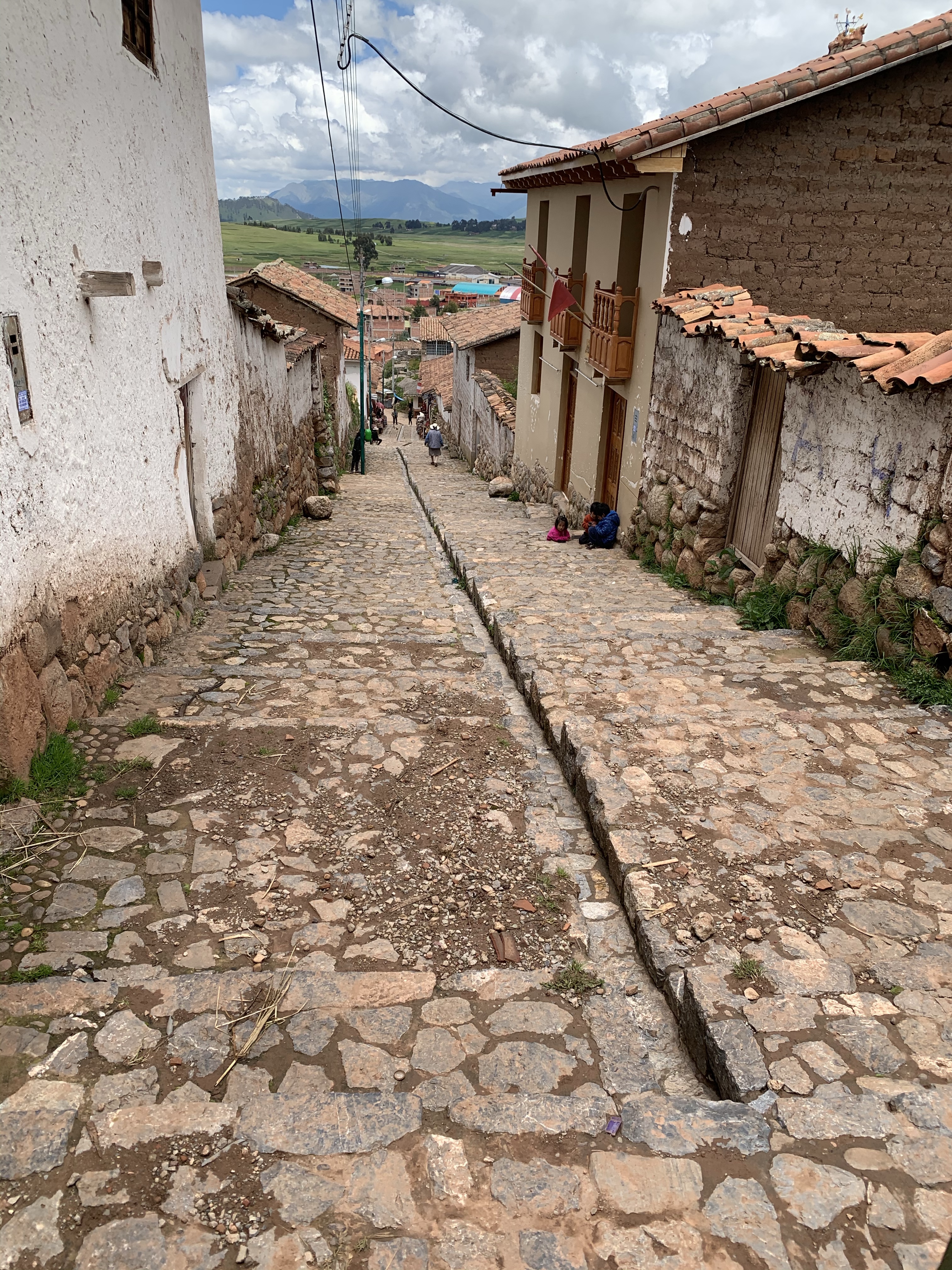
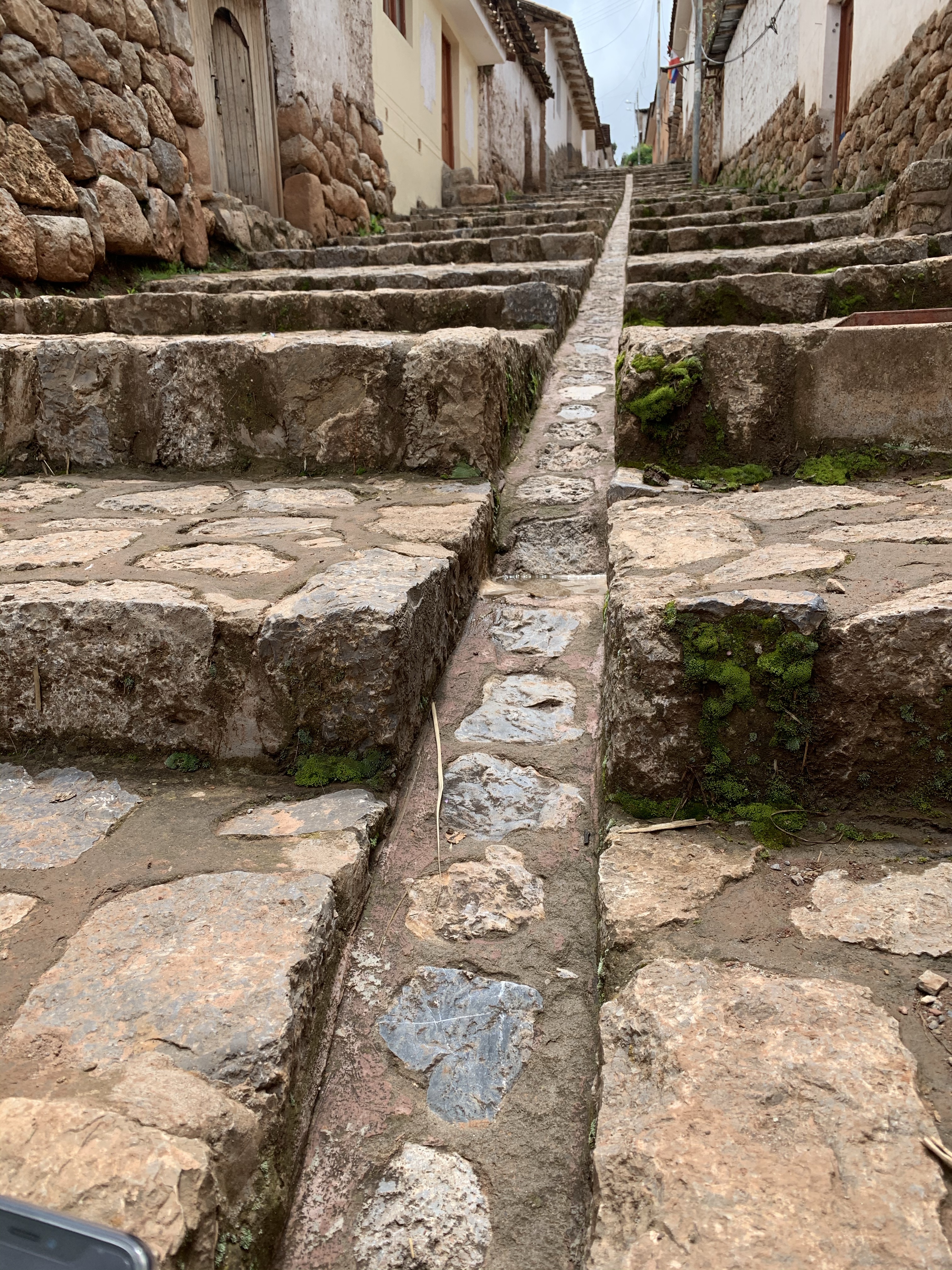
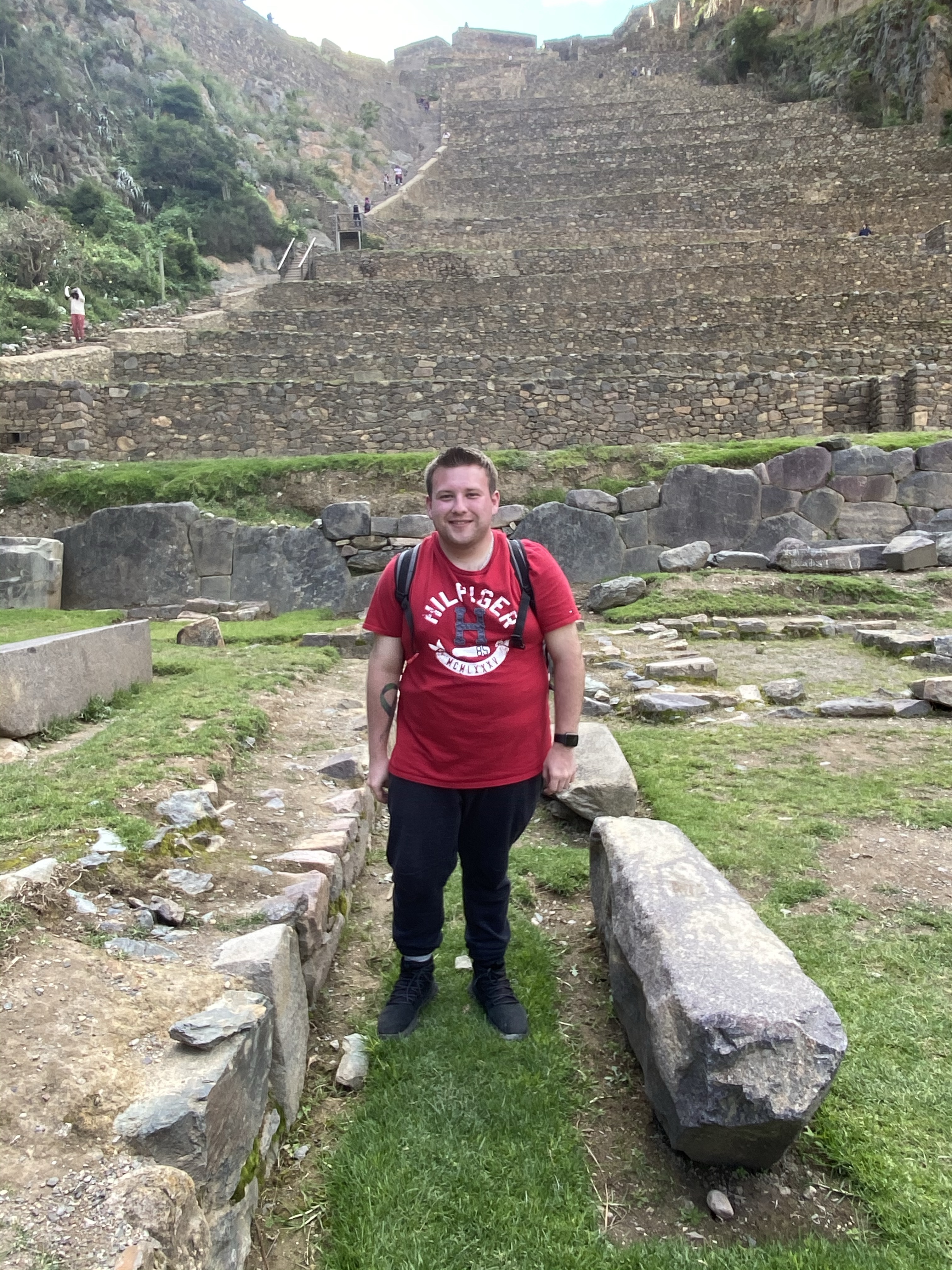
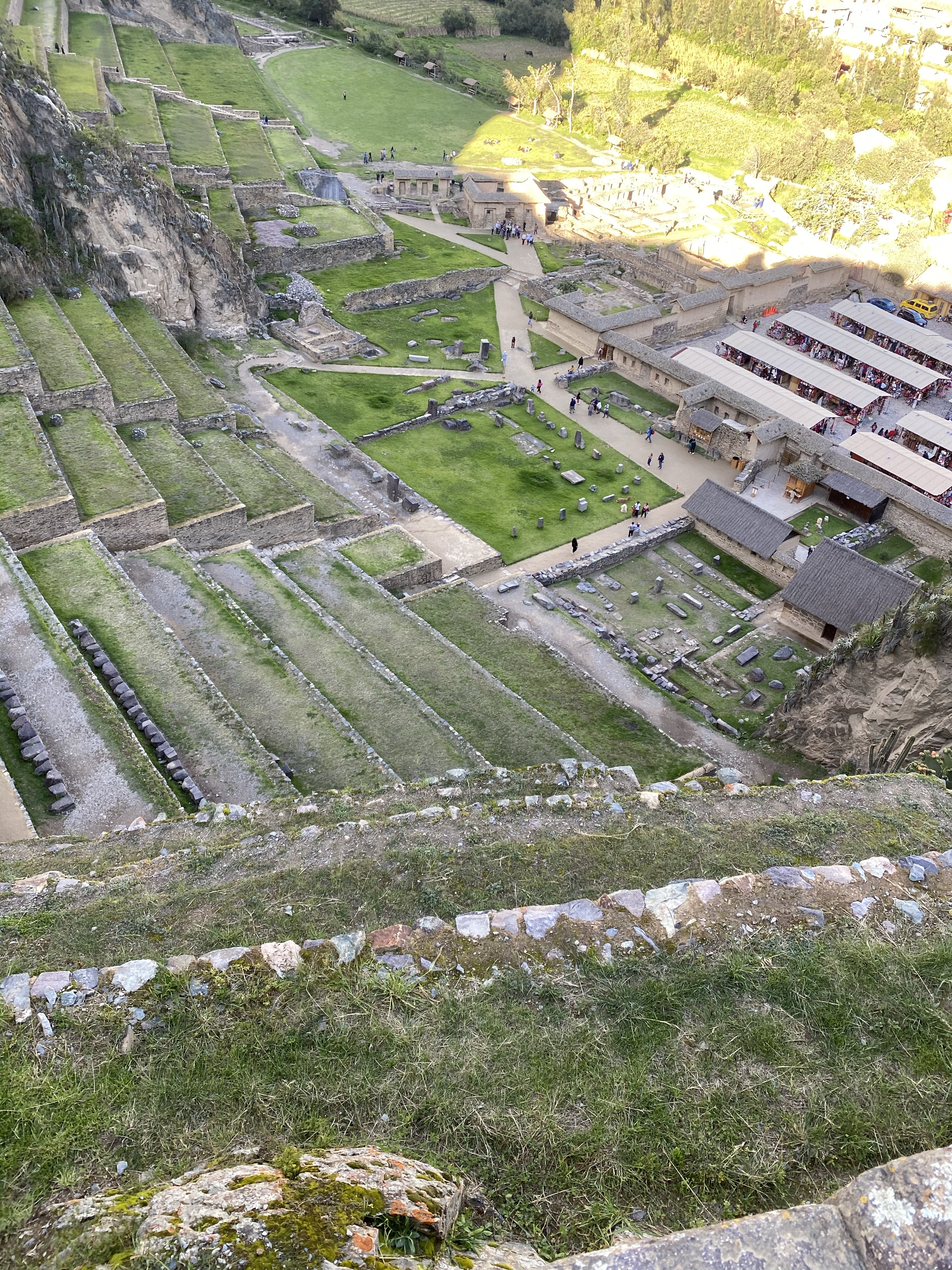
The city of Ollantaytambo was built in the 15th century and all of the buildings today are 70% original.
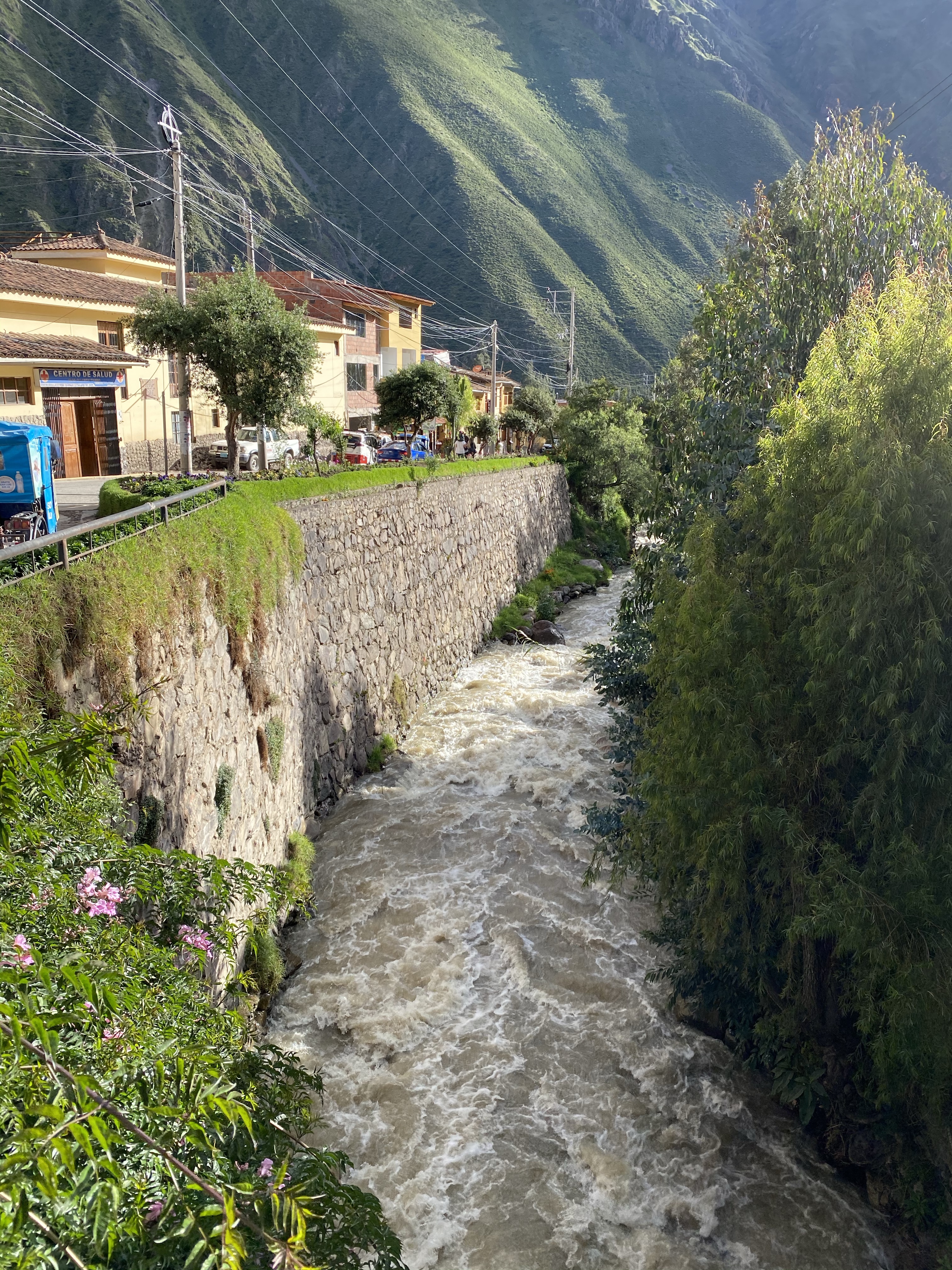
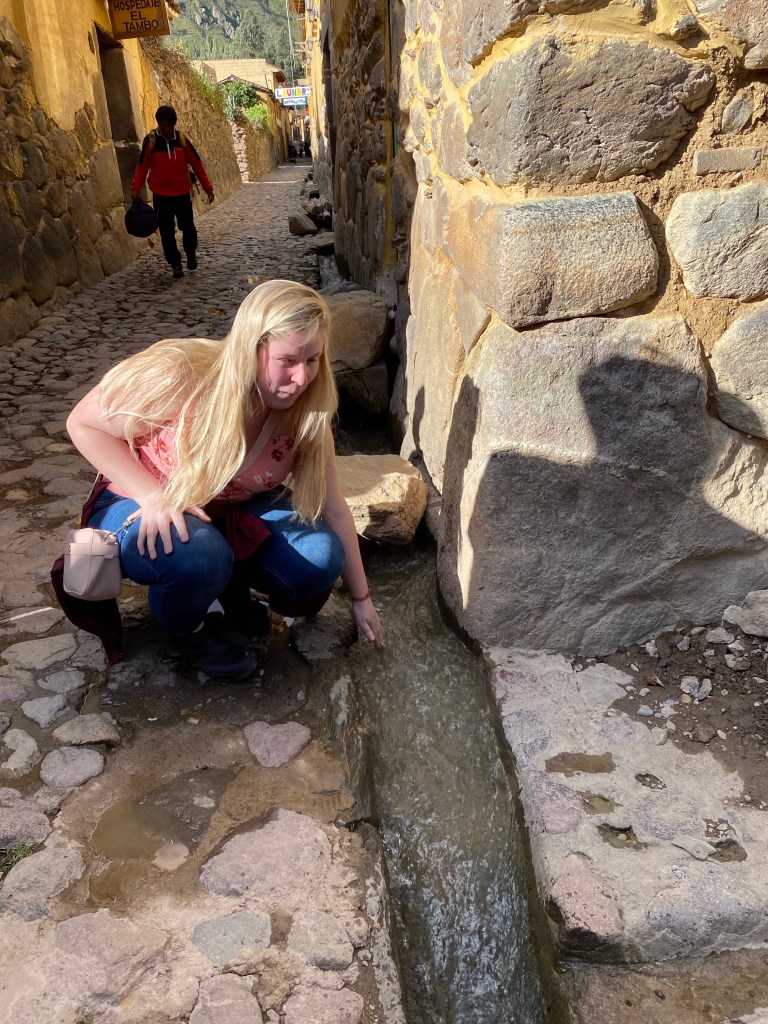
The water flowing through the city is coming from the glacier at the top of the mountain
Morgan showing excitement touching the glacier water.
We walked to a small house in the city. Alrich showed us what it was like living in these small spaces.
Video of the standard living situations
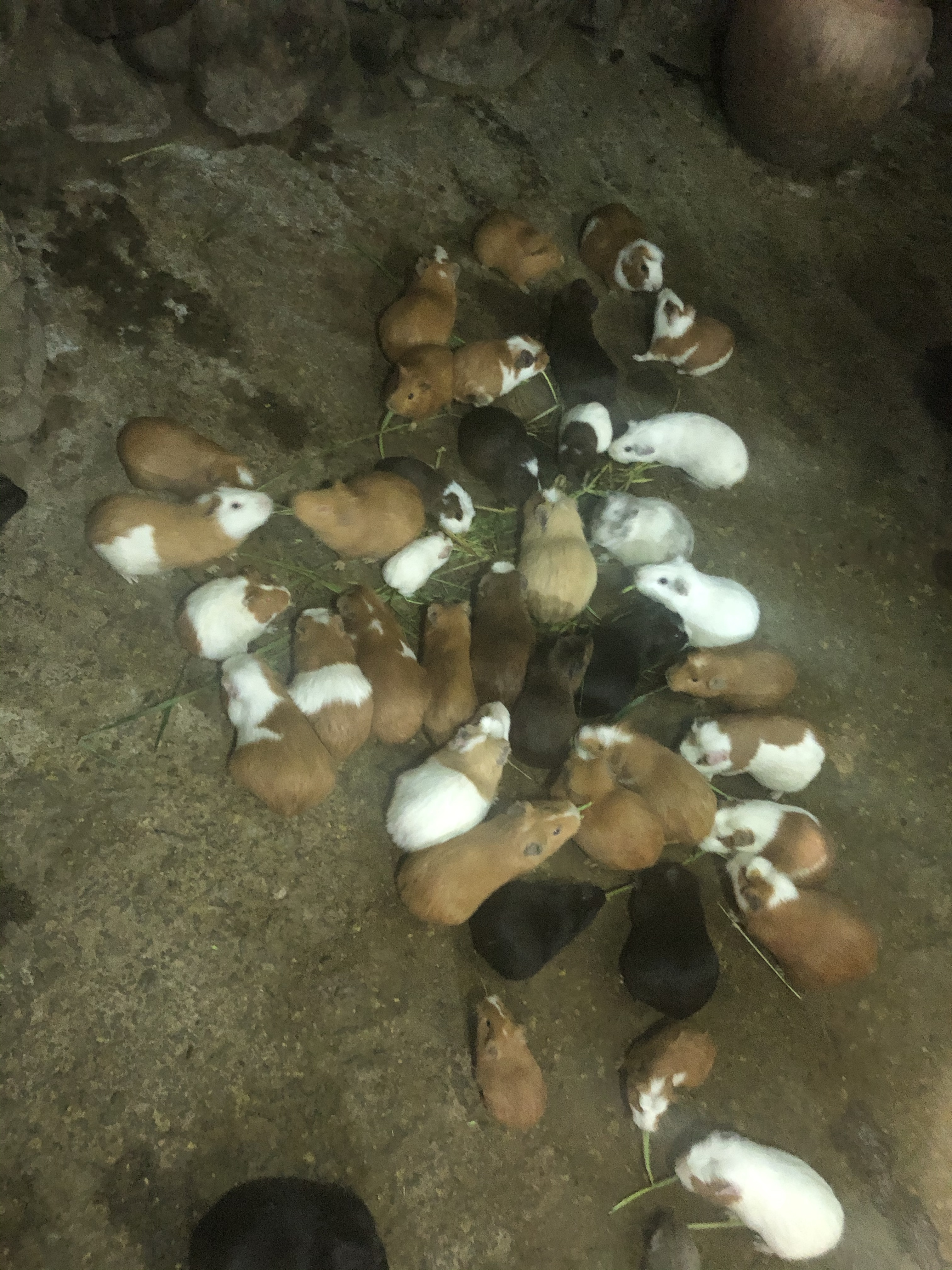
Guinea Pig are raised for food. They are eaten on special occasions- like weddings, baptisms, birthdays, cultural celebrations, etc.
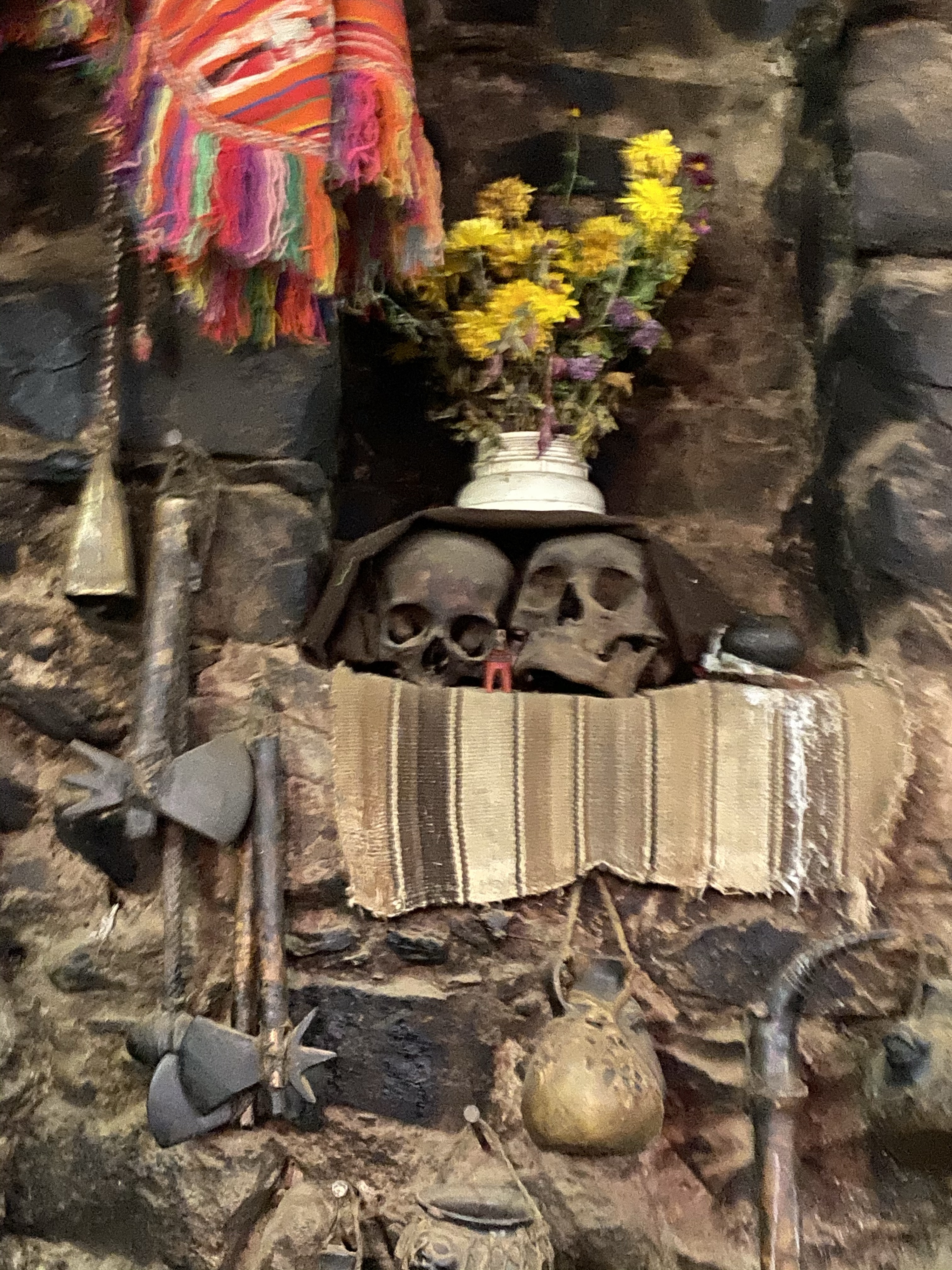
It is Tradition to save skulls of grand father, and grand mother. It is a way of remembering them, If they make food they would prepare some for them(skull), if they like this flower we will pick it and put it by their skull. They honour them more often then if they were all buried at a grave site.
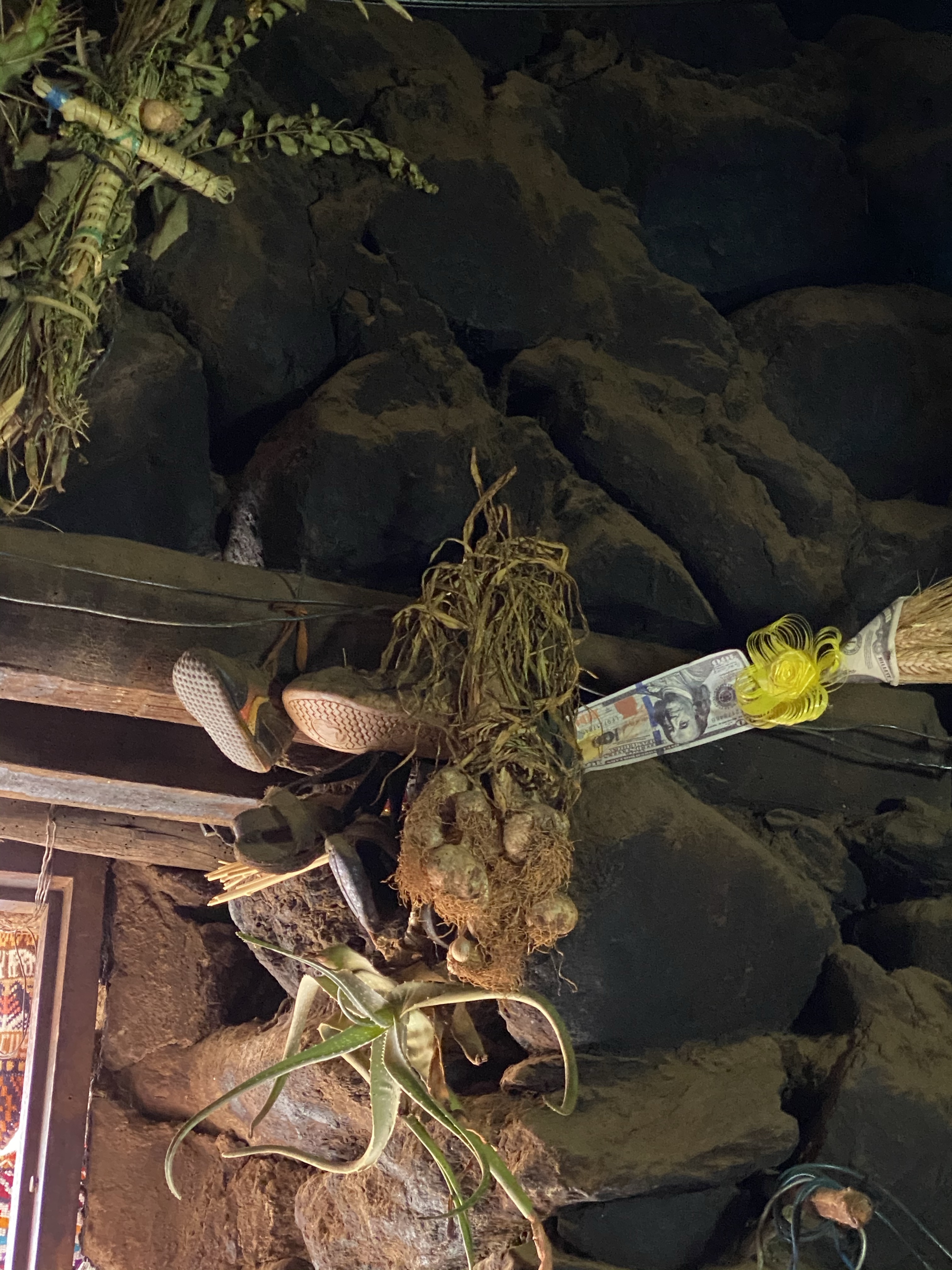
Baby shoes hanging from the doorway for good luck.
Arlich told us you can tell when someone is poorer not by the food they eat or the water but by their allocation, their housing, and clothes.
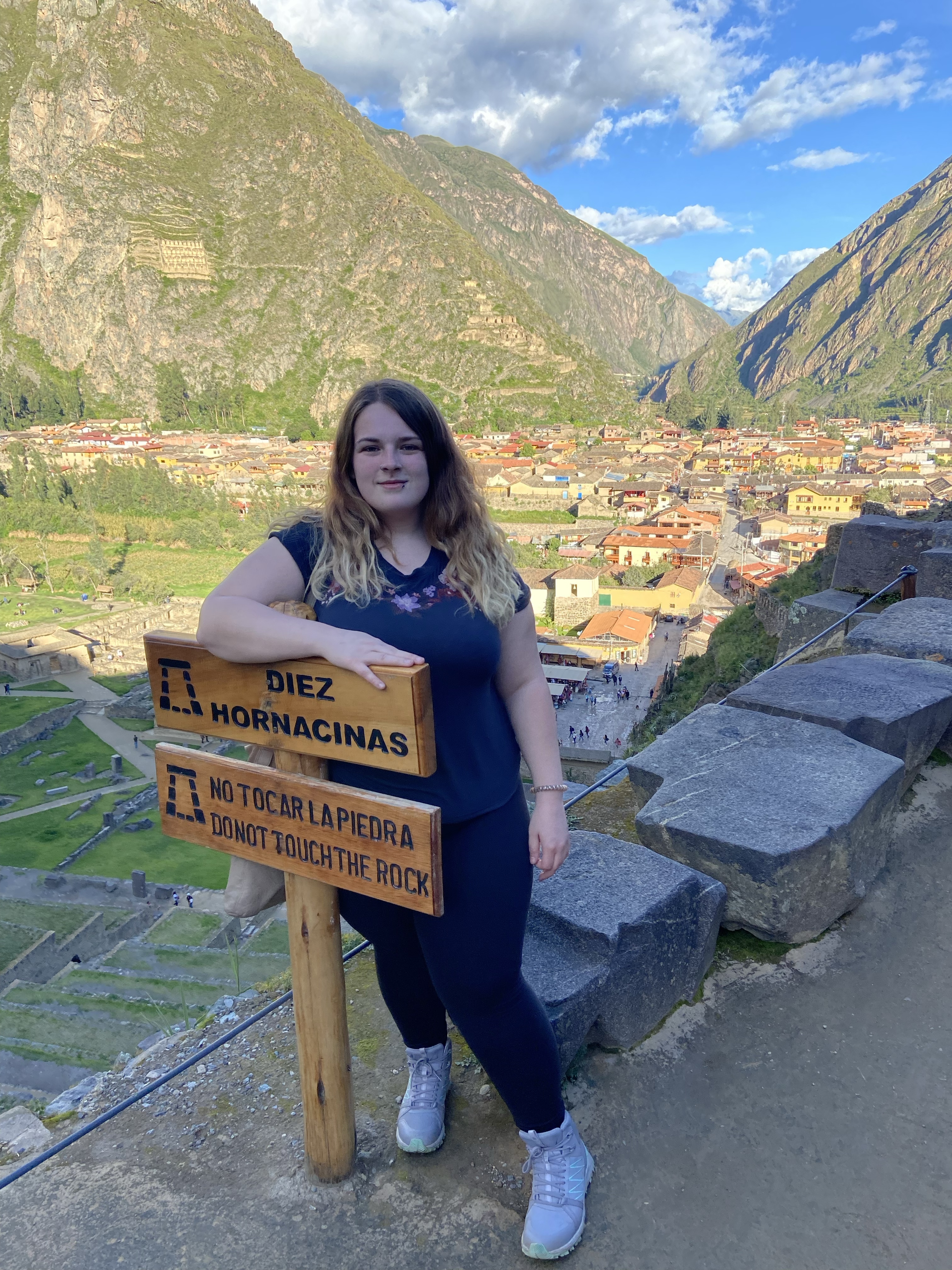
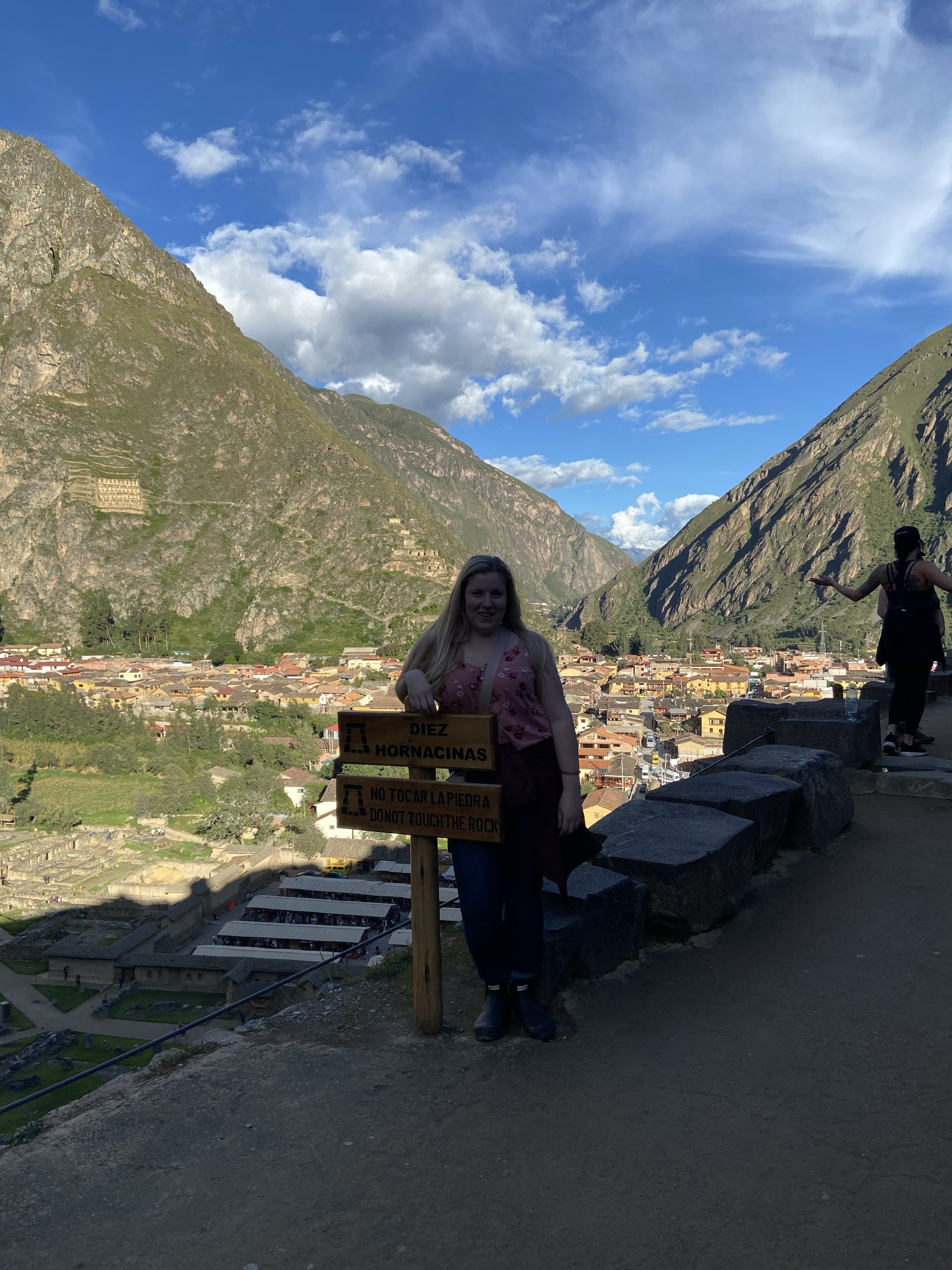
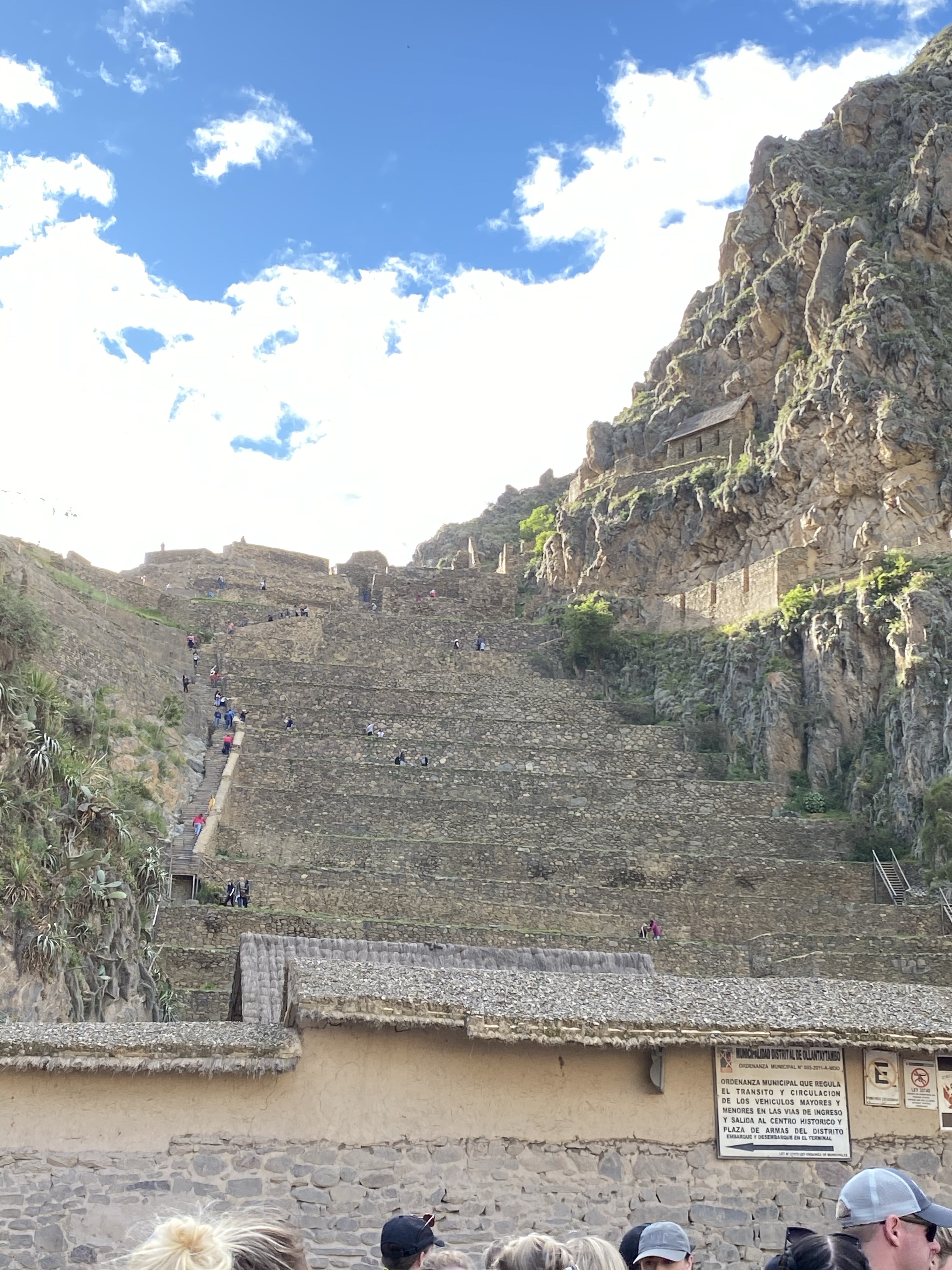
We then made our way to a mountain which think is named Diez Hornacinas.
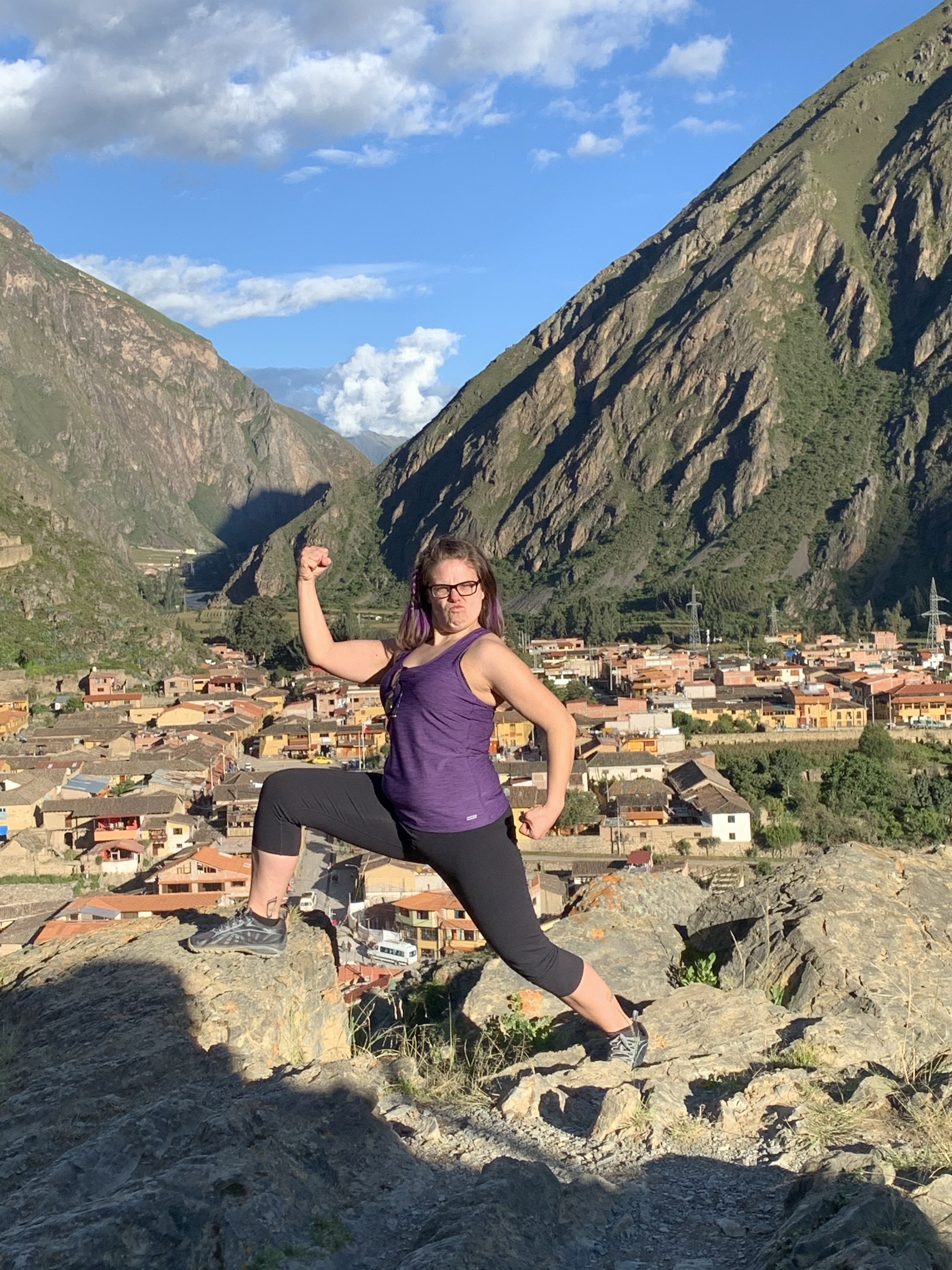
The majority of us hiked the mountain, a few stayed behind and shopped at the market. This mountain has about 250 very steep steps.
After climbing the mountain we checked out the market. Some really cute kids came and sang for us for some soles.
Rebecca dancing with the kids singing for us
After this we went back to our hostel said good bye to our tour guide Arlich, thanked him for the amazing job he did the past few days and prepared for clincial the next day!
Terri and Sonya with Arlich
Stay tuned for our first Peruvian hospital experience!


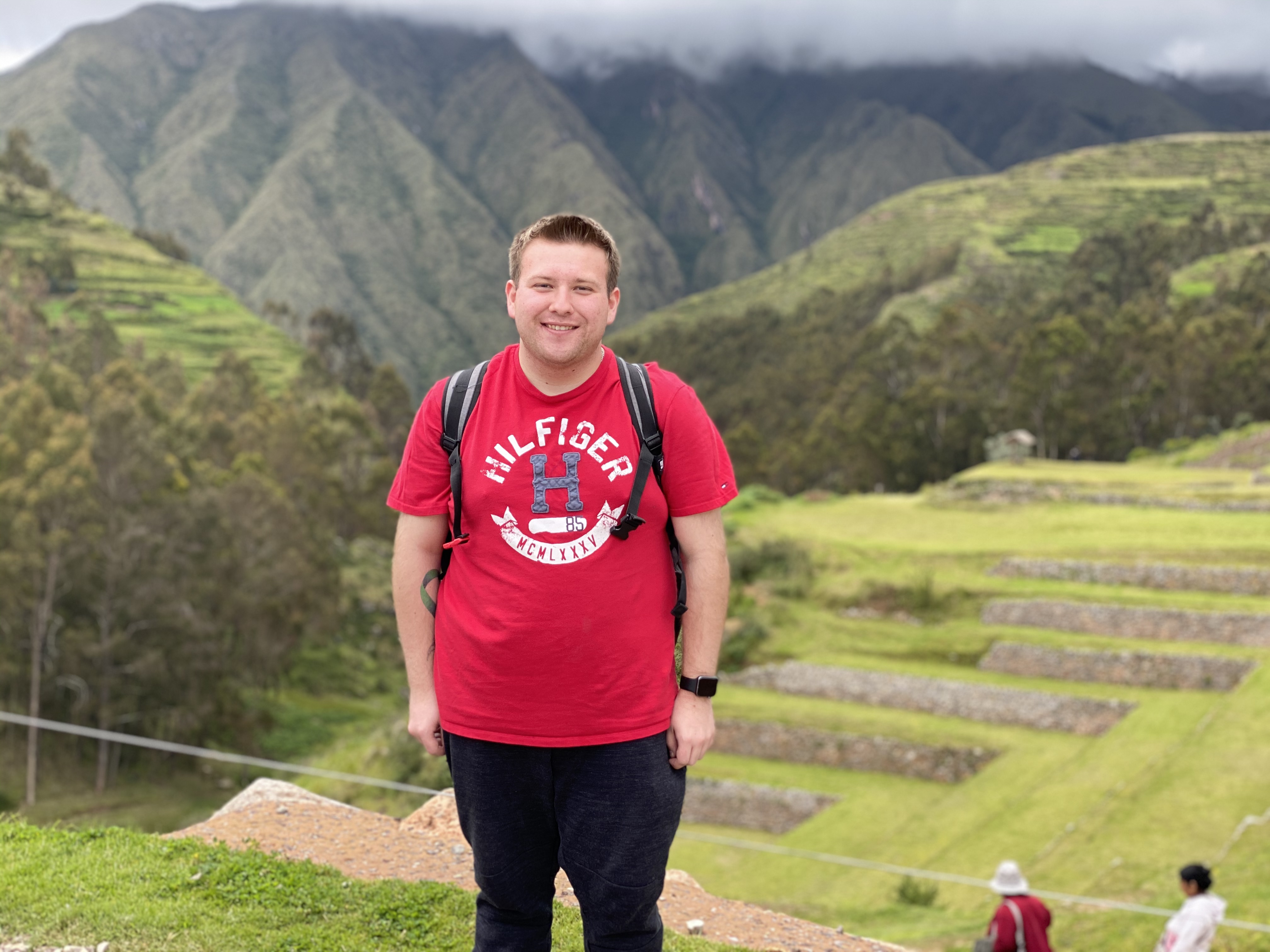
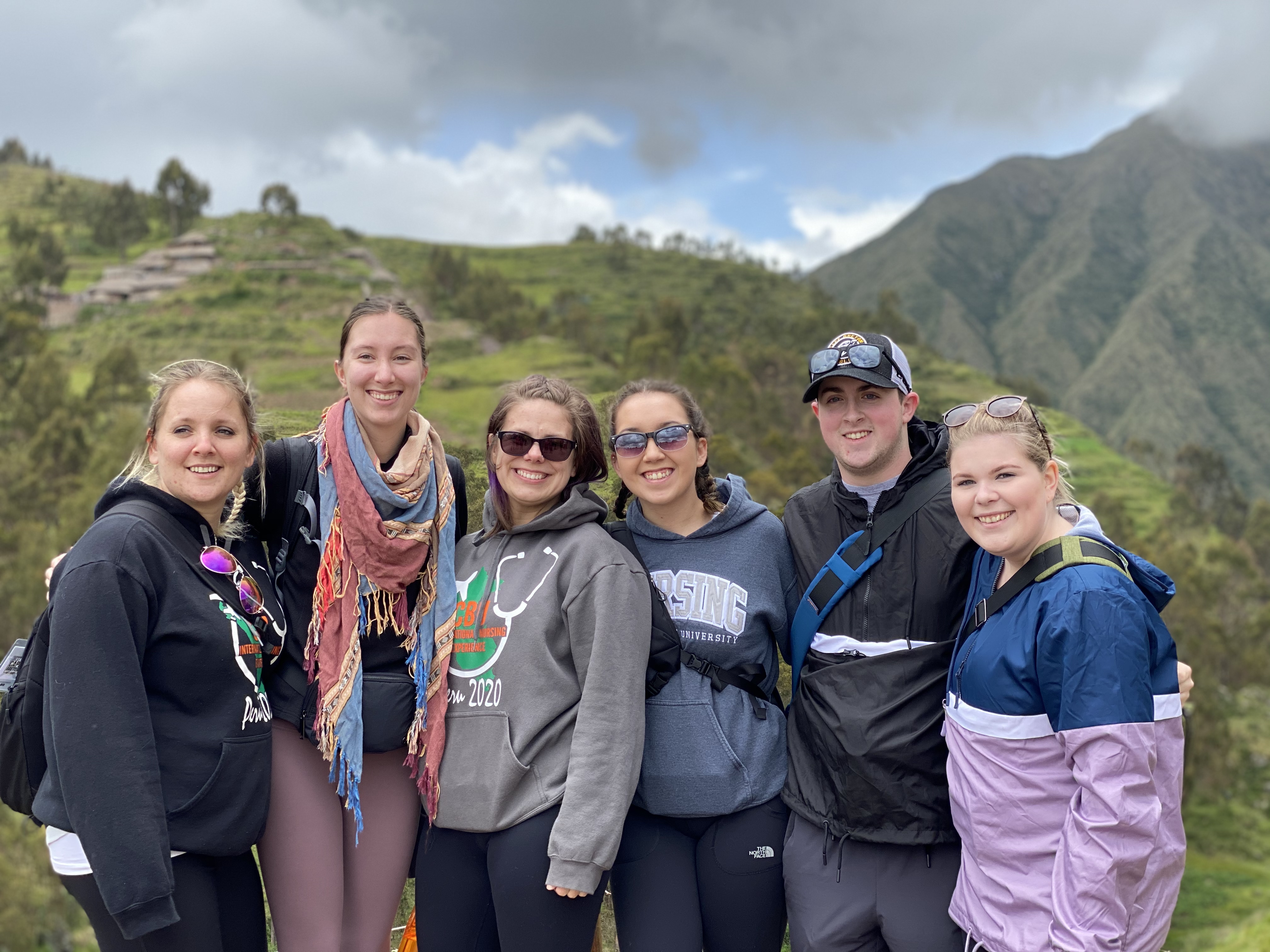
 Austin Chapman Blogs